
Ever stared at a mirror, wondering why your new extensions look flat, frizzy, or just... wrong? The culprit is rarely the stylist. It’s almost always the hair itself. When it comes to nano ring extensions, not all strands are created equal. Using the wrong type of hair can turn a seamless blend into a tangled nightmare within weeks.
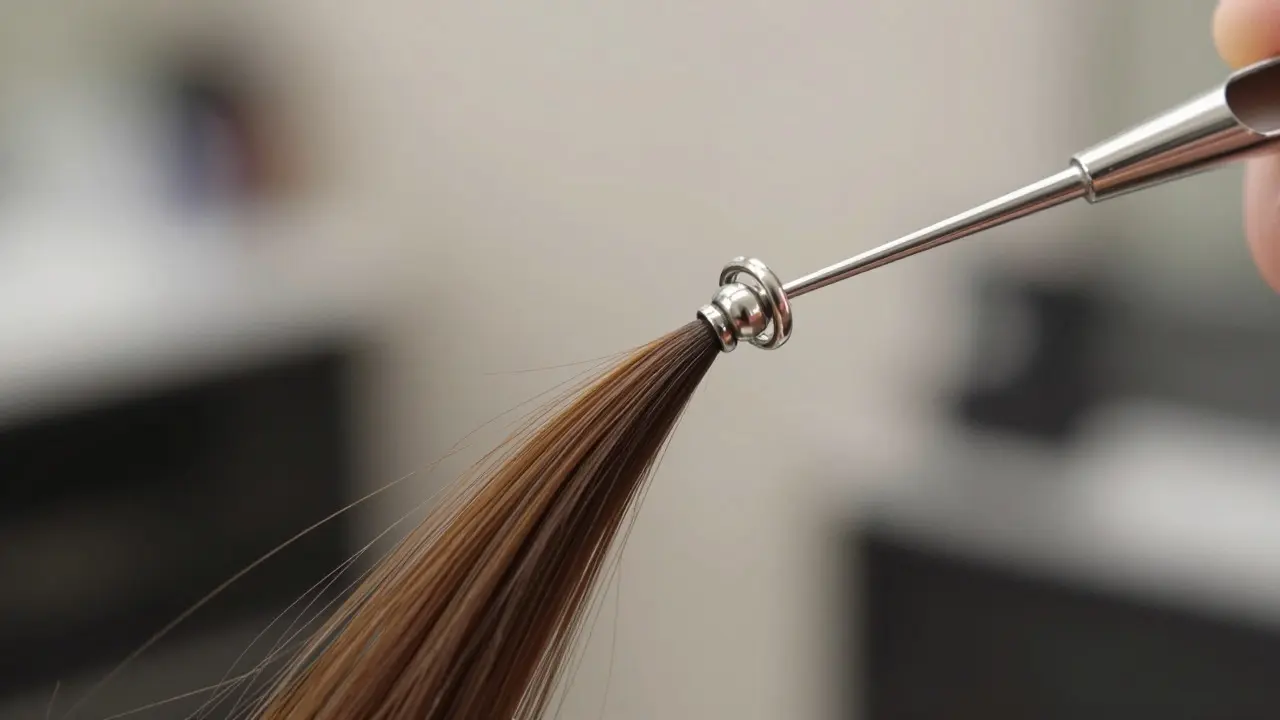
You might think any long hair will do. But nano bonds are tiny-literally millimeters in size. They demand precision, smoothness, and strength that synthetic fibers or low-grade processed hair simply cannot provide. If you want your extensions to last months without shedding, tangling, or looking artificial, you need to understand exactly what goes into those small metal beads.
The Non-Negotiable Standard: Virgin Remy Human Hair
Let’s cut through the marketing jargon. The only hair suitable for high-quality nano ring extensions is Virgin Remy Human Hair, which is 100% natural human hair with intact cuticles aligned in the same direction. Why this specific combination? Because nano rings work by clamping down on a small section of hair. If the cuticles (the outer layer of the hair shaft) are stripped or misaligned, friction occurs. That friction leads to tangling, matting, and breakage right at the bond.
"Remy" means the cuticles are kept intact and facing downward, just like they did on the donor’s head. "Virgin" means the hair has never been chemically processed-no bleaching, no dyeing, no acid baths. This ensures the hair retains its natural strength and elasticity. When you pull on virgin remy hair, it stretches slightly and snaps back. Processed hair? It breaks.
- Cuticle Alignment: Prevents internal friction and tangling.
- No Chemical Processing: Maintains structural integrity for repeated styling.
- Natural Shine: Reflects light naturally, blending seamlessly with your bio hair.
If a vendor offers you "synthetic blend" or "non-remy" for nano rings, walk away. Synthetic hair melts under heat tools, and non-remy hair tangles because the cuticles face random directions, creating a microscopic velcro effect.
Why Texture Matching Matters More Than Color
Color can be corrected. Texture cannot. One of the biggest mistakes clients make is focusing solely on matching their hair color while ignoring the wave pattern and thickness. Nano ring extensions sit close to the scalp. If the texture doesn’t match, the difference is glaringly obvious.
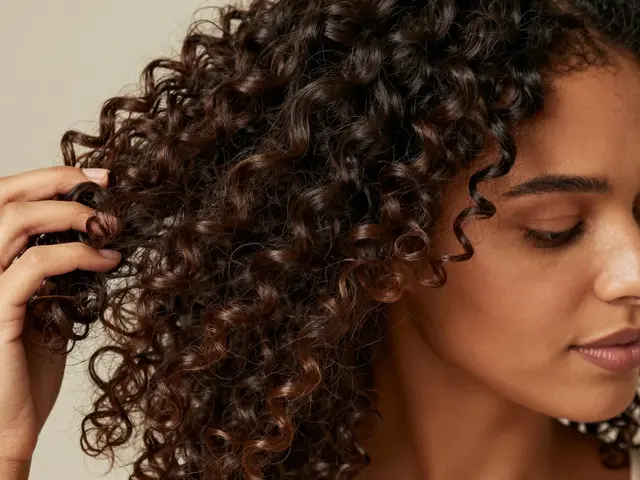
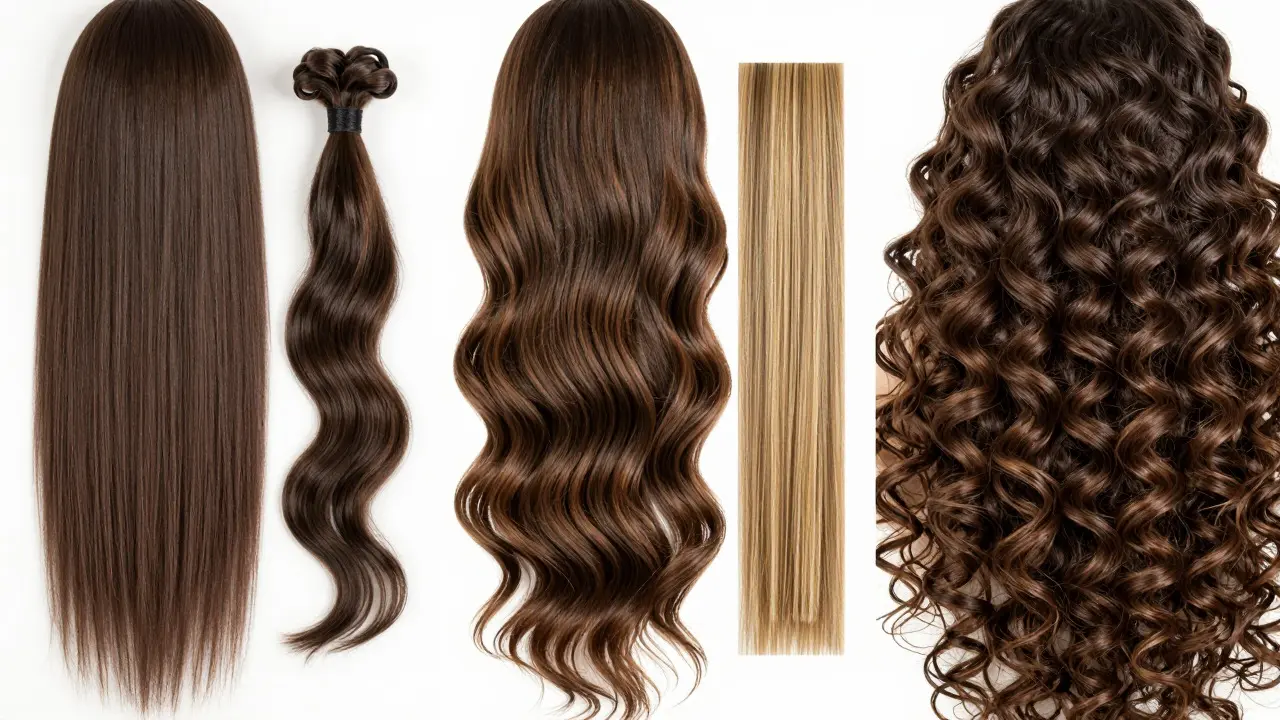
Hair texture falls into three main categories: straight, wavy, and curly. Within each category, there are sub-types based on density and curl tightness. For example, Asian hair tends to be coarser and straighter, while European hair is often finer and more prone to natural waves. African American hair has a distinct curl pattern that requires specific handling.
When selecting hair for nano rings, you must match both the pattern and the diameter of your natural hair. If you have fine, straight hair and install coarse, wavy extensions, the weight alone can cause slippage. Conversely, if you have thick, curly hair and use fine, straight extensions, they will get lost in your natural volume and shed prematurely due to lack of support.
| Your Natural Hair Type | Recommended Extension Texture | Key Consideration |
|---|---|---|
| Fine & Straight | Straight, Single Drawn | Avoid heavy bundles; choose lighter density to prevent slippage. |
| Medium & Wavy | Body Wave / Loose Wave | Ensure the wave pattern matches your natural bend, not just the curl. |
| Coarse & Curly | Deep Wave / Kinky Curly | Requires stronger bonds; ensure hair is moisturized to prevent dryness. |
Single Drawn vs. Double Drawn: What’s the Difference?
You’ll see these terms everywhere, but few explain what they actually mean for your wallet and your hair health. "Drawing" refers to the process of sorting hair by length to ensure uniformity.
Single Drawn Hair: Contains a mix of lengths. A bundle labeled 20 inches might have plenty of 18-inch and 16-inch hairs mixed in. It looks fuller at the top but thinner at the ends. It’s cheaper, but for nano rings, this inconsistency can lead to uneven tension on the bonds.
Double Drawn Hair: Rigorously sorted so that 90-95% of the strands are the exact length specified. It looks thicker from root to tip. For nano extensions, double-drawn hair is superior because every strand contributes equally to the hold and volume. You use less hair to achieve the same fullness, saving money in the long run.
If you’re paying premium prices for nano installations, insist on double-drawn virgin remy hair. It reduces waste and ensures a polished finish.
The Danger of Processed and Dyed Hair
Can you use dyed hair for nano rings? Technically, yes. Practically? It’s risky. Most affordable "virgin" hair sold online has been lightly processed to achieve popular colors like ash blonde or jet black. This processing strips natural oils and weakens the protein structure.
Weak hair breaks easily. In a nano ring system, the bond holds onto the hair shaft. If the hair shaft is brittle, it will snap off above the bead rather than slipping out. This results in sudden thinning and visible gaps near the scalp. Additionally, processed hair fades quickly. Your natural hair grows out, revealing roots, while the extensions stay one solid, unnatural shade. This creates a harsh line of demarcation that’s difficult to blend.
If you love colored hair, consider buying raw, unprocessed brown or black virgin hair and having a professional colorist tint it to match your desired shade after installation. This way, the color integrates with your natural growth cycle more naturally.
How to Spot Low-Quality Hair Before You Buy
Not every vendor is honest. Here’s how to test the hair yourself before committing to a purchase:
- The Burn Test: Pull out a few strands and burn them. Real human hair smells like burning feathers or meat and turns to ash. Synthetic hair smells like plastic and melts into a hard bead.
- The Tangle Test: Wet the hair and rub two strands together vigorously. High-quality remy hair should glide smoothly. If it knots instantly, the cuticles are damaged or misaligned.
- The Elasticity Check: Stretch a wet strand. Good hair stretches about 30% of its length and returns to original form. Poor hair snaps or stays stretched.
- Shedding Rate: Shake the bundle gently. Minimal shedding is normal. If handfuls of hair fall out, the wefting or sorting was done poorly.
Also, check the packaging. Reputable vendors provide certificates of authenticity detailing the origin (e.g., Brazilian, Peruvian, Indian) and processing history. Vague descriptions like "European Blend" are red flags.
Maintenance Tips to Extend Lifespan
Even the best hair fails if treated poorly. Nano ring extensions require specific care routines to maintain their integrity. Unlike tape-ins or clip-ins, nano bonds are semi-permanent and sit closer to the scalp, making them susceptible to product buildup.
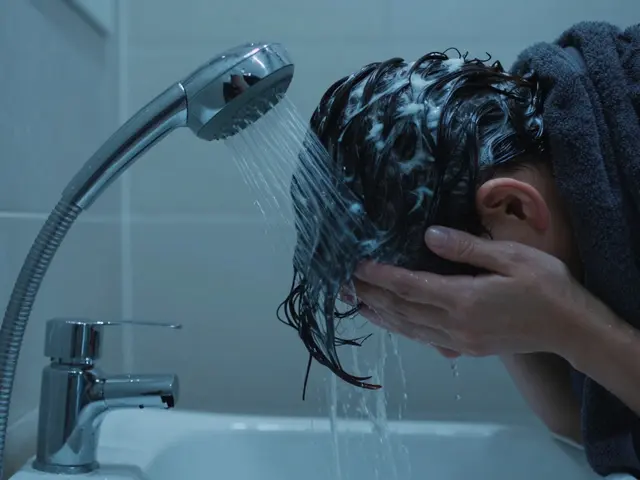
Use sulfate-free shampoos. Sulfates strip natural oils, leaving the hair dry and prone to tangling. Condition from mid-length to ends, avoiding the beads directly. Oil-based products can loosen the metal rings over time, so apply serums sparingly and keep them away from the roots.
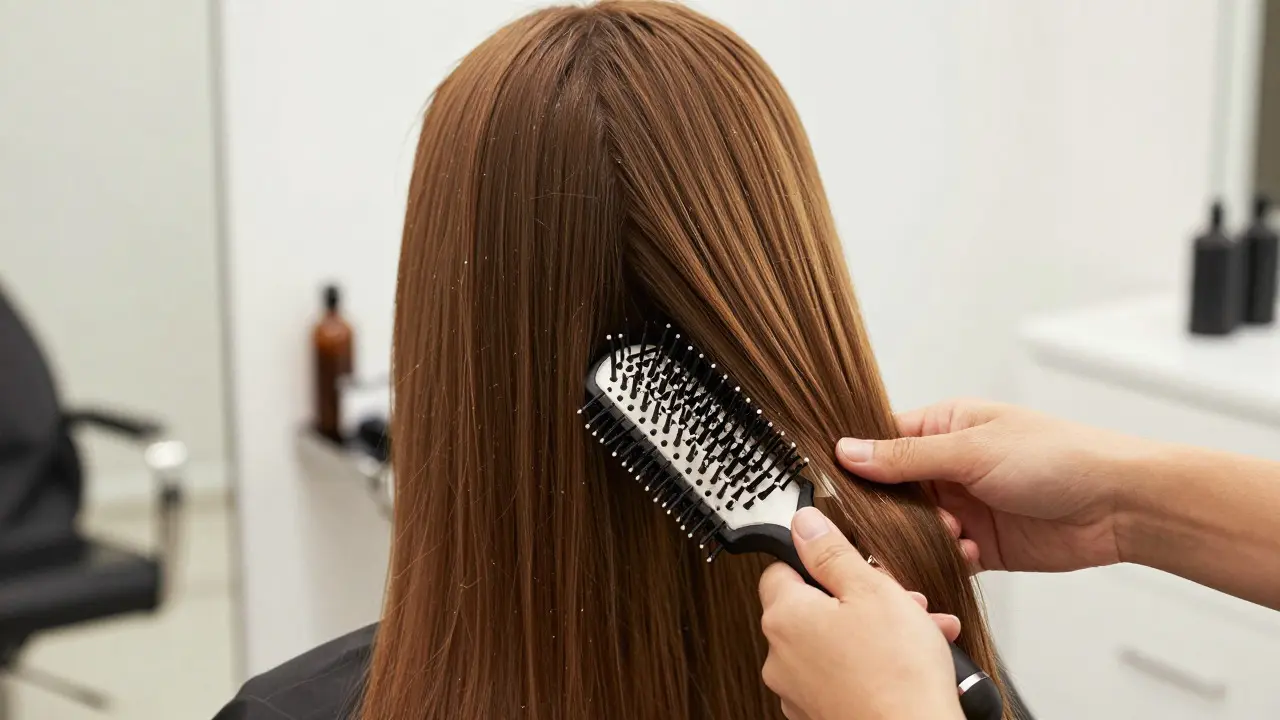
Brushing technique matters too. Use a loop brush designed for extensions. Start from the tips and work your way up to the bonds. Never pull from the top down, as this puts excessive stress on the nano bead connection points.
Common Myths About Nano Ring Hair
Myth: "Nano rings damage your natural hair." Fact: When installed correctly with proper tension and removed professionally, nano rings are gentle. Damage usually comes from using heavy, low-quality hair that pulls on the follicles or from neglecting maintenance.
Myth: "You can wash them daily." Fact: Over-washing dries out the hair and loosens the bonds. Aim for 2-3 times a week max, depending on your activity level.
Myth: "All human hair is the same." Fact: As discussed, cuticle alignment, processing history, and drawing methods drastically affect performance. Cheap human hair behaves worse than good synthetic hair in some cases.
Can I use synthetic hair for nano ring extensions?
No. Synthetic hair cannot withstand the heat of styling tools and lacks the elasticity needed for secure bonding. It will melt, tangle excessively, and slip out of the nano beads quickly.
How long do nano ring extensions last with good hair?
With high-quality virgin remy hair and proper maintenance, the hair itself can last 12-18 months. However, the bonds typically need to be moved up every 6-8 weeks as your natural hair grows.
Is Brazilian hair better than Indian hair for nano rings?
It depends on your natural texture. Brazilian hair is typically thicker and wavier, ideal for volume. Indian hair is finer and straighter, perfect for seamless blending with delicate hair types. Neither is inherently "better"; they serve different needs.
Do I need to cut the hair before installing nano rings?
Usually, yes. Professional stylists trim the ends to remove split ends and ensure even length. This also helps in customizing the shape and layering to match your haircut.
Can I blow dry my nano ring extensions?
Yes, but use a heat protectant spray and keep the dryer on a medium setting. Avoid directing hot air directly at the metal beads for prolonged periods, as this can weaken the grip over time.