

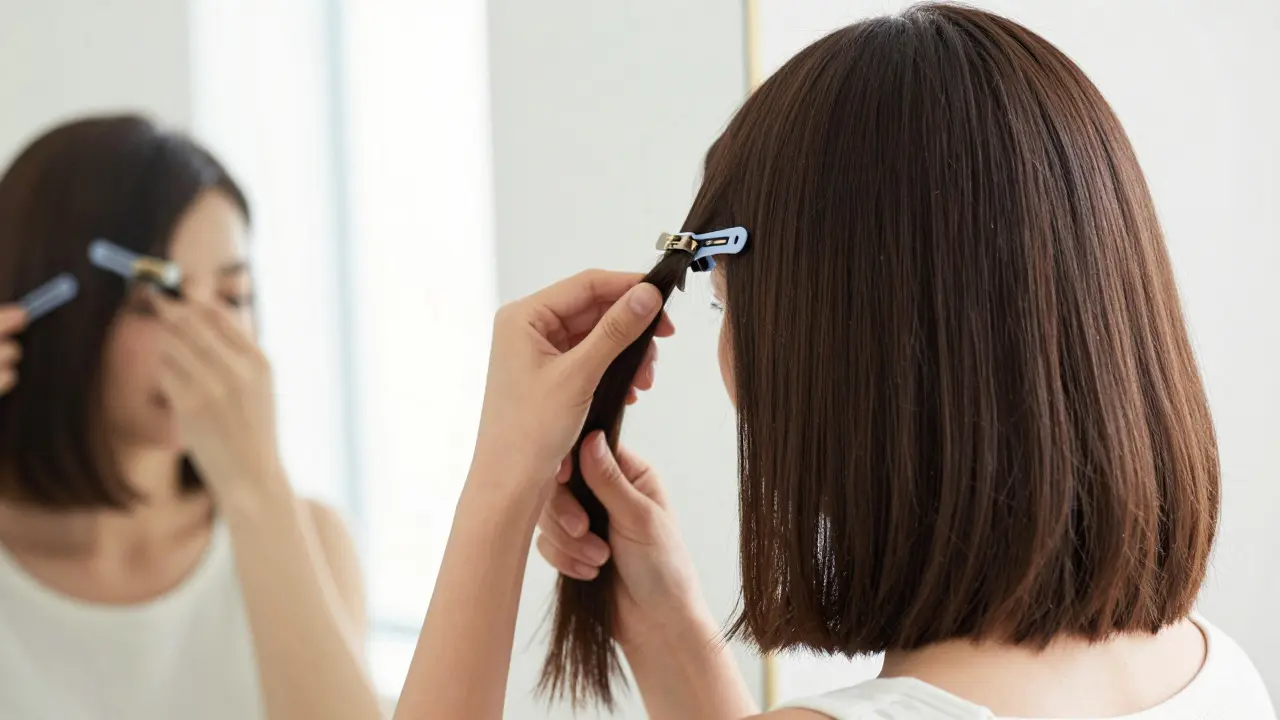
Clip-in hair extensions are one of the easiest and most affordable ways to add length, volume, or color to your hair-especially if you have short hair. Unlike permanent extensions that require glue, sewing, or heat, clip-ins snap in and out with metal or silicone clips. You can wear them for a night out, a special event, or just to test out a new look without commitment. And yes, they work great even if your natural hair is chin-length or shorter.
How clip-in extensions actually work
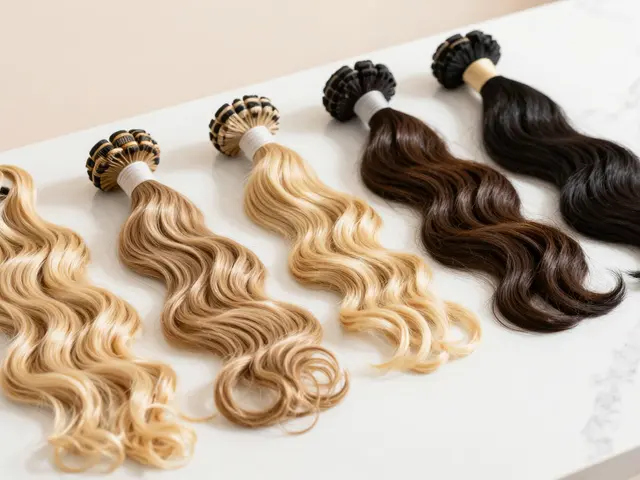
Each set of clip-in extensions comes with several wefts-strips of hair with small clips sewn along the top edge. These clips are designed to grip your natural hair securely, holding the extension in place without pulling or slipping. Most sets include 5 to 10 pieces, ranging from small temple clips to larger center-back pieces that cover more area.
The key is matching the clip size to your hair’s thickness. If your hair is fine or thin, go for lighter clips with silicone grips-they won’t tug or leave dents. If your hair is thicker, you can handle heavier clips with more teeth. The clips should feel snug but not painful. If they pinch or slide down, they’re either too small or not attached properly.
Modern clip-ins use high-quality human hair, mostly Remy or virgin hair, which means the cuticles are aligned in one direction. This prevents tangling and gives a natural shine. Synthetic clip-ins exist too, but they look shiny under bright lights and don’t hold up well with heat styling. For short hair users, human hair clip-ins are worth the extra cost because they blend better and last longer.
Why short hair benefits from clip-ins
Short hair doesn’t mean you’re stuck with just what you’ve got. Many people with pixie cuts, bobs, or shags feel limited in styling options. Clip-ins solve that. You can instantly add length to frame your face, create volume at the crown, or even try a bold color like pastel pink or honey blonde without bleaching your natural hair.
Think of it like temporary makeup for your hair. Want to look like you just walked out of a salon? Clip in a few wefts for a fuller ponytail or a cascading half-up style. No heat damage. No salon appointment. Just 5 minutes and you’re done.
A 2024 survey by the American Hair Extension Association found that 68% of women with short hair who tried clip-ins reported feeling more confident in social settings. The biggest reason? They could change their look instantly-no commitment, no regret.
Choosing the right set for short hair
Not all clip-in sets are made equal. Here’s what to look for if you have short hair:
- Length: Aim for 14 to 18 inches. Anything longer than 20 inches will look unnatural on short hair-it’ll hang too low and create a disconnected look.
- Weight: Lightweight sets (under 120 grams total) are best. Heavy extensions can weigh down short hair and cause headaches or tension.
- Number of pieces: 5 to 7 pieces are ideal. Too many clips can feel bulky. You don’t need 10 pieces if you’re just adding volume to the top.
- Color matching: Choose a shade that matches your natural root color, not just the ends. Short hair often shows more root, so a mismatched base will look obvious.
Pro tip: If you’re unsure about color, buy a set with a mix of highlights and lowlights. It mimics natural hair growth and blends better with short styles. Brands like Bellami, Kinky Curly, and Hairdreams offer sets specifically designed for short hair users.
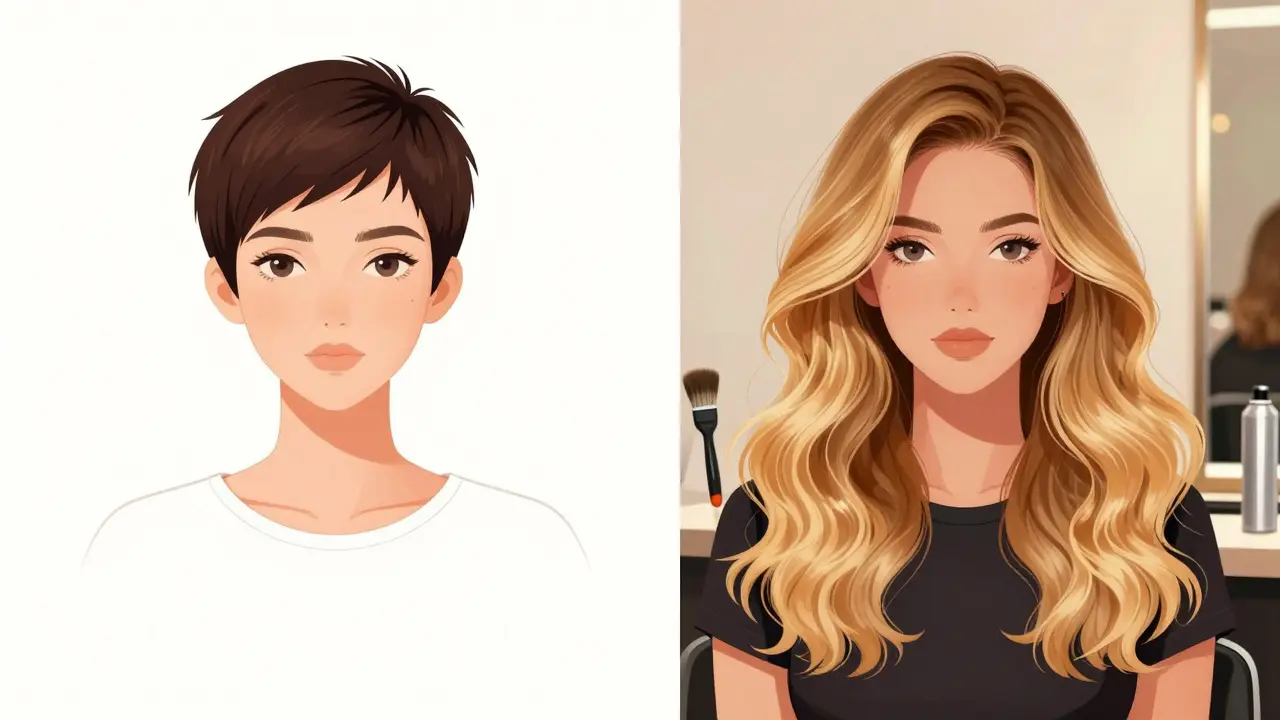
How to apply clip-ins on short hair
Applying clip-ins on short hair takes a little practice, but once you get it, it’s second nature. Here’s the simplest way:
- Start with clean, dry hair. Wet hair stretches and can make clips slip. Blow-dry your hair smooth so the clips have something to grip.
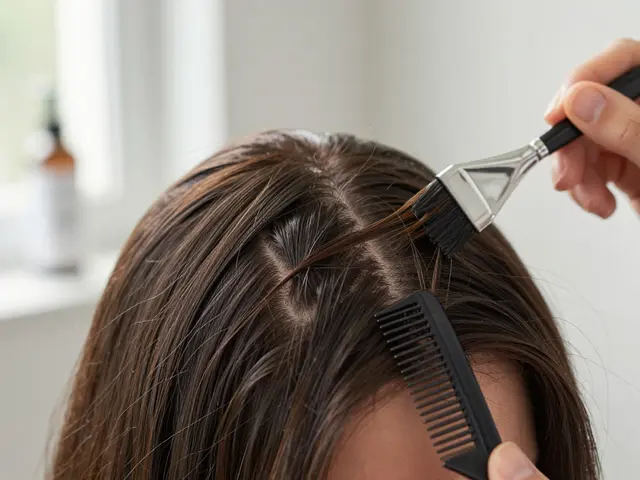
- Part your hair horizontally just above your ears. This creates a clean line to attach the first weft.
- Open the first clip and place it at the base of your natural hairline, close to your scalp. Close the clip firmly. You should feel it lock into place.
- Work your way up, adding one weft at a time. Use the top clips for volume, side clips for framing, and the back clips for length.
- Once all clips are in, gently brush or comb through the extensions with a wide-tooth comb. Start from the bottom and work up to avoid tangles.
- Style as usual. You can curl, straighten, or even tie your hair into a small bun if your natural hair is long enough to hold it.
Pro tip: If your hair is very short (under 4 inches), use a small amount of texturizing spray on your roots before clipping in. It gives the clips something to grip onto without needing to pull on your hair.
How to make them look natural
The biggest mistake people make is leaving a visible line where the extension meets their natural hair. Here’s how to avoid it:
- Blend the extensions with your hair using a round brush and blow dryer. Point the nozzle downward to smooth the seam.
- Use a small flat iron on the very top of the extension weft to flatten any bulk near the scalp.
- Apply a light mist of hairspray along the part line to hold everything in place.
- If you have bangs or layers, gently tease your natural hair slightly before clipping in. This creates a buffer that hides the clip edge.
For color blending, ask a stylist to add a few lowlights to your natural hair if you plan to wear clip-ins often. Even one or two subtle tones can make the transition invisible.
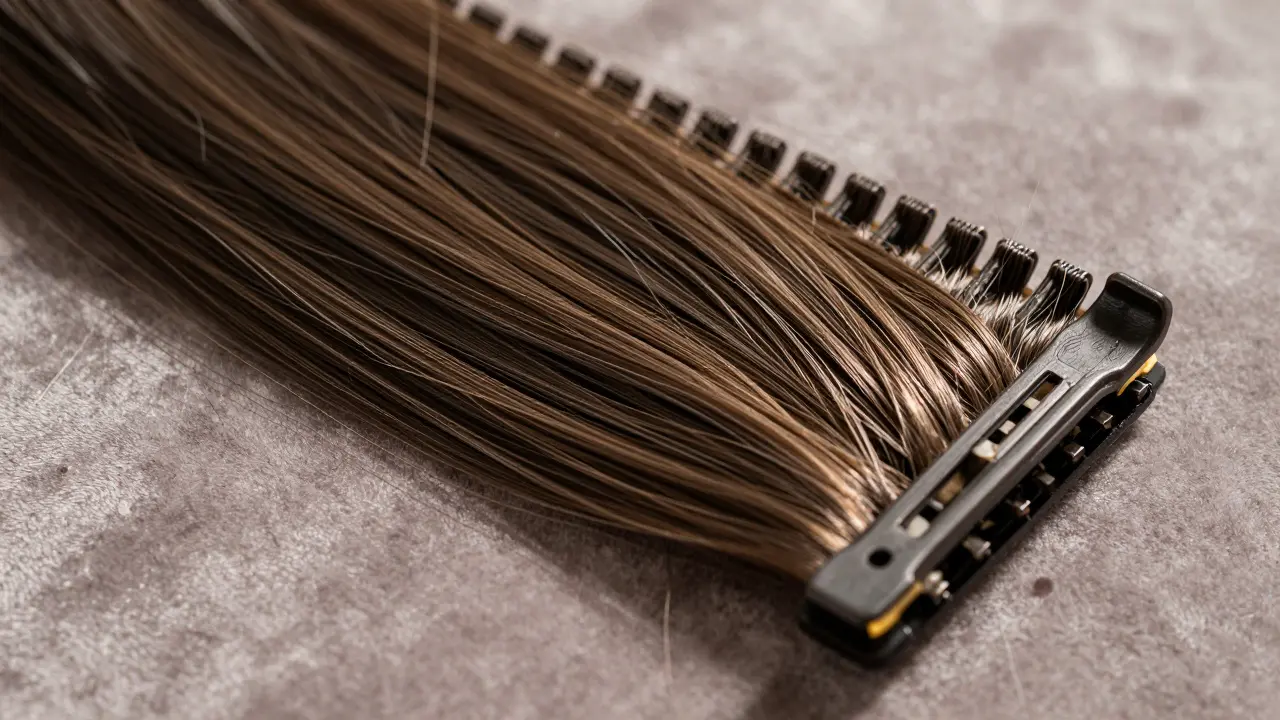
How long do they last?
With proper care, a good set of human hair clip-ins can last 6 to 12 months-even with weekly use. Synthetic ones start to look frizzy after 2 to 3 months.
To extend their life:
- Brush them gently with a detangling brush after each use.
- Wash them every 8 to 10 wears with sulfate-free shampoo. Don’t scrub the clips.
- Let them air dry on a towel-never use heat tools on the clips.
- Store them flat or on a wig stand. Don’t crumple them in a drawer.
Don’t wash them after every use. That’s what kills the hair faster. Just brush and air out between wears.
Common mistakes to avoid
Even experienced users make these errors:
- Putting clips on wet hair: Water makes hair slippery. Clips won’t hold and can fall out mid-event.
- Using too many pieces: More isn’t better. Three well-placed wefts look better than six messy ones.
- Ignoring your natural hair’s texture: If your hair is curly, buy curly clip-ins. Straight extensions on curly hair look fake.
- Wearing them every day: Constant tension on the same spots can cause breakage. Give your scalp a break every few days.
- Using heat tools on synthetic hair: It melts. Plain and simple.
Who should not use clip-ins?
Most people can use clip-ins safely. But if you have:
- Severe hair thinning or traction alopecia
- Scalp conditions like psoriasis or eczema
- Extremely fine, fragile hair that breaks easily
...then clip-ins might add stress. Talk to a trichologist first. In those cases, tape-in or micro-bead extensions might be better-but they’re not DIY.
For most people with short hair, though, clip-ins are a game-changer. They’re affordable, easy, and reversible. No one has to know you’re wearing them-unless you want them to.
Can clip-in extensions work on very short hair?
Yes, even if your hair is as short as a pixie cut, clip-ins can work. You need to choose lightweight, small-clip sets and apply them close to the scalp. Texturizing spray helps grip. Focus on adding volume at the crown or length at the back, not full-length extensions.
Do clip-ins damage your hair?
When used correctly, clip-ins don’t damage your hair. But if you pull them too tight, wear them daily, or sleep in them, you can cause breakage or tension on your roots. Always remove them before bed and avoid clipping them over the same spot every time.
Can you sleep with clip-in extensions in?
No. Sleeping in clip-ins can tangle the hair, loosen the clips, and pull on your scalp. Always remove them before bed. Store them flat or on a stand to keep their shape.
How much do clip-in extensions cost?
Prices range from $30 for basic synthetic sets to $200+ for high-quality human hair. For short hair, you don’t need the most expensive set. A $80-$120 human hair set with 5-7 pieces is enough for a natural, long-lasting look.
Can you style clip-in extensions with heat tools?
If they’re made of human hair, yes-you can curl, straighten, or blow-dry them like your own hair. Use heat protectant spray and keep the temperature under 350°F (175°C). Synthetic extensions cannot handle heat and will melt or burn.
Teja kumar Baliga
January 14, 2026 AT 09:03Clip-ins are a game-changer for short hair folks-I went from a pixie to mermaid vibes in 5 minutes for my cousin’s wedding. No one guessed. Best part? I took them out before bed and my hair was fine the next day.
Nicholas Zeitler
January 14, 2026 AT 10:50I’ve tried three different sets-Bellami, Hairdreams, and a random Amazon one-and honestly? The Bellami ones are the only ones that didn’t slide down after two hours. Also, silicone grips are non-negotiable if you’ve got fine hair. And yes-texturizing spray is magic.
Don’t skip the blow-dry step. Wet hair? Disaster. I learned that the hard way at a birthday party.
And if you’re thinking of going past 18 inches? Don’t. It looks like a wig attached to a bob. I’ve seen it. It’s not flattering.
Also, brush them from the bottom up. Always. Tangles are a nightmare to fix.
Don’t wash them every week. Seriously. Sulfate-free shampoo? Yes. Daily washing? No. You’ll kill the hair faster than you can say ‘expensive mistake’.
And for the love of all things holy-don’t sleep in them. I’ve done it twice. I cried both times.
Pro tip: If you’re color-matching, go lighter than your ends. Roots show. Trust me.
And if you’re using heat on them? Only if they’re human hair. Synthetic? Just say no. It melts like a candle in a sauna.
Finally-don’t buy the $30 sets unless you want frizz that looks like a bad Halloween wig. Spend the extra cash. You’ll thank me later.
k arnold
January 15, 2026 AT 17:30Oh wow, a whole article about clip-ins. Did we run out of real problems to solve? Climate change? Inflation? Nope. Let’s talk about how to make your hair look like a 90s pop star’s wig.
Tiffany Ho
January 15, 2026 AT 19:15I love clip-ins they make me feel so much more confident and they’re so easy to use
lucia burton
January 15, 2026 AT 22:11Let’s be real-clip-in extensions are the most accessible form of non-invasive aesthetic augmentation in the modern beauty-industrial complex. They provide immediate chromatic and volumetric modulation without the metabolic or epidermal trauma associated with permanent integration systems. For short-haired individuals navigating sociocultural expectations of femininity and length-based validation, this is a low-risk, high-reward intervention. The psychological ROI is statistically significant, especially when paired with strategic lighting and texturizing agents. Also, don’t use heat on synthetics. It’s not a suggestion. It’s a law of physics.
Denise Young
January 17, 2026 AT 21:54Oh sweetie, you’re telling me you didn’t know that synthetic hair melts at 180°C? I’ve seen women cry over melted extensions at Sephora. It’s not a fashion choice-it’s a crime scene. And if you think you can just slap on ten wefts and call it a day, you’re not being bold, you’re being chaotic. One or two well-placed pieces? That’s art. Ten? That’s a bad cosplay.
Also, if you’re using a $30 set from Wish and wondering why your hair looks like it’s been attacked by a raccoon? Congratulations. You’ve just funded a scam factory in Guangdong.
Sam Rittenhouse
January 18, 2026 AT 10:34I used to hate my short hair. Felt like I was missing out on everything. Then I tried clip-ins. I cried the first time I saw myself in the mirror with a little extra length. It wasn’t about looking like someone else. It was about feeling like I had more options. Like I could be whoever I wanted to be for a day. That’s powerful. And yeah, I follow every tip in this post. The texturizing spray? Lifesaver.
Peter Reynolds
January 18, 2026 AT 14:25Good info. I’ve used them a few times. Works fine if you don’t overdo it. Just make sure they’re not too tight.
Fred Edwords
January 18, 2026 AT 22:59Correction: The article states ‘Remy or virgin hair’-technically, all Remy hair is virgin hair, but not all virgin hair is Remy. Remy refers to the alignment of cuticles; virgin refers to chemical processing. Also, ‘under 120 grams total’-grams of what? Hair? Wefts? Clips? Be precise. And ‘brush from the bottom up’-this is correct, but it should specify ‘gently with a wide-tooth comb,’ not a brush. Brushes cause breakage in extensions.
Sarah McWhirter
January 20, 2026 AT 01:04Did you know the clip-in industry is secretly funded by Big Hair to distract women from the real issue? The government doesn’t want you to know that short hair is actually healthier. They’ve been pushing extensions since the 80s to keep you spending. And the ‘68% more confident’ stat? That survey was sponsored by Bellami. They paid people to say yes. I’ve seen the receipts.
Also, why do you think they say ‘don’t sleep in them’? Because the clips are laced with microchips that track your emotional state. I’m not joking. I saw a documentary.
Ananya Sharma
January 21, 2026 AT 15:15Let’s not pretend this is empowerment. You’re just buying into a beauty standard that says your natural hair isn’t enough. Short hair is elegant, minimal, intentional. Clip-ins? They’re a symptom of internalized insecurity masquerading as convenience. You think you’re choosing freedom, but you’re just following a script written by marketing departments who profit from your doubt. And don’t get me started on the environmental cost of human hair trafficking-most ‘Remy’ hair comes from unregulated temples in India, where women sell their locks for pennies. So yes, your ‘beautiful’ extensions? They’re built on exploitation. You’re not being creative-you’re being complicit.
And if you’re using them for a ‘night out,’ you’re already lost. Real confidence doesn’t need a weft.
michael Melanson
January 23, 2026 AT 00:53Just want to add that if your hair is curly, get curly extensions. Straight ones on curly hair look like someone glued a wig to your head. It’s not a look. It’s a tragedy.