


Have you ever stood in front of a mirror, trying to figure out if you have a round or oval face, only to feel completely stuck? You aren’t alone. Millions of people struggle to identify their own face shape. It feels like a simple task-just look at your reflection and trace the outline-but for many, it’s an exercise in frustration. Why is something so visible to others so hard to see yourself?
The answer isn’t that you lack observation skills. It’s that human biology, physics, and psychology are working against you. When we try to determine our face shape, we are fighting a battle on three fronts: the way our brains process familiar images, the optical tricks played by mirrors, and the actual structural complexity of our skulls. Understanding these barriers is the first step toward finally getting this right.
The Brain’s Blind Spot: Habituation and Familiarity
The biggest hurdle isn’t your eyes; it’s your brain. You have seen your face every single day of your life. Because of this constant exposure, your brain has developed a phenomenon known as perceptual habituation. This means your mind filters out details it deems unimportant to save energy. Since your face doesn’t change drastically from day to day, your brain stops analyzing its contours and starts treating it as background noise.
Think about your house. You probably don’t notice the exact shade of paint on your hallway walls unless you’re actively looking for it. Similarly, your brain has created a mental map of your face that prioritizes features like your eyes or mouth over the broader structure of your jawline or forehead width. When you look in the mirror, you are seeing what your brain expects to see, not necessarily what is physically there. This is why strangers can often identify your face shape instantly-they are seeing it fresh, without the filter of lifelong familiarity.
This cognitive bias makes self-assessment incredibly difficult. You might believe you have a square jaw because that’s how you’ve always perceived yourself, but in reality, your angles might be much softer. To overcome this, you need to force your brain to break its routine. Taking a photo from a distance, rather than looking in a close-up mirror, forces your visual cortex to process your face as a new image, bypassing some of that habitual filtering.
Mirror Distortion: The Physics of Reflection
If your brain is the first obstacle, your bathroom mirror is the second. Most household mirrors are not perfectly flat. They are slightly curved due to the manufacturing process and the weight of the glass itself. This curvature creates subtle distortions that alter proportions. A convex curve (bulging outward) will make your face appear thinner and smaller, while a concave curve (curving inward) can make features look wider and more pronounced.
Furthermore, lighting plays a deceptive role. Harsh overhead lighting casts deep shadows under the cheekbones and nose, creating false lines that mimic bone structure where there might be none. Soft, diffused lighting flattens these shadows, making a defined jawline disappear into a smoother contour. If you’re trying to determine if you have a heart-shaped face or an oblong face based on shadow play, you’re likely misreading the data.
Distance also matters. Standing too close to a mirror exaggerates central features-the nose and eyes-while shrinking the peripheral areas like the ears and jaw corners. This perspective distortion can make a wide face look narrow or a long face look shorter. For an accurate assessment, you need a flat mirror, neutral lighting, and a viewing distance of at least two feet to minimize these optical illusions.
Anatomical Complexity: Faces Aren’t Geometric Shapes
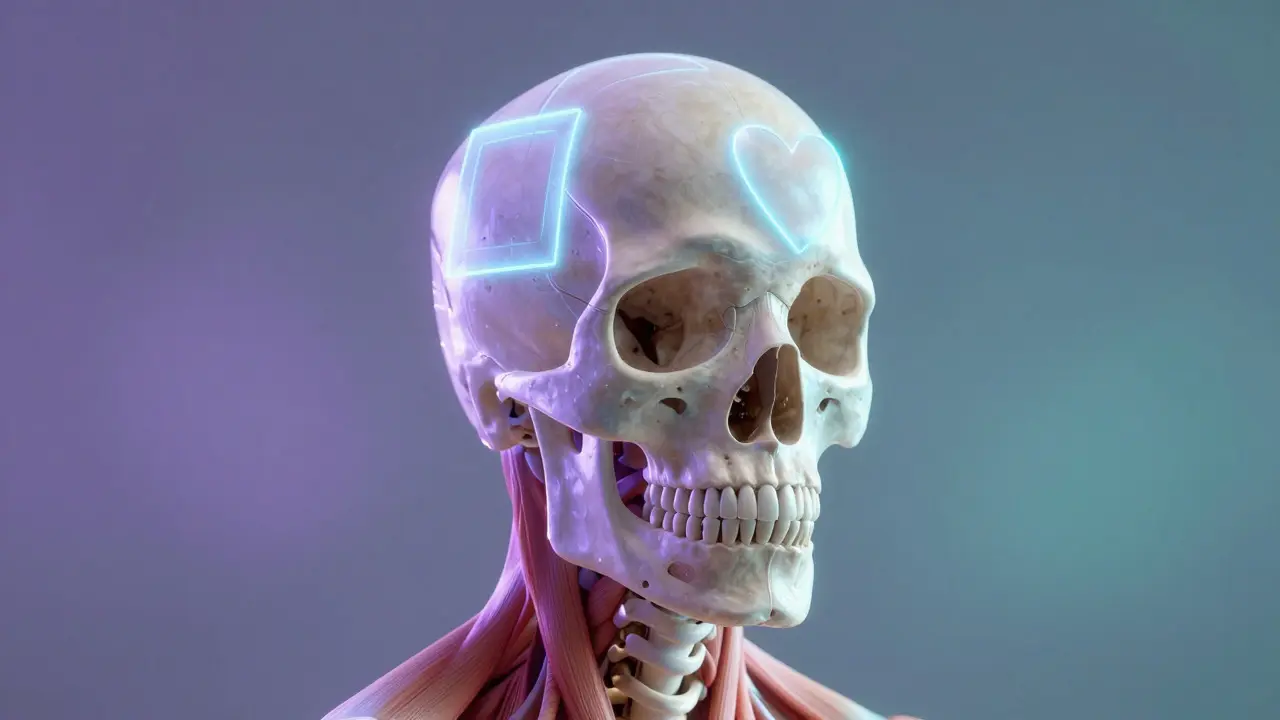
We tend to categorize faces into neat boxes: oval, round, square, heart, diamond, or oblong. But human anatomy rarely fits into perfect geometric definitions. A square face is defined by a strong, angular jawline and a forehead of similar width. However, many people have a mix of characteristics. You might have a rounded chin but a squared-off jaw angle. Or you could have a wide forehead but a narrow chin, which suggests a heart shape, but with high cheekbones that push it toward a diamond classification.
Facial symmetry is another factor. Very few people have perfectly symmetrical faces. One side of your face might be slightly wider or higher than the other. When you look in the mirror, you’re seeing a composite of both sides, which can blur the defining lines needed for classification. Additionally, soft tissue distribution varies greatly. Muscle mass in the cheeks or fat deposits around the jaw can mask the underlying bone structure. A person with a naturally square skull might appear round due to fuller cheeks, leading to a misidentification of their true skeletal shape.
This ambiguity is why rigid categories fail. Instead of forcing your face into one label, it’s more helpful to understand your dominant features. Are your angles sharp or soft? Is your face longer than it is wide? Focusing on these relative proportions provides a more useful framework for styling than chasing a perfect category match.
How to Actually Determine Your Face Shape
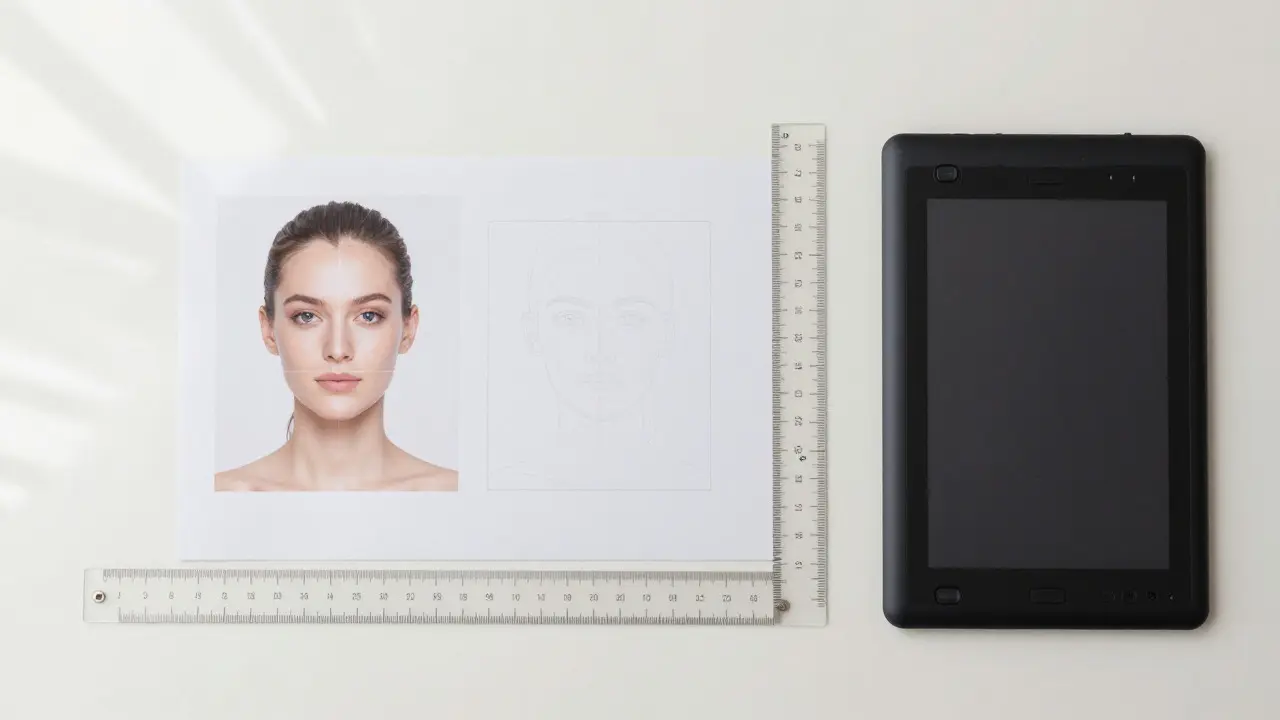
Since looking in the mirror is unreliable, you need a method that removes subjective bias. The most effective approach involves using tools to create an objective outline. Here is a step-by-step process that works:
- Pull back your hair: Ensure all hair is pulled away from your face and secured behind your head. Any stray hairs will distort the perimeter.
- Take a reference photo: Use a camera on a tripod or ask someone to take a photo of you facing directly forward. Keep your expression neutral and your head level. Avoid selfies taken at arm’s length, as lens distortion will warp your features.
- Trace the outline: Print the photo or view it on a screen. Use a transparent sheet of paper or a digital drawing tool to trace the outer edge of your face. Follow the line of your hairline, the widest part of your cheeks, and the curve of your chin.
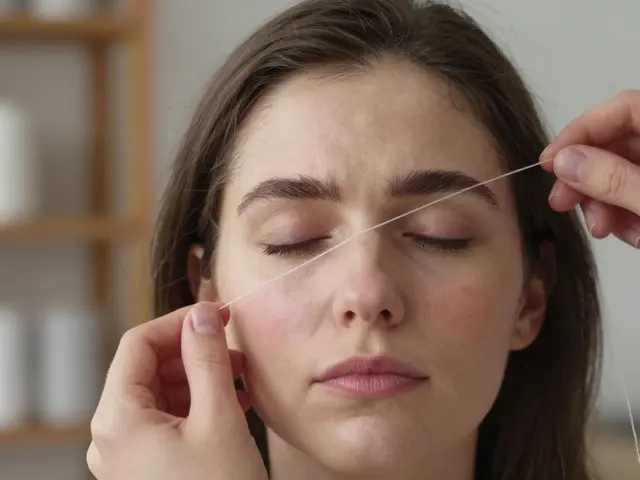
- Measure key points: Use a ruler or measuring tape on the printed image. Measure four specific areas:
- Forehead width (from hairline peak to hairline peak)
- Cheekbone width (across the widest part of the zygomatic arches)
- Jawline width (from the angle of the jaw on one side to the other)
- Face length (from the center of the hairline to the tip of the chin)
Comparing these measurements gives you concrete data. If your face length is significantly greater than your width, you likely lean toward oblong or oval. If your cheekbones are the widest point and your jaw tapers sharply, you may have a diamond or heart shape. If all three widths (forehead, cheek, jaw) are similar, you are likely square or round, depending on the softness of the angles.
Common Misconceptions About Face Shapes
There are several myths that complicate this process. One common belief is that face shape is fixed forever. While your bone structure remains relatively stable after early adulthood, changes in weight, muscle tone, and aging can alter the appearance of your face shape. Losing weight might reveal a sharper jawline, shifting your appearance from round to square. Conversely, gaining weight can soften angles, making a square face appear rounder.
Another misconception is that you must fit into one specific category. In reality, most people fall between two shapes. You might be “oval-leaning-round” or “square-leaning-heart.” Accepting this hybrid nature reduces the pressure to find a perfect match. Styling choices should address your unique combination of features rather than adhering strictly to a generic rulebook for a single shape.
| Face Shape | Key Widths | Jawline & Chin | Common Mistake |
|---|---|---|---|
| Oval | Cheeks widest, forehead slightly narrower | Rounded, balanced | Confusing with round due to soft angles |
| Square | Forehead, cheek, and jaw widths are similar | Angular, broad | Mistaking strong muscles for bone structure |
| Heart | Forehead widest, tapering to chin | Narrow, pointed chin | Overlooking widow's peak influence |
| Diamond | Cheekbones widest, forehead and jaw narrow | Pointed chin, narrow forehead | Confusing with heart due to pointed chin |
| Round | Width and length are nearly equal | Soft, curved, no sharp angles | Assuming fullness equals roundness |
Why Getting It Right Matters
You might wonder why determining your face shape is worth the effort. The primary benefit lies in styling. Hairstyles, glasses frames, and even makeup techniques are designed to balance proportions. If you have a round face, styles that add height and angles can create the illusion of length. If you have a long face, styles that add width can create balance. Misidentifying your shape can lead to choices that exaggerate your least favorite features rather than harmonizing them.
For example, wearing thick, rectangular glasses on a square face can make the face look even boxier. A softer, oval frame would provide contrast and balance. Similarly, a blunt bob might overwhelm a petite, heart-shaped face, while a layered cut adds volume where it’s needed. Knowing your true structure allows you to make informed decisions that enhance your natural appearance.
Can my face shape change as I get older?
While your underlying bone structure remains largely the same after adolescence, the appearance of your face shape can change due to loss of collagen, fat redistribution, and skin elasticity. These factors can soften angles or create sagging that alters the perceived shape. Weight fluctuations also play a significant role in how your face appears.
Is it better to use a mirror or a photo to determine face shape?
A photo is generally more reliable. Mirrors suffer from distortion issues related to curvature, lighting, and viewing distance. A well-lit, straight-on photo taken with a standard lens (not a wide-angle selfie lens) provides a static, accurate representation that you can measure and analyze objectively.
What if I don't fit into any of the standard categories?
This is very common. Most faces are hybrids of two shapes. Focus on your dominant features. If you have a wide forehead but a soft jaw, you might be heart-leaning-round. Identify which traits are most prominent and style accordingly, rather than forcing yourself into a rigid box.
Does facial hair affect face shape determination for men?
Yes, significantly. Facial hair can add width to the jaw or lengthen the chin, masking your natural bone structure. To determine your true face shape, you should shave clean or trim very short before tracing your outline. Once you know your shape, you can then choose a beard style that complements it.
Why do different stylists give me different face shape results?
Visual assessment is subjective. Different professionals may prioritize different features-one might focus on your jawline while another focuses on your forehead width. Using measurement-based methods reduces this subjectivity and provides a consistent baseline for decision-making.




Caitlin Donehue
July 18, 2026 AT 21:49always thought it was just me being vain but turns out its actually physics and psychology fighting against my ability to buy glasses
Patrick Dorion
July 20, 2026 AT 00:15The part about perceptual habituation is fascinating because it explains why we are terrible judges of our own appearance in real time. We rely on a mental map that has been reinforced for decades, so when we look in the mirror, we are not seeing the raw data but rather the filtered interpretation our brain prefers. This is why taking a photo from a distance works better than staring into a bathroom mirror, as it forces the visual cortex to process the image as new information rather than background noise.
Edward Nigma
July 20, 2026 AT 21:13thats all bs honestly. you dont need a ruler or a tripod to know if your face is square or round. most people here are overthinking it to sell more hair products. if you have a big jaw its square end of story. stop making it complicated with talk about convex mirrors and cognitive bias. its just vanity disguised as science.
Patrick Dorion
July 22, 2026 AT 14:22While simplicity is appealing, human anatomy rarely fits into such rigid binary categories. The reason professionals use measurements is precisely because soft tissue distribution and asymmetry can completely mask the underlying bone structure. A person might have a square skull but appear round due to muscle mass or fat deposits, which is why relying solely on a quick glance often leads to styling choices that clash with one's actual proportions rather than complementing them.
Edward Nigma
July 22, 2026 AT 14:43you sound like a robot. nobody cares about zygomatic arches. they care if their haircut looks cool. this whole measuring thing is ridiculous and only people who hate themselves would spend an hour tracing their face on paper. get a life man.
Andrea Alonzo
July 23, 2026 AT 00:37I found this article incredibly validating because I have spent years feeling frustrated by conflicting advice from different stylists, some saying I am heart-shaped while others insist I am oval, and it never made sense until I read about how lighting and mirror distortion play such a deceptive role in self-perception. It really highlights how much of our daily routine involves subconscious filtering where our brains prioritize familiar features like eyes and mouth over the broader structural contours of our jawline and forehead, which explains why strangers can often identify our shape instantly while we remain stuck in confusion. Understanding that our faces are dynamic and influenced by weight changes and aging helps remove the pressure to fit into a single static category, allowing us to focus on balancing our dominant features rather than chasing an impossible geometric ideal.
Jeanne Abrahams
July 23, 2026 AT 16:26oh please. another article telling us to measure ourselves like lab rats. i live in south africa and we have sun and wind and gravity does what it wants. my face changes depending on whether i have had coffee or not. this western obsession with categorizing everything is exhausting. just wear what makes you feel good and stop worrying about cheekbone width.
Marissa Haque
July 23, 2026 AT 17:32This is SO true!!! I literally cried last week trying to figure out if I was diamond or heart shaped because every website gave me different results based on blurry photos! The tip about pulling back hair and using a tripod is a game changer!! I tried it yesterday and realized I’m actually more oval than I thought!! Thank you for this!!
kimberly de Bruin
July 24, 2026 AT 03:02we are trapped in the prison of perception. the mirror lies. the brain filters. the geometry is false. we seek definition in chaos. perhaps the face shape is irrelevant. perhaps the struggle is the point. we trace lines that do not exist to find order in disorder. maybe we are all just shapes waiting to be defined by someone else.
om gman
July 25, 2026 AT 17:19honestly this is why westerners are so confused about beauty standards. in india we understand that face shape is determined by karma and diet not by some silly ruler measurement. you guys are too obsessed with symmetry. asymmetry is character. also your mirrors are probably cheap chinese imports that distort everything. try looking in a still pond instead.
Bineesh Mathew
July 25, 2026 AT 19:21the tragedy of modern existence is that we attempt to quantify the soul through geometry. we take photographs of our flesh and trace the boundaries of our skulls as if we are cartographers mapping uncharted territories of vanity. yet the truth remains elusive because the observer is always part of the observed. the mirror reflects not just light but the desperation to be seen correctly. we are all diamonds and hearts and squares crumbling into dust. let us embrace the ambiguity for it is the only constant.
Oskar Falkenberg
July 26, 2026 AT 12:16i think the bit about facial hair masking bone structure is super important for men especially since many barbers will just guess your shape without asking you to shave first. i used to think i had a round face but after shaving clean and taking a proper photo i realised my jaw was actually quite angular. its funny how much we assume about ourselves based on bad lighting and old mirrors. thanks for sharing this info it really helped me understand why certain beard styles were working against me rather than with me.
Stephanie Frank
July 27, 2026 AT 08:53let’s be real most people reading this are insecure losers trying to justify buying expensive glasses they dont need. face shape is a marketing gimmick invented by the fashion industry to make you feel inadequate so you spend money fixing imaginary problems. your face is fine leave it alone.
Francis Laquerre
July 28, 2026 AT 09:35As someone who travels extensively across Europe and Asia, I have noticed that the concept of face shape varies significantly in cultural contexts. In some cultures, the emphasis is placed entirely on skin texture and eye shape, rendering the jawline almost irrelevant. However, the scientific explanation regarding mirror curvature and lighting is universally applicable regardless of geography. It is a brilliant reminder that our perception is flawed and that we must rely on objective tools to overcome these biological limitations. This knowledge empowers individuals to make better aesthetic choices that harmonize with their unique features rather than adhering to arbitrary trends.
Keith Barker
July 29, 2026 AT 19:10the mind sees what it expects. the eye sees what is there. the conflict between these two creates the illusion of complexity. we measure to find truth but truth is relative. the face is a landscape of shadows and light. we are all searching for a definition that does not exist. perhaps the answer is not in the shape but in the acceptance of the form.