

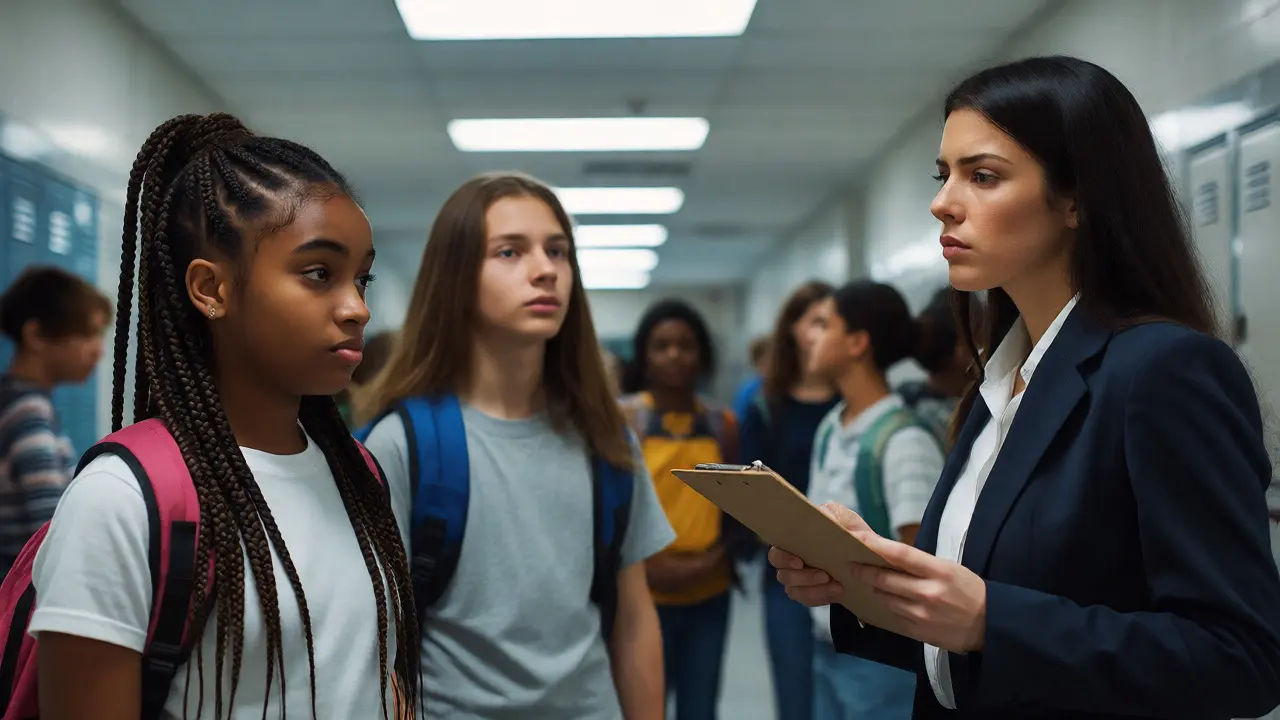
You drop your kid off at school, and they’re already stressed. Not because of a math test or a social drama, but because the principal told them their braids were "distracting" or their afro was "unruly." It sounds trivial until you realize that for many students, hair isn't just a style choice-it's identity. The debate over whether hairstyles should be restricted in schools has exploded in recent years, moving from quiet hallway complaints to national headlines. Is it about discipline, or is it about control?
This isn't just about keeping hallways tidy. When schools ban certain cuts, colors, or textures, they often send a message that natural appearance is unprofessional or inappropriate. For Black students, this hits hard due to historical biases against textured hair. But even white students with long hair or piercings face scrutiny. So, where do we draw the line between maintaining order and respecting individuality? Let’s break down why this issue matters, what the research says, and how schools are actually handling it right now.
The Argument for Strict Hair Policies
Schools aren’t making these rules up out of thin air. Administrators usually point to three main reasons for restricting hairstyles: safety, hygiene, and minimizing distractions. Think about shop classes or science labs. Long hair can get caught in machinery, which is a legitimate safety hazard. Similarly, some argue that extreme styles-like neon green spikes or shaved designs-might distract other students from learning.
There’s also the idea of uniformity. Many educators believe that reducing visible differences helps create a cohesive community. If everyone looks somewhat similar, maybe bullying decreases. It’s a neat theory, but does it hold water? In practice, kids find ways to differentiate themselves anyway. They swap sneakers, backpacks, or phone cases. Banning a mohawk doesn’t stop a kid from feeling like an outsider if they’re being teased for their clothes or speech.
Then there’s the administrative burden. Teachers already deal with homework, attendance, and behavioral issues. Do they really need another thing to police? Some principals argue that clear, strict rules make enforcement easier. "If it’s not on the list, it’s okay," simplifies the conversation. But when that list includes things like "natural hair must be tied back," it creates friction with families who view loose, natural hair as normal.
Why Bans Often Backfire
Here’s the problem with strict bans: they often target specific cultural expressions without saying so explicitly. Take the CROWN Act (Creating a Respectful and Open World for Natural Hair). This legislation, passed in several states including California and New York, exists because Black students were disproportionately punished for wearing protective styles like locs, braids, and twists. These styles aren’t just fashion; they’re essential for maintaining healthy textured hair.
When a school sends a child home to change their hair, they lose instructional time. More importantly, they feel shamed. Imagine sitting in class knowing your own culture is labeled "messy" by the authority figures. That impacts self-esteem and engagement. A study published in the Journal of School Health found that students who felt their identity was respected showed higher levels of academic motivation. Conversely, those who faced microaggressions related to appearance reported lower satisfaction with school life.
It’s not just about race, either. Gender norms play a huge role. Boys with long hair are often told to "cut it short," while girls are pressured to keep hair away from their faces. These double standards reinforce rigid gender roles that don’t reflect modern society. Why is a ponytail fine on a girl but "unkempt" on a boy? It’s arbitrary, and students notice the hypocrisy.
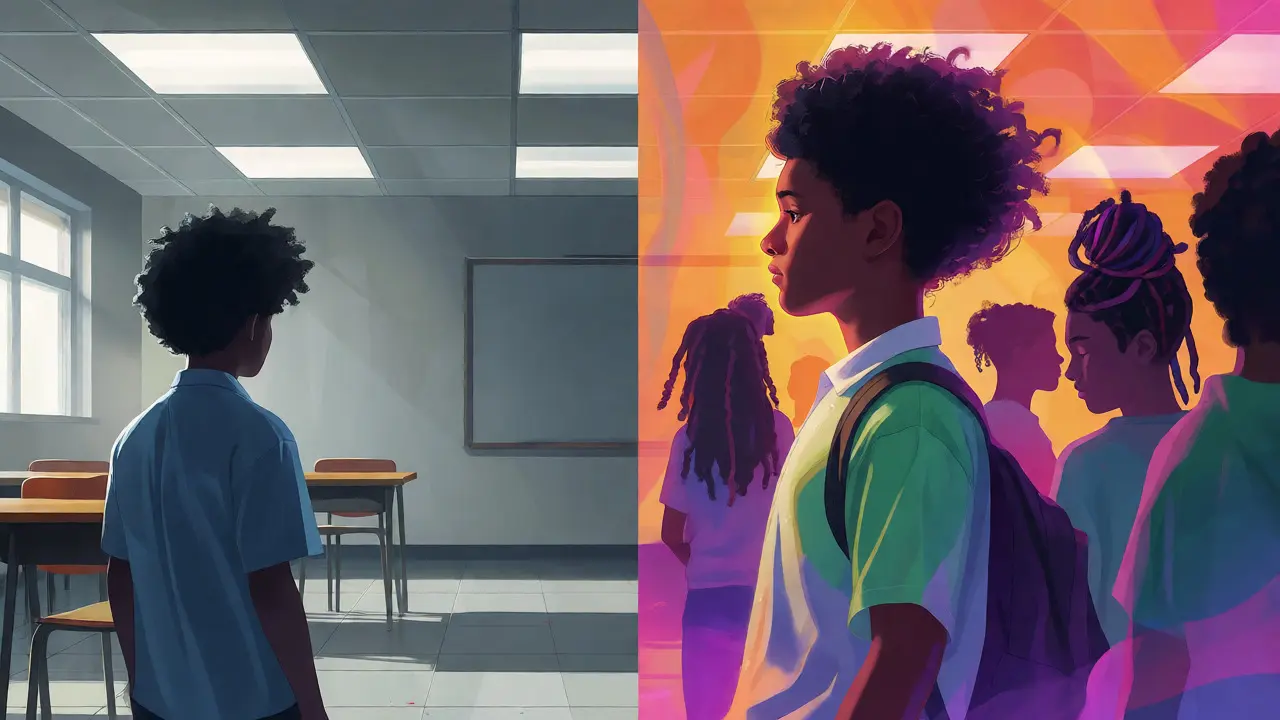
What the Data Says About Distractions
Do wild hairstyles actually hurt grades? Most evidence suggests no. There is little peer-reviewed data linking specific haircuts to lower test scores. Instead, the "distraction" argument often masks discomfort with difference. Teachers might find a blue streak distracting, but is it more distracting than a student tapping a pen or whispering to a neighbor?
Consider the experience of international schools. Many operate with very relaxed dress codes, allowing everything from dreadlocks to brightly colored hair. Yet, these institutions often report high levels of student happiness and strong community bonds. The key seems to be consistency and respect. If the rule applies equally to all, students tend to accept it. If it feels targeted, resentment builds.
Furthermore, enforcing hair rules takes significant staff energy. One vice principal in Texas noted that his team spent hours each week dealing with hair-related infractions. That’s time not spent helping struggling readers or supporting emotional needs. When you calculate the cost of sending students home to fix a "violation," the financial and educational toll adds up quickly.

Finding the Middle Ground: Best Practices
So, what works? Successful schools aren’t necessarily banning everything or allowing chaos. They’re updating policies to be inclusive and practical. Here are a few strategies that have proven effective:
- Focus on Hygiene and Safety, Not Style: Require that hair be clean and secured only when necessary for safety (e.g., in chemistry lab or woodshop). Remove vague terms like "neat" or "tidy," which are subjective.
- Include Parents in Policy Creation: Form committees with parents, students, and staff to review dress codes. This ensures diverse perspectives are heard before rules are finalized.
- Train Staff on Cultural Competency: Educate teachers about different hair types and styles. Understanding why a student wears a headscarf or braids reduces unconscious bias during enforcement.
- Allow Exceptions for Medical Needs: Some conditions require specific hair care routines. Flexible policies accommodate these needs without requiring doctor’s notes for every minor adjustment.
For example, Houston Independent School District updated its dress code guidelines recently to explicitly protect natural hair textures and protective styles. This wasn’t just a PR move; it aligned with state laws protecting students from hair discrimination. Other districts are following suit, realizing that inclusivity isn’t just nice-it’s legally smart.
How Parents Can Advocate Effectively
If you’re worried about your child’s school policy, don’t just complain at PTA meetings. Bring data. Show examples of successful inclusive policies elsewhere. Ask specific questions: "How does this rule affect students with textured hair?" or "Can we define 'distracting' more clearly?"
Document incidents. If your child is sent home for a haircut, note the date, the reason given, and the time lost. Patterns emerge over time. Was it one teacher or the whole administration? Was it applied consistently across genders and races? Concrete examples are harder to dismiss than general grievances.
Also, talk to your kids. Ask them how they feel about the rules. Sometimes, students themselves propose reasonable compromises. Maybe they’d agree to tie hair back during sports but wear it loose in class. Empowering students to participate in the solution fosters ownership and compliance.
Are schools allowed to ban natural hair textures?
In many places, no. Laws like the CROWN Act prohibit discrimination based on hair texture and protective styles. However, in states without such laws, schools may still enforce restrictive policies, though legal challenges are increasing.
Does hair color count as a distraction?
Generally, no. Most educational studies show that hair color has negligible impact on academic performance. Restrictions on color are often rooted in traditional norms rather than pedagogical evidence.
How should I handle a conflict with my child's school over hair?
Start by reviewing the written dress code. Then, request a meeting with the administrator to discuss the specific incident. Keep records of any lost instructional time. If unresolved, escalate to the school board or consult local education advocacy groups.
Do strict hair rules reduce bullying?
Not necessarily. Bullying often shifts to other markers like clothing or accessories. Inclusive environments that celebrate diversity tend to see less harassment than those enforcing strict conformity.
What is the CROWN Act?
The CROWN Act stands for Creating a Respectful and Open World for Natural Hair. It prohibits discrimination based on hair texture and protective hairstyles such as braids, locks, and twists.

Alyson Karson
September 14, 2026 AT 03:29YES!! FINALLY someone said it. My niece got sent home for locs last week and i almost lost my mind at the school office. Its not about discipline its about control and honestly its so outdated. We need to stop policing kids bodies like theyre props in a movie set.
Chris Neal
September 15, 2026 AT 10:56While the emotional argument is compelling, we must consider the logistical reality of large classrooms. A uniform appearance reduces cognitive load for teachers managing thirty students simultaneously. Furthermore, the safety argument regarding machinery in vocational courses is non-negotiable and cannot be dismissed as mere bias. If you remove all visual markers of difference, you do indeed reduce initial social friction, even if bullying finds new outlets later. The data on academic performance is inconclusive, but the administrative efficiency gained by clear, strict rules is quantifiable and significant for underfunded districts that lack resources for nuanced individual assessments every morning.
Vishnu Vardhan Reddy M S
September 17, 2026 AT 00:35Oh wow, thanks for bringing up "administrative efficiency" because nothing says "we care about your child's soul" quite like treating them like inventory items on a shelf.
I agree with you though, Chris, safety is key. But let's be real here, if a kid has neon green hair, are they really distracting you from learning quantum physics? Or is it just that you're uncomfortable seeing something different than what you saw in 1985?
We can definitely find a middle ground where safety rules exist without turning the principal into a fashion police officer who hates fun.
Kyle Ware
September 17, 2026 AT 10:05exactly this. the focus should be on hygiene and safety only. vague terms like "neat" or "tidy" are subjective and often used to enforce cultural biases. schools need to define specific physical requirements rather than aesthetic judgments
Iva Grekova
September 18, 2026 AT 11:49i think it’s nice that people are talking about this more openly now. it feels like progress when communities start listening to each other instead of just enforcing old rules. everyone deserves to feel comfortable in their own skin while they learn.
Brenna Gonedrman
September 20, 2026 AT 04:54This is absolutely devastating for young minds. To have your identity stripped away before you even enter the classroom is tragic beyond words. It breaks my heart to see children shamed for their natural beauty simply because an adult lacks the imagination to accept diversity. The cruelty is palpable and unnecessary.
Courtney Wagstaff
September 21, 2026 AT 14:32honestly though, sometimes the vibe at school is just chaotic enough that a little structure helps everyone chill out. i get the frustration, but if everyone showed up looking like a festival attendee, would we actually get any work done? maybe there's a sweet spot between 'strict military' and 'total free-for-all' where we can all breathe easy.
Elisabeth Ballet
September 22, 2026 AT 20:46Let's get loud about this! We have the power to change these archaic policies right now. Every parent needs to show up, speak up, and demand respect for their children's identities. Do not let them silence us with bureaucracy. Together we can create schools that celebrate uniqueness rather than punishing it. Go get them!
Joanna Mucha
September 23, 2026 AT 13:01The existential dread of the modern student is exacerbated by the superficiality of institutional norms. When we banish the afro or the braid, we are not merely regulating aesthetics; we are suppressing the ontological selfhood of the youth. It is a tragedy of the commons, where the collective comfort of the administrator outweighs the individual's quest for authentic expression. One must wonder if the true distraction is not the hair, but the inability of the educator to engage with the complex tapestry of human variance. We are drowning in a sea of conformity, gasping for air in a world that demands we cut off parts of ourselves to fit into boxes drawn by frightened men.
Kim Edwards
September 25, 2026 AT 01:25I literally CANNOT believe this is still happening in 2026. I was nearly in tears reading this article because it reminds me of my own high school trauma. They made me cut my hair three inches shorter than it was allowed to be and I felt like I lost my entire personality. It was DRAMATIC and UNJUSTIFIED and I am still mad about it twenty years later!
Bonnie Watt
September 26, 2026 AT 11:49oh please. kids today have zero resilience. if you can't handle a teacher telling you to tie your hair back, how will you survive a corporate job? this whole thing is blown way out of proportion. they want everything handed to them on a silver platter including their self-esteem. grow up.