


You stare in the mirror, touching the sparse patch on your arch. It’s been three weeks since your last eyebrow threading appointment, and those top hairs just aren’t coming back like they used to. Panic sets in. Did you over-pluck? Is it permanent damage? Or is this just normal biology playing a slow-motion trick on you?
Here’s the short answer: Yes, your eyebrows will almost certainly grow back at the top after threading, provided the hair follicle wasn’t permanently destroyed by scarring or extreme trauma. But "almost certainly" isn't helpful when you have a date on Friday. The real question is when and how fast.
The Real Reason Your Brows Are Slow to Return
Threading removes hair from the root, which is great for precision but tricky for patience. Unlike shaving, where the hair stubble stays visible immediately, threading leaves you bare until the next growth phase kicks in. This delay triggers anxiety because we expect immediate feedback.
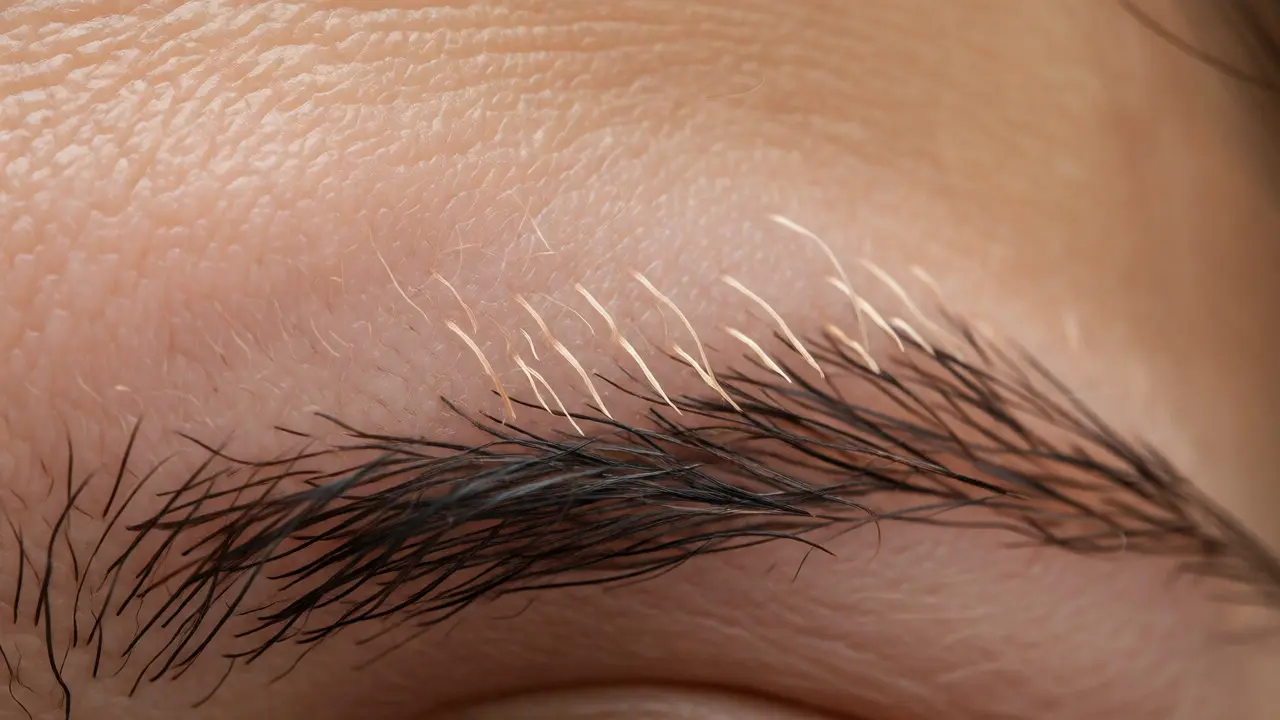
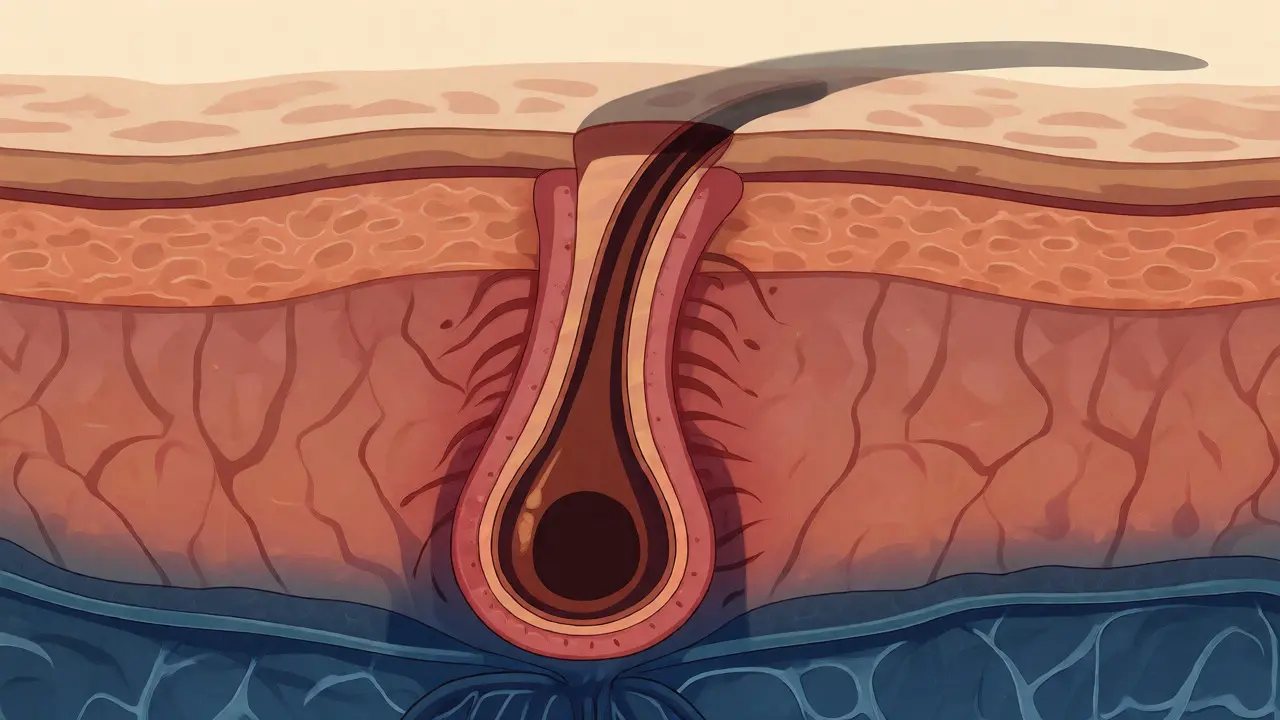
Hair growth isn’t uniform. Each hair on your body operates on its own independent clock called the hair growth cycle. This biological process consists of three distinct phases: anagen (growth), catagen (transition), and telogen (resting). When you thread, you yank out hairs that might be in any of these stages. If a hair was in the resting phase, it won’t start growing again for months. That’s why some spots fill in quickly while others stay bald for ages.
Most people assume all their brow hairs are growing at once. They aren’t. A typical eyebrow has about 500 hairs, each cycling independently. The average full regrowth cycle for eyebrow hair ranges from 4 to 6 months, though visible stubble often appears within 2 to 3 weeks. If your top arch looks thinner than usual, it’s likely because those specific follicles were pulled during a dormant phase.
Can Threading Actually Stop Growth Forever?
This is the fear that keeps us up at night. Can repetitive threading cause permanent loss? Generally, no. Threading is less traumatic to the skin than waxing because it doesn’t remove layers of dead skin cells along with the hair. However, there are exceptions.
If you constantly pluck or thread the same area aggressively, you can cause inflammation that damages the follicle. In rare cases, this leads to fibrosis-scar tissue forming around the follicle-which prevents new hair from pushing through. This usually happens if you’re dealing with ingrown hairs repeatedly or if you have a condition like trichotillomania (hair-pulling disorder).
Age also plays a role. As we get older, our hair cycles shorten. The anagen phase shrinks, meaning hairs grow for less time before falling out. So, if you’re over 30, your brows might take longer to return than they did in your teens. Hormonal changes, particularly thyroid issues or menopause, can also thin the upper arch specifically. If your brows haven’t returned in six months, it’s worth checking your hormone levels rather than blaming the aesthetician.
How Long Does It Really Take?
Let’s break down the timeline so you know what to expect. This varies by genetics, but here’s a realistic roadmap for post-threading regrowth:
- Weeks 1-2: You see nothing. The follicle is recovering. Skin might look slightly red or sensitive initially, but that fades quickly.
- Weeks 3-4: Tiny, soft vellus hairs (peach fuzz) start to appear. These are light-colored and hard to see under bright bathroom lighting.
- Weeks 5-8: Terminal hairs (the thick, dark ones) begin to emerge. This is when you’ll notice gaps filling in unevenly. Some areas will look bushy; others remain sparse.
- Months 3-4: Most hairs have reached their previous length. You can now assess the true shape of your brow.
- Months 5-6: Full density returns. Any remaining gaps are likely due to natural shedding or hormonal factors, not threading damage.
Notice the gap between week 4 and month 3? That’s the danger zone where most people panic and start using aggressive growth serums or trying to fill in the gaps too heavily with makeup. Patience is your best tool here.
Tools That Help vs. Tools That Hurt
While waiting for your natural growth, you might be tempted to use every product on the shelf. Not all tools help. In fact, some make the problem worse by irritating the skin or clogging pores.
A popular misconception is that rubbing castor oil daily stimulates growth. While moisturizing helps prevent breakage, castor oil doesn’t scientifically prove to speed up the anagen phase for everyone. It works for some simply because it keeps the skin healthy, allowing existing hairs to survive longer. Don’t rely on it as a miracle cure.
If you need to tidy up stray hairs below the brow line while waiting for the top to grow, avoid tweezers near the main arch. Tweezers are precise but risky if you’re impatient. Instead, consider a gentle method like trimming with small scissors or using a dedicated eyebrow wax stick. Wax sticks are excellent for cleaning up the underside of the brow without disturbing the delicate top arch. They apply warm wax only to specific stray hairs, minimizing skin irritation compared to traditional strip waxing.
| Method | Best For | Risk to Top Arch | Recovery Time |
|---|---|---|---|
| Threading | Precision shaping | High if overdone | 2-4 weeks for stubble |
| Tweezing | Single stray hairs | Moderate (human error) | Immediate control |
| Wax Stick | Cleaning under-brow | Low (targeted application) | Minimal irritation |
| Trimming | Length control | None | No downtime |
Speeding Up the Process Safely
You can’t change your genetics, but you can optimize the environment for growth. Think of your follicles like plants. They need nutrients, blood flow, and protection.
First, keep the area clean. Clogged pores prevent hair from breaking through the surface. Use a gentle cleanser twice a day. Avoid heavy, comedogenic creams directly on the brow bone if you’re prone to acne there.
Second, boost circulation. Gentle massage with fingertips for one minute daily can increase blood flow to the follicles. More blood means more oxygen and nutrients delivered to the hair root. Some people swear by rosemary oil diluted in a carrier oil for this purpose, citing studies that show it comparable to minoxidil for scalp hair, though eyebrow-specific data is scarcer.
Third, check your diet. Hair is made of keratin, a protein. If you’re low on iron, zinc, or biotin, your hair growth slows down. A simple blood test can reveal deficiencies. Supplements help only if you’re actually deficient; taking extra biotin when you have enough does nothing.
When to See a Professional
Sometimes, the issue isn’t the threading-it’s the technique. If your esthetician pulls against the direction of hair growth too aggressively, they can snap the hair instead of removing it cleanly. Broken hairs take longer to regrow because the follicle needs to repair itself before producing a new shaft.
Look for signs of poor technique: excessive redness lasting more than a few hours, bleeding, or immediate pain that persists. If this happens, switch providers. A good threader works with the grain, not against it, and uses sterile cotton threads.
If you’ve waited six months and still see significant thinning on the top arch, consult a dermatologist. Conditions like alopecia areata or hypothyroidism often manifest first in the outer third of the eyebrow. Treating the underlying health issue is far more effective than any topical serum.
Does threading cause permanent hair loss?
No, threading rarely causes permanent hair loss. It removes hair from the root, which resets the growth cycle, but the follicle remains intact. Permanent loss usually results from scarring, severe inflammation, or medical conditions, not standard threading practices.
How long after threading do eyebrows start growing?
You may see fine, invisible peach fuzz within 2 to 3 weeks. Visible, thicker terminal hairs typically appear between 4 and 6 weeks. Full density matching your pre-threading state takes about 3 to 4 months.
Why is my top eyebrow thinner than my bottom?
The top arch hairs are often finer and more fragile than the lower brow hairs. They are also more susceptible to hormonal thinning and mechanical stress from glasses or sleeping positions. Additionally, many people naturally have sparser hair distribution on the upper edge.
Can I use an eyebrow wax stick while my brows are growing back?
Yes, an eyebrow wax stick is ideal for tidying stray hairs under the brow line without disturbing the growing top arch. It allows for targeted removal of strays while leaving the main shape untouched, reducing the risk of over-plucking during the regrowth phase.
Do growth serums work for threaded eyebrows?
Growth serums containing peptides or prostaglandin analogs can extend the anagen (growth) phase, potentially making brows fuller. However, they work best on active follicles. If the follicle is dormant, results may take several months. Always patch-test to avoid irritation.

Brad Walker
September 29, 2026 AT 10:54Bro, you're overthinking this like it's a quantum physics equation. Hair grows back. It always does. Unless you ripped the skin off, which you didn't because threading is just fancy plucking. The universe doesn't care about your arches. They will return. Or they won't. Either way, Friday date night isn't ruined by a few missing hairs. Just draw them on if you're scared. But honestly? Nobody looks at your eyebrows when you talk. They look at your eyes. Stop panicking. It's biology, not a moral failing.
william mcstay
September 30, 2026 AT 13:56This whole industry is a scam designed to keep women insecure and paying for appointments every two weeks. In America, we value efficiency and strength. If you can't grow thick brows naturally, maybe check your diet or your hormones instead of blaming some thread artist. We don't need these delicate rituals. Just let it grow out. Real beauty doesn't require constant maintenance. This article is just another attempt to monetize female anxiety. Wake up people.
Prayagraj Medicose
October 1, 2026 AT 17:34Dude seriously?? You think it's just "biology"?? Look closer. Threading companies are using micro-threads treated with chemicals that inhibit growth long term. Why do you think everyone needs more frequent appointments now than 10 years ago?? It's planned obsolescence for your face!! I read somewhere that big beauty corps want us dependent on serums and fillers so they can sell us the fix after breaking the natural cycle. Don't fall for the timeline chart. It's propaganda. Check your local water supply too, fluoride messes with hair follicles. Trust no one. Not even the esthetician smiling at you while she rips your soul out.
Howard Hurd
October 2, 2026 AT 00:50Actually, if you read the dermatology journals (which most of you don't), you'd know that mechanical trauma *can* cause permanent loss via fibrosis, but only in extreme cases. :P Most people here are just impatient. Also, why is nobody talking about how American waxing standards are superior to Indian threading techniques? We have stricter hygiene regulations. :D Just saying. Don't come crying to me when your salon uses dirty cotton threads. That's a real risk. Hygiene first. Then growth. :)
Manoj Kumar
October 3, 2026 AT 23:20I find the generalization of "almost certainly" to be scientifically precarious. One must consider the variance in individual follicular health. Furthermore, the mention of rosemary oil as comparable to minoxidil is a gross oversimplification of limited clinical data. It is highly probable that many users will experience contact dermatitis from such oils, thereby exacerbating the perceived lack of growth due to inflammation rather than actual dormancy. A rigorous analysis suggests that without proper patch testing, one risks inducing telogen effluvium locally. Thus, the advice given, while well-intentioned, lacks sufficient nuance for the discerning reader who values precision over popularity.
Hemali Jaiswal
October 4, 2026 AT 07:54Oh honey, take a deep breath! 💖 It’s totally normal to feel panicked when your mirror shows something unexpected, but remember: our bodies are resilient wonders. 🌸 The timeline mentioned is quite accurate for most folks, but stress can actually slow down growth, so try to be kind to yourself during those awkward weeks. Maybe experiment with gentle brow gels to define what you have while waiting for the magic to happen. You’ve got this! Sending positive vibes to your follicles! ✨
Sean Eagen
October 5, 2026 AT 07:52If u dont respect ur body enough to wait 6 months then u dont deserve full brows. Patience is a virtue. Modern society has made us weak. We cant handle discomfort. Just let it grow. No excuses.
Kieran Mitchell
October 5, 2026 AT 15:23Wait, hold on!!! Are we really ignoring the fact that threading pulls against the grain sometimes??? Because if the technician is pulling AGAINST the direction of growth, they are SNAPING the hair shaft, NOT removing the root!!! That causes breakage, not clean removal!!! And broken hairs take FOREVER to regrow because the follicle has to repair itself!!! This article barely touches on technique quality!!! It assumes all threaders are equal, which is FALSE!!! Some use cheap, frayed threads that shred the hair instead of pulling it out cleanly!!! Check your redness duration!!! If it lasts more than an hour, your tech is bad!!! Switch immediately!!! Do not trust the timeline if the method was flawed!!! This is critical info!!!
Darlene Hopkins
October 7, 2026 AT 02:58I went through this last year. It felt so isolating staring at that gap. But time heals all wounds, even eyebrow ones. Be patient with yourself.
Sherri Jones
October 8, 2026 AT 19:05Great post! 📝 Just a small note: Biotin supplements often cause acne breakouts around the chin and jawline before showing any brow results. 😅 Also, castor oil can clog pores if you're prone to milia. 🙈 I recommend using a lightweight peptide serum instead if you have oily skin. 💧 Always patch test new products near the ear first! 👂✨
Bryce Imbriale
October 9, 2026 AT 10:55You got this!! Seriously, stop checking the mirror every 5 minutes. Go touch grass. Literally. Get outside, get some sun, boost your vitamin D levels which helps hair growth anyway. Your brows will thank you. Stay positive and keep moving forward. Growth happens when you aren't watching. So go live your life. The hairs will catch up eventually. Believe in the process. You are stronger than a thinning arch.
LoriBeth Blair
October 11, 2026 AT 06:17Most people asking this question are clearly not taking their health seriously. If your brows don't grow back, it's usually thyroid issues or iron deficiency. Go get blood work done. Stop buying expensive serums and start eating spinach. Simple. People want quick fixes but refuse to do basic medical diligence. It's frustrating to see people waste money on topicals when the problem is internal. Fix your gut, fix your hair. End of story.
Charles Reah
October 12, 2026 AT 01:41Hello everyone. I would like to add that hydration plays a significant role in hair elasticity and growth speed. Ensuring adequate water intake can support the keratin production process. Additionally, avoiding excessive heat styling near the brow area may prevent unnecessary damage to the emerging vellus hairs. Please consider these holistic factors alongside topical treatments for optimal results. Wishing you all a healthy regrowth journey.
SHANNON GRUBER
October 13, 2026 AT 23:30Ugh. Another article telling women to wait 6 months. Who has time for that? I’m not spending half my life waiting for follicles to wake up. If it’s not growing in 4 weeks, I’m getting microblading. Done. Move on. This “patience” advice is useless for working professionals. We don’t have luxury timelines. Just admit that threading is high maintenance and low reward compared to semi-permanent makeup. Lazy science.
Brenna Gonedrman
October 14, 2026 AT 06:29OMG YES!!! I cried for three days when I saw my bare spot!! 😭😭😭 It looked SO BAD!! Like I had no forehead!! But then week 5 happened and I saw tiny little baby hairs popping up and I literally screamed in my bathroom!! 🎉🎉🎉 It’s worth the wait!! Don’t give up!! They WILL come back!! I promise!! My brows are thicker now than ever!! ❤️❤️❤️