
There is no single "best" way to remove pubic hair. The right choice depends entirely on your pain tolerance, budget, and how much time you want to spend maintaining the results. Some people swear by the smoothness of waxing, a method that pulls hair from the root, while others prefer the immediate, low-cost convenience of shaving, which cuts hair at the skin's surface. Both methods have distinct pros and cons, and both carry risks like irritation or ingrown hairs if not done correctly.
If you are trying to decide between these two popular techniques, you need to look beyond just the price tag. You need to consider how your skin reacts to friction, how often you are willing to repeat the process, and whether you have the patience for proper preparation. This guide breaks down exactly what happens to your body with each method so you can make an informed decision without guessing.
The Reality of Shaving Pubic Hair
Shaving is the most common form of pubic hair removal because it requires almost zero barrier to entry. You likely already own a razor and some soap in your bathroom. It is fast, cheap, and completely painless during the act itself. However, the trade-off is frequency and potential skin trauma.
When you shave, you are slicing through the hair shaft at the skin level. Because the hair follicle remains intact, new growth starts immediately. Within 24 to 48 hours, you will feel stubble. For many, this stubble feels coarse and itchy, especially as the sharp tip of the cut hair pushes against clothing. If you are preparing for a special event, shaving the morning of might leave you with visible dark shadows under the skin within a day.
| Aspect | Details |
|---|---|
| Cost | Very low ($5-$15 for a quality razor) |
| Pain Level | Painless (unless nicks occur) |
| Duration of Results | 2-3 days before stubble returns |
| Risks | Nicks, razor burn, high risk of ingrown hairs |
| Maintenance | Frequent (every few days) |
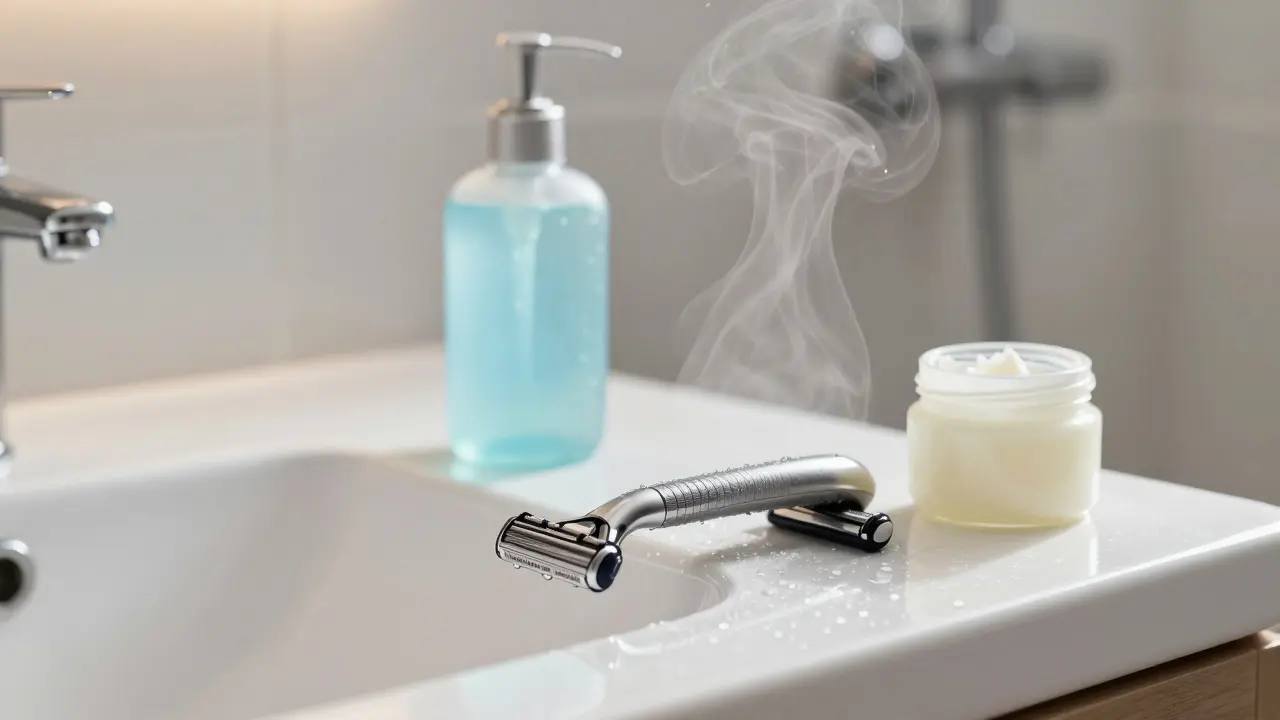
The biggest enemy of shaving is the razor itself. Using a dull blade or dragging it across dry skin causes micro-tears in the epidermis. This leads to razor burn-a red, bumpy rash that stings when urine hits it or when clothes rub against it. To minimize this, you must shave in the shower after a warm bath has softened the hair and opened pores. Always use a lubricant like shaving gel or coconut oil, never plain soap which dries out the skin. Shave in the direction of hair growth to reduce irritation, even though going against the grain gives a closer shave.
Understanding the Waxing Process
Waxing involves applying hot or cold wax to the skin and ripping it off against the direction of hair growth. This action pulls the entire hair out from the follicle. Because the root is removed, the results last significantly longer-typically three to six weeks. Over time, repeated waxing can weaken the hair follicle, leading to finer, sparser regrowth.
The downside is obvious: it hurts. The first few times you wax your bikini area, expect tears. The skin in the pubic region is sensitive and packed with nerve endings. However, pain tolerance increases with regularity. Many people report that subsequent waxes hurt less because the hair becomes thinner and easier to remove.
You have two main options for waxing: professional salon services or at-home kits. Salon visits cost between $30 and $60 depending on the city and the type of wax used (hard wax vs. soft wax). At-home kits, like those found at retailers such as Walmart, cost around $15-$25 but require skill. If you mess up at home, you cannot easily fix it without causing more damage. Hard wax is generally recommended for the bikini line because it adheres to the hair rather than the skin, reducing the risk of lifting skin layers.
Key Differences: Pain, Cost, and Longevity
To help you choose, let’s compare the core factors side-by-side. Your decision often comes down to whether you value long-term smoothness over short-term comfort.
| Factor | Shaving | Waxing |
|---|---|---|
| Immediate Sensation | Cool, frictionless | Sharp sting, tearing sensation |
| Regrowth Speed | Fast (1-3 days) | Slow (3-6 weeks) |
| Regrowth Texture | Coarse, stubbly | Soft, fine tips |
| Long-Term Effect | No change in hair density | Hair may become thinner over time |
| Best For | Quick fixes, sensitive skin types | Long-lasting smoothness, special events |
Consider your schedule. If you hate the idea of touching a razor every few days, waxing saves time in the long run. If you have a tight budget and low pain threshold, shaving is the safer bet. Also, consider your hair length. Shaving works on any length. Waxing requires hair to be at least 1/4 inch long (about the size of a grain of rice) to grip effectively. If your hair is too short, the wax won’t pull it out; if it’s too long, you’ll need to trim it first to reduce pain.

Preventing Ingrown Hairs and Irritation
Regardless of the method you choose, ingrown hairs are the most common complaint. These occur when the hair curls back into the skin instead of growing outward, causing red, painful bumps. They are more common in curly hair types but can affect anyone.
To prevent ingrowns after shaving, exfoliate gently two days after shaving using a sugar scrub or a washcloth. Do not exfoliate immediately after shaving, as the skin is too raw. Moisturize daily with a product containing salicylic acid or tea tree oil, which helps keep pores clear. Avoid tight underwear immediately after hair removal to reduce friction.
For waxing, prevention starts before you go. Exfoliate lightly for a few days leading up to your appointment to remove dead skin cells that could trap the hair. After waxing, avoid hot baths, saunas, and sexual activity for 24 hours to prevent infection and inflammation. Apply a soothing post-wax lotion with aloe vera to calm the skin.
Alternative Methods Worth Considering
If neither shaving nor waxing appeals to you, there are other options. Sugaring, a natural alternative to waxing made from sugar, lemon, and water, is less painful and less irritating for sensitive skin. It also removes hair from the root but adheres less to the skin than traditional wax. Laser hair removal offers permanent reduction but requires multiple sessions and significant upfront investment. It works best on people with light skin and dark hair due to the contrast needed for the laser to target the pigment. Electrolysis is another permanent option but is slower and more expensive per session.

How to Prepare Your Skin for Either Method
Proper preparation reduces pain and improves results. Whether you shave or wax, start with clean, dry skin. Avoid applying lotions or oils beforehand unless instructed otherwise. For waxing, ensure your hair is the correct length. For shaving, take a warm shower first to soften the hair. Always patch test new products on a small area of your arm or inner thigh before applying them to sensitive areas.
If you are prone to infections or have open wounds, wait until healed before removing hair. Consult a dermatologist if you have conditions like eczema or psoriasis in the bikini area, as both methods can trigger flare-ups.
Final Thoughts on Choosing Your Method
There is no wrong answer here. Shaving is accessible and flexible. Waxing is efficient and long-lasting. Think about what matters most to you right now. Are you looking for a quick fix before a weekend trip? Shave. Are you tired of dealing with stubble every week? Try waxing. Listen to your body, experiment safely, and adjust based on how your skin responds.
Does waxing make hair grow back thicker?
No, this is a myth. Hair grows back with a blunt tip initially, which may feel coarser, but it does not change thickness or density. Over time, waxing can actually lead to finer, sparser regrowth as follicles weaken.
Is it safe to shave pubic hair every day?
Daily shaving increases the risk of razor burn, nicks, and ingrown hairs. It is better to shave every 2-3 days and allow your skin to recover. Use a fresh, sharp blade each time to minimize irritation.
Which is less painful: hard wax or soft wax?
Hard wax is generally less painful for sensitive areas like the bikini line because it shrinks around the hair and grips only the hair, not the skin. Soft wax adheres to both hair and skin, requiring a cloth strip to remove, which can cause more pulling.
Can I wax my pubic hair at home?
Yes, but it requires practice and caution. Start with a hard wax kit designed for sensitive skin. Follow instructions carefully, work in small sections, and pull quickly in the opposite direction of hair growth. If you are unsure, consider a professional first.
How do I get rid of ingrown hairs after shaving?
Apply a warm compress to bring the hair to the surface. Gently exfoliate the area with a mild scrub or chemical exfoliant containing salicylic acid. Avoid picking at the bump to prevent infection. Keep the area moisturized to support skin healing.