

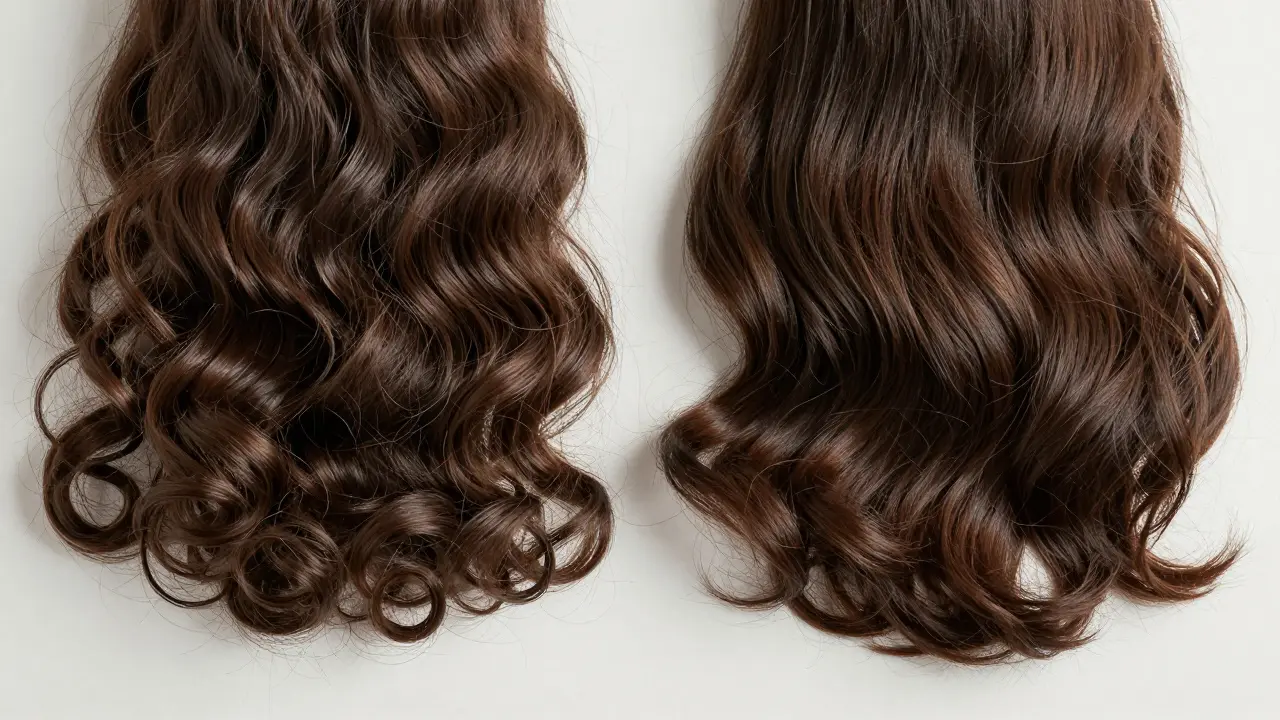
Walking into a salon or browsing online for hair extensions, you might feel like you’re looking at two completely different worlds. On one end, you see prices hovering around $50 for clip-ins on marketplaces. On the other, stylists are quoting $3,000 to $8,000 for permanent installations. What gives? Why is there such a massive gap?
The short answer is that hair extensions aren’t just about the strands themselves. You are paying for the quality of the fiber, the method of attachment, and the labor involved. In 2026, with inflation affecting service industries and new technologies changing how we attach hair, understanding these costs is crucial to avoid overpaying or ending up with damage.
Let’s break down exactly where your money goes, so you can decide what fits your budget and your lifestyle.
The Base Cost: Human Hair vs. Synthetic
The biggest factor driving price is the material. Are you buying human hair or synthetic fibers? This isn't just a marketing distinction; it changes everything about how the hair behaves, lasts, and costs.
Synthetic Hair is made from plastic polymers like Kanekalon or Toyokalon. It is pre-styled, meaning it holds curls well without heat. However, it cannot be dyed or heat-styled beyond its factory setting without melting. Because it is mass-produced, it is significantly cheaper. Expect to pay between $30 and $150 for a full set of synthetic clip-ins. For permanent methods, synthetic hair is rarely recommended by professionals because it degrades quickly and can cause tangling that leads to natural hair loss.
Human Hair is sourced from donors, primarily in regions like India, Brazil, Peru, and Vietnam. This hair behaves exactly like your own. You can blow-dry it, curl it, straighten it, and even color it (with caution). The price varies wildly based on origin and processing:
- Remy Human Hair: The cuticles are intact and aligned in the same direction. This prevents tangling and matting. Prices range from $200 to $600 per bundle (4-6 ounces).
- Virgin Human Hair: This is the highest grade. It has never been chemically processed, dyed, or permed. It is stronger, shinier, and lasts longer. Prices start at $400 per bundle and can exceed $800 for rare textures or lengths over 24 inches.
- Non-Remy Hair: Cuticles are stripped or misaligned. It tangles easily and looks dull after a few weeks. Avoid this if possible, as it often costs little ($50-$100) but requires replacement sooner, costing more in the long run.
Installation Methods: The Hidden Labor Costs
If you buy the hair yourself, you still need to get it attached. The installation method dictates the hourly rate of the stylist and the complexity of the process. Some methods take an hour; others take six.
| Method | Average Installation Cost | Duration | Maintenance Frequency |
|---|---|---|---|
| Clip-In | $0 (DIY) | 5-10 mins daily | N/A |
| Tape-In | $200 - $400 | 2-3 hours | Every 6-8 weeks |
| Keratin Bond (Fusion) | $300 - $600 | 4-6 hours | Every 8-10 weeks |
| Micro Links / Nano Rings | $250 - $500 | 3-5 hours | Every 8-10 weeks |
| Weave / Sew-In | $150 - $300 | 2-4 hours | Every 6-8 weeks |
| Halo / Invisible Wire | $0 (DIY) | 5 mins daily | N/A |
Tape-In Extensions are currently very popular because they lie flat against the head and are relatively quick to install. They use medical-grade adhesive tabs. While the initial install is moderate in cost, you must return to the salon every two months to remove old tapes and apply new ones. Each maintenance visit typically costs $100 to $200, depending on whether you reuse the hair or replace it.
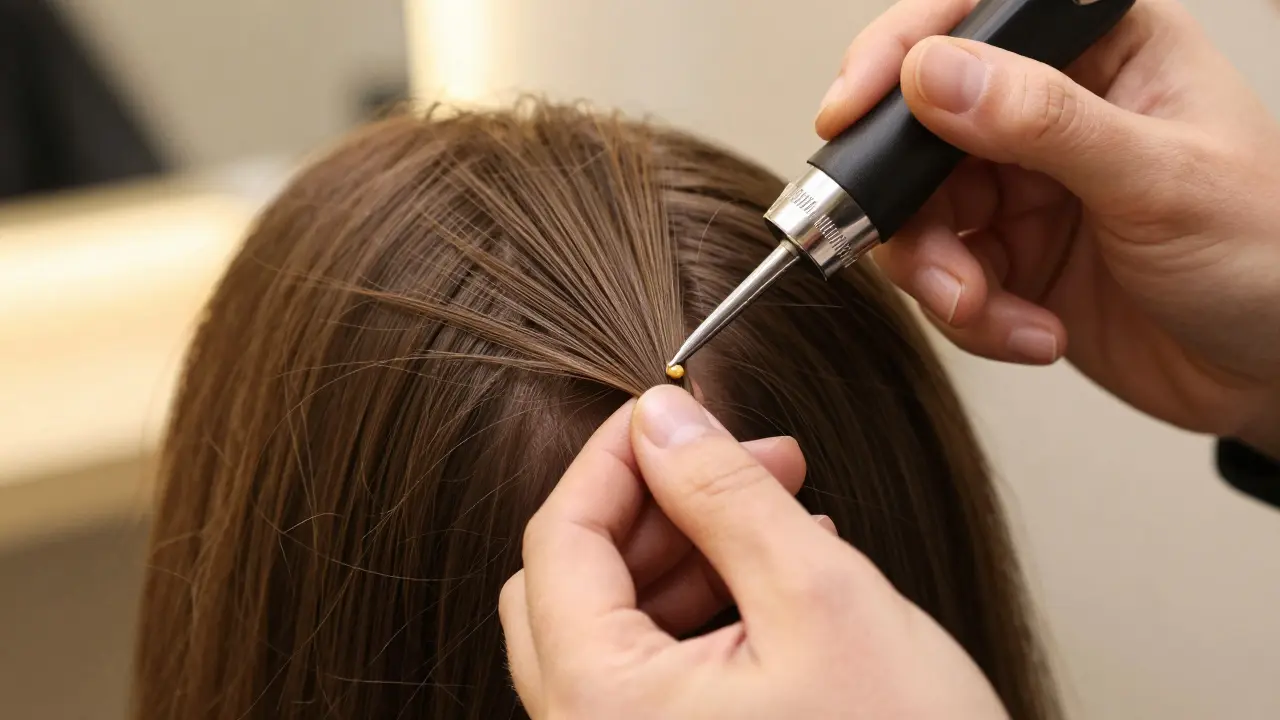
Keratin Bond Extensions involve bonding small sections of extension hair to your natural hair using keratin protein heated by a tool. This is the most time-intensive method. Because it takes all day, salons charge premium rates. However, when done correctly, it is one of the most durable options, lasting up to four months before needing adjustment.
Micro Link Extensions use tiny silicone-lined copper rings clamped onto the hair. No heat or glue is used, which makes them safer for fine hair. The cost is driven by the number of links needed. Thinner hair requires more links for support, increasing the time and cost. Maintenance involves sliding the links up as your hair grows.
Additional Expenses: Products and Aftercare
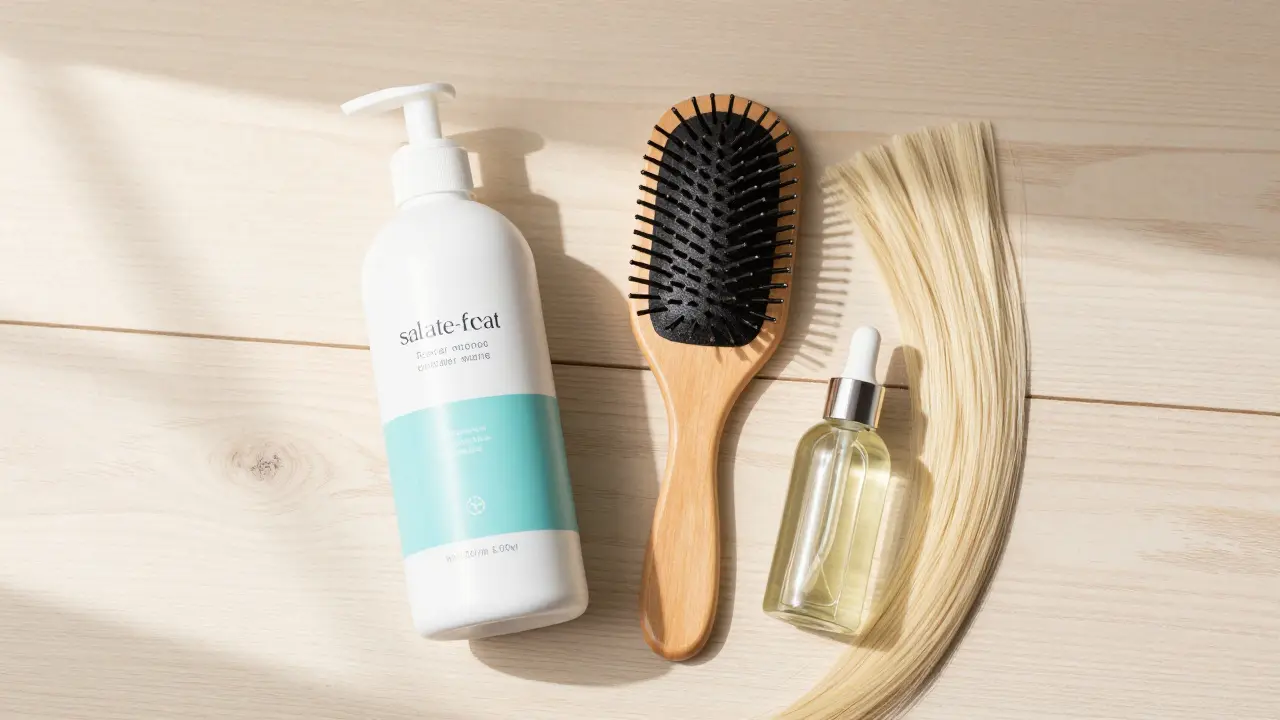
Many people forget that extensions require specific care products. Using regular shampoo can strip moisture from human hair extensions, causing them to dry out and break within weeks. You will likely need to purchase:
- Sulfate-Free Shampoo and Conditioner: Essential for preserving the integrity of the bonds and the hair itself. Budget $20-$40 per bottle.
- Extension-Specific Brush: A loop brush or soft bristle brush designed to detangle without pulling on the roots. These cost $15-$30.
- Leave-In Conditioner or Oil: To keep the mid-lengths and ends hydrated. Expect to spend $15-$25 monthly.
If you choose tape-ins or keratin bonds, you may also need a specialized remover solution during maintenance visits, though many salons include this in their service fee. Always ask if product costs are included in the quote.
Total Cost Breakdown by Method
To give you a realistic picture, let’s look at the total first-year investment for three common scenarios. These estimates assume average US pricing in 2026.
Scenario 1: Clip-In Extensions (Budget-Friendly)
You buy a high-quality Remy human hair set online. There is no installation fee. You do your own styling.
- Hair Set: $300 - $600
- Care Products: $50
- Total Year 1 Cost: $350 - $650
This is the most affordable route, but it requires daily effort to put in and take out. If you drop them or lose clips, replacement costs add up.
Scenario 2: Tape-In Extensions (Mid-Range)
You visit a salon for installation and two maintenance appointments.
- Hair (10-12 bundles): $600 - $900
- Initial Installation: $300
- Maintenance Visit 1 (Removal + Re-taping): $150
- Maintenance Visit 2 (Removal + Re-taping): $150
- Care Products: $100
- Total Year 1 Cost: $1,200 - $1,600
Note: Many salons allow you to reuse the hair for 4-6 months. If you need to replace the hair halfway through the year, add another $600-$900 to the cost.
Scenario 3: Keratin Bond Extensions (Premium)
You opt for a full head of virgin hair with professional installation and quarterly adjustments.
- Hair (Full Head Virgin): $1,200 - $2,000
- Initial Installation: $500
- Maintenance Visit 1: $200
- Maintenance Visit 2: $200
- Care Products: $150
- Total Year 1 Cost: $2,250 - $3,150
This option offers the most natural look and longest lifespan but requires a significant financial commitment.
Factors That Increase the Price
Several variables can push your final bill higher than the averages above.
Length: Hair becomes exponentially more expensive as length increases. Going from 18 inches to 24 inches can double the price per bundle because longer hair is rarer and harder to source.
Texture Match: Finding extensions that match curly, coily, or wavy textures is difficult. Processed textures often require custom blending, which adds labor time and cost. Straight hair is generally cheaper because it is easier to source in bulk.
Salon Location: Salons in major metropolitan areas like New York City, Los Angeles, or London charge significantly higher hourly rates due to overhead. A tape-in install in Boulder, Colorado, might cost $250, while the same service in Manhattan could be $500.
Stylist Expertise: Certified extension specialists command higher fees. While tempting to go cheap, poor installation can lead to traction alopecia (hair loss caused by tension), shedding, and mats that require cutting off your natural hair. Investing in a skilled technician saves money on corrective treatments later.
When to Skip the Extensions
Extensions are not for everyone. If you have extremely fine, thin, or damaged hair, adding weight can cause breakage. In these cases, consider temporary volumizing sprays, root-lifting techniques, or hair fibers instead. These alternatives cost under $50 and pose zero risk to your natural hair health.
Also, consider the time commitment. If you cannot commit to washing your hair gently and brushing it daily, extensions will become a nightmare. Tangled, matted extensions are painful to remove and can ruin your natural hair texture.
Are cheap hair extensions worth it?
Generally, no. Cheap synthetic extensions may look okay initially but will tangle, frizz, and shed within weeks. Cheap human hair is often non-remy, meaning the cuticles are stripped, leading to severe matting. The cost of removing tangled cheap extensions and repairing damaged natural hair often exceeds the savings.
How long do hair extensions last?
With proper care, high-quality human hair extensions can last 6 to 12 months. Tape-ins need repositioning every 6-8 weeks, while keratin bonds can stay in for 3-4 months before adjustment. Synthetic extensions typically last 1-3 months depending on usage.
Do hair extensions damage your natural hair?
They should not if installed correctly by a professional. Damage usually occurs from improper installation (too tight), poor maintenance (tangling), or leaving them in too long. Regular maintenance and gentle care prevent traction alopecia and breakage.
What is the cheapest type of hair extension?
Clip-in extensions are the cheapest overall because there is no installation fee. You only pay for the hair once. Halo extensions are also low-cost since they require no appointment. Among permanent methods, sew-in weaves are often the most affordable regarding installation labor.
Can I color my hair extensions?
Only human hair extensions can be colored, and even then, only virgin or unprocessed Remy hair takes dye well. Synthetic hair cannot be dyed and will melt if exposed to chemical dyes. Always consult a professional before coloring extensions to avoid ruining them.

Patrick Dorion
July 4, 2026 AT 15:00It is fascinating to consider how the commodification of beauty intersects with global labor economics. The disparity between synthetic and human hair pricing reflects a broader philosophical question about value and authenticity in consumer goods. When we pay for 'virgin' hair, are we purchasing a product or participating in an ethical supply chain that often lacks transparency? The article correctly identifies the cost drivers, but one must also reflect on the social implications of sourcing from regions like India or Brazil where economic disparities are stark. Understanding these layers adds depth to what might otherwise seem like a simple cosmetic transaction.
Marissa Haque
July 5, 2026 AT 12:10OMG!!! This is literally the most important guide ever!!!!! I cannot believe how much money I wasted on cheap tape-ins back in the day!!!! They melted my natural hair and it took YEARS to grow back!!!! You have to invest in quality people!!! Virgin hair is worth every single penny because your scalp deserves respect!!!! Do not listen to anyone who says synthetic is fine for long term wear!!! It is a disaster waiting to happen!!!!!
Keith Barker
July 7, 2026 AT 07:14price is just a number really. the real cost is time. sitting in a chair for six hours while someone glues plastic to your head feels like a different kind of tax. i prefer clip ins. put them on take them off. no salon drama. no maintenance fees. just hair.
Lisa Puster
July 8, 2026 AT 19:08typical american obsession with vanity driving up prices. meanwhile europeans know better than to ruin their natural texture with these foreign imports. the elitist nature of virgin hair pricing is absurd. only the wealthy should indulge in such frivolity. poor people should stick to what they have. it is pathetic how much we spend on appearances instead of substance. stay out of my country and stop influencing our culture with this expensive nonsense.
Lisa Nally
July 9, 2026 AT 03:43Let us address the epistemological crisis within the extension industry. The dichotomy between Remy and non-Remy hair is not merely aesthetic; it is structural integrity at the molecular level. Cuticle alignment dictates friction coefficients during detangling processes. Furthermore, the keratin bond method utilizes thermal activation of protein bonds which, if improperly calibrated by an unskilled technician, results in irreversible denaturation of the natural hair shaft. One must exercise extreme diligence in selecting a practitioner who understands the biomechanics of traction alopecia. The financial expenditure is secondary to the physiological preservation of follicular health. Ignorance in this domain leads to catastrophic dermatological outcomes.
Edward Gilbreath
July 10, 2026 AT 16:07they want you to think you need new hair every 6 months. its a scam. the salons keep the old hair sell it again or dump it. big beauty cartel controlling prices. dont fall for it. buy once wear forever. they lie about maintenance costs to get you back in the chair. wake up sheeple.
kimberly de Bruin
July 11, 2026 AT 23:38beauty is a construct imposed by society to control women. why do we feel the need to add length when short hair is liberating. the cost is irrelevant because the premise is flawed. true freedom comes from rejecting the gaze entirely. extensions are chains made of hair.
Edward Nigma
July 12, 2026 AT 08:31actually the article is wrong about synthetic hair being bad for everyone. some high end synthetics hold curl better than human hair in humid climates. also micro links are overrated because they slip out easily. the author clearly has a bias towards expensive methods. i have worn sew ins for years and never had issues so your warning about damage is exaggerated. stop fear mongering.
Francis Laquerre
July 14, 2026 AT 07:13In France we view hair care as an art form not a commodity. The precision required for a proper balayage with extensions demands a level of craftsmanship that is disappearing in mass market salons. We appreciate the detailed breakdown of costs here but remember that technique transcends price tags. A skilled artist can make mid-range hair look exquisite through expert blending and placement. Respect the craft above all else.