You’re standing in front of the mirror, staring at your reflection. The itch is there-that sudden, overwhelming urge to chop off those inches and go short. But then doubt creeps in. What if you look like a mushroom? What if it grows out weirdly? What if you hate it for six months while waiting for it to grow back? This isn’t just about vanity; it’s about identity. Your hair frames your face, dictates how people perceive you, and honestly, affects how confident you feel walking out the door.
So, how do you know if short hair will actually look good on you without taking the plunge blindfolded? It’s not magic. It’s geometry, biology, and a little bit of trial and error. Let’s break down exactly how to assess your features so you can walk into that salon chair with confidence, not regret.
The 2.25 Inch Rule: A Quick Math Test
Before you even look in the mirror, grab a ruler and a pencil. This is known as the "2.25-inch rule," popularized by John Frieda hairdressers. It’s surprisingly accurate for determining whether your jawline structure supports shorter cuts. Here’s how you do it:
- Stand straight in front of a mirror.
- Place a pencil horizontally under your chin.
- Hold a ruler vertically from the bottom of your earlobe to the point where the pencil touches your jaw.
- Measure that distance.
If the measurement is less than 2.25 inches (about 5.7 cm), you likely have the bone structure that flatters short hairstyles. If it’s more than 2.25 inches, longer styles might balance your features better. Why does this work? It measures the angle of your jaw relative to your neck. A sharper, tighter angle usually means a defined jawline that pops when exposed. A longer distance often indicates a softer or rounder lower face, which long hair helps elongate. It’s not gospel-plenty of people with long measurements rock pixie cuts-but it’s a solid starting filter.
Face Shape Analysis: The Core Framework
Hair doesn’t exist in a vacuum; it interacts with your face shape. You don’t need a proctologist’s eye to figure this out. Tie your hair back tightly, pull your bangs up, and look at your outline in a well-lit mirror. Trace the shape you see. Which category fits best?
| Face Shape | Characteristics | Best Short Styles | Avoid |
|---|---|---|---|
| Oval | Balanced proportions, forehead slightly wider than chin | Pixie cuts, bobs, buzz cuts | Styles that hide the face entirely |
| Round | Width and length are similar, soft curves | Asymmetric bobs, side-swept bangs | Straight-across blunt bobs |
| Square | Strong jawline, forehead and jaw same width | Layered crops, textured shags | Rigid, geometric cuts |
| Heart | Wide forehead, narrow chin | Chin-length bobs, wispy bangs | Voluminous tops with no sides |
| Long/Oblong | Face is noticeably longer than wide | Curly crops, bangs to shorten face | Super short sides with height on top |
If you have an oval face, you’ve hit the genetic lottery. Almost any short cut works because your proportions are naturally balanced. You can go super short or keep it chin-length. The goal here is simply not to hide your face behind too much bulk.
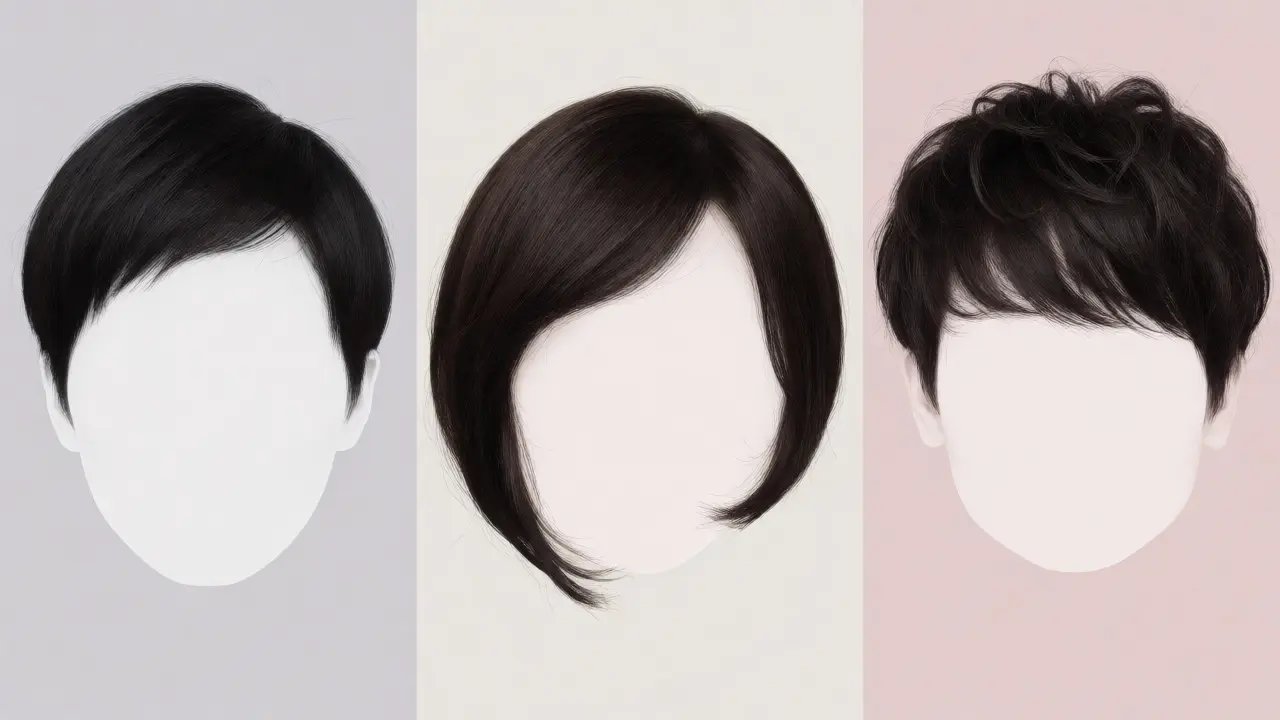
For round faces, the enemy is symmetry. A blunt, chin-length bob can make your face look wider. Instead, opt for asymmetry. An angled bob that’s shorter in the back and longer in the front creates diagonal lines, which trick the eye into seeing length rather than width. Side-swept bangs also help break up the circular pattern.
Those with square faces often worry that short hair will emphasize a strong jaw. Actually, it can soften it. Textured layers around the jawline diffuse the sharp angles. Avoid rigid, one-length cuts that mimic the squareness of your jaw. Think messy, piecey, and lived-in rather than polished and severe.
Hair Texture and Density: The Hidden Variables
Your face shape tells half the story. Your hair texture tells the other half. Two people with identical oval faces can have completely different experiences with a pixie cut based solely on their strands.
Fine hair can be tricky with very short cuts. Without enough density, a buzz cut or ultra-short crop can reveal scalp patches or look sparse. However, fine hair holds shape well. A structured bob or a sleek pixie can add volume through layering. Ask your stylist for internal layers to build body without removing weight.
Thick hair is the opposite problem. Too much volume on a short cut can lead to the "mushroom" effect, where the top puffs out uncontrollably. Thinning shears are your friend here. You need texturizing techniques to remove bulk while keeping length. Curly thick hair requires specific cutting methods (like dry cutting) to prevent shrinkage surprises.
Wavy or curly hair behaves differently when shortened. Curls spring up as they get shorter. A shoulder-length wavy cut might become a tight coil at chin-length. Always cut curls dry or damp-dry to see their true length. Never trust wet curl patterns-they stretch out significantly.
Lifestyle and Maintenance Reality Check
Here’s the part most articles skip: maintenance. Short hair isn’t necessarily "low maintenance." In fact, many short cuts require more frequent trims and daily styling time than long, lazy waves.
- Trim Frequency: To keep a pixie or bob looking intentional, you need trims every 4-6 weeks. Long hair can go 3-4 months between cuts. Can you commit to monthly salon visits?
- Styling Time: A messy bun takes two minutes. A textured pixie might take ten minutes of blow-drying with a round brush and applying product. Do you have that time in the morning?
- Gym Life: If you sweat heavily, short hair dries faster but can stick to your forehead. You’ll need headbands or quick washes. Long hair can be tied up easily; short hair cannot.
Be honest about your routine. If you air-dry everything and hate heat tools, a high-maintenance textured cut will frustrate you. Opt for a style that embraces your natural texture instead.
The Virtual Try-On and Clip-In Hack
Still unsure? Don’t rely on memory. Use technology. Apps like FaceApp, YouCam Makeup, or specialized salon apps allow you to upload a photo and simulate short haircuts. They aren’t perfect-lighting and angle matter-but they give a rough idea of proportion changes.
For a more tactile experience, buy a set of clip-in short hair extensions. They’re cheap (often $15-$30 online). Clip them over your current hair to simulate a bob or pixie. Wear them for a full day. See how it feels to touch your neck, how it looks in different lighting, and how others react. This physical simulation is far more accurate than any app.

Consulting Your Stylist: The Right Questions
When you finally book the appointment, don’t just say "I want short." Bring photos, but also ask these questions:
- "Given my hair growth pattern, will this style fall flat or poof out?"
- "How much daily styling effort will this require?"
- "What happens when it grows out? Is there an awkward phase?"
- "Can we start longer and cut shorter during the appointment if I’m comfortable?"
A good stylist will advise you against a cut that fights your natural growth patterns. For example, if you have a cowlick at the crown, a slicked-back pixie might never stay put. They’ll suggest a fringe or texture to mask it.
Embracing the Transition Phase
If you decide to go for it, remember that growing out short hair is harder than cutting it. The "awkward stage" happens around the chin-to-shoulder mark. Plan for it. Learn new updos, use accessories like scarves or hats, and embrace the change. Many people find that once they push through the transition, they love their new normal. Confidence plays a huge role-if you own the look, people perceive it as intentional and stylish.
Does short hair make you look older?
Not necessarily. Well-cut short hair can frame the face and highlight cheekbones, making you look younger. Poorly maintained or overly harsh cuts can age you. Focus on soft layers and movement rather than severe, geometric shapes.
Can I cut my own hair if I want to try short?
It’s risky. Cutting your own hair at home often leads to uneven lengths, especially with short styles where mistakes are visible. If you must DIY, consider a long bob first, which is more forgiving than a pixie. Professional tools and technique matter significantly for precision.
Will short hair make my head look big?
Only if the cut adds too much volume at the wrong places. Balanced proportions are key. If you have a larger head size, avoid excessive height on top. Instead, focus on width-balancing layers around the jaw and ears to create harmony.
How long does it take to grow short hair back?
Hair grows approximately half an inch per month. Going from a pixie to shoulder-length takes roughly 18-24 months. Patience is required, but regular trims during the process keep it healthy and manageable.
Is short hair better for thinning hair?
Yes, often. Long hair weighs itself down, exposing scalp gaps. Short hair lifts at the root, creating the illusion of density. Pixie cuts and bobs are excellent choices for concealing thinning areas.