


When you finally get that bold red, vibrant blue, or deep black hair color, the excitement fades fast when you notice your pillowcase looks like a crime scene. Or your favorite white T-shirt has a purple smudge you can’t scrub out. Hair dye bleeding onto clothes and sheets isn’t just annoying-it’s expensive, messy, and totally avoidable. The truth? hair dye bleed happens because pigment hasn’t fully locked into your hair shaft yet. It’s not your fault. It’s chemistry. And you can stop it.
Wait It Out (But Don’t Just Sit There)
The first 3-5 washes after coloring are the danger zone. That’s when most of the loose pigment washes out. You can’t stop it completely, but you can control where it goes. Don’t wash your hair every day. Skip a day or two between washes. Every time you wet your hair, you’re releasing more dye. Less washing = less dye floating around. And when you do wash, use cool water. Hot water opens up the hair cuticle like a door, letting pigment escape. Cool water? It keeps the door shut. Simple. Effective.Protect Your Skin Before You Even Start
Before you even rinse out the dye, put on a defense. Grab a small tub of petroleum jelly-Vaseline works fine-and rub it along your hairline, ears, neck, and forehead. It’s not glamorous, but it creates a barrier. Dye won’t stick to your skin if it slides right off. And if dye doesn’t touch your skin, it won’t transfer to your shirt collar or pillow. This step takes 30 seconds. It prevents hours of scrubbing later.Wear a Dark Towel Like a Cape
After washing, don’t wrap your hair in a white towel. Ever. Even if it’s brand new. Use a dark, old towel you don’t care about. A black or navy microfiber towel is ideal. It absorbs water without showing stains. If you’re drying your hair under a blow dryer, drape the towel around your shoulders too. That way, any drips land on the towel, not your shirt. And if you sleep with damp hair? Same rule. A dark cotton sleep cap or a silk scarf tied snugly helps. Silk doesn’t absorb dye like cotton does, so it’s a double win.Switch to Dark Pillowcases and Sheets
This is the biggest game-changer. If you’ve got vivid hair color, your white pillowcase is a target. Swap it out for black, charcoal, or deep burgundy. You won’t eliminate dye transfer-you’ll just stop seeing it. And when you do spot a stain? It’s easier to clean on dark fabric. Wash your dark pillowcases separately, cold water, no fabric softener. Softener can make dye cling harder. And if you’re feeling extra, get a second set. Rotate them. One in the wash, one on the bed.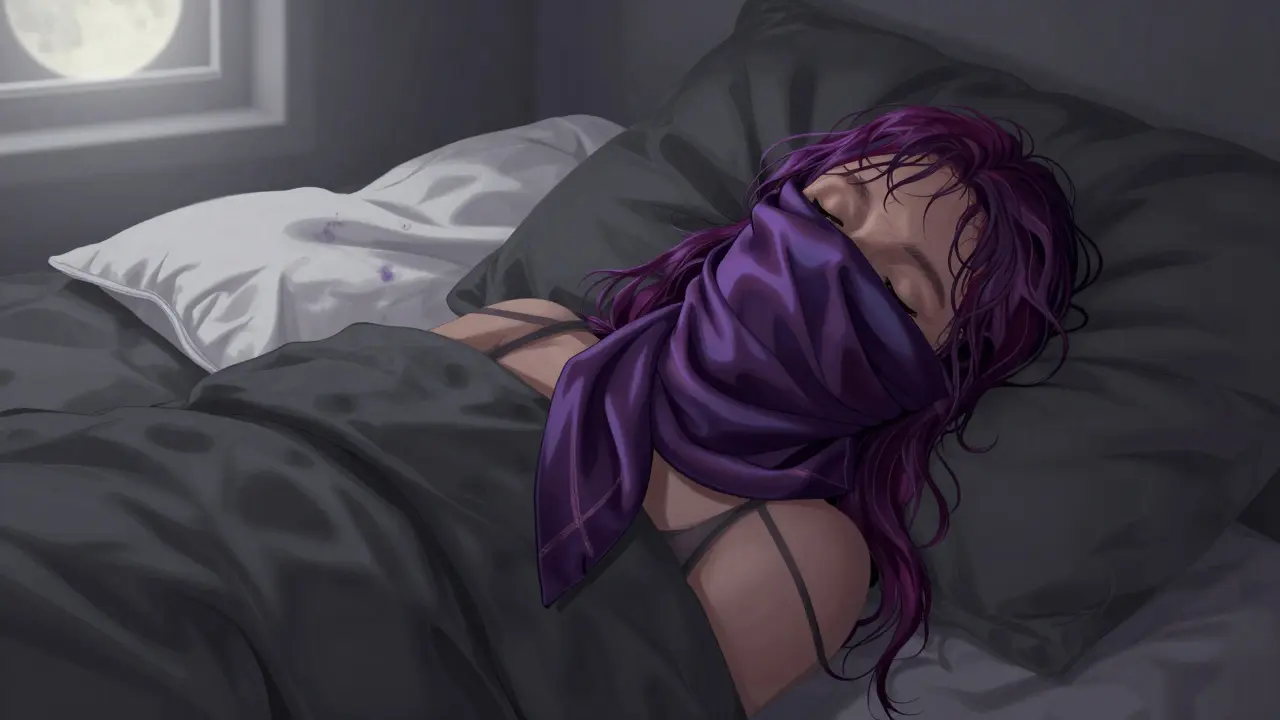
Control the Water Flow When You Wash
Don’t let your hair hang loose under the showerhead. That’s how dye gets everywhere-your shoulders, your chest, your back. Tilt your head forward. Let the water run down your hair like a waterfall into the drain. Use a handheld showerhead if you have one. It gives you control. Spray downward, not sideways. No splashing. No dripping. Keep your hair as contained as possible. If you don’t have a handheld sprayer, use a kitchen sink with a pull-out faucet. Same idea. You’re not showering-you’re rinsing with precision.Try a Vinegar Rinse After Washing
Once a week, after shampooing, rinse your hair with a mix of one part white vinegar and three parts cool water. Let it sit for 2-3 minutes, then rinse with plain water. Vinegar helps close the hair cuticle. It’s like putting a seal on the dye. You’ll notice your hair feels smoother, looks shinier, and bleeds less over time. It’s not magic, but it’s science. And it works. Especially if you have hard water, which can make dye fade faster and leak more.What to Wear After Coloring
For the first few days, wear dark clothes. Black hoodies, dark jeans, navy sweaters. No white tees. No light gray sweats. You’re not trying to be trendy-you’re trying to avoid laundry disasters. Even if your hair is only slightly damp, it can leave a mark. And once dye sets into fabric, it’s nearly impossible to remove without bleach. And bleach ruins most fabrics. So play it safe. Dress like you’re heading to a funeral. Dark. Simple. Safe.



Jane San Miguel
February 24, 2026 AT 03:00Kasey Drymalla
February 24, 2026 AT 10:41Dave Sumner Smith
February 25, 2026 AT 01:30Cait Sporleder
February 26, 2026 AT 13:40Jeroen Post
February 28, 2026 AT 09:50Nathaniel Petrovick
February 28, 2026 AT 22:56Honey Jonson
March 1, 2026 AT 17:47Sally McElroy
March 1, 2026 AT 17:49Destiny Brumbaugh
March 3, 2026 AT 05:17Sara Escanciano
March 4, 2026 AT 17:55Elmer Burgos
March 5, 2026 AT 15:14Jason Townsend
March 6, 2026 AT 00:41Antwan Holder
March 7, 2026 AT 20:14Angelina Jefary
March 9, 2026 AT 02:41Jennifer Kaiser
March 10, 2026 AT 05:30