

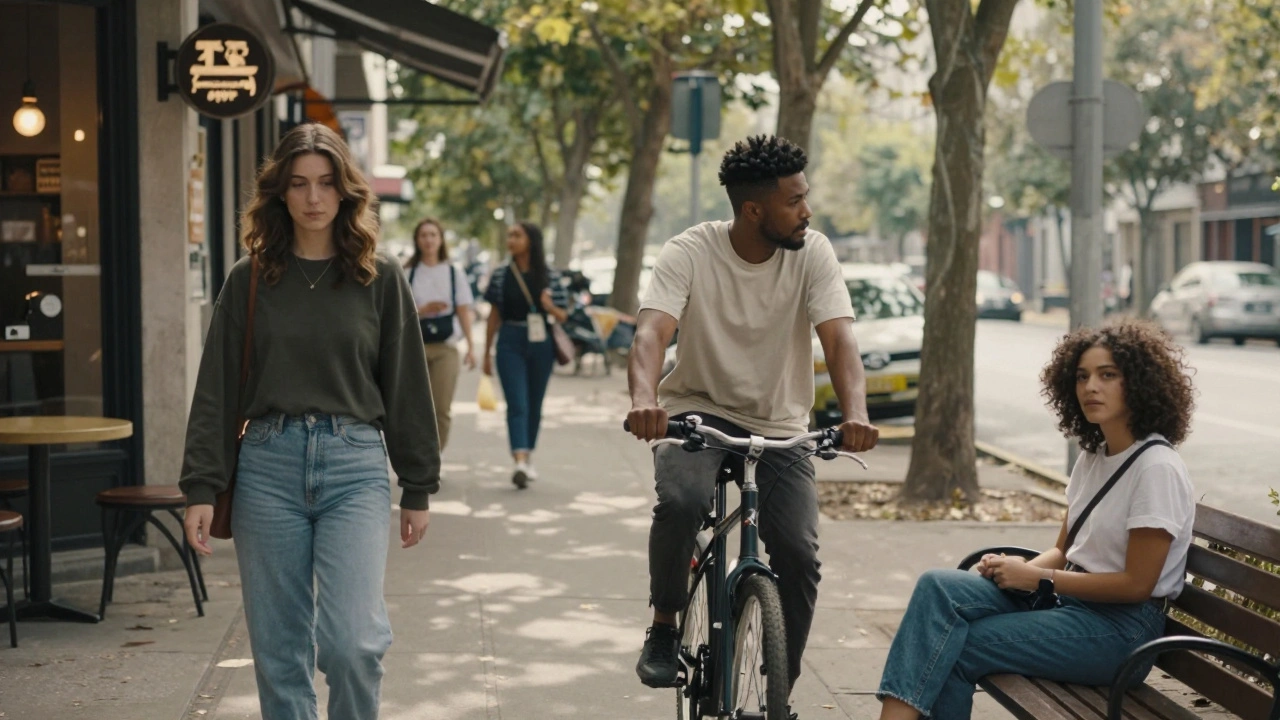
Ask ten people in the U.S. what their go-to hairstyle is, and you’ll likely hear the same answer more than once: the textured bob. It’s not flashy, it doesn’t trend for a season and fade, and it’s not limited by age, gender, or hair type. From college campuses in Austin to suburban neighborhoods in Ohio, the textured bob - a chin-to-shoulder cut with soft layers, natural movement, and minimal styling - is the most common hairstyle in the United States today.
Why the Textured Bob Dominates
The textured bob isn’t new, but it’s evolved. Ten years ago, sleek bobs were in. Five years ago, blunt cuts ruled. Now, it’s all about ease and authenticity. Women, men, and non-binary people are choosing cuts that look good with zero effort. The textured bob works because it’s designed for real life - rushing out the door, working from home, exercising, or just surviving a long day.
Salon stylists across the country report that over 60% of clients asking for a new cut now request some version of the textured bob. A 2024 survey by the Professional Beauty Association found that 58% of U.S. salons listed the textured bob as their most requested style, beating out ponytails, afros, and even pixie cuts. Why? It’s low-maintenance, universally flattering, and adapts to almost every hair texture - straight, wavy, curly, or coily.
What Makes a Bob ‘Textured’?
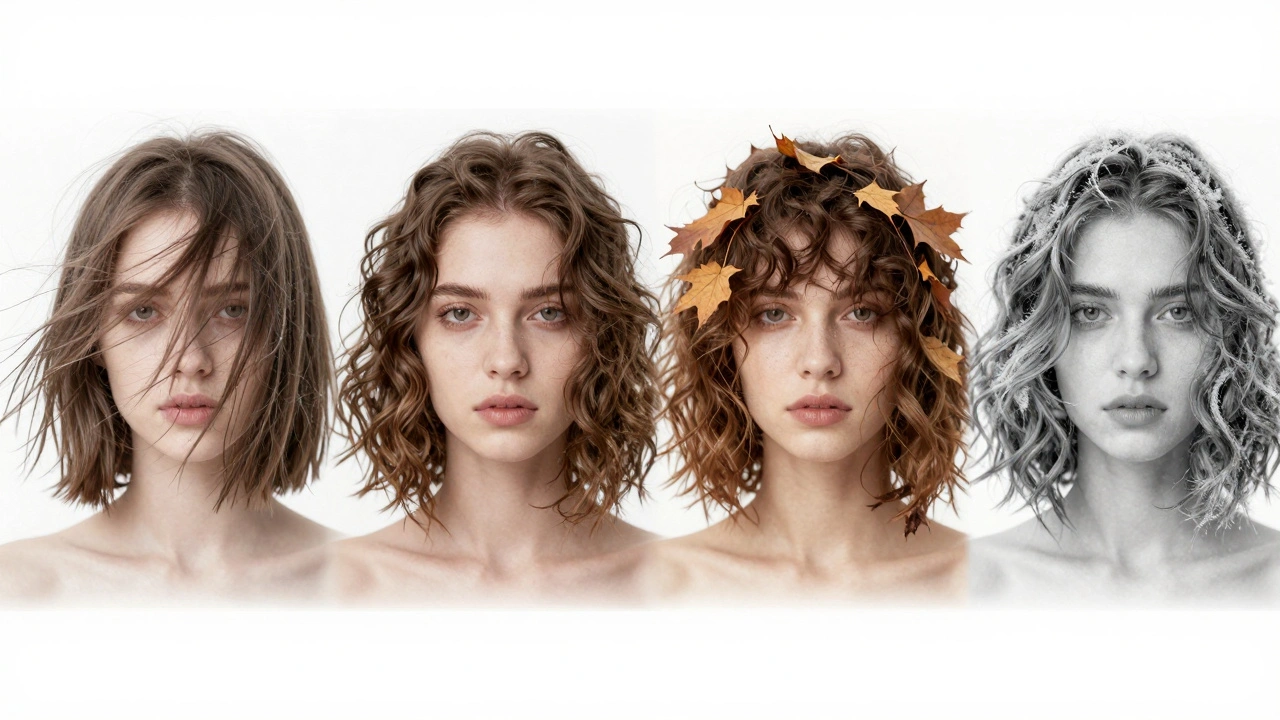
Not all bobs are the same. A classic bob is straight and blunt. A textured bob has layers, movement, and intentional imperfection. Stylists use point cutting, razoring, or thinning shears to remove weight and add volume. The goal isn’t perfection - it’s natural-looking shape.
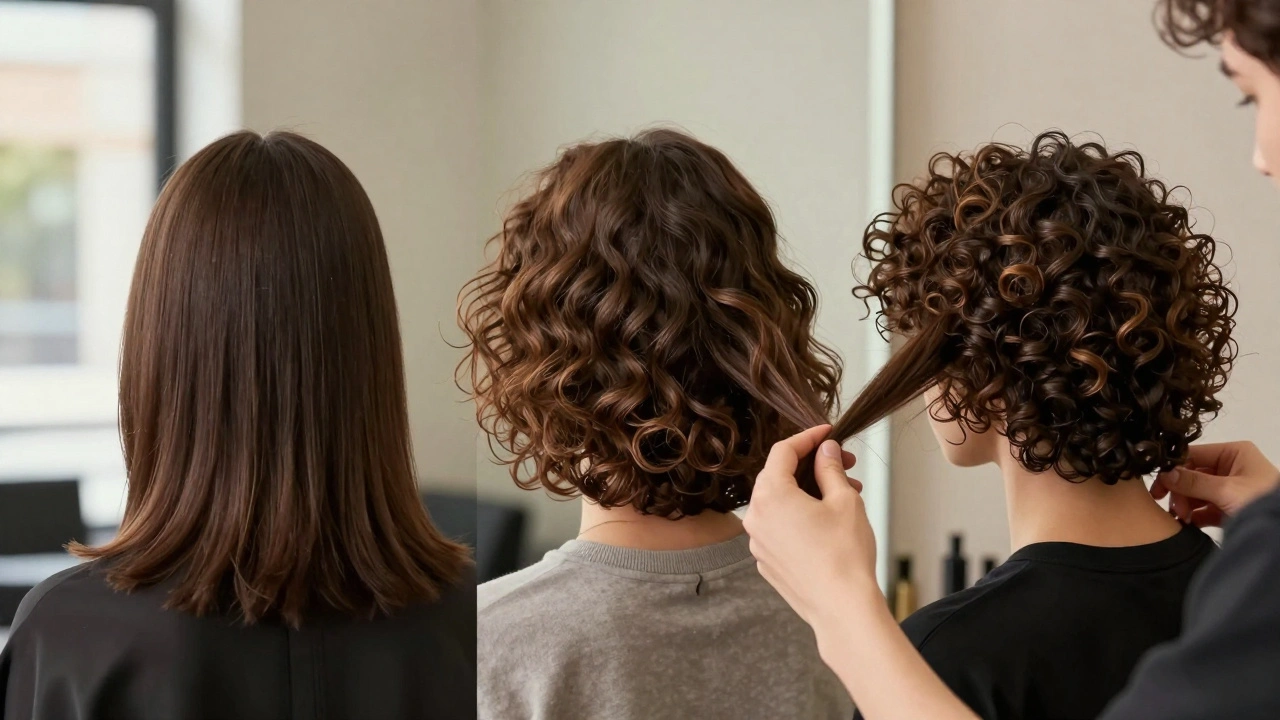
For straight hair, the texture comes from subtle layers around the crown and nape. For wavy hair, it’s about enhancing the natural curl pattern without over-styling. For curly or coily hair, the textured bob often means a longer length (just below the chin) to allow curls to form without looking frizzy or bulky. It’s cut to follow the hair’s natural fall, not forced into a rigid shape.
Products matter too. Most people who wear this style use a lightweight mousse or curl cream - not gel, not serum, not heat tools. A quick scrunch and air-dry is enough. That’s the appeal: you don’t need a styling station at home.
Who Wears It - And Why
It’s not just women. Men are wearing it too - shorter, neater, but still textured. Think of the ‘modern crew’ cut: shaved on the sides, slightly longer on top with soft, piecey layers. It’s clean, but not stiff. It’s popular among men in their 20s to 40s who want to look put together without looking like they spent an hour in front of a mirror.
Teenagers? They’re ditching the blunt bangs and straight-across cuts for textured bobs that frame their faces without requiring daily blowouts. Parents? They love it because it’s easy to manage on busy mornings. Professionals? It’s polished enough for Zoom calls, casual enough for Friday dress-down days.
Even in corporate environments, the textured bob has become a quiet symbol of modern professionalism. It says, ‘I’m competent, I’m confident, and I don’t need a perfect hairdo to prove it.’
How It Compares to Other Popular Styles
Let’s be clear: other styles are popular. But popularity doesn’t mean common.
| Haircut | Popularity | Maintenance Level | Adaptable to Hair Types | Everyday Wearability |
|---|---|---|---|---|
| Textured Bob | Very High | Low | High (straight to coily) | Excellent |
| Pixie Cut | Moderate | Medium | Medium (best for fine to medium hair) | Good |
| High Ponytail | High | Low | High | Good |
| Afro / Natural Curl | High | Medium-High | High (coily/curly only) | Good |
| Long Layered Hair | High | High | High | Moderate |
The textured bob wins because it balances all four factors. The high ponytail might be easier to do, but it’s not a ‘style’ - it’s a utility. The afro is beautiful and culturally significant, but it requires more time and product. Long layered hair looks great, but needs regular trims and daily styling. The textured bob? It looks intentional without being high-effort.
The Rise of ‘No-Styling’ Hair
This isn’t just about haircuts - it’s about a cultural shift. After years of viral TikTok styles, people are tired of spending 45 minutes styling their hair just to leave the house. The pandemic changed everything. Working from home made people realize they didn’t need to look ‘camera-ready’ every day.
Now, the priority is authenticity. People want hair that looks like it belongs to them - not like a model’s. The textured bob fits perfectly. It doesn’t hide your natural texture; it celebrates it. It doesn’t require heat tools. It doesn’t need extensions or clips. It just… works.
Salon owners in New York, Atlanta, and Portland say clients are now asking for ‘hair that looks like me’ instead of ‘hair that looks like Instagram.’ That’s the real reason the textured bob is everywhere.
How to Get the Textured Bob
If you’re thinking about trying it, here’s what to do:
- Find a stylist experienced with your hair type. Not all barbers or stylists know how to cut curly hair for a bob.
- Bring photos - not just of the style, but of your own hair when it’s air-dried and natural.
- Ask for ‘soft layers’ and ‘movement,’ not ‘blunt’ or ‘sharp.’
- Start with a length just below your chin. You can always grow it out.
- Use a curl-defining cream or lightweight mousse. Skip the hairspray.
Don’t expect it to look perfect right away. The first wash after the cut might make it look frizzy or flat. That’s normal. Give it three days. Let your hair adjust. The magic happens after the second or third wash.
What Doesn’t Work
Some people try to copy the textured bob but end up with a shapeless mess. That usually happens when:
- The cut is too short for their curl pattern - curls shrink up and look like a puffball.
- The stylist uses too much thinning - hair becomes wispy and loses body.
- They use heavy products that weigh curls down.
- They try to straighten it daily - defeating the whole purpose.
The textured bob is not a one-size-fits-all cut. It’s a personalized shape. It’s not about following a template - it’s about enhancing what you already have.
What’s Next?
Will the textured bob last? It already has. Unlike trends that fade in six months, this style has staying power because it’s rooted in function, not fashion. It’s the haircut equivalent of a good pair of jeans - timeless, versatile, and always in style.
As more people prioritize real life over curated looks, the demand for low-effort, high-impact styles will only grow. The textured bob isn’t just the most common hairstyle in the U.S. today - it’s the hairstyle of the next decade.
Is the textured bob only for women?
No. The textured bob is worn by people of all genders. Men often opt for a shorter version - called a textured crew or modern undercut - with longer, layered top hair and faded sides. The same principles apply: natural texture, low maintenance, and clean lines.
Can I get a textured bob if I have curly hair?
Yes - and it’s one of the best cuts for curly hair. Curly textures benefit from a textured bob because it removes bulk while keeping volume. Stylists cut it longer (chin to shoulder) to let curls form naturally without looking frizzy. Avoid blunt cuts - they can make curls look like a helmet.
How often do I need to get a trim?
Every 6 to 8 weeks. Since the style relies on shape and layering, the ends can start to look uneven if left too long. But unlike long hair, you don’t need monthly trims. The texture hides minor growth, so you have more flexibility.
Do I need heat tools to style it?
No. One of the biggest appeals of the textured bob is that it looks great air-dried. If you have wavy or curly hair, just apply a light cream and scrunch. If you have straight hair, a small amount of texturizing spray and finger-combing is enough. Heat tools can damage the natural texture over time.
What’s the best product for a textured bob?
For straight or wavy hair: a lightweight mousse or texturizing spray. For curly or coily hair: a curl cream or defining gel with a soft hold. Avoid heavy oils, serums, or gels - they flatten the texture. Brands like SheaMoisture, Moroccanoil Texture, and Bounce Curl are popular choices among stylists.

NIKHIL TRIPATHI
December 13, 2025 AT 05:42The textured bob is honestly the only cut that works for my wavy hair without turning into a frizz monster. I used to spend 30 minutes blow-drying every morning until I got this cut. Now I just wash, scrunch, and walk out. No heat, no product overload. It’s like my hair finally stopped fighting me.
Also, I’ve noticed more guys at my office wearing it too-shorter, but still layered. It’s weird how something so simple became the universal uniform.
Salon stylists in India are starting to catch on too. I got mine done in Pune and the stylist had never heard of ‘textured bob’ until I showed him a pic. He figured it out anyway. That’s the beauty of it-it adapts.
Also, it’s the first hairstyle I’ve had that didn’t make me feel like I had to look ‘done’ to leave the house. Real life doesn’t need perfection. This cut gets that.
Shivani Vaidya
December 14, 2025 AT 18:26The textured bob represents a quiet revolution in personal expression. It is not a trend but a recalibration of societal expectations regarding grooming. The abandonment of rigid aesthetics in favor of natural form reflects a broader cultural movement toward authenticity and self-acceptance.
This hairstyle, in its deliberate imperfection, challenges the notion that beauty must be polished. It is not merely practical-it is philosophical. To wear a textured bob is to declare that one’s identity is not contingent on external validation through immaculate presentation.
It is a subtle act of resistance against performative beauty standards. One does not need to be flawless to be worthy. The bob says this without words.
Rubina Jadhav
December 16, 2025 AT 05:37I tried it last year. My hair got too frizzy. Gave up. Now I just wear a bun.
sumraa hussain
December 16, 2025 AT 23:16OMG I’M SO GLAD SOMEONE FINALLY SAID THIS. I’VE BEEN SCREAMING INTO THE VOID FOR YEARS THAT THE TEXTURED BOB IS THE ONLY THING THAT MAKES MY CURLY HAIR LOOK LIKE A HUMAN AND NOT A CLOUD THAT DECIDED TO LIVE ON MY HEAD.
My stylist was like ‘uhhh we just do a bob?’ and I had to show him 17 TikToks. He ended up cutting it like a potato with layers. It looked like a disaster. But after three washes? MAGIC.
Now I just walk out with wet hair and a smirk. No blow dryer. No gel. No shame. I’m not styling my hair-I’m just letting it be. And it’s the most confident I’ve ever felt.
Also, my dad saw it and said ‘you look like a normal person now.’ I took that as a compliment.
Raji viji
December 17, 2025 AT 02:44Textured bob? Please. That’s just what people call it when they’re too lazy to grow their hair out or too scared to go full pixie. You think it’s ‘low maintenance’? Nah. You’re just too cheap to pay for a decent trim every 6 weeks. And let’s be real-half these people don’t even know how to use product right. They slap on some cream, scrunch, and call it ‘effortless.’ It looks like they slept in a wind tunnel.
And don’t get me started on men wearing it. ‘Modern crew cut’? Bro, you shaved the sides and left two inches on top. That’s not a bob. That’s a middle finger to hair science.
Also, the ‘no heat’ thing? That’s a myth. You think your curls look good without a diffuser? You’re delusional. The real winners are the ones who know how to style with heat and still look natural. That’s skill. This? This is laziness with a marketing team.
Rajashree Iyer
December 17, 2025 AT 09:30There is something deeply spiritual in the way the textured bob refuses to conform. It does not beg for attention. It does not scream for validation. It simply is. In a world that demands perfection, it offers surrender-not as defeat, but as liberation.
Each strand, each layer, each imperfect curl whispers: I am not here to please you. I am here to be.
It is the haircut of the awakened. The one who has seen through the illusion of control. The one who knows that true beauty lies not in symmetry, but in surrender to the natural flow of existence.
When you wear this cut, you are not choosing a style-you are choosing a state of being. The textured bob is not a trend. It is a meditation.
And yet, the world still asks, ‘How do you style it?’
They do not understand. You do not style it. You allow it.
And in that allowing, you become free.
Parth Haz
December 18, 2025 AT 23:00It’s encouraging to see a hairstyle that balances practicality with personal expression. The textured bob does not require extensive maintenance, yet still conveys intentionality and care. This reflects a broader societal shift toward sustainable personal habits-less waste, less time, more meaning.
For professionals, students, and caregivers alike, this cut offers a rare combination: dignity without formality, ease without neglect. It is a quiet testament to the value of efficiency in daily life.
Salon professionals who adapt to this demand are demonstrating not just technical skill, but cultural awareness. This is not just hair-it’s a reflection of evolving values.
Thank you for highlighting this shift with such thoughtful detail.
Vishal Bharadwaj
December 20, 2025 AT 21:13Textured bob? More like textured *bog*. You know what’s actually common in the US? Ponytails. Like 80% of women wear them every day. And men? Buzz cuts. Everywhere. Especially in the South. You’re cherry-picking salon data to push a narrative. Real people don’t go to salons every 6 weeks. Most of us get a trim at the barbershop for $15 and call it a day.
Also, ‘no heat’? LOL. You think people with straight hair don’t flat iron their bobs? Of course they do. You just don’t see it because they’re not posting it on Instagram.
And ‘curly hair benefits’? Try telling that to someone with 4C hair who got a bob and now looks like a poodle that got hit by a truck. Stylists don’t know how to cut curly hair. Most of them just copy Pinterest pics and hope for the best.
Also, ‘textured’ just means ‘bad cut.’ You’re romanticizing incompetence.