

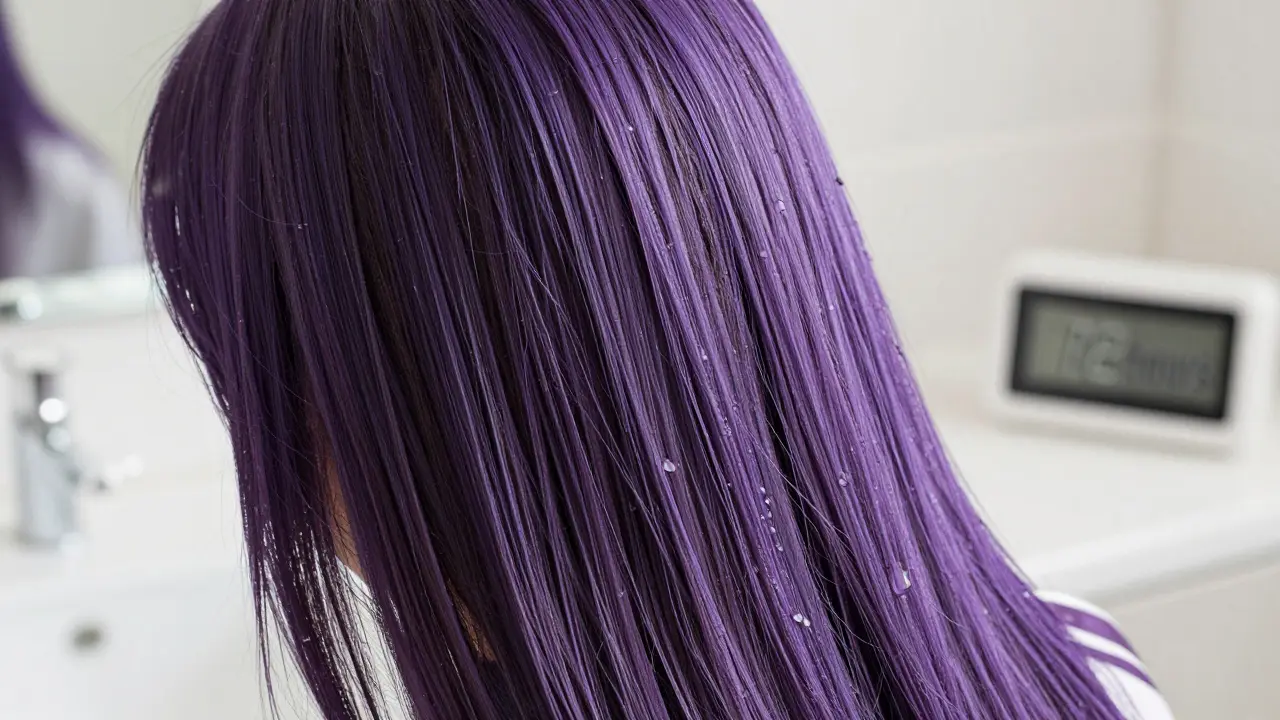
After getting your hair permanently colored, you’re probably excited to see the results-but also nervous about what you can and can’t do next. One of the most common questions? Can I use oil after permanent coloring of my hair? The short answer is yes-but only if you wait long enough and choose the right oil. Do it too soon, or pick the wrong product, and you could end up with dull, faded color. Get it right, and your hair will be soft, shiny, and vibrant for weeks.
Why Timing Matters More Than You Think
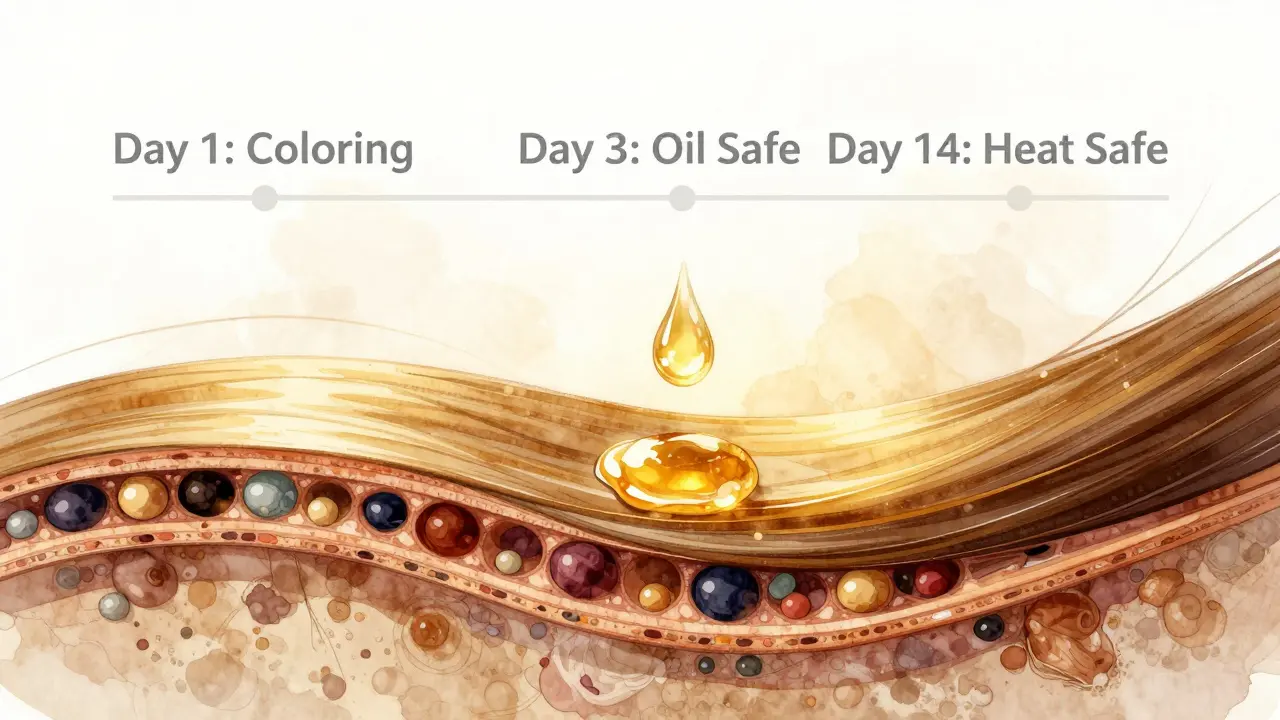
When you get your hair colored, the chemicals in the dye open up the hair cuticle-the outer layer of each strand-to let pigment sink deep into the cortex. This is how the color sticks. But here’s the catch: that cuticle doesn’t snap shut right away. It needs time to seal in the dye molecules. If you introduce oil, water, or heat too early, you risk pushing those color particles out before they fully lock in.Most experts agree: wait at least 72 hours. That’s three full days after coloring before you apply any oil. Some sources say 48 hours might be okay for lighter shades, but if you’ve gone bold-think red, purple, or platinum-you should stick to the full 72-hour window. Think of it like painting a wall. You wouldn’t wipe it down with a damp cloth the next day, would you? Same logic applies here. The color needs to cure.
That’s why washing your hair too soon after coloring is also discouraged. Even rinsing with water before the 72-hour mark can cause premature fading. And yes, that includes oil treatments. Applying oil too early is like trying to seal a fresh paint job with wax-it messes with the bonding process.
Which Oils Are Safe for Colored Hair?
Not all oils are created equal when it comes to colored hair. Some nourish. Others can strip or fade. Here’s what works:- Argan oil - Lightweight, non-greasy, and packed with vitamin E. It coats the hair without weighing it down and helps lock in moisture without disturbing color.
- Jojoba oil - Closely mimics your scalp’s natural sebum. It’s gentle, absorbs quickly, and won’t clog the cuticle.
- Almond oil - Rich in fatty acids and proteins. Great for repairing dry ends and adding shine.
These are your go-to choices after the 72-hour mark. They’re light enough to nourish without pulling color out.
Now, about coconut oil and castor oil: they’re popular, but they come with caveats. Coconut oil is great for moisture, and some brands claim it won’t fade color. But for vibrant fashion tones-especially reds, purples, and blues-it can accelerate fading. Why? Because it’s heavier and more penetrating. It can slip into the hair shaft and gently lift pigment over time. Castor oil? No solid proof it strips color, but it’s thick and sticky. It can build up and make hair look dull. Use it sparingly, if at all, in the first two weeks.
How to Apply Oil Without Ruining Your Color
Even the right oil can cause problems if you apply it wrong. Here’s how to do it safely:- Avoid the roots. Don’t massage oil into your scalp or near the hairline. That’s where color fades fastest, and oil can dilute the pigment at the source.
- Focus on mid-lengths and ends. This is where damage and dryness show up. Apply a dime-sized amount, rub it between your palms, then glide it down the last 6-8 inches of your hair.
- Use a gentle massage. A 2-3 minute scalp rub is fine if you keep it light. Don’t scrub or tug. You’re not trying to deep clean-you’re sealing in moisture.
- Leave it in for a few hours or overnight. For a deep treatment, wrap your hair in a silk scarf and leave the oil on while you sleep. Wash it out the next morning with a sulfate-free shampoo.
- Use it as a pre-shampoo buffer. Apply oil 30 minutes before washing. This creates a protective layer so water and shampoo don’t strip color as harshly.
Pro tip: Use a wide-tooth comb to distribute oil evenly. Never use a brush-it can tug on wet, fragile strands and cause breakage.
Heat Is the Enemy (Especially in the First Two Weeks)
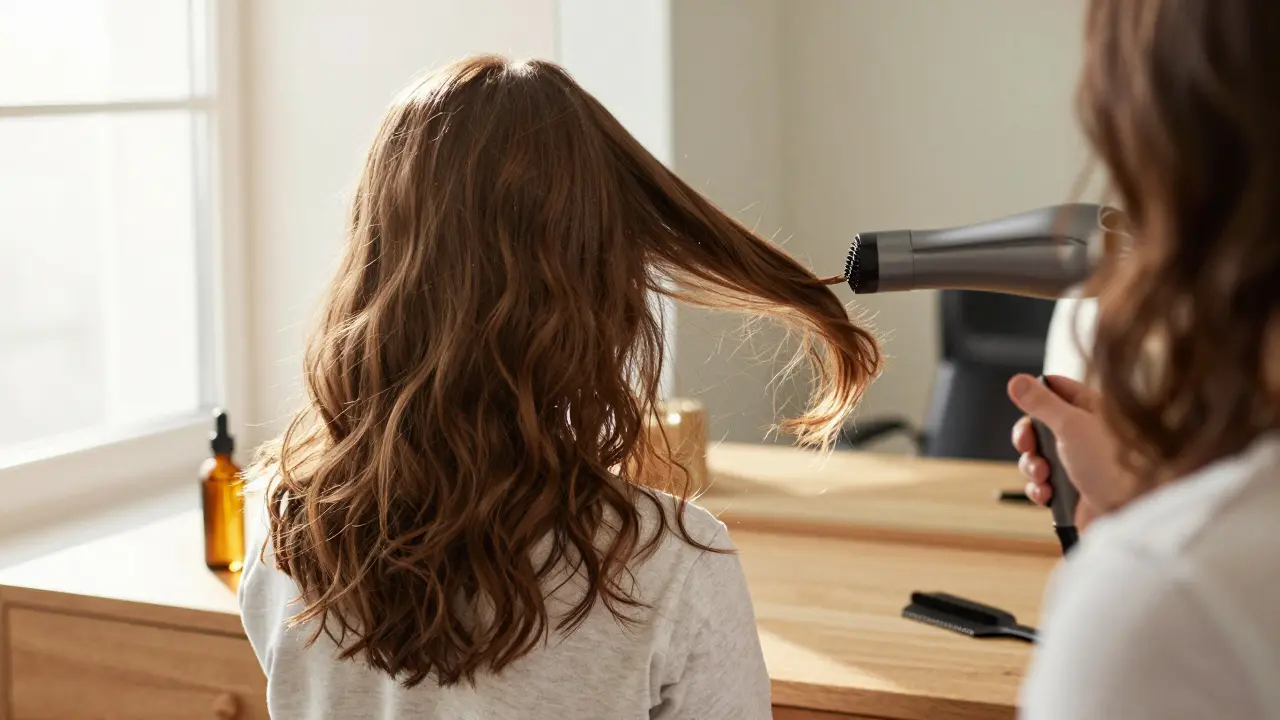
You might be tempted to do a hot oil treatment to really soak in the nutrients. Don’t. Heat opens the cuticle again. And if your cuticle is open after coloring, color molecules escape. That’s why experts say: no hot tools, no hot oil, no steam for at least 14 days after coloring.Even blow-drying on high heat can cause fading. If you must use heat, stick to low settings and always use a heat protectant. Let your hair air-dry whenever possible. Your color will thank you.
What About Oiling Before Coloring?
This is a lesser-known but important point. If you oil your hair the day before coloring, it can actually help. A little natural oil protects your scalp from irritation and prevents the dye from sticking too aggressively to your skin. But too much? That’s a problem.Excess oil creates a barrier that blocks the dye from penetrating the hair shaft. The result? Patchy, uneven color. You don’t need to wash your hair right before coloring-but you shouldn’t look greasy either. The sweet spot? Wash your hair 24 hours before coloring. Use dry shampoo if needed to absorb leftover oil. Avoid products with silicones or heavy waxes-they’re the real culprits that interfere with dye uptake.
Special Cases: Bleached or Damaged Hair
If your color job involved bleaching, your hair is more porous than ever. That means it’s extra thirsty-and extra fragile. Oiling becomes even more critical here. The tiny holes created by bleach let moisture escape, which leads to frizz and breakage.Light oils like argan and jojoba can fill those gaps. They don’t weigh hair down, but they smooth the surface, making hair look healthier and less frizzy. For bleached hair, oiling twice a week after the 72-hour window can make a visible difference in texture and shine.
What Else Should You Use Alongside Oil?
Oil is great, but it’s not the whole story. To keep your color lasting:- Switch to a sulfate-free shampoo. Sulfates are harsh-they strip color fast.
- Use a color-depositing conditioner once a week. These add a tiny boost of pigment to keep tones bright.
- Try a leave-in serum with UV protection. Sunlight fades color. A little SPF for your hair goes a long way.
- Limit washing to 2-3 times a week. Every wash is a chance for color to slip away.
Think of your colored hair like a tattoo. You wouldn’t scrub it with soap every day. You’d protect it, moisturize it, and avoid the sun. Same rules apply.
Quick Recap: The 72-Hour Rule
- Wait 72 hours after coloring before applying any oil.
- Use light oils like argan, jojoba, or almond.
- Avoid heavy oils (coconut, castor) on bright colors until week two.
- Never use heat for the first two weeks.
- Apply only to mid-lengths and ends-never the roots.
- Wash with sulfate-free shampoo and limit frequency.
Follow this, and your color will stay rich, your hair will stay soft, and you won’t have to rush back to the salon.
Can I use coconut oil after permanent hair coloring?
You can, but wait at least 72 hours-and avoid it if you have bright colors like red, purple, or blue. Coconut oil is heavy and can pull pigment out over time. For subtle tones like brown or blonde, it’s usually fine after the waiting period. Stick to lighter oils like argan or jojoba if you’re unsure.
How often should I oil my colored hair?
Twice a week is ideal after the initial 72-hour wait. Over-oiling can cause buildup, especially if you use heavy oils. Stick to a small amount on the ends only. If your hair feels greasy or flat, cut back to once a week.
Can I oil my hair the day before coloring?
Yes, but only if your hair is slightly oily, not greasy. A little natural oil helps protect your scalp. However, if your hair looks shiny or slick, wash it the day before. Too much oil blocks dye from penetrating, leading to patchy results.
Does oil fade hair color?
Oil itself doesn’t fade color-but applying it too soon or using the wrong type can. Heavy oils like coconut or castor can lift pigment if used before the color fully sets. Heat combined with oil is even riskier. Wait 72 hours, use light oils, and avoid heat to keep color vibrant.
Should I use oil instead of conditioner?
No. Oil and conditioner serve different purposes. Conditioner hydrates and repairs the hair’s internal structure. Oil seals in moisture and adds shine on the surface. Use both: conditioner in the shower, oil after drying. They work best together.


Kasey Drymalla
March 3, 2026 AT 19:08Dave Sumner Smith
March 5, 2026 AT 08:11Cait Sporleder
March 6, 2026 AT 07:22Paul Timms
March 8, 2026 AT 05:56Jennifer Kaiser
March 8, 2026 AT 14:52James Winter
March 8, 2026 AT 22:38Aimee Quenneville
March 9, 2026 AT 06:02Cynthia Lamont
March 10, 2026 AT 09:29Kirk Doherty
March 10, 2026 AT 18:28Dmitriy Fedoseff
March 11, 2026 AT 13:33