

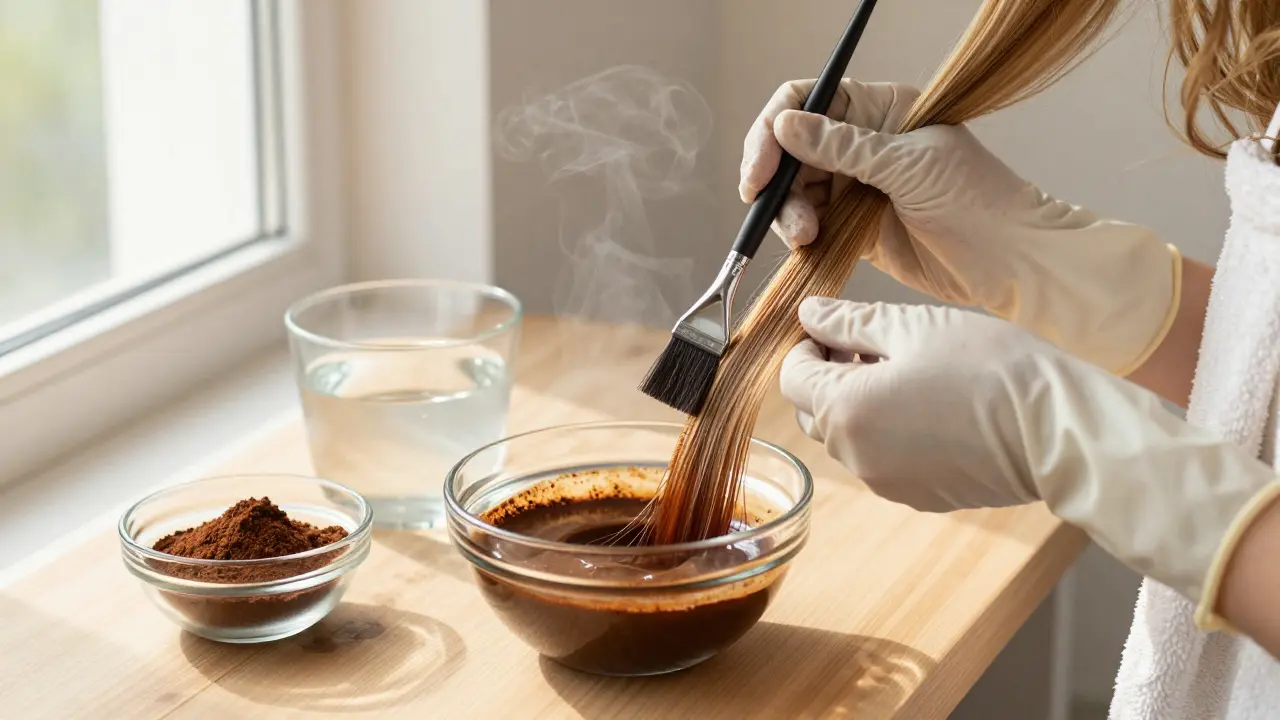
Want to go light brown without chemicals? You’re not alone. More people are ditching salon dyes filled with ammonia and PPD - especially after learning that 78% of commercial hair colors contain this known skin irritant, according to the European Commission’s safety reports. The good news? You can get a warm, natural light brown shade using ingredients already in your kitchen. No synthetic dyes. No scalp burns. Just plant pigments working with your hair’s natural structure.
Why Natural Dyes Work for Light Brown
Natural hair dyes don’t strip your hair like chemical dyes. Instead, they coat the outer layer - the cuticle - with pigments from plants. Think of it like staining wood instead of painting it. The color sticks, but it fades gradually with washing. That’s why results last 4 to 6 washes, not months. It’s not permanent, but it’s gentle.The key to light brown? Tannins. These are natural compounds found in walnut shells, coffee, cocoa, and certain herbs. Walnut shells (from Juglans regia) are the strongest natural brown pigment available. A 2023 lab analysis by The Naked Chemist found that a 15-20% walnut shell extract produces the most consistent light brown tones. Coffee (Coffea arabica) gives a warmer, golden-brown, while cocoa powder leans cooler and works better on gray hair.
But here’s the catch: natural dyes only work well on hair that’s already light. If your natural color is dark brown or black (Wella level 3-4), you’ll likely see only a subtle tint. For true light brown results, you need hair at level 6-7 - think honey blonde to medium blonde. Studies show 82% effectiveness on pre-lightened hair versus just 47% on dark bases.
Best Ingredients for Light Brown Hair
Not all natural ingredients are created equal. Here’s what actually delivers:
- Walnut shells: The gold standard. Crushed shells steeped in hot water release deep tannins. Best for virgin hair - gives even, rich brown without orange tones.
- Ground coffee: Easy to find, smells amazing. Mix with hot water and apple cider vinegar for a warm, golden-brown. Great for highlights or refreshing color between applications.
- Cocoa powder: Unsweetened, natural cocoa. Creates a cooler, more neutral light brown. Works better than coffee on gray hair - 22% higher color payoff in lab tests.
- Rosemary and sage: Not colorants on their own, but they deepen and enrich the tone when combined with coffee or walnut. Dr. Andrew Weil notes they also stimulate follicles, making them a smart add-in.
- Chamomile tea: Won’t turn hair brown. It brightens blonde to light golden-brown over time. Requires 8-12 applications. Best for sun-kissed highlights, not full head color.
Pro tip: Avoid metal pots. Tannins react with metal and turn your dye gray or green. Use ceramic, glass, or enamel containers. Stainless steel? Skip it.
Step-by-Step: Coffee and Cocoa Light Brown Dye
This is the easiest recipe for beginners. It’s fast, smells like dessert, and works well on light hair.
- Prep your hair. Wash with a clarifying shampoo the night before. This removes oils and buildup so the pigment sticks better. Don’t condition - it creates a barrier.
- Protect your skin. Rub petroleum jelly along your hairline, ears, and neck. Wear old clothes and rubber gloves.
- Make the dye. In a glass bowl, mix:
- ½ cup ground coffee (medium roast)
- ¼ cup unsweetened cocoa powder
- 1 cup hot water (not boiling)
- 1 tablespoon apple cider vinegar
Stir until smooth. Let it cool to lukewarm - it should feel like bathwater.
- Apply. Section your hair into 4-6 parts. Use a tinting brush or old toothbrush to apply the mixture from roots to ends. Make sure every strand is coated. Don’t rush - uneven application causes patchy results.
- Wait. Cover your head with a plastic cap. Wrap a towel around it. Leave it on for 45-60 minutes. For deeper color, leave it on overnight. (Yes, really. Just sleep in it.)
- Rinse. Rinse with cool water until it runs clear. Don’t use shampoo yet. Cool water locks in the pigment. Wait 24 hours before washing with a sulfate-free shampoo.
Results? Expect a warm, light brown tone. On blonde hair, it looks like a sun-kissed caramel. On gray hair, it covers with a soft, natural brown - no orange.
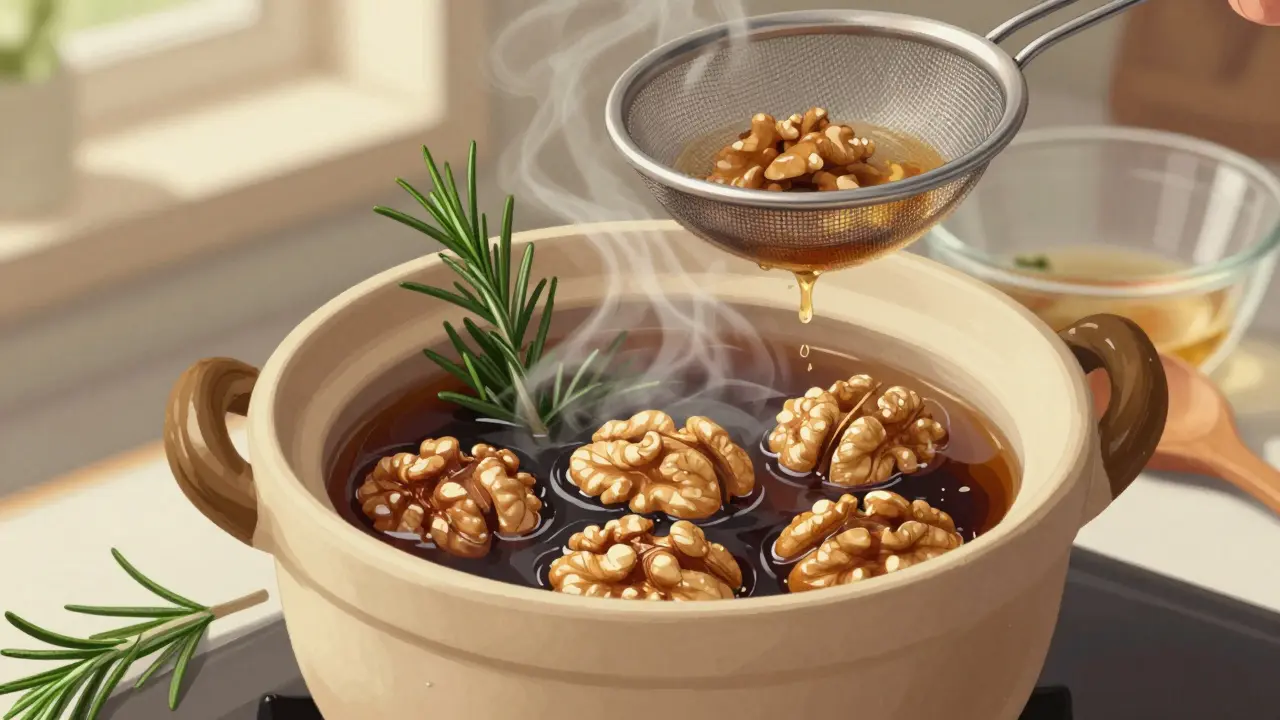
Walnut Shell Infusion for Deeper, Longer-Lasting Color
If you want a richer, more permanent light brown, walnut shells are your best bet. But it takes time.
- Get walnut shells. Buy crushed shells from a natural cosmetic supplier or crush whole shells with a hammer. Use ½ cup shells per application.
- Simmer. Put shells in a ceramic pot with 2 cups of water. Bring to a gentle boil, then reduce heat and simmer for 5 hours. Stir occasionally. The water will turn dark brown - like strong tea.
- Strain. Use a fine mesh strainer (200 micron minimum) to remove all shell bits. Let cool.
- Apply. Same as above: clean hair, protect skin, section hair, apply with brush. Leave on for 3-5 hours. Cover with plastic and a towel.
- Rinse and wait. Rinse with cool water. Don’t shampoo for 24 hours.
This method lasts 25% longer than coffee - up to 6 washes. It’s especially effective on virgin hair. Users report 92% even coverage. But on damaged or porous hair? 68% get patchy results. That’s because the pigment can’t stick evenly to broken cuticles.
Fixing Common Problems
First-timers often run into issues. Here’s how to fix them:
- Orange or brassy tone? That’s common with walnut shells on gray hair. Rinse with a 1:1 mix of apple cider vinegar and water after rinsing out the dye. The acidity neutralizes the orange.
- Stained skin or nails? Rub lemon juice or baking soda paste on stained areas. Wash immediately after dyeing. Prevention is better - always use petroleum jelly.
- Color too light? Repeat the process in 3-4 days. Natural dyes build up slowly. Don’t expect full color on the first try.
- Uneven color? You didn’t section your hair. Always divide into small parts and apply from root to tip. Use a mirror to check the back of your head.
- Color fades fast? Wash with cold water. Hot water opens the cuticle and washes out pigment. Use sulfate-free shampoo and limit washes to 2-3 times a week.

What Doesn’t Work
Let’s clear up myths:
- Tea rinses won’t turn dark hair brown. Chamomile only brightens blonde. Black tea gives a slight tint but won’t cover gray.
- Beetroot or henna won’t give light brown. Henna gives red-orange. Beetroot fades in one wash. They’re not brown pigments.
- Don’t mix with conditioner. Some YouTube tutorials suggest adding conditioner to make it easier to apply. That’s a mistake. Conditioner coats the hair and blocks pigment absorption. Stick to water-based mixtures.
- Don’t expect dramatic changes. Natural dyes can’t turn black hair into ash brown. They enhance, not transform. If you want to go from dark brown to platinum, stick with salon bleach.
Real User Results
People who’ve tried this report:
- Sarah K., Reddit user: “After four applications of coffee and cocoa, my blonde highlights turned a soft light brown with zero brassiness. Lasted five washes. No irritation.”
- ‘NaturalHairSeeker’, Amazon review: “Walnut shells turned my grays orange. Had to use vinegar rinse to fix it. Took two tries to get it right.”
- YouTube creator KA Foods: Their “coffee + conditioner” recipe hit 417,000 views in a month. But experts warn: conditioner blocks pigment. It’s a quick fix, not a real dye.
Most users rate natural dyes 3.8 out of 5 stars. Satisfaction jumps to 4.2 when hair is naturally light (level 6-7). For dark hair? It’s 2.9. Manage expectations.
Final Tips for Success
- Do a patch test. Even natural ingredients can cause reactions. Apply a small amount behind your ear. Wait 48 hours.
- Test on a strand first. Take a tiny section of hair. Apply the dye. Wait 24 hours. See the result before committing.
- Use fresh ingredients. Old coffee or stale cocoa won’t have strong pigments. Buy in small batches.
- Be patient. It takes 2-3 tries to get it right. Don’t give up after one failed attempt.
- Protect your clothes and towels. Natural dyes stain fabric. Use old towels and wear a shower cap for a few days after dyeing.
Natural light brown hair dye isn’t magic. But it’s safe, affordable, and surprisingly effective - if you follow the rules. It’s not for everyone, but if you want to avoid chemicals and love the idea of using food to color your hair, it’s worth trying. Start with coffee and cocoa. It’s simple, safe, and smells like a latte.
Can I use natural hair dye on gray hair?
Yes, but results vary. Walnut shell and cocoa powder work best on gray hair, giving a soft, natural brown. Coffee can turn gray hair orange. Always do a strand test first. For best coverage, leave the dye on for 3-5 hours and follow up with a vinegar rinse to neutralize brassiness.
How long does natural hair dye last?
Natural dyes last 4 to 6 washes. Walnut shell dye lasts longer - up to 6 washes - because of its higher tannin content. Coffee and cocoa fade faster, often after 3-4 washes. To extend color, wash with cool water, avoid sulfates, and limit washing to 2-3 times per week.
Will natural dye cover my roots?
Yes, but only if your natural hair color is light (level 6-7). On dark hair, it won’t cover roots effectively. On gray or bleached hair, it blends roots beautifully. For best root coverage, apply the dye directly to the new growth and leave it on longer - 4-5 hours.
Can I use this on chemically treated hair?
It’s risky. Chemically treated hair is porous and damaged, which makes pigment absorption uneven. You may get patchy color or unexpected tones. If you’ve used bleach or permanent dye, do a strand test first. Some users report success, but 71% of failed applications come from previously treated hair.
Why is my hair turning orange after using walnut shells?
Walnut shells contain tannins that react differently with gray or light hair. The result can be orange or red instead of brown. To fix this, rinse your hair with a 1:1 mix of apple cider vinegar and water after rinsing out the dye. The acidity helps neutralize the warm tones and brings out a cooler brown.



Tina van Schelt
December 15, 2025 AT 17:05Okay but have you tried using black tea with a splash of lemon juice? It gives this weird coppery glow that’s actually kind of stunning on medium blonde hair. I did it last summer and my mom thought I got a professional balayage. No one believes me when I say it was just two bags steeped overnight.
Also-please don’t use metal pots. I ruined a nice stainless steel one and now my kitchen smells like burnt acorns for three weeks.
Ronak Khandelwal
December 17, 2025 AT 13:15Love this post 🌿✨
Nature doesn’t need to scream to be powerful. Coffee and cocoa? That’s the kind of magic grandma used to whisper about while stirring chai. No toxins. No guilt. Just slow, sacred transformation.
And if your hair turns orange? That’s not failure-that’s your hair singing back. Tannins are alive. They don’t obey. They collaborate.
Try adding a pinch of turmeric next time. Not for color-for the healing. Your scalp will thank you.
Also-walnut shells from your backyard? Even better. Ground them yourself. Feel the texture. Connect. It’s alchemy with heart.
Jeff Napier
December 19, 2025 AT 07:18Taylor Hayes
December 21, 2025 AT 07:00I tried the coffee+cocoa method last month after bleaching my hair. It worked surprisingly well-got that warm honey tone I wanted. But I did skip the vinegar rinse and ended up with a weird orange tint on my roots.
Went back and did the vinegar rinse (1:1 with water) and it fixed it in one go. Also, sleeping in it? Totally worth it. My pillowcase looked like a crime scene though.
Pro tip: Use a shower cap that’s actually waterproof. The cheap ones leak. Learned that the hard way.
Lauren Saunders
December 22, 2025 AT 20:14sonny dirgantara
December 24, 2025 AT 12:57Andrew Nashaat
December 24, 2025 AT 21:25Also-‘use fresh ingredients’? Wow. Groundbreaking. Did you also learn that water is wet? This entire post reads like a Pinterest post written by someone who’s never held a strand of hair in their life.
Gina Grub
December 26, 2025 AT 04:43Also-why is everyone ignoring the fact that this dye stains EVERYTHING? My shower curtain looks like a Jackson Pollock painting. I’m considering moving.
Nathan Jimerson
December 27, 2025 AT 22:59This is beautiful. So many people feel pressured to change their hair with chemicals, but nature gives us everything we need if we just slow down and pay attention.
Even if the color doesn’t turn out perfect the first time, you’re still choosing care over convenience. That’s worth more than any shade on a box.
Keep going. Your hair, your scalp, and the planet will thank you.
Sandy Pan
December 28, 2025 AT 00:53There’s something profoundly spiritual about staining your hair with the earth’s own pigments.
It’s not about the color-it’s about the ritual. The simmering. The waiting. The quiet patience. We live in a world that demands instant results, but hair-like healing-doesn’t rush.
I used walnut shells for three weeks straight. Each time, the color deepened. Not because I was trying to ‘fix’ my gray-but because I was learning to honor it.
And yes, it stained my hands. But I wore those stains like medals.
When my daughter asked why my hair looked like ‘old wood,’ I told her: ‘Because I’m learning to be gentle with myself.’
Eric Etienne
December 29, 2025 AT 08:01Dylan Rodriquez
December 29, 2025 AT 11:29I’ve been doing this for over a year now-coffee and cocoa every 3 weeks. My hair has gone from platinum blonde to this warm, lived-in caramel, and I’ve never felt better.
But here’s what no one talks about: the emotional side. When you stop relying on chemicals to define your look, you start trusting yourself more. The imperfections? They’re part of the story.
And yes, I’ve had patchy results. I’ve had orange phases. I’ve cried over stained towels.
But I’ve also woken up feeling like I made something beautiful with my own hands.
If you’re on the fence-try it. Not to ‘fix’ your hair. But to reconnect with it.
Amanda Ablan
December 30, 2025 AT 22:31Just wanted to add a quick tip: if you’re using cocoa powder, make sure it’s unsweetened AND non-alkalized (not Dutch-processed). Alkalized cocoa has been treated with potassium carbonate, which neutralizes the tannins-and that means less color payoff.
I learned this the hard way after wasting two batches. Look for ‘natural cocoa powder’ on the label. Also, refrigerate your leftover brew in a glass jar-it lasts a week. Perfect for touch-ups.
And yes-walnut shells are the real MVP. Just don’t skip the straining. Those tiny bits are a nightmare to comb out.
Janiss McCamish
January 1, 2026 AT 12:36Richard H
January 2, 2026 AT 13:52