


Full face threading sounds like a quick, natural way to shape brows, remove upper lip hair, and clean up the forehead-all without chemicals or heat. But if you’ve ever walked out of a salon with red, burning skin or tiny bumps that won’t go away, you know it’s not as harmless as it looks. Threading pulls hair out from the root using a twisted cotton thread, and while it’s precise, doing it across your entire face increases the risk of damage you might not notice until it’s too late.
Threading Isn’t Just for Brows-But That’s Where the Problems Start
Most people think threading is safe because it’s been used for centuries in South Asia. But those traditions were never meant for full-face sessions. Traditional threading targets small, controlled areas like the eyebrows or upper lip. When you extend it to the cheeks, chin, sideburns, and forehead, you’re asking your skin to handle way more trauma than it’s built for.
Every time the thread snaps against your skin, it tugs on the hair follicle. That’s fine once or twice. But when you do it across your whole face, you’re essentially giving your skin dozens of micro-tears in one sitting. The result? Redness that lasts for hours, or sometimes days. In sensitive skin types, that redness turns into a rash. In darker skin tones, it can leave behind dark spots called post-inflammatory hyperpigmentation.
Broken Follicles and Ingrown Hairs Are Common
Threading pulls hair out at the root, which sounds great-until the follicle gets damaged. When the thread yanks too hard or the technician isn’t precise, the hair can break off under the skin instead of coming out cleanly. That’s when ingrown hairs show up.
Unlike waxing, where the hair is removed in the direction of growth, threading often goes against it to get a sharper line. This increases the chance of hair curling back into the skin. You’ll see small, painful bumps that look like pimples but won’t pop. They can get infected. And if this happens repeatedly, the follicles can scar over, leading to permanent hair loss in patches.
A 2023 study in the Journal of Clinical and Aesthetic Dermatology found that 37% of patients who had full-face threading reported recurring ingrown hairs within three months. The highest rates were in people with coarse, curly hair-exactly the kind most common in people of color.
Threading Can Spread Infections
Think threading is clean because there’s no wax or chemicals? Think again. The thread is reused between clients, even in places that claim to use "fresh" strands. A single thread might be used on multiple areas of your face, then reused on the next person. That’s a direct path for bacteria, viruses, and fungi.
Herpes simplex (cold sores), staph infections, and even MRSA have been linked to threading salons. One case in Houston in 2024 involved a woman who developed a severe staph infection after a full-face session. The thread had been dipped in water between clients, not sanitized. The infection spread to her cheek and required antibiotics and a week off work.
Even if the salon uses new thread, the technician’s hands are the real risk. If they touch their face, phone, or another client’s skin and then touch yours, they’re transferring germs. Salons rarely test their staff for skin infections. And most customers don’t ask.
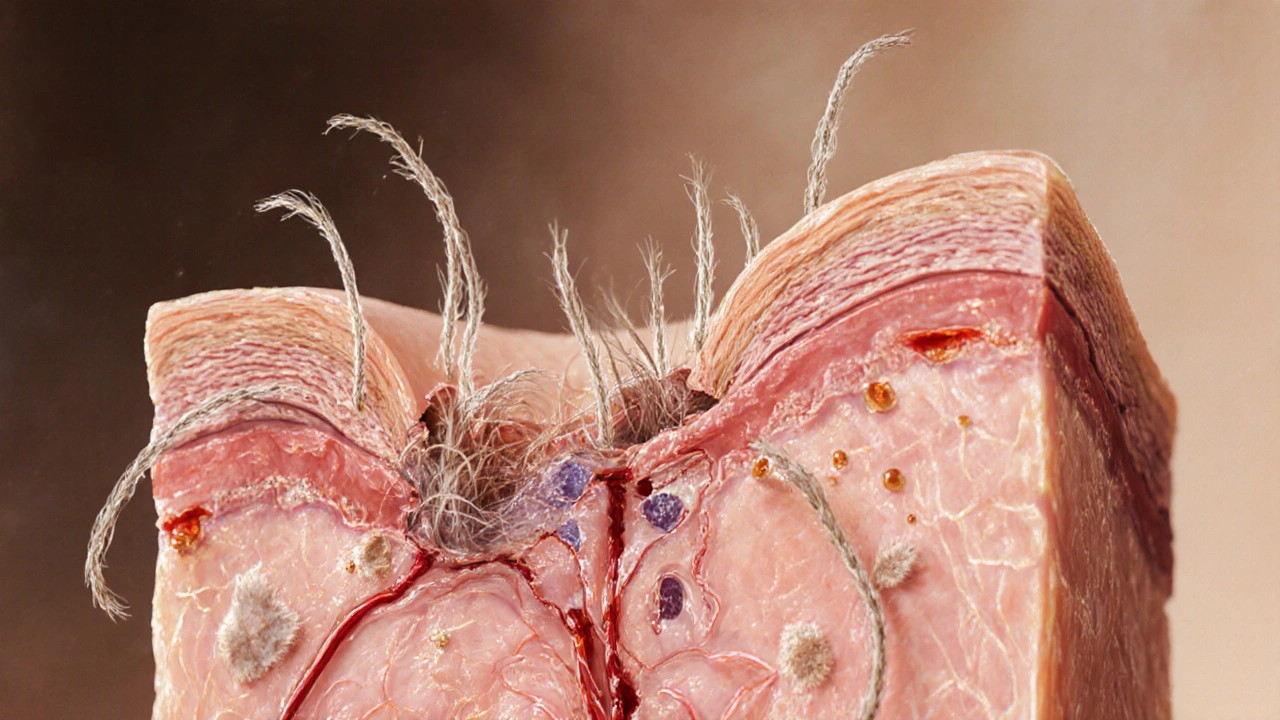
Threading Can Make Skin Thinner and More Sensitive
Repeated threading strips away the top layer of skin-not just the hair. Over time, your skin adapts by becoming thinner and more reactive. That’s why some people notice their skin feels tight, dry, or burns easily after sun exposure or using products they used to handle fine.
Threading removes not only hair but also the fine layer of dead skin cells that protect your barrier. If you’re using retinoids, AHAs, or even just a daily moisturizer, threading can make those products sting or cause peeling. Many clients report their skin becoming "sensitive" after monthly threading sessions. That’s not normal aging-it’s damage.
It Can Worsen Acne and Rosacea
If you have acne-prone skin, threading is a bad idea. The friction and pulling irritate active breakouts, spreading bacteria and triggering more pimples. Even if you don’t have active acne, threading can inflame dormant follicles and turn them into lesions.
For people with rosacea, threading is even riskier. The heat and friction from the thread can trigger flare-ups. Redness that used to come and go after spicy food or alcohol now lasts for weeks. One client in Austin, Texas, told her dermatologist she’d been threading her face every two weeks for five years. By the time she came in, her cheeks were permanently flushed, with visible broken capillaries. She stopped threading, but the redness didn’t fully go away.
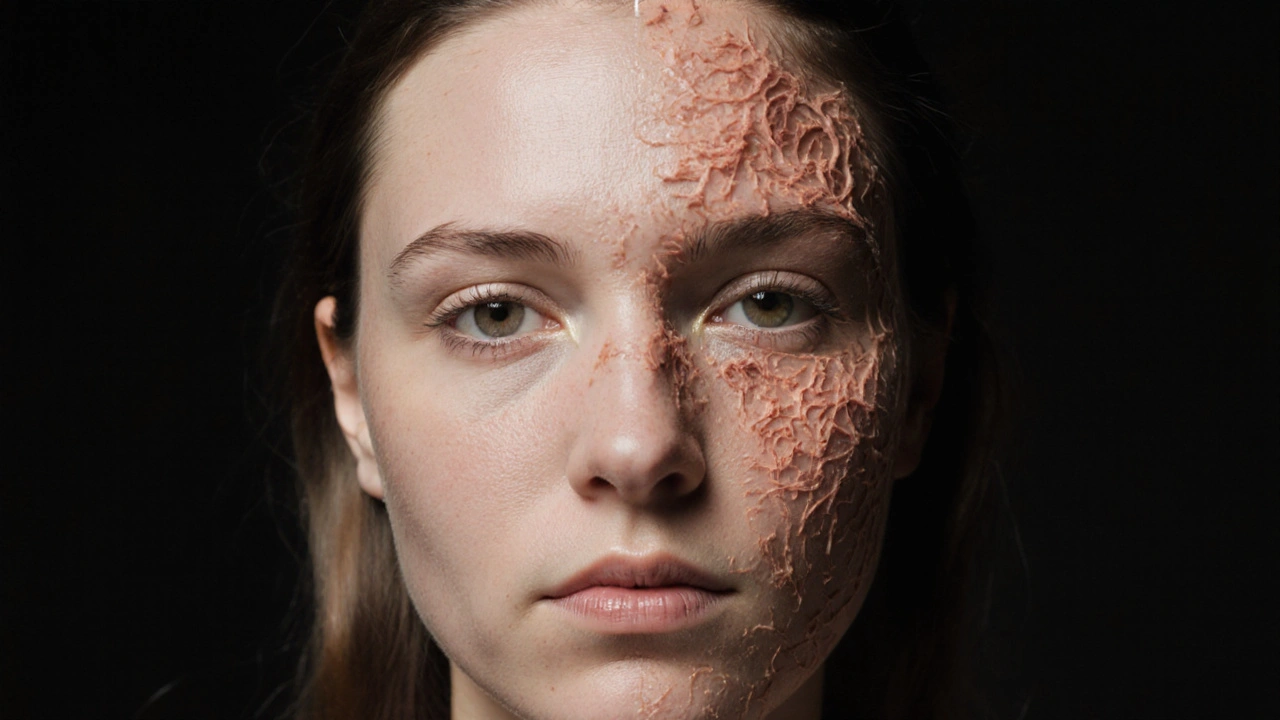
Threading Isn’t Always More Precise Than Waxing
A lot of people choose threading because they believe it’s more precise than waxing. But precision depends on the technician’s skill-not the method. A bad wax job can be messy. A bad threading job can leave you with uneven brows, a crooked hairline, or patches of missing hair.
Waxing removes hair in bulk, which is faster and less traumatic for large areas. Threading is slow and labor-intensive. That means a full-face session can take 45 minutes to an hour. During that time, your skin is under constant tension. Waxing takes five minutes. Less time = less irritation.
And here’s something most salons won’t tell you: waxing, when done right, actually exfoliates the skin gently. Threading doesn’t. So if you want smooth skin after hair removal, waxing often wins-even if it feels harsher at first.
What to Do If You Already Have Damage
If you’ve had threading and now deal with redness, bumps, or dark spots, stop immediately. Don’t keep going "to fix it." Here’s what to do:
- Stop threading for at least three months. Let your skin heal.
- Use a gentle, fragrance-free moisturizer with ceramides or niacinamide. These help repair your skin barrier.
- Avoid retinoids, acids, and scrubs until your skin feels normal again.
- If you have dark spots, try a product with vitamin C or azelaic acid. These are safer than hydroquinone for long-term use.
- See a dermatologist if you have persistent bumps, pain, or signs of infection (pus, warmth, swelling).
Alternatives That Are Safer for Full-Face Hair Removal
You don’t need threading to get clean lines. Here are better options:
- Professional waxing with high-quality hard wax. It’s faster, less irritating over large areas, and removes hair cleanly without pulling on the skin.
- Electrolysis for permanent hair removal. It’s the only FDA-approved method to permanently destroy hair follicles. It takes multiple sessions, but it’s safe for all skin tones and types.
- Laser hair removal for long-term reduction. Works best on dark hair and light skin, but newer devices can handle darker tones safely.
- Depilatory creams for occasional use. Choose ones made for the face and patch-test first. They dissolve hair at the surface-no pulling, no follicle damage.
Threading isn’t evil. It’s a skill. But using it on your whole face? That’s where things go wrong. Your skin isn’t designed to handle that kind of repeated trauma. If you want smooth skin without the side effects, there are safer, smarter ways to get there.
Can threading cause permanent skin damage?
Yes. Repeated threading can lead to scarring, broken capillaries, permanent dark spots, and even hair loss in patches if follicles are damaged over time. People with sensitive or darker skin are at higher risk.
Is threading safer than waxing for the face?
Not necessarily. Waxing removes hair faster and with less direct friction on the skin. Threading pulls each hair individually, which can cause more micro-tears across large areas. Waxing, when done with proper technique and high-quality wax, is often gentler on the skin overall.
Why does my skin turn red after threading?
Redness happens because the thread tugs on your skin and hair follicles at the same time. This causes inflammation. If the redness lasts more than 24 hours or turns into bumps, it’s a sign your skin is irritated or damaged.
Can threading spread herpes or other infections?
Yes. If the thread or technician’s hands carry the herpes virus (even without visible sores), it can transfer to your skin. There have been documented cases of herpes outbreaks after threading. Always ask if the salon uses new thread for each client and if technicians wash hands between sessions.
How often should I get threading done?
For eyebrows or upper lip, once every 3-4 weeks is fine. For full-face threading, it’s not recommended. If you do it, limit it to once every 6-8 weeks and only if your skin shows no signs of irritation. Better yet, switch to a gentler method.



Michael Gradwell
November 18, 2025 AT 01:01Threading your whole face is just asking for trouble. You think you're being natural but you're basically sanding your skin with string. Stop pretending it's some ancient wisdom-it's not. It's just bad hygiene with extra steps.
Flannery Smail
November 19, 2025 AT 06:33Actually waxing is worse. At least threading doesn't burn your skin off like hot wax. You're just mad because you've never had a good threader.
Emmanuel Sadi
November 20, 2025 AT 03:50So you're telling me a technique used for centuries by millions of South Asians is somehow dangerous now? The real problem is you don't know how to find a skilled practitioner. It's not the method-it's the incompetence. Also your skin is probably just weak from too much CeraVe.
Nicholas Carpenter
November 21, 2025 AT 15:50This is actually really helpful. I had no idea threading could cause long-term damage like that. I've been doing it every few weeks and my skin has been acting up lately. Guess I'm switching to waxing. Thanks for laying it out so clearly.
Chuck Doland
November 22, 2025 AT 10:48It is incontrovertible that the structural integrity of the epidermis is compromised through repeated mechanical trauma induced by tensile force application via cotton filament. The physiological consequences, including but not limited to follicular disruption, inflammatory hyperpigmentation, and barrier dysfunction, are well-documented in peer-reviewed dermatological literature. One must therefore conclude that full-face threading constitutes an iatrogenic risk that far outweighs its aesthetic utility.
Madeline VanHorn
November 24, 2025 AT 02:22Ugh. I knew someone would do this. I stopped threading after my face looked like a rashy tomato. Now I just let my hairs grow. It's so much easier. And honestly? People don't care.
Glenn Celaya
November 24, 2025 AT 02:36Threading is for people who think they're too good for wax but too cheap for laser. Also your salon probably uses the same thread on everyone. I saw a guy wipe his nose then grab the thread. No thanks. I'm going full laser. My wallet will cry but my skin will thank me
Wilda Mcgee
November 25, 2025 AT 19:19OMG YES. I had the same thing happen after my first full-face thread. Red for days, bumps everywhere, and then dark spots on my cheeks that wouldn't fade. I switched to hard wax and my skin has never been better. Also-niacinamide is a game changer. Try The Ordinary. You'll feel like your skin finally got a hug.
Chris Atkins
November 26, 2025 AT 22:32My mom in Pakistan threads her whole face every week and she's 72 and still looks amazing. Maybe it's about how you do it not if you do it. Also I think people forget that skin adapts. We're not fragile. Just find a good person.
Jen Becker
November 27, 2025 AT 20:11I got herpes from threading. Like. Actual herpes. On my lip. It was the worst week of my life. No one told me. No one asked. I just cried in my car for three days.
Ryan Toporowski
November 27, 2025 AT 23:38Y'all need to stop the drama and just try electrolysis 😊 It's slow but it's the only thing that actually works forever. I did it on my chin and now I don't have to think about it anymore. Worth every penny 💪✨
Samuel Bennett
November 28, 2025 AT 04:57Did you know the FDA doesn't regulate threading salons? None of them. Zero. That means your threader could be a guy who just learned from YouTube. And they reuse threads. I'm not even kidding. I saw a video of one guy using the same thread on 8 people. This is a public health crisis and no one's talking about it
Rob D
November 29, 2025 AT 14:39Threading is for weak Americans who can't handle a little pain. In real countries they do it every day. You think your skin is special? Your skin is just lazy. Try a real method like sugaring or just shave. That's what my grandpa did in the 50s and he lived to 98.
Franklin Hooper
December 1, 2025 AT 09:13There is a statistically significant correlation between the frequency of threading and the incidence of post-inflammatory hyperpigmentation in Fitzpatrick skin types IV–VI. The data is clear. Yet the discourse remains emotionally driven rather than evidence-based. This is why science suffers.
Michael Gradwell
December 2, 2025 AT 05:33Of course the guy who got herpes is gonna post. Everyone knows salons are dirty. But you're the one who didn't ask if they use fresh thread. You're the problem.