

Why Most Hair Extensions Ruin Your Natural Hair
You want length. You want volume. But you also want to keep your natural hair healthy. That is the big dilemma with hair extensions are artificial or human hair strands attached to natural hair to add length and thickness. The problem is that many popular methods pull, glue, or heat your real hair. Over time, this causes breakage, thinning, and even permanent damage at the roots.
If you have short hair, the stakes are higher. Short hair has less weight to distribute tension. It is more fragile near the scalp because it hasn't had years of growth to strengthen the shaft. So, choosing the right type matters more than ever. Not all extensions are created equal. Some are safe for occasional use. Others are a one-way ticket to traction alopecia.
The Gold Standard: Clip-In Extensions
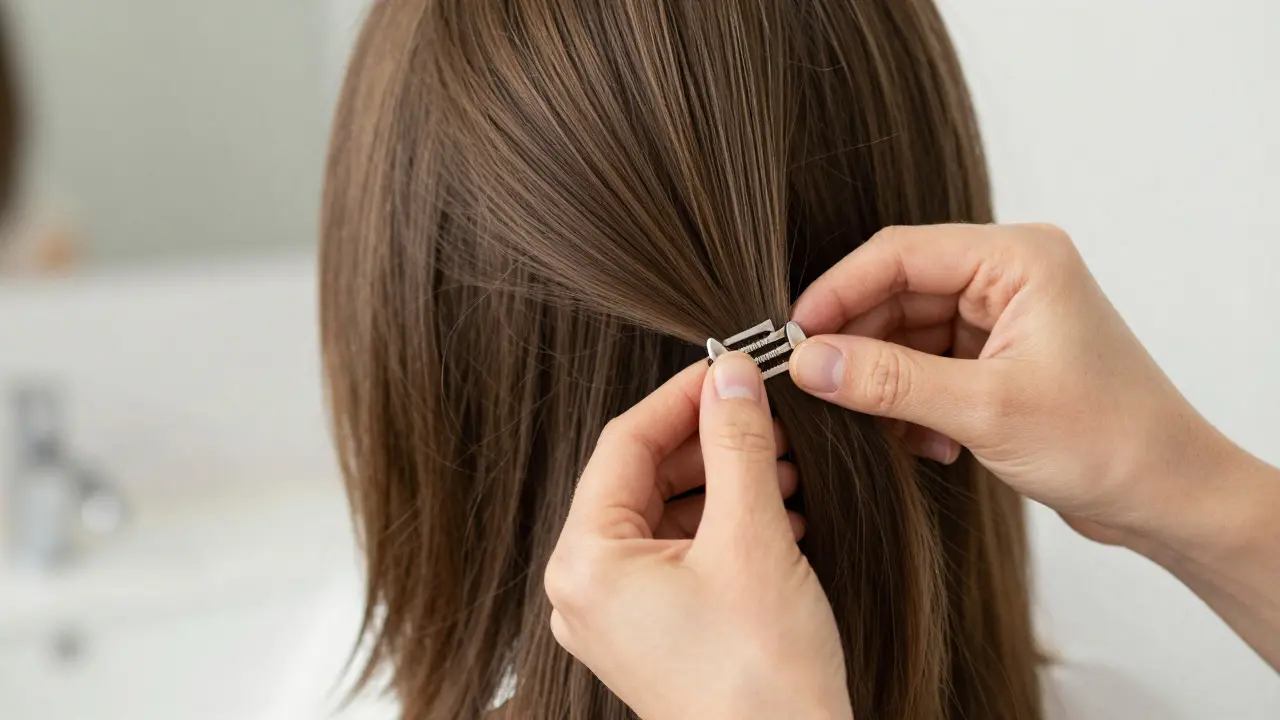
When we talk about the least damaging hair extensions, clip-ins win every time. Why? Because they do not touch your natural hair permanently. You snap them in when you need them. You take them out before bed. No glue. No beads. No weaving. Just simple clips that grip your own hair gently.
For people with short hair, clip-ins are a game-changer. They let you experiment with length without committing to a salon appointment. You can wear them for a night out, then remove them so your scalp breathes. This gives your hair follicles a chance to recover. There is no constant tension pulling on your roots.
Here is how to make clip-ins work for short hair:
- Choose lightweight wefts. Heavy bundles will slip out of short layers.
- Select a shade that matches your mid-lengths, not just your roots. Short hair shows contrast easily.
- Place the clips under the top layer of your hair. This hides the mechanism and reduces stress on visible strands.
- Never sleep with them in. Even gentle clips can tangle overnight.
Clip-ins are not perfect. They require daily application. If you forget, you go back to your natural length. But if your goal is zero damage, this trade-off is worth it.
Micro Bead (I-Tip) Extensions: A Semi-Permanent Option
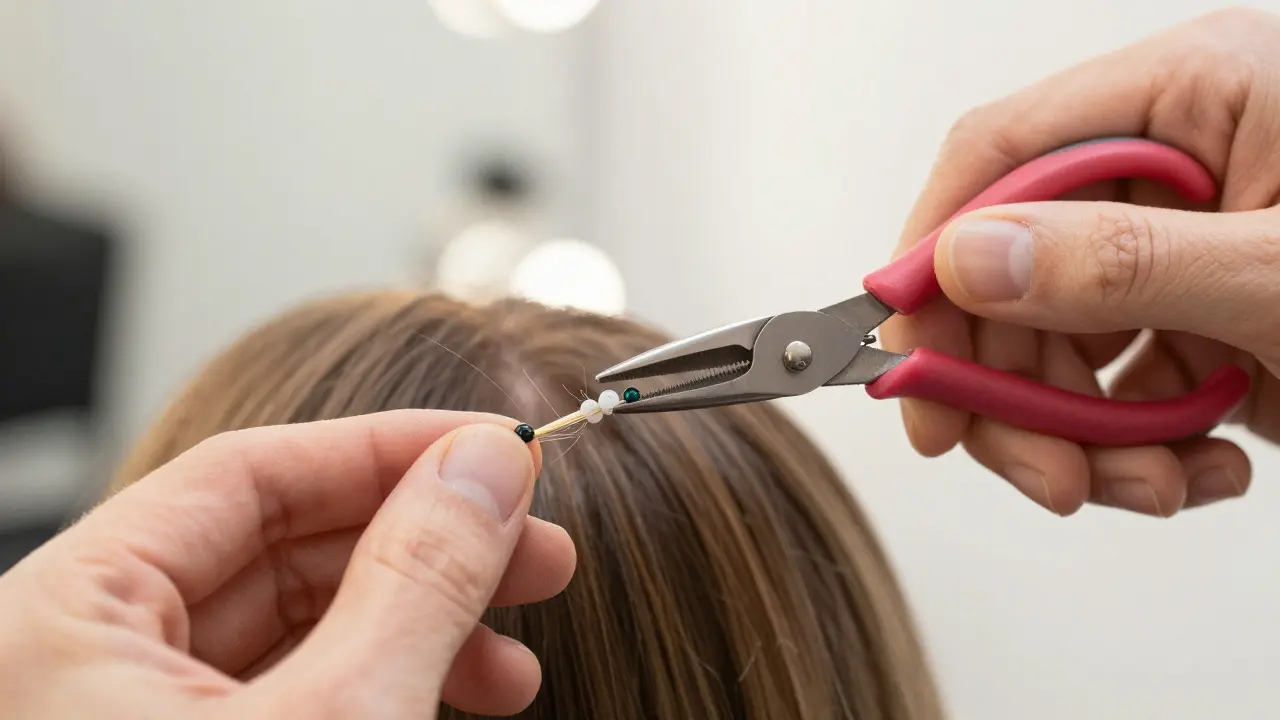
If clip-ins feel too temporary, look at micro bead extensions. Also known as I-tip extensions, these use tiny metal or silicone tubes to attach individual strands of extension hair to your natural hair. A specialist uses pliers to crimp the tube shut. No heat. No glue. Just mechanical pressure.
This method is much safer than fusion or tape-in methods. Why? Because there is no chemical bonding agent to dissolve your hair's cuticle. And there is no high heat to cook your strands. The beads sit close to the scalp but do not clamp down tightly if installed correctly.
For short hair, micro beads offer a clean look. Since each strand is attached individually, the result looks natural even with shorter base lengths. However, you must visit a professional every six to eight weeks for maintenance. As your hair grows, the beads move down. If left too long, they can slip and cause tangling.
Key tips for micro beads:
- Avoid heavy conditioning directly on the beads. Slippery hair makes beads slide off.
- Sleep with a silk scarf. Friction from cotton pillows pulls on the beads.
- Choose a stylist who specializes in fine or short hair. Big salons often over-tension clients with thick hair.
What to Avoid: The Danger Zones
Some extension methods are notorious for causing damage. If you have short hair, steer clear of these:
Fusion extensions use keratin bonds melted onto your hair with a hot iron. The heat weakens the protein structure of your natural strand. When removed, the bond often rips out chunks of your own hair. For short hair, the weight of the bonded extensions can cause immediate breakage.
Tape-in extensions use adhesive strips glued to thin sections of your hair. While easier to apply than fusion, the glue residue is hard to remove completely. Solvents used to strip the tape dry out your hair. Plus, tape-ins add bulk near the root. On short hair, this creates an unnatural puffiness that is hard to style flat.
Weave or braided extensions involve cornrowing your natural hair tightly. This puts constant tension on the hairline. Traction alopecia is a real risk here. If you already have short hair, tightening braids further stresses the follicles. It is better to skip this method entirely unless you plan to keep the weave in for less than four weeks.
How to Protect Your Hair Regardless of Method
Even the safest extensions need care. Here is a checklist to keep your natural hair strong:
- Strengthen your hair first. Start with a protein treatment series two weeks before getting extensions. Weak hair breaks under any added weight.
- Keep your scalp clean. Buildup traps moisture and breeds bacteria. Wash regularly with a sulfate-free shampoo.
- Brush gently. Use a loop brush designed for extensions. Start from the ends and work up to the roots to prevent snagging.
- Limit heat styling. Extensions do not produce natural oils. Heat tools dry them out faster. Always use a heat protectant spray.
- Remove them promptly. Do not wait until they fall out on their own. Scheduled removal prevents matting and tangling.
Comparison of Extension Types for Short Hair
| Extension Type | Damage Level | Duration | Best For |
|---|---|---|---|
| Clip-In | Low | Temporary (Hours) | Occasional wear, zero commitment |
| Micro Bead (I-Tip) | Medium-Low | Semi-permanent (6-8 weeks) | Natural look, daily wear |
| Tape-In | Medium-High | Semi-permanent (4-6 weeks) | Flat styles, thicker hair |
| Fusion | High | Semi-permanent (8-10 weeks) | Long-term volume, strong hair |
| Weave/Braid | High | Semi-permanent (4-8 weeks) | Protective styling, longer hair |
Choosing the Right Shade and Texture
Color matching is critical for short hair. With long hair, you can hide mismatched extensions under layers. With short hair, every strand is visible. Bring photos of your hair in different lighting to your stylist. Ask for a blend of two shades if your hair has highlights. Monochromatic extensions look fake against dimensional color.
Texture matters too. If you have straight hair, avoid wavy extensions unless you plan to straighten them daily. Conversely, curly hair needs curly extensions to blend seamlessly. Mismatched textures create friction. Friction leads to tangling. Tangling leads to breakage. Match the curl pattern exactly.
FAQ
Are clip-in extensions safe for thin hair?
Yes, clip-ins are very safe for thin hair because they do not add permanent weight. Choose lightweight synthetic or fine human hair wefts. Place the clips strategically so they grip enough hair without slipping. Avoid placing multiple clips in one small section to reduce tension.
Can I get micro bead extensions if my hair is chin-length?
Yes, but you need a skilled stylist. Micro beads require at least half an inch of natural hair to attach securely. If your hair is too short, the beads may slip out. A professional can assess your density and decide if I-tips are viable or if clip-ins are a better choice.
Do hair extensions cause baldness?
Extensions themselves do not cause genetic baldness. However, improper installation or tight styles can cause traction alopecia. This is hair loss due to constant pulling on the follicles. It is usually reversible if caught early. Remove the extensions and give your scalp rest. Consult a dermatologist if patches appear.
How long can I leave clip-ins in?
You should never sleep with clip-ins in. Take them out every night. Leaving them on for 12+ hours increases the risk of tangling and stress on the roots. Clean the clips weekly with a damp cloth to remove oil buildup.
Is human hair better than synthetic for short hair?
Human hair blends better with natural texture and allows heat styling. Synthetic hair is lighter and cheaper but can look shiny and artificial. For short hair where visibility is high, human hair offers a more realistic finish. Look for Remy human hair for the best quality.
How do I remove micro bead extensions safely?
Use special sliding pliers to open the bead gently. Do not pull the hair through the bead. Slide the bead down the strand and remove it. Apply a conditioner mask afterward to restore moisture lost during the wearing period.

Bonnie Watt
August 14, 2026 AT 21:51Oh please, spare me the 'clip-ins are safe' nonsense. I've seen girls with clip-ins pulling out more hair than those with weaves because they're too lazy to brush properly before snapping them in. It's all about technique, not the tool. Most people just yank and pray.
Sabrina Newland
August 15, 2026 AT 17:41i mean... isn't it funny how we trust metal beads on our scalps but fear a little glue? 🤔 maybe the real damage is the anxiety of looking fake lol. also typos r everywhere in this post but who cares when u look good ✨
Meagan Mueller
August 17, 2026 AT 14:35they want you to think its safe so you buy more chemicals later. micro beads contain trace metals that leach into your bloodstream over time. big beauty knows this but hides it behind 'natural look' marketing. wake up sheeple.
Dave Gibbeson
August 18, 2026 AT 14:04Listen up! If you have short hair, stop messing around with semi-permanent methods unless you have a budget for constant maintenance. Clip-ins are the only logical choice if you value your follicles. Get a lightweight set, learn to layer them correctly, and stop complaining about slippage. It's physics, not magic. Heavy wefts on short hair will always slide. Adjust your expectations or adjust your method.
Art HND
August 19, 2026 AT 18:08Clip ins are for amateurs who can't commit. Real style requires risk. If your hair breaks you did it wrong.
Amara Akbar
August 20, 2026 AT 09:32I must respectfully disagree with the notion that clip-ins are effortless. They require significant dexterity and patience. However, I agree that for short hair, the tension from tape-ins is often miscalculated by stylists who are used to working with longer, heavier locks. The key is finding a specialist who understands the biomechanics of short hair shafts. It is quite fascinating how much engineering goes into something as simple as adding length.
Elizabeth Brooks
August 21, 2026 AT 10:57honestly i tried micro rings once and my stylist was terrible. she crimped them too tight and i had these tiny bald spots for weeks. now i stick to clip ins even though they fall out if i run. at least my hair isnt falling out lol. anyone else have bad experiences with i-tips?
Deb Kortyna, MBA
August 22, 2026 AT 17:21The article fails to mention the economic implications of frequent salon visits for bead maintenance. For the average consumer, the cumulative cost outweighs the initial investment in high-quality clip-ins. Furthermore, the claim that fusion extensions cause immediate breakage is an exaggeration; proper keratin bonding, when executed by a certified professional, yields minimal damage. The issue lies in amateur application, not the method itself. One should not conflate poor craftsmanship with inherent product danger.
Mark Harvey
August 23, 2026 AT 18:54hey everyone dont stress too much about it. i found that sleeping with a silk pillowcase helps way more than worrying about the type of extension. just be gentle with yourself and your hair will bounce back. positive vibes only!
alex kobri
August 25, 2026 AT 11:45we define safety by what we fear. glue feels chemical but beads feel mechanical yet both exert force. perhaps the true enemy is gravity acting on foreign mass attached to fragile anchors. short hair lacks the leverage to distribute weight hence the pain. logic dictates temporary solutions are superior for weak foundations.
Brandon Olvera
August 25, 2026 AT 22:48Imported synthetic hair is ruining our local salons anyway. Stick to domestic human hair products if you want quality. Everything else is cheap junk designed to fail.
Zach Loescher
August 27, 2026 AT 11:45I've been using clip-ins for three years now and my hair density hasn't changed. I think the biggest mistake people make is washing their natural hair and the extensions together without separating them first. That causes mats which then get pulled out during removal. Just keep them separate and use a loop brush.