

Walking into a salon and feeling like your hair lacks body is a frustrating experience. You want more volume, but you don't want clumps of plastic-looking strands sitting on top of your head. If you have thin hair, the standard tape-in or clip-in methods often feel too heavy or visible. This is where hand-tied wefts come in. They are widely considered the gold standard for adding length and thickness without compromising the natural movement of your hair.
Unlike machine-made extensions that sit flat against the scalp, hand-tied wefts are crafted by artisans who sew individual strands onto a thin thread. This creates a flexible, lightweight base that moves with your natural hair. For those struggling with low density, this method offers a solution that looks less like "extensions" and more like your hair just grew thicker overnight. Here is everything you need to know about how they work, why they suit fine hair, and what to expect from the process.
How Hand-Tied Wefts Are Made
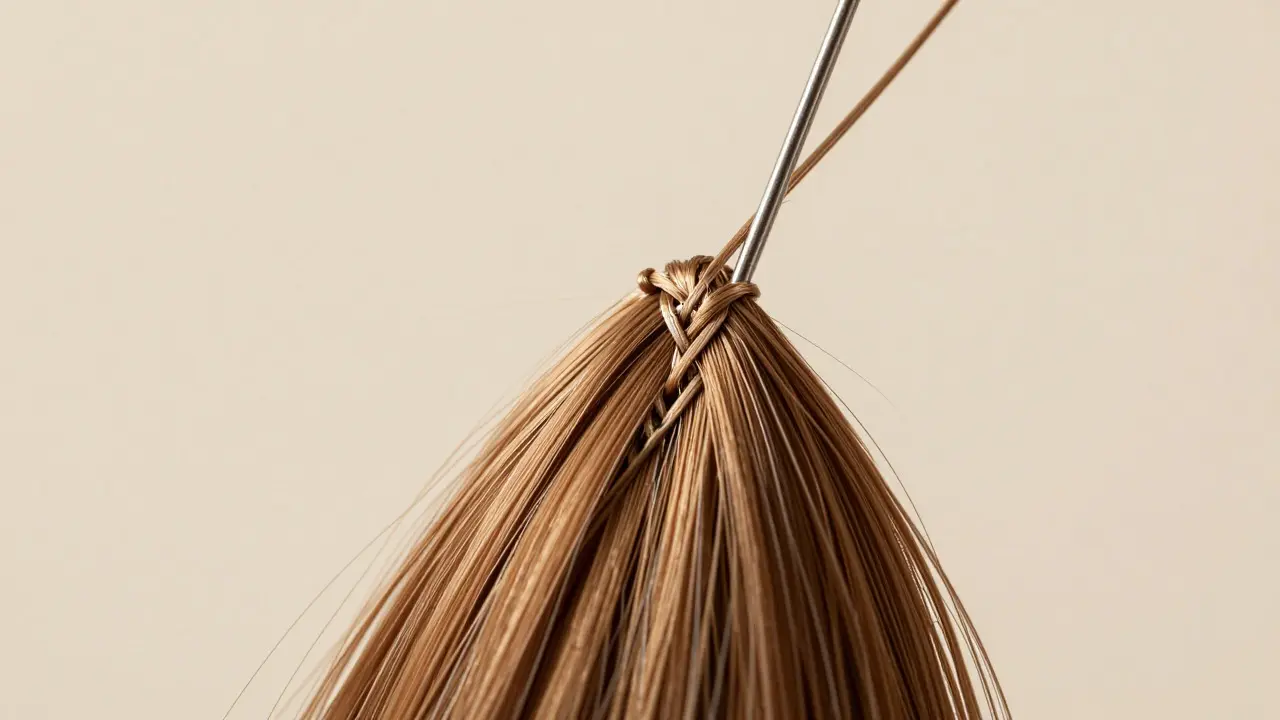
To understand why these extensions feel so different, you have to look at how they are constructed. A Hand-Tied Weft is a type of hair extension made by manually sewing individual hair strands onto a single thread using a needle. This labor-intensive process takes hours, which is why they cost more than machine-sewn alternatives. However, the result is a weft that is incredibly thin-often just a few millimeters wide-and soft.
The key difference lies in the texture. Machine-made wefts use a zigzag stitching pattern that can create a rigid line. Hand-tied wefts use a continuous, tight stitch that allows the hair to lay flat against the head. When your stylist places these under your natural hair, there is no bulky band to show through. This makes them ideal for people with fine or delicate hair that might break under the weight of heavier options.
Why They Work Best for Thin Hair
If your hair is fine, weight is your enemy. Heavy extensions pull down on the roots, causing traction alopecia or simply making your hair fall flat. Hand-tied wefts solve this problem in two ways:
- Lightweight Distribution: Because the weft itself is thin, the weight is distributed evenly across a larger surface area of the scalp when secured properly.
- Seamless Integration: There is no tape, glue, or metal bead to irritate sensitive scalps. The only thing touching your skin is the small section of your own hair wrapped around the weft thread.
This gentle approach means you can wear them for longer periods without damaging your natural hairline. Many stylists recommend this method specifically for clients with a density level below average because it adds visual fullness without physical bulk.
The Installation Process Step-by-Step
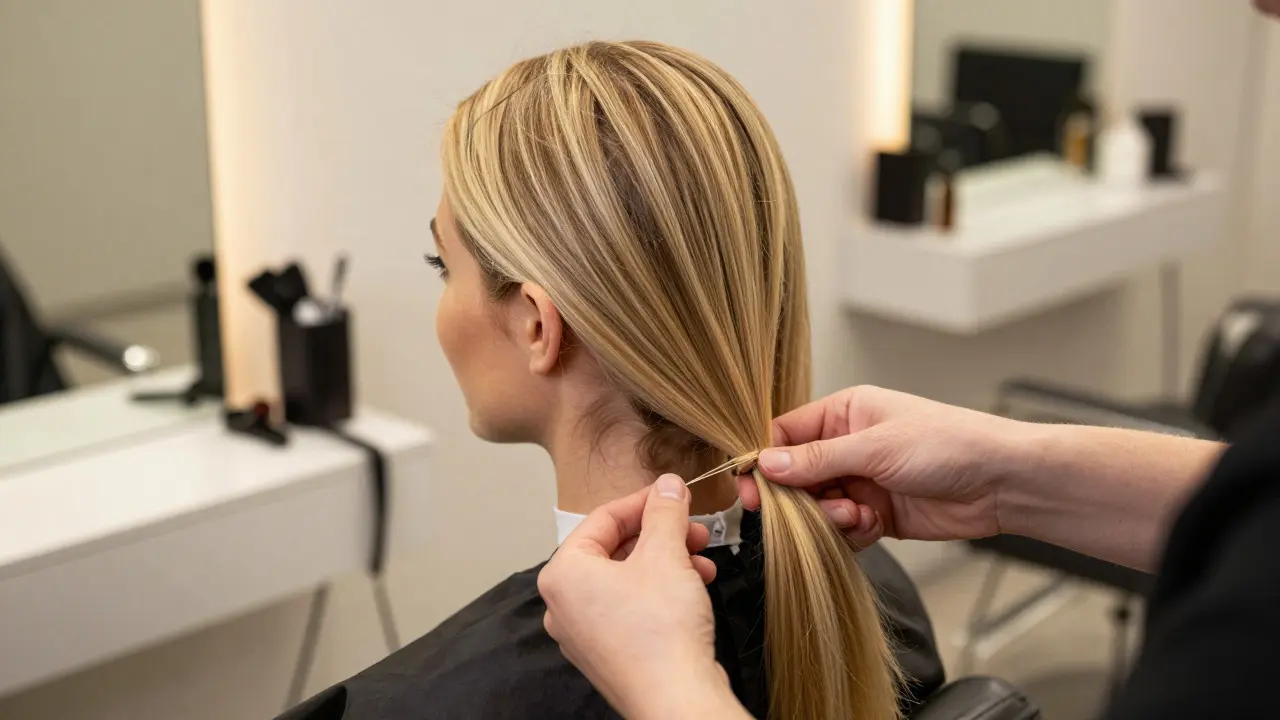
Getting hand-tied wefts installed is not a quick lunch-break appointment. It is a detailed process that usually takes three to five hours. Here is what happens during the session:
- Consultation and Measurement: Your stylist measures your head and determines how many rows (tiers) you need. Typically, 4 to 6 tiers are required for significant volume.
- Sectioning: Your hair is divided into horizontal sections. The first row is placed closest to the nape of the neck, and subsequent rows move up toward the crown.
- Tying the Wefts: The stylist wraps a small bundle of your natural hair around the end of the weft thread and ties it securely. This knot is then hidden beneath your top layer of hair.
- Cutting and Blending: Once all wefts are tied, your stylist cuts the extensions to match your desired length and blends them with your natural hair for a seamless finish.
It is crucial to choose an experienced technician for this job. If the knots are tied too tightly, you will feel tension. If they are tied too loosely, the wefts may slip out. Precision matters here more than with any other extension method.
Comparison: Hand-Tied vs. Other Methods
Not all extensions are created equal. To help you decide if hand-tied wefts are right for you, let's compare them to popular alternatives.
| Method | Visibility | Weight | Lifespan | Best For |
|---|---|---|---|---|
| Hand-Tied Wefts | Lowest (Invisible) | Lightest | 3-5 months | Fine/Thin hair, natural look |
| Tape-In Extensions | Medium (Flat but visible lines) | Moderate | 6-8 weeks | Straight hair, frequent changes |
| Keratin Bonded | High (Beads visible) | Heavy | 3-4 months | Thick hair, long lengths |
| Clip-Ins | Variable | Varies | Daily removal | Temporary occasions |
As you can see, hand-tied wefts win on visibility and weight. Tape-ins are faster to install but can leave visible lines if your hair is very fine. Keratin bonds hold strong but add significant weight, which can stress thinning hairlines over time.
Maintenance and Care Tips
Owning hand-tied wefts requires a specific care routine to keep both your natural hair and the extensions healthy. Since the knots are tied with your own hair, you need to be gentle around the attachment points.
- Brushing Technique: Always brush from the ends up to the roots. Never start brushing at the scalp, as this can loosen the knots. Use a loop brush or a soft bristle brush designed for extensions.
- Washing Routine: Wash your hair every 2-3 days. Use sulfate-free shampoo and conditioner. Avoid applying product directly to the knots; instead, apply it to the mid-lengths and ends.
- Sleeping Habits: Tuck your hair into a loose braid or bun before bed. Sleeping on your back can cause friction that unravels the ties. Silk pillowcases also reduce friction.
- Heat Styling: You can blow dry, curl, and straighten hand-tied wefts, but always use heat protectant. Keep the heat setting below 350°F (175°C) to prevent frizz.
One common mistake people make is using oil-based products near the roots. Oil weakens the tie knots, causing the wefts to slip. Stick to water-based conditioners and leave-in treatments for the lower half of your hair.
Cost and Longevity Expectations
Because they are handmade, hand-tied wefts carry a premium price tag. In the United States, you can expect to pay between $300 and $800 for the installation, depending on the amount of hair needed and the quality of the strands (human vs. synthetic). Human hair wefts cost more but last longer and look more natural.
The longevity of the style depends on your hair growth rate. On average, you will need to have the wefts moved up every 3 to 5 months. This "move-up" service costs significantly less than the initial installation, usually ranging from $100 to $200. With proper care, a set of high-quality human hair wefts can be reused multiple times, making them a cost-effective investment in the long run compared to buying new clip-ins frequently.
Common Mistakes to Avoid
Even with the best method, mistakes can ruin the look. Here are the pitfalls to watch out for:
- Choosing the Wrong Color: Make sure the weft color matches your natural hair exactly, including undertones. A slight mismatch is obvious when the light hits your head.
- Overloading Your Head: More isn't always better. Adding too many rows can weigh down fine hair, defeating the purpose of adding volume. Trust your stylist's recommendation on the number of tiers.
- Neglecting the Knots: During washes, gently massage the scalp but avoid scrubbing the tie areas. Aggressive washing loosens the threads.
- Ignoring Scalp Health: Keep your scalp clean and moisturized. Dry, flaky skin can make the extensions look messy and uncomfortable.
Avoiding these errors ensures your extensions remain invisible and comfortable for the entire duration of their life cycle.
Frequently Asked Questions
Do hand-tied weft hair extensions damage thin hair?
When installed correctly by a professional, hand-tied wefts are one of the least damaging options for thin hair. The risk comes from improper maintenance, such as brushing too aggressively or tying hair too tightly at night. If you follow a gentle care routine, your natural hair should remain healthy.
Can I swim with hand-tied weft extensions?
Yes, you can swim, but you must take precautions. Chlorine and saltwater can dry out the hair fibers. Rinse your hair with fresh water immediately after swimming and apply a leave-in conditioner. If you swim frequently, consider wearing a swim cap to minimize exposure.
How much hair do I need for a full head of volume?
For someone with thin hair looking for significant volume, you typically need 4 to 6 packs of wefts. Each pack contains several wefts. Your stylist will measure your head circumference to determine the exact number needed to ensure even coverage without excessive weight.
Are hand-tied wefts suitable for curly hair?
Yes, they are excellent for curly hair. Because the weft is thin and flexible, it lays flat even under dense curls. Just make sure to buy wefts that match your curl pattern (e.g., deep wave, spiral, or coily) so the blend is seamless.
How long does the installation process take?
The initial installation usually takes between 3 to 5 hours. This includes consultation, sectioning, tying each weft individually, cutting, and styling. Subsequent move-up appointments are faster, typically taking 1 to 2 hours.



Dave Gibbeson
August 16, 2026 AT 12:14Let's be real, the 'plastic look' is the biggest dealbreaker for most guys and women alike. If you want volume without looking like a wig shop exploded on your head, hand-tied is the only way to go. The weight distribution is key here. Machine wefts just sit there heavy and stiff. Hand-tied moves with you. It’s not magic, it’s engineering. Get a good stylist or you’re wasting money. Don't cheap out on the hair quality either. Synthetic will show up in the light fast. Human hair costs more but lasts longer. You get what you pay for. Stop overthinking it and book the appointment. Confidence looks good on everyone.
Sabrina Newland
August 17, 2026 AT 09:16I have been reading about this for months and finally decided to try it 🤔
My hair is so fine that tape-ins always left red marks on my scalp 😩
It feels like such a relief to know there is an option that doesn’t pull
The idea of sewing them by hand sounds incredibly meticulous ✨
I wonder if the price tag is really worth it for someone like me 💸
But seeing the comparison table makes me feel less anxious about the process
Maybe I should stop waiting for the perfect moment and just do it? 🙏
Amara Akbar
August 18, 2026 AT 11:47Indeed, the structural integrity of the weft is paramount when considering long-term hair health.
Many clients underestimate the importance of the initial consultation phase.
A skilled technician will assess your density before committing to a number of tiers.
Overloading the root zone is a common error that leads to traction issues.
Furthermore, the maintenance routine must be strictly adhered to for optimal results.
Sulfate-free products are not merely a suggestion but a necessity for longevity.
One must also consider the sleeping habits to prevent friction damage.
A silk pillowcase is a small investment that yields significant benefits.
Heat styling should be done sparingly and always with protection.
The goal is to enhance, not to burden, the natural hair structure.
Patience during the installation process is rewarded with a seamless finish.
It is a partnership between the client and the stylist.
Communication regarding expectations is vital to avoid disappointment.
Proper care ensures the extensions remain invisible for months.
This method truly stands out as a refined solution for delicate hair types.
Mark Harvey
August 19, 2026 AT 19:27you got this bro
trust the process
it works better than you think
just keep your hair tied up at night
easy peasy
Art HND
August 20, 2026 AT 20:34Expensive.
Maintenance nightmare.
Just grow it out.
Brandon Olvera
August 21, 2026 AT 13:12Most people don't have the discipline to maintain these properly. They buy the extensions, forget the brush, and end up with matted hair. It's a vanity project that fails because of laziness. Better to save the money and buy good shampoo. American beauty standards are pushing us into debt for temporary fixes. Just accept how you look. It's cheaper and healthier. No need for all this hassle. The industry profits from our insecurity. Keep your cash in your pocket. Natural is best. That's the truth they don't tell you. Most of these ads are misleading anyway. Save yourself the trouble. Stay home and read a book instead. Less stress. More peace. That's the American dream, right? Simplicity. Don't complicate your life. Cut your hair short and move on. Life is too short for salon appointments.
Elizabeth Brooks
August 21, 2026 AT 16:33hey i actually had these put in last year and they were great!
the stylist i went to was super careful with the knots
i did have to be really gentle when washing though
if you use oil near the roots they slip out fast
also make sure you get human hair if you can afford it
synthetic felt weird after a few weeks
but overall i loved the volume boost
definitely recommend finding a reputable place
don't just go to the first salon you see
ask for reviews specifically on thin hair
that helped me a lot
good luck!
Deb Kortyna, MBA
August 22, 2026 AT 07:39One must acknowledge that the financial commitment required for such a cosmetic procedure is substantial, often exceeding the cost of high-end fashion accessories.
Yet, the psychological benefit derived from enhanced self-perception cannot be quantified in mere dollars.
However, the risk of visible attachment points remains a critical concern for discerning consumers.
Any deviation in color matching or knot tension can result in a suboptimal aesthetic outcome.
Therefore, the selection of a certified specialist is not optional but imperative.
Furthermore, the time investment for maintenance appointments disrupts professional schedules significantly.
Nevertheless, the long-term durability of human hair wefts offers a return on investment that clip-ins rarely match.
It is essential to view this as a strategic enhancement rather than a fleeting trend.
The precision required in installation demands a level of craftsmanship akin to haute couture tailoring.
Consumers should demand transparency regarding the origin of the hair strands used.
Only then can one ensure that the final product meets the highest standards of elegance and discretion.
Do not settle for mediocrity in a matter as personal as one's appearance.
Excellence is the only acceptable standard when altering one's natural features.
alex kobri
August 24, 2026 AT 00:32interesting take on the weight distribution
i always thought the knots would be the weak point
but maybe its just about how tight they are tied
my sister has tried two different methods and hated both
she said the tape ones made her scalp itch badly
so hand-tied might be the only thing left for her
i hope it works out better this time
its frustrating when something simple like hair becomes such a headache
but yeah the price is no joke
still better than buying new wigs every month i guess
just wish the install time was shorter
five hours is a long day to sit still
anyway thanks for the detailed breakdown
helps me understand why she hesitates so much
Zach Loescher
August 25, 2026 AT 12:18So basically, you spend $800 and five hours of your life to pretend your hair isn't thin. Bold strategy. Love it. Or hate it. Depends on your bank account. The fact that you have to braid it at night like a Victorian ghost just to keep it in place is peak modern beauty standards. We've come a long way from just brushing our hair. Now we're engineering it. Nice. Really nice. Can't wait to see the next innovation. Maybe we'll start gluing diamonds to the knots. Why not? It's all about the look, right? As long as it doesn't fall out in the shower, we're good. Probably.
Quintin Franzese
August 26, 2026 AT 16:13Sarcastic aside, the point about the knots slipping with oil is valid. I ignored that advice once and regretted it. My wefts started sliding down within two weeks. Very annoying. Glad I learned that lesson the hard way. Otherwise, the experience was pretty smooth. Just remember: no oil near the roots. Simple rule. Hard to follow sometimes. But necessary. Don't be me. Do your research. You'll thank yourself later. Seriously. It saves so much frustration. And yes, the install is long. Bring a book. Or a laptop. You're stuck there. Might as well work. Or nap. Some people even sleep through it. Respect the dedication. It's a marathon, not a sprint. Keep that in mind when booking. Plan your week accordingly. Don't double-book. Trust me.
Susan Cole
August 28, 2026 AT 10:36Quietly agreeing with the maintenance tips. I never realized how specific the brushing technique needed to be. From ends up, never roots. Makes sense now. I used to just brush normally and wondered why things felt loose. Good to know. Thanks for the info. It's helpful to have clear steps. No drama, just facts. Appreciate the detail. It helps plan ahead. Will keep this in mind for my next visit. Hope it goes well. Fingers crossed. Best of luck to everyone trying this. It seems like a journey. But a worthwhile one if done right. Take care of your hair. It matters. More than we admit. Especially when we're stressed. A good hairstyle can change your whole mood. Subtly. But effectively. Worth the effort. Definitely. End of thought. Moving on. Have a good day. Peace. Out.