

Getting a Brazilian wax for the first time can feel intimidating. You’ve probably seen ads for it at spas, heard stories from friends, or scrolled through endless Instagram posts. But what actually happens during the procedure? And is it as bad as people say? The truth is, a Brazilian wax is straightforward-if you know what to expect. This isn’t about fancy treatments or luxury spas. It’s about understanding the process, preparing your body, and walking out without surprises.
What Exactly Is a Brazilian Wax?
A Brazilian wax removes all hair from the pubic area, including the front, sides, back, and everything in between. Some people leave a small strip or triangle on top, but most go completely bare. It’s different from a standard bikini wax, which only tidies up what’s visible in a swimsuit. A Brazilian goes further-sometimes all the way to the butt crack. It’s not just about aesthetics; many people find it more comfortable, especially in tight clothing or during hot weather.
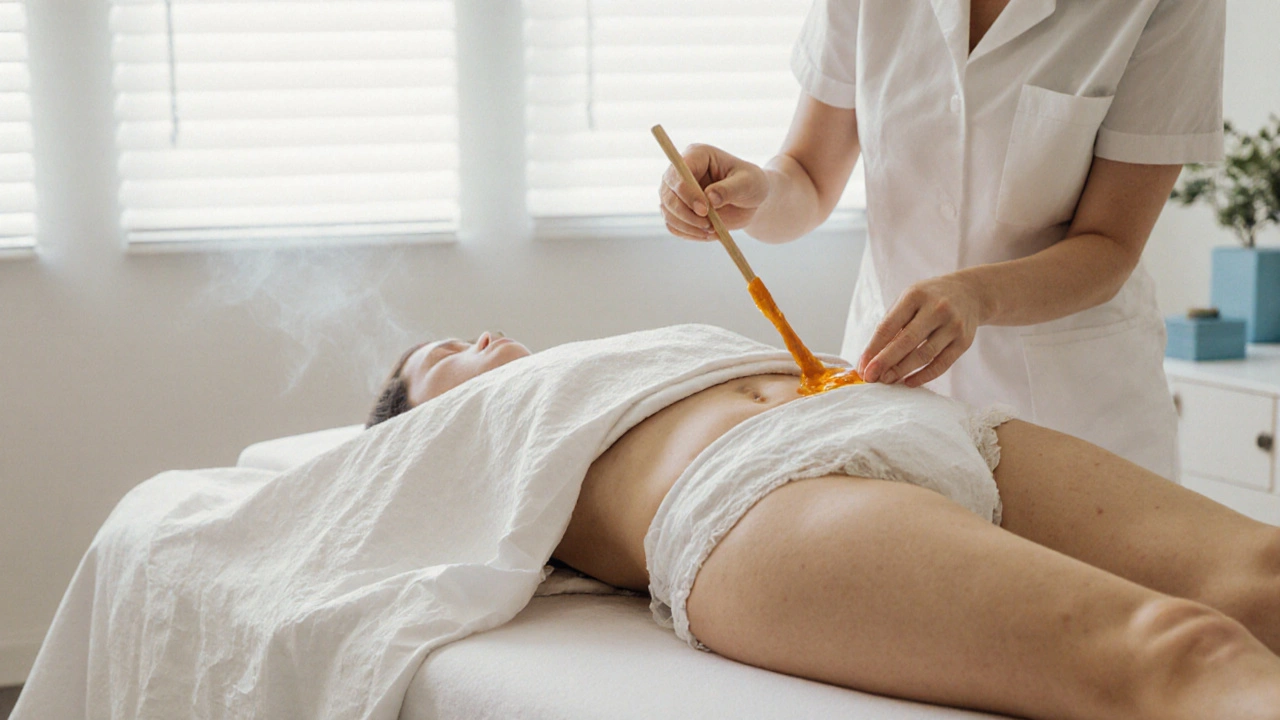
The wax used is usually hard wax, which sticks to hair but not skin as much as soft wax. That means less pain and fewer ingrown hairs. Hard wax is heated to a honey-like consistency and applied in small sections. It’s pulled off quickly, in the direction of hair growth. The whole process takes about 20 to 40 minutes, depending on hair thickness and how much you’ve grown out.
How to Prepare for Your First Brazilian Wax
Preparation makes all the difference. If you show up with hair too short, the wax won’t grip it. Too long, and it’ll hurt more than necessary. The sweet spot is about 1/4 inch-roughly the length of a grain of rice. That usually means letting it grow for 2 to 3 weeks after your last shave or trim.
Here’s what to do before your appointment:
- Avoid shaving for at least 14 days before your appointment.
- Exfoliate your skin 2 days before to reduce ingrown hairs. Use a gentle scrub or a dry brush.
- Don’t apply lotion, oil, or deodorant to the area the day of your wax. These create a barrier that stops wax from sticking.
- Wear loose cotton underwear and pants. Tight clothes rub against freshly waxed skin and cause irritation.
- Take an ibuprofen 30 minutes before your appointment if you’re worried about pain. It doesn’t eliminate it, but it helps.
- Avoid caffeine and alcohol a few hours before. They can make your skin more sensitive.
And yes-go to the bathroom before you get on the table. There’s no way around it: you’ll be lying there exposed for a while. Feeling rushed or uncomfortable just adds to the stress.
What Happens During the Waxing Process
You’ll be given a disposable paper brief or towel to cover yourself. The technician will ask you to lie back on a table. They’ll work in sections, starting from the sides, then the front, then the back. Each area gets a small amount of warm hard wax applied with a wooden stick. It’s not messy-it’s precise.
Then comes the pull. A cloth strip is pressed over the wax and ripped off in one quick motion. It’s fast. Like, lightning-fast. The pain is sharp but lasts less than a second. Most people say the first pull is the worst. After that, your body adjusts. Some describe it as a quick sting, like a rubber band snapping hard. Others say it feels like peeling off a Band-Aid-but in a sensitive spot.
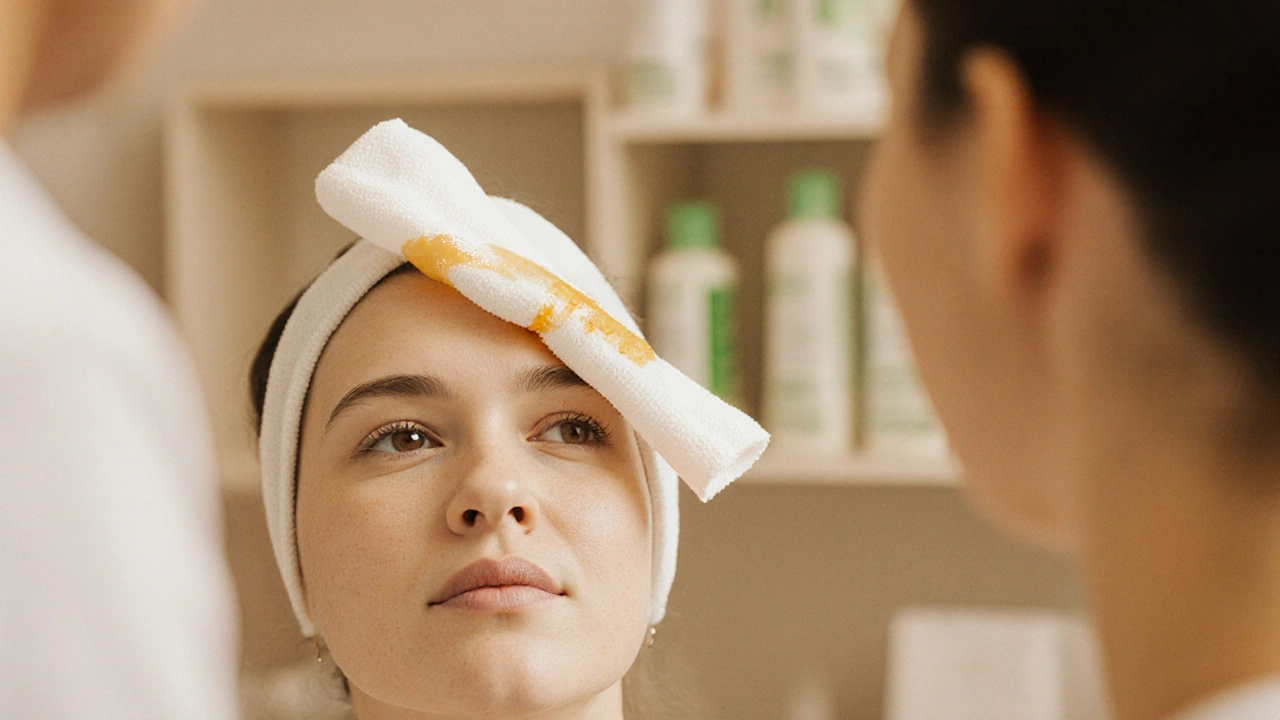
The technician will use a soothing lotion or aloe gel right after each section. This cools the skin and calms redness. You might feel a little burning or tingling afterward, but that fades in under an hour.
They’ll check with you constantly. “Does this hurt?” “Too much?” “Need a break?” A good technician doesn’t rush. They respect your comfort. If someone doesn’t ask, that’s a red flag.
Pain Levels and What to Expect
Yes, it hurts. But it’s not torture. Pain depends on your tolerance, hair thickness, and how often you wax. First-timers often feel more pain because the hair is coarser and the skin hasn’t adapted. People who wax every 4 to 6 weeks report less discomfort over time. Hair gets finer, and the follicles weaken.
Here’s a rough pain scale based on real client feedback:
- First time: 6/10-sharp, surprising, but over fast.
- Second time: 4/10-less shock, more familiarity.
- Regular waxer (every 4 weeks): 2/10-just a quick tug.
Some women say it’s worse during their period. Hormones make skin more sensitive. If you can, schedule your appointment a week after your cycle ends. That’s when most people report the least discomfort.
Aftercare: What to Do Right After
Waxing doesn’t end when you leave the chair. What you do next determines whether you get smooth skin-or a rash.
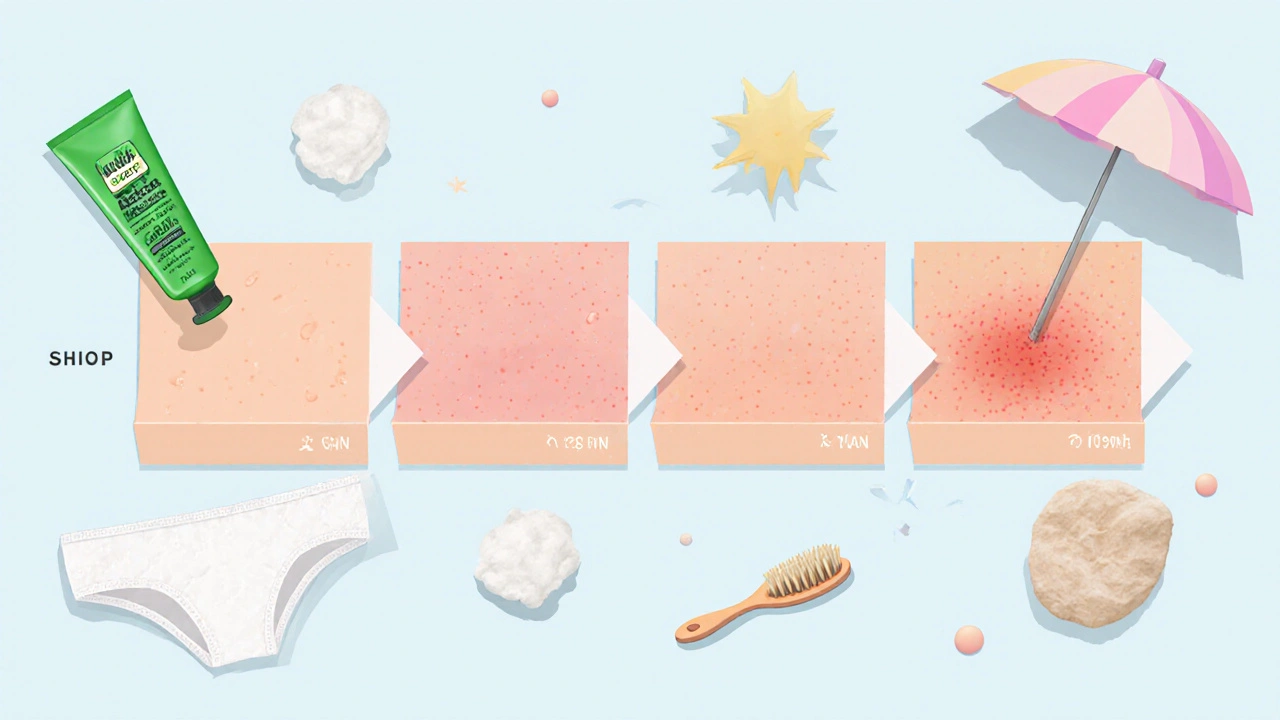
- Avoid hot showers, saunas, steam rooms, and swimming pools for 24 hours. Heat opens pores and invites bacteria.
- Don’t wear tight clothes. Cotton underwear is best for the first day.
- Don’t touch or scratch the area. Your hands carry oils and germs.
- Apply a gentle, fragrance-free moisturizer twice a day. Look for ingredients like aloe vera, chamomile, or tea tree oil.
- Exfoliate gently every 2-3 days after the first 48 hours. This prevents ingrown hairs.
- Avoid sun exposure for 48 hours. Fresh waxed skin burns easily.
If you notice red bumps, don’t panic. A few small ones are normal. They usually go away in a day or two. If they turn into pus-filled pimples or stay swollen for more than 3 days, see a dermatologist. That could be folliculitis-an infection that needs treatment.
How Often Should You Get a Brazilian Wax?
Most people go every 4 to 6 weeks. That’s when hair grows back to a length that wax can grip. Going too early means you’ll need to shave sooner. Waiting too long makes it more painful and increases the chance of breakage (which leads to ingrown hairs).
Some people stretch it to 8 weeks, especially if they have slower hair growth. But that’s rare. If you’re serious about staying smooth, stick to the 4-6 week window. Consistency makes future sessions easier and less painful.
What Doesn’t Work: Common Myths
Let’s clear up some misinformation.
- Myth: Waxing makes hair grow back thicker. Truth: Hair may seem coarser because you’re seeing the blunt ends after it grows back. Waxing removes hair from the root, so regrowth is finer over time.
- Myth: You can do it yourself at home with a Walmart kit. Truth: Those kits are designed for legs or underarms-not sensitive areas. Doing a Brazilian at home with soft wax increases the risk of burns, tears, and infections. Save the DIY for your eyebrows.
- Myth: It’s only for women. Truth: Men get Brazilian waxes too. It’s common among athletes, dancers, and men who prefer clean lines under swimwear or tight clothing.
- Myth: You need to be completely hair-free before going in. Truth: That’s the opposite of true. You need hair to grow out first. Waxing won’t work on stubble.
Alternatives to Brazilian Waxing
Waxing isn’t the only option. If you’re not ready to commit, here are other methods:
- Shaving: Quick and cheap, but hair grows back in 1-3 days. Prone to razor burn and ingrown hairs.
- Sugaring: Similar to waxing but uses a sugar paste. Often gentler on sensitive skin. Less common but growing in popularity.
- Laser hair removal: Permanent reduction after 6-8 sessions. Costs $200-$400 per session. Best for people who want long-term results.
- Depilatory creams: Chemicals dissolve hair. Risky for the pubic area-can cause chemical burns.
Waxing strikes the best balance between cost, effectiveness, and duration. It lasts longer than shaving, is less expensive than laser, and doesn’t involve chemicals.
Final Thoughts: Is It Worth It?
Yes-if you’re willing to stick with it. The first time is awkward. The second is better. By the third, you’ll wonder why you waited so long. Smooth skin without daily maintenance? No more razor nicks? No more itching from stubble? That’s the payoff.
Find a reputable salon. Look for licensed estheticians with clean practices. Ask if they use hard wax. Read reviews. Don’t go to the cheapest place just because it’s on sale. This isn’t a haircut. It’s a procedure.
And remember: everyone feels nervous the first time. Even the people who seem totally calm. You’re not weird for being unsure. You’re normal. And you’re not alone.
Does a Brazilian wax hurt more than other types of waxing?
It can feel more intense because the skin is more sensitive, but the pain level isn’t drastically higher than underarm or bikini waxing. The difference is in the area covered-more surface area means more pulls. But each pull is quick. Most people say the anticipation is worse than the actual pain.
Can I get a Brazilian wax if I have sensitive skin?
Yes, but you need to be careful. Choose a salon that uses hard wax and fragrance-free aftercare products. Avoid waxing if you’re using retinoids, acne medications, or have sunburned skin. Tell your technician about any skin conditions like eczema or psoriasis. They can adjust their technique or recommend waiting.
How long does it take for hair to grow back after a Brazilian wax?
Hair typically starts to reappear in 2 to 3 weeks, but it’s usually too short to feel until week 4. Full regrowth takes about 6 weeks. The texture changes over time-hair becomes finer and grows slower with regular waxing.
Is it safe to get a Brazilian wax while pregnant?
Many women get Brazilian waxes during pregnancy without issues. But skin becomes more sensitive due to hormonal changes. Some salons won’t wax women past 36 weeks. Always check with your doctor first, especially if you have any complications. Make sure the wax isn’t too hot-your body temperature is already higher.
What’s the difference between a Brazilian and a Hollywood wax?
There’s no official difference. Some salons use “Hollywood” to mean completely bare, with no hair left at all. “Brazilian” sometimes implies a small strip or triangle on top. But terms vary by salon. Always clarify what you want before they start.
Can I exercise after a Brazilian wax?
Wait at least 24 hours. Sweating can irritate the open follicles and cause bumps or infections. Avoid yoga, running, cycling, or anything that causes friction. Light walking is fine. Give your skin time to calm down before getting back into your routine.


Vishal Gaur
November 26, 2025 AT 19:05man i tried this once after a friend convinced me it was "liberating" and let me tell you, the first pull felt like someone yanked my dignity out with tweezers. i was sweating like i’d run a marathon in a sauna, and the technician kept asking if i was okay like i was a nervous puppy. but weirdly? by the third time it wasn’t so bad. hair gets softer, your brain stops screaming, and now i just appreciate not having to shave every three days. also, no more wedgies. small victories.
Nikhil Gavhane
November 27, 2025 AT 00:51This is actually one of the most helpful guides I’ve read on the topic. So many people make it sound like a horror movie, but you broke it down with real clarity. The prep tips alone are gold-especially the part about avoiding caffeine. I didn’t know that could make it worse. Thank you for taking the time to write this. It takes the fear out of something that shouldn’t be taboo.
Rajat Patil
November 27, 2025 AT 17:46It is a good idea to approach this matter with care and consideration for personal comfort. Many individuals experience anxiety regarding bodily procedures, and it is important to recognize that this is normal. The guidance provided here is thoughtful and respectful. I appreciate the emphasis on hygiene, communication with the technician, and aftercare. These are essential elements for a positive experience.
deepak srinivasa
November 27, 2025 AT 21:42Wait, so hard wax is better because it sticks to hair and not skin? But how does that work chemically? Is it the resin content? Or the melting point? And why does exfoliating two days before help with ingrowns-is it just about removing dead skin, or does it stimulate follicles? I’ve been reading conflicting stuff online. Also, does age affect pain tolerance here? My dad says he got one at 58 and it was fine, but I’m 22 and it sounds like a nightmare.
NIKHIL TRIPATHI
November 29, 2025 AT 12:37So true about the first time being the worst. I went in thinking I was ready, but I screamed like someone stepped on my toe with stilettos. Then I laughed so hard the tech gave me a free aloe gel. Now I do it every 5 weeks like clockwork. Also, don’t underestimate how much better it feels in shorts during summer. No more itch. No more stubble. Just smooth. Also, FYI-avoid spicy food the day before. Trust me on this one.
sumraa hussain
November 30, 2025 AT 00:32THE FIRST PULL. OH MY GOD. THE FIRST PULL. I thought I was ready. I had meditated. I had listened to lo-fi. I had worn my lucky underwear. And then-SNAP. Like my soul got yanked out through my pelvis. I cried. I whimpered. I whispered "why" into the table. But now? I’m addicted. It’s like getting a massage from a very aggressive angel. And the freedom? Unmatched. I swear, I feel lighter. Like I shed more than hair. I shed shame.
Raji viji
December 1, 2025 AT 21:07Ugh, another fluffy guide for people who think pain is a suggestion. Let’s be real-this isn’t "liberating," it’s just less annoying than shaving. And no, hard wax doesn’t magically make it painless. It just means the tech doesn’t have to yank as many times. But you still feel every single follicle getting ripped out like a weed in concrete. And don’t even get me started on the "it gets easier" lie. Your body adapts, sure, but your nerves don’t forget. Also, if you think a Walmart kit is "dangerous," you’ve never tried to wax your own balls with a spatula and hope. That’s real horror.
Rajashree Iyer
December 2, 2025 AT 07:28There’s something profoundly intimate about surrendering your body to another person’s hands, isn’t there? Not just the hair-but the vulnerability, the silence, the breath held, the unspoken trust. We live in a world that tells us to cover, to hide, to be ashamed of natural things. And yet here we are, willingly exposing ourselves, not for others, but for ourselves. This isn’t beauty. It’s rebellion. A quiet act of reclaiming autonomy, one painful pull at a time.
Parth Haz
December 2, 2025 AT 18:16Thank you for sharing such a detailed and thoughtful resource. Many individuals are hesitant to seek this service due to misinformation or embarrassment. Your clear, structured approach helps normalize the experience and encourages informed decision-making. I especially appreciate the emphasis on professional standards and aftercare. This kind of guidance promotes both safety and confidence.