

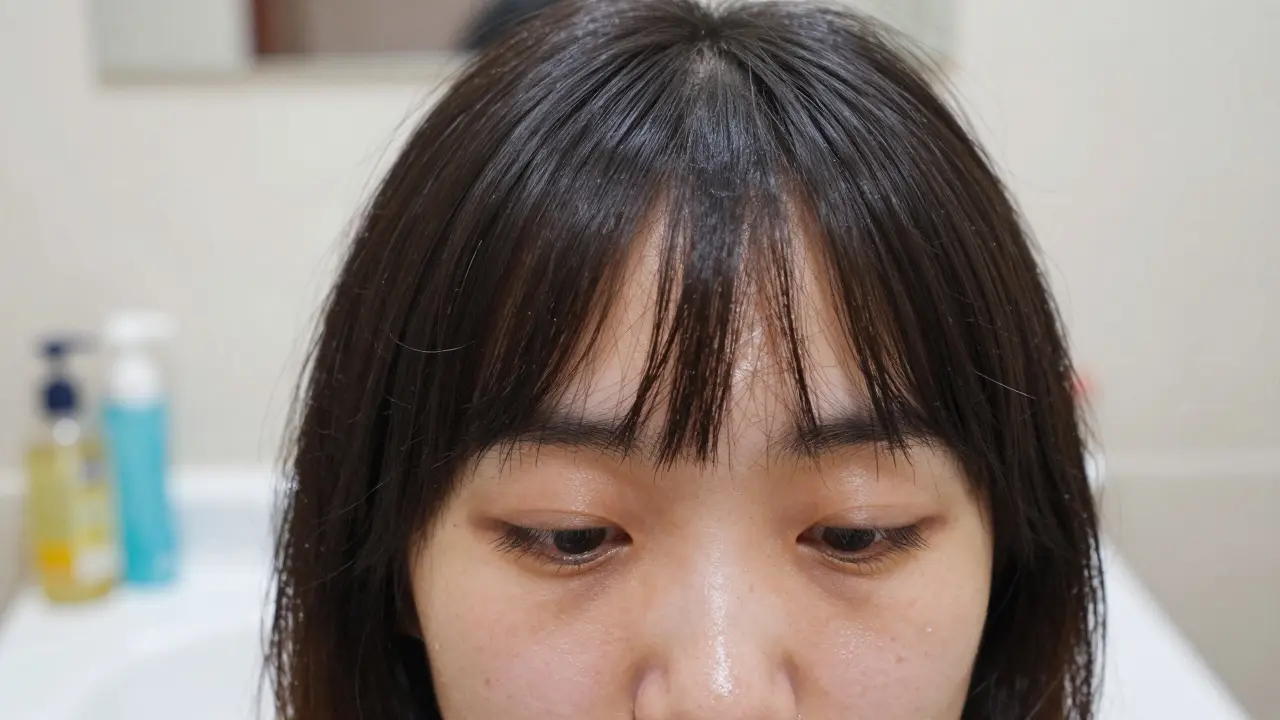
Ever notice your forehead breaking out right after you got bangs? You’re not imagining it. Lots of people report more breakouts after trimming their hair into a fringe - and there’s a real reason behind it.
Why Bangs Might Be Irritating Your Skin
Bangs sit right where acne loves to show up: the forehead, temples, and sometimes even the nose. When your hair constantly brushes against your skin, it’s not just a styling choice - it’s a physical contact point that can transfer oil, sweat, and product buildup straight onto your pores.
Your scalp produces sebum - a natural oil that keeps hair healthy. But when that oil travels down the strands of your bangs and lands on your forehead, it can mix with dead skin cells and bacteria. That mix clogs pores. And clogged pores? That’s how acne starts.
It gets worse if you use styling products. Gels, sprays, and serums meant to hold your bangs in place often contain silicones, alcohols, or heavy oils. These ingredients don’t just sit on your hair - they rub off onto your skin. Some of them are comedogenic, meaning they’re known to block pores. Even a light mist of hairspray can leave a residue that builds up over days.
Who’s Most at Risk?
Not everyone with bangs gets acne. But certain factors make it more likely:
- Oily skin types - If your face naturally produces more sebum, adding extra oil from your hair is like pouring gasoline on a fire.
- Long, thick bangs - The more surface area your bangs cover, the more contact they have with your skin. Wispy, shorter bangs are less likely to cause issues because they don’t drag across your forehead as much.
- Not washing your hair often enough - If you skip shampooing for two or three days, oil and dirt pile up in your bangs. That’s when breakouts start showing up.
- Sweating a lot - Whether from workouts, hot weather, or stress, sweat trapped under your bangs creates a warm, damp environment perfect for bacteria.
One 2023 dermatology study tracked 120 people with persistent forehead acne. Of those who wore bangs, 68% saw a noticeable reduction in breakouts after switching to a blunt cut or pulling their hair back for two weeks. The improvement wasn’t just cosmetic - it was measurable in pore size and inflammation.
How to Keep Your Bangs From Causing Breakouts
You don’t have to give up your favorite hairstyle. With a few simple changes, you can keep your bangs and your clear skin.
- Wash your hair every other day, at minimum - If you have oily skin or bangs that fall on your forehead, daily washing helps. Use a gentle shampoo without sulfates. Harsh cleansers can over-dry your scalp, making it produce even more oil.
- Avoid heavy styling products - Skip gels and thick pomades. If you need to tame flyaways, try a light mist of water or a tiny bit of alcohol-free leave-in conditioner. Apply it to your hands first, then lightly smooth your bangs - don’t spray directly onto your skin.
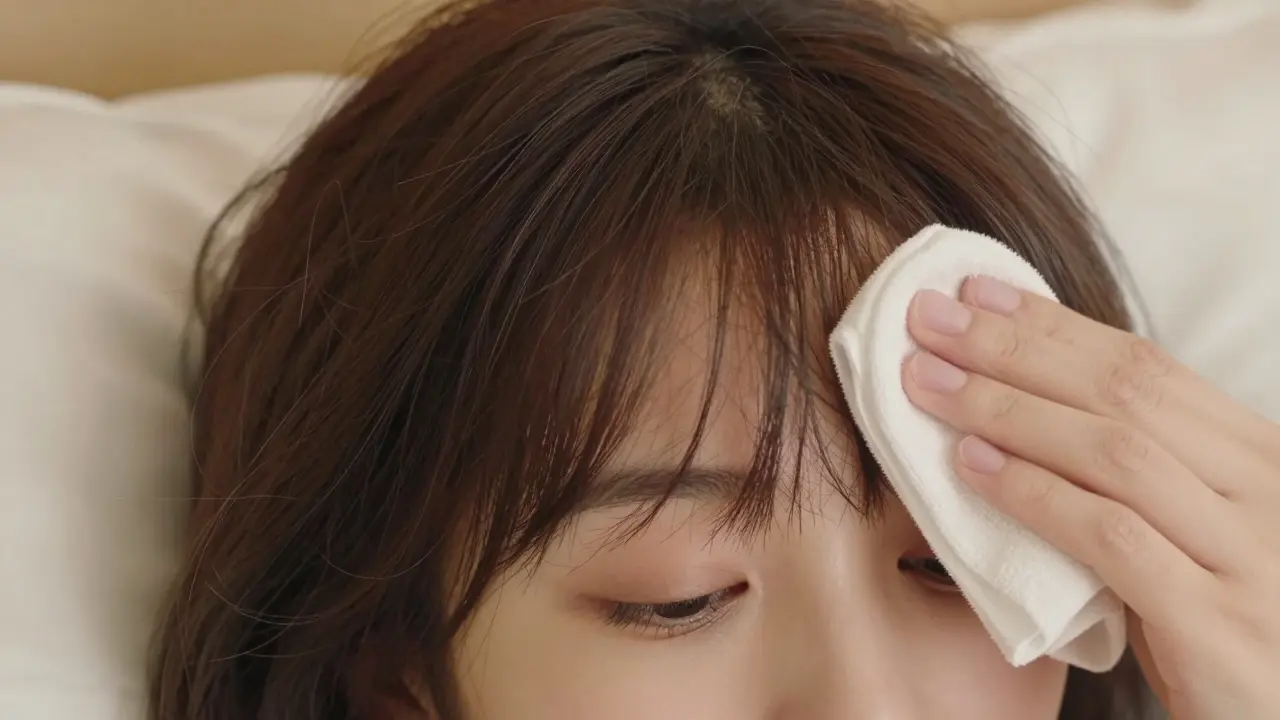
- Wipe your bangs daily - Keep a clean microfiber cloth or gentle facial wipe handy. After sweating or before bed, gently pat your bangs and the skin beneath them. This removes surface oil without irritating your skin.
- Keep your pillowcase clean - Cotton pillowcases absorb oil from your hair and skin overnight. Wash them twice a week, or switch to silk or satin - they’re less absorbent and reduce friction.
- Try a different part - If your bangs are too long, ask your stylist to layer them or thin them out. A side-swept fringe or curtain bangs that don’t sit flat on your forehead can make a big difference.
What About Wispy Bangs?
Wispy bangs - the lighter, feathered kind - are generally better for acne-prone skin than blunt, heavy fringes. They don’t cling as tightly to the forehead, so there’s less constant contact. They also tend to be thinner, meaning less product and oil transfer.
But even wispy bangs can cause problems if they’re too long or if you’re using too many products. A 2024 survey of 500 people with acne-prone skin found that 41% of those with wispy bangs still experienced breakouts - but only if they washed their hair less than twice a week or used styling spray daily.
The key isn’t the style - it’s the hygiene.
When to See a Dermatologist
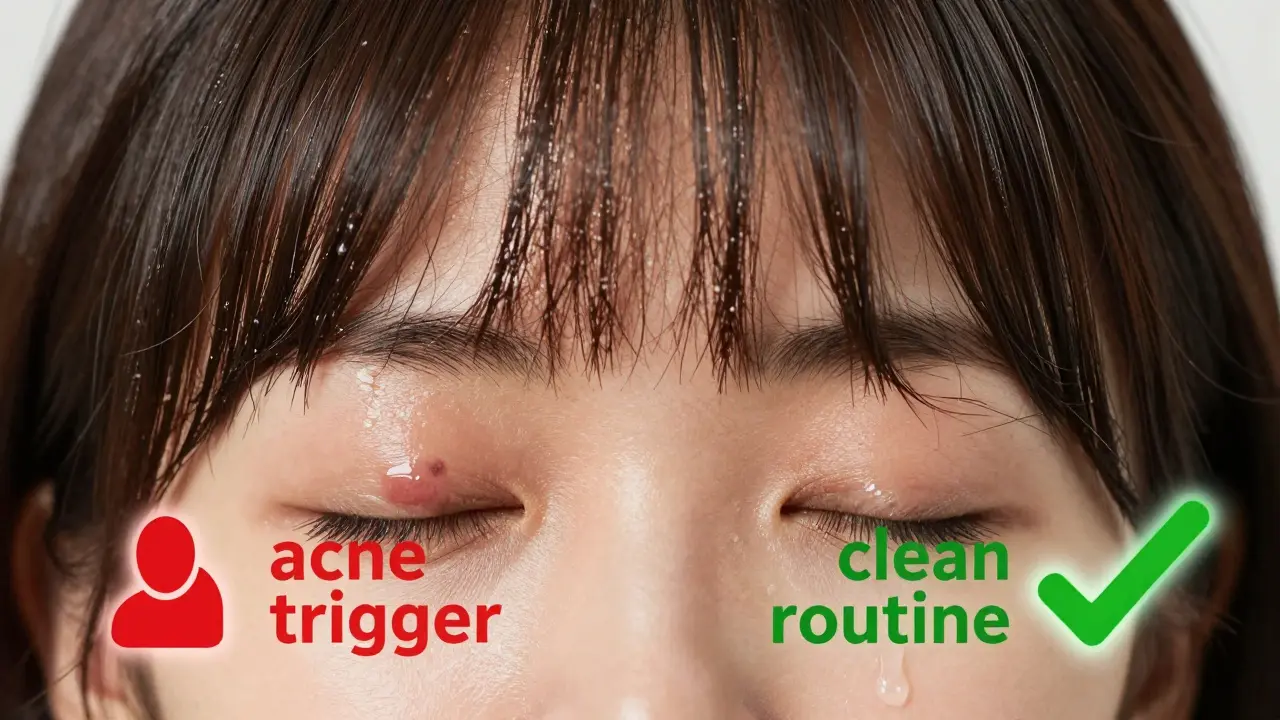
If you’ve tried all the above and your breakouts haven’t improved after 4-6 weeks, it might not be your bangs alone. Other factors could be at play:
- Hormonal acne (common around the jawline and chin)
- Skincare products that irritate your skin
- Stress or diet changes
A dermatologist can help you figure out whether your acne is triggered by hair contact or something deeper. They might recommend topical treatments like retinoids or benzoyl peroxide, or suggest changes to your hair care routine.
Don’t assume it’s just "hair causing acne." Sometimes, what looks like a simple styling issue is actually a sign of a larger skin concern.
Final Takeaway
Bangs themselves don’t cause acne. But if they’re constantly touching your skin and carrying oil, product, or sweat, they can definitely make breakouts worse. The solution isn’t to cut them off - it’s to treat them like a potential acne trigger, not just a hairstyle.
Keep your hair clean, avoid heavy products, and pay attention to how your skin reacts. You can have gorgeous bangs and clear skin - you just need to treat them as a team, not rivals.
Do bangs cause acne or just make it worse?
Bangs don’t cause acne on their own, but they can make existing acne worse. Acne forms when pores get clogged with oil, dead skin, and bacteria. Bangs transfer oil and product from your scalp to your forehead, which can clog pores and trigger breakouts - especially if you already have oily skin or use heavy styling products.
How often should I wash my hair if I have bangs and acne?
If you have acne-prone skin and bangs, wash your hair every other day. Daily washing is even better if you sweat a lot, use styling products, or have very oily hair. Skipping washes lets oil and product build up, which then rubs onto your skin. Use a gentle shampoo without sulfates to avoid over-drying your scalp - dry skin can trigger more oil production.
Are wispy bangs better than blunt bangs for acne-prone skin?
Yes, wispy bangs are usually better. They’re lighter, thinner, and don’t cling as tightly to the forehead, which means less constant contact with your skin. Blunt bangs act like a sponge, trapping oil and sweat against your forehead. But even wispy bangs can cause issues if you don’t wash your hair regularly or use too much product.
Can I still use hairspray if I have bangs and acne?
You can, but be careful. Avoid spraying directly onto your bangs or forehead. Instead, hold the can 12 inches away and spray lightly into the air, then gently run your fingers through your hair. Look for alcohol-free, non-aerosol formulas. A better option is a tiny dab of leave-in conditioner on your palms - smooth it over your bangs without touching your skin.
Will cutting my bangs help my acne?
Cutting your bangs might help - but only if you replace them with a style that doesn’t touch your skin. If you switch to a side-swept fringe or pull your hair back, you’ll likely see improvement. But if you just trim them shorter and still let them rest on your forehead, the problem won’t go away. The real fix is hygiene, not length.



Jawaharlal Thota
February 18, 2026 AT 13:11Let me tell you something I learned the hard way-bangs and acne aren’t just a coincidence, they’re a system failure. Your scalp isn’t some isolated organ; it’s connected to your face through oil, sweat, and sheer biological momentum. When you’ve got thick, heavy bangs sitting there like a greasy curtain, you’re basically turning your forehead into a fermentation tank for bacteria. I used to wash my hair every three days, thought I was doing fine, until my forehead looked like a topographic map of zits. Started washing daily, switched to a sulfate-free shampoo, and stopped using that damn gel that smelled like a chemistry lab. Within two weeks, the redness faded. Not magic. Just hygiene. Your hair isn’t just hair-it’s an extension of your skincare routine. Treat it like you treat your cleanser. Consistency beats intensity every time.
Also, pillowcases. Nobody talks about pillowcases. Cotton is a sponge for your scalp’s secretions. I switched to satin, and it wasn’t just about hair frizz-it stopped my bangs from dragging oily residue onto my skin while I slept. I didn’t even realize how much I was transferring overnight. It’s like your face is getting a nightly facial from your own sebum. Gross, right? But fixable.
And don’t even get me started on sweat. If you work out, commute in heat, or live in a humid climate, your bangs are basically a sweatband that never gets changed. Wipe them down after a run. Don’t just let them air-dry. Use a microfiber cloth. It’s not extra, it’s essential. I know it sounds obsessive, but when your skin is reactive, obsession is the only thing that works.
And yes, wispy bangs are better-but only if they’re short. If they’re long wispy bangs that still touch your skin, you’re just fooling yourself. Length matters more than texture. A fringe that doesn’t touch? Perfect. One that drapes? Problematic. Don’t romanticize the style. Be practical.
And stop blaming your hormones. I’ve seen too many people say, “It’s just hormonal,” when it’s literally their hairline touching their pores. Get rid of the product buildup first. Then reevaluate. Don’t skip steps. Skin doesn’t lie. It just waits for you to stop making excuses.
Also, don’t use conditioner on your bangs. Seriously. Conditioner is a mask for oil. It makes them heavier. Rinse it out. Don’t leave it in. I know it’s tempting to smooth them down, but that’s how you create a greasy film. Use water. Just water. It’s enough.
And one last thing: don’t wait until you’re breaking out to change. Prevent it. Clean hair, clean skin, clean pillowcase. Three pillars. Miss one, and you’re asking for trouble. I’ve been acne-free for 14 months now. No miracle cream. Just discipline. You got this.
Lauren Saunders
February 19, 2026 AT 05:33How quaint. You treat acne like a plumbing issue-oil, sweat, clogged pores-as if the skin were a pipe and not a complex, neuroendocrine organ responding to stress, diet, circadian rhythm, and microbial ecology. To reduce it to ‘hair touching skin’ is reductive, almost bourgeois. Have you considered that the real issue is the cultural fetishization of ‘cleanliness’? The assumption that oil is inherently bad? That’s a capitalist construct, propagated by beauty conglomerates who profit from insecurity. Your ‘daily wash’ routine? That’s not hygiene-it’s performance.
And let’s not forget: the 2023 study you cite had a sample size of 120. Hardly representative. And the 2024 survey? Self-reported. No controls. No blinding. It’s anecdotal science dressed in lab coat aesthetics. If you want to talk about acne triggers, let’s talk about dairy, refined sugars, and cortisol spikes. But no, it’s easier to blame bangs.
Also, silk pillowcases? That’s a luxury good for people who can afford to replace bedding every six months. For the working class, cotton is the only option. Your advice is classist under the guise of dermatological wisdom.
Acne is not a styling problem. It’s a systemic one. And you’re selling snake oil.
sonny dirgantara
February 20, 2026 AT 23:04lol i had bangs for like 3 years and never had acne till i started using that cheap hairspray from target. then boom. forehead looked like a lava lamp. switched to water only and wiped them with a towel after gym. no more zits. also pillowcases are a thing?? i didnt know that. gonna wash mine now. thx??
Andrew Nashaat
February 21, 2026 AT 13:56Okay, I’m sorry, but this post is a masterpiece of misinformation wrapped in a bow of pseudoscience. Let’s start with the most egregious error: ‘Bangs transfer oil from your scalp to your forehead.’ That’s true-but so does every strand of hair that touches your skin. Your neck, your ears, your shoulders. Why are we singling out bangs? Because it’s visible? Because it’s convenient? Because it makes a good headline?
And then you recommend ‘washing daily.’ That’s a recipe for stripping your scalp, triggering rebound sebum production, and worsening acne. Dermatologists don’t say this. They say: ‘Wash when dirty.’ Not ‘wash daily.’ You’re promoting a cult of cleanliness that doesn’t exist in evidence-based medicine.
Also, ‘alcohol-free leave-in conditioner’? That’s not a solution-it’s a marketing ploy. Conditioners are emollients. They sit on the skin. They don’t ‘tame flyaways’-they clog pores. You’re not helping. You’re enabling.
And ‘wipe your bangs daily’? With what? A facial wipe? That’s abrasive. That’s irritation. That’s contact dermatitis waiting to happen. You’re telling people to rub their skin with a cloth? That’s not hygiene. That’s self-abuse.
And pillowcases? Twice a week? For whom? A 20-year-old with a part-time job? That’s not realistic. And silk? Please. That’s a luxury item for people who don’t have to choose between groceries and laundry detergent.
This isn’t advice. It’s performative wellness. You’re not helping acne sufferers. You’re selling a lifestyle.
Gina Grub
February 22, 2026 AT 06:10Let’s not pretend this is about acne. It’s about control. Control over your body, your hair, your environment. The obsession with ‘cleanliness’ as a moral imperative. The way we pathologize natural bodily functions-oil, sweat, dead skin-and turn them into enemies to be eradicated. This isn’t dermatology. It’s puritanism with a shampoo bottle.
And yet, we’re told to wash daily, wipe daily, change pillowcases, avoid products, switch to silk, layer bangs, thin them, part them sideways-like our skin is a battlefield and we’re soldiers in a war against our own biology.
Who benefits? The beauty industry. The dermatologists. The influencers selling $40 silk pillowcases. Not us.
Acne isn’t caused by bangs. It’s caused by the pressure to be perfect. To be smooth. To be poreless. To be unblemished. And we’ve turned a biological process into a personal failure.
Maybe the real solution isn’t hygiene. Maybe it’s letting go.
Nathan Jimerson
February 23, 2026 AT 20:46Just wanted to say thank you for this. I’ve been struggling with forehead breakouts for over a year and blamed myself for not washing enough or using the wrong products. This actually gave me a clear path-not perfection, just consistency. I started washing every other day, stopped using gel, and wiped my bangs with a clean cloth before bed. It’s been three weeks and I can already see a difference. No miracles, just small habits. You’re right-it’s not about cutting them off. It’s about treating them with care. Keep it simple. Keep it real. You’re not alone.
Sandy Pan
February 25, 2026 AT 15:39There’s something deeply poetic about the relationship between hair and skin. Hair, the most visible extension of the self, becomes a conduit for the invisible-oil, stress, time. When bangs rest on the forehead, they don’t just transfer sebum. They transfer anxiety. They transfer the weight of daily routines, of rushed mornings, of sleepless nights. The skin beneath them doesn’t just break out-it sighs.
We treat acne like a defect to be corrected, but what if it’s a message? A whisper from the body saying: ‘You’re not resting. You’re not nourishing. You’re not allowing yourself to be.’
Washing hair daily? Fine. Changing pillowcases? Necessary. But what about the silence between the rituals? The moments we forget to breathe? The nights we stare at the ceiling, wondering why our skin betrays us?
Maybe the real cure isn’t in the shampoo. Maybe it’s in the pause. In the acceptance. In the quiet act of letting go-not of your bangs, but of the need to control them.
Acne doesn’t care if your hair is wispy or blunt. It cares if you care.
Eric Etienne
February 27, 2026 AT 08:06bro this whole post is just a long ad for ‘clean hair = clear skin’ and nobody’s even asking if you’re overwashing. i used to wash my hair every day because of this crap. now my scalp is flaking like a desert. i just started washing twice a week and my skin got better. you don’t need all this. just don’t touch your face. and stop using hairspray. done.
Dylan Rodriquez
February 28, 2026 AT 15:35Thank you for writing this with such care. I’ve been helping clients with acne for over a decade, and what I’ve learned is this: skin is deeply personal. It reflects our habits, our stress, our self-worth. This isn’t just about bangs. It’s about how we treat ourselves.
Some people need daily washes. Others need space. Some need silk. Others need cotton. There’s no universal rule. The key is awareness-not dogma.
Listen to your skin. Not the algorithm. Not the influencer. Not the dermatologist who’s never seen your lifestyle. Your body knows. It’s just been trained to scream.
If you’re struggling, start small. One change. One habit. One moment of gentleness. That’s where healing begins.
You’re not broken. You’re just trying to survive in a world that tells you you’re not enough. You are. And your skin is, too.