

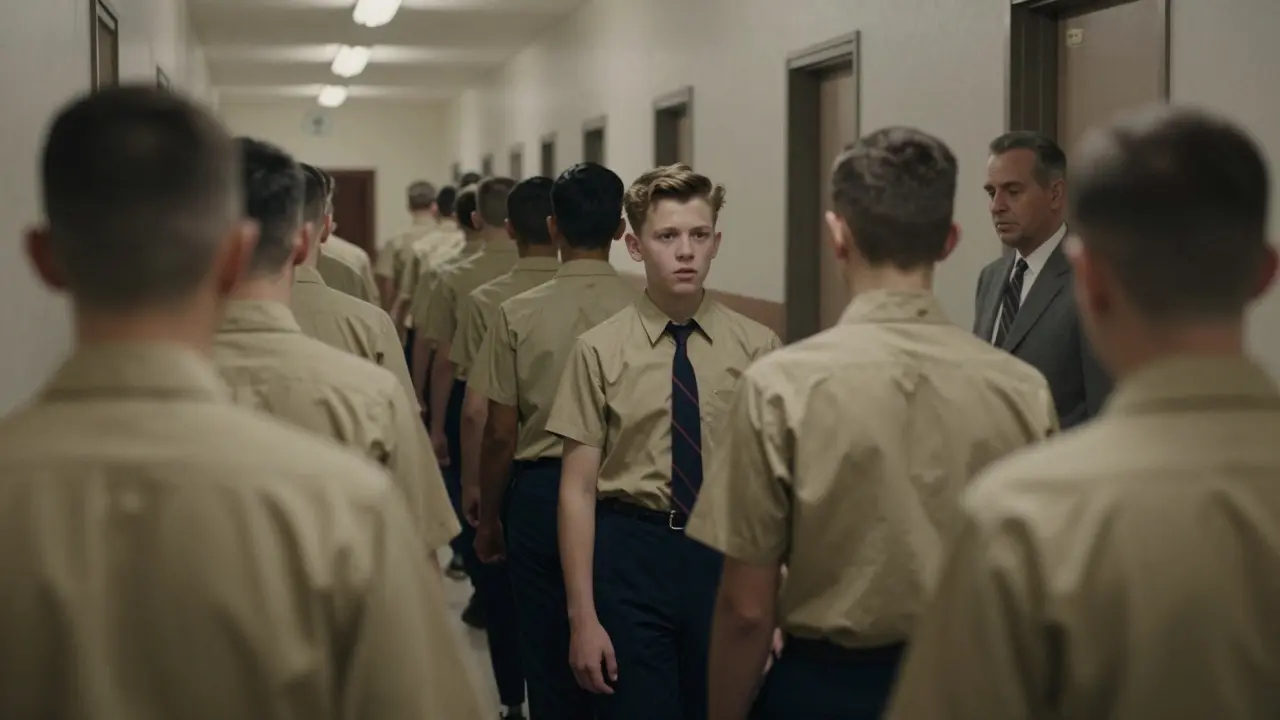
Ever walked past a school and noticed every kid has the same short haircut? It’s not just about neatness. There’s a history, a rule, and a reason behind it - and it’s not always about hygiene or safety.
It’s Not About Cleanliness
Some schools say short hair is easier to keep clean. But that doesn’t hold up. Long hair can be washed, tied back, and maintained just as easily as short hair. In fact, many students with long hair wear it in ponytails, braids, or buns - styles that keep it out of their faces during class or gym. So if cleanliness were the real goal, schools would just require hair to be tied up. They don’t. They require it to be short.
There’s a deeper reason. Short hair policies started in the 1950s and 60s, when schools were trying to enforce uniformity. Back then, long hair on boys was seen as rebellious - linked to counterculture movements, anti-war protests, and rock music. Schools didn’t want students looking like activists or musicians. They wanted them to look obedient, quiet, and predictable.
Control Through Appearance
Discipline in school isn’t just about stopping fights or cheating. It’s about controlling behavior before it starts. One way to do that? Standardize appearance. When every student looks the same, it’s easier to spot who doesn’t belong. A student with long hair, dyed hair, or an unusual style becomes visible - and therefore, a target for correction.
This isn’t unique to hair. Many schools have rules about nail length, jewelry, makeup, and even socks. The message is clear: your body is not your own to express. It belongs to the institution. And if you want to be part of this system, you have to shrink yourself to fit.
Studies from the University of Michigan in 2018 showed that schools with strict appearance codes saw a 12% drop in disciplinary referrals - but only for minor infractions like tardiness or dress code violations. There was no measurable change in academic performance, bullying rates, or student engagement. So the policy didn’t make students better learners. It just made them quieter.
Gender Bias in Hair Rules
Here’s the thing: short hair rules almost always target boys. Girls are often allowed to have long hair - even if it’s dyed, styled, or decorated. Some schools even have separate rules: boys must have hair above the ears, girls can have it down to their shoulders. That’s not equality. That’s a double standard.
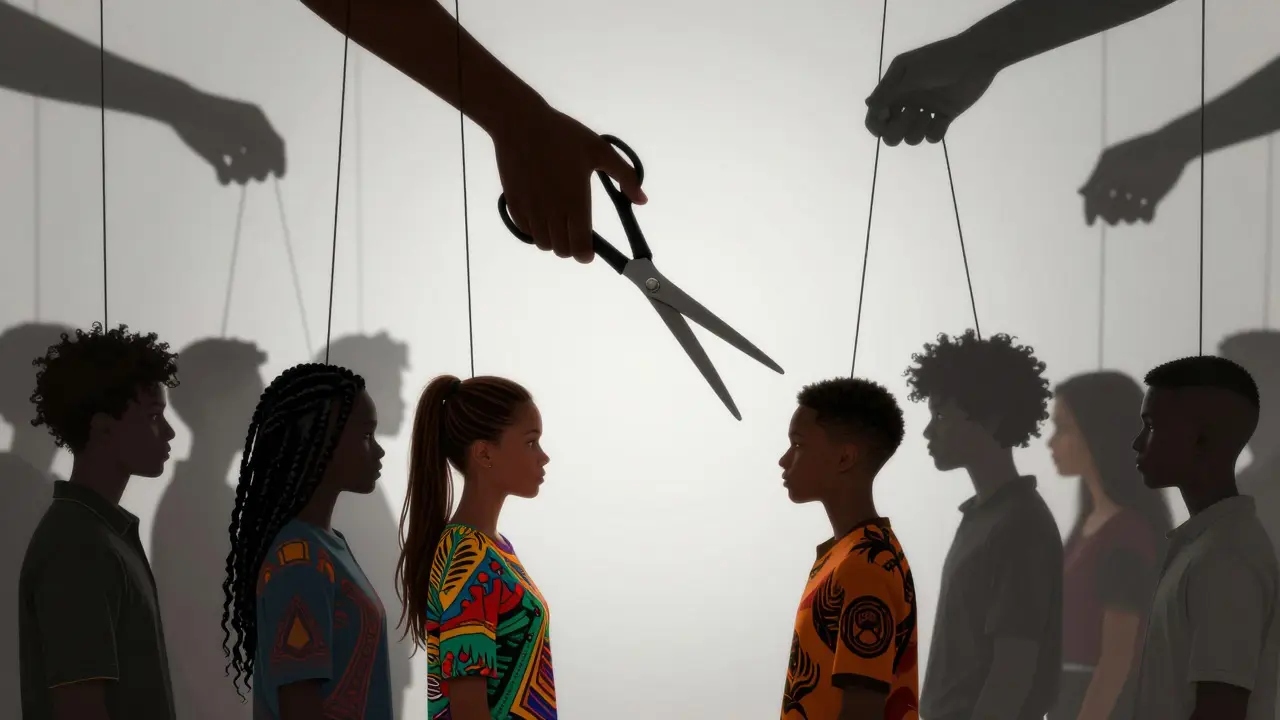
In 2023, a federal court in Texas ruled that a school district’s hair policy violated Title VII of the Civil Rights Act because it disproportionately affected Black boys who wear natural hairstyles like locs or braids. The court said the policy was based on racial bias disguised as discipline. That case didn’t just change one school’s rules - it forced dozens across the country to reconsider.
Short hair policies aren’t neutral. They’re cultural. They reflect who gets to be seen as professional, normal, or respectable - and who doesn’t.
What About Safety?
Schools often claim short hair is safer in labs, workshops, or sports. But that’s a weak argument. In chemistry class, students wear safety goggles and lab coats. In gym, they wear headbands or caps. No one is getting their hair caught in machinery because it’s long. If safety were the real concern, schools would require protective gear - not haircut enforcement.
And what about students with medical conditions? Some kids have alopecia, trichotillomania, or scalp disorders that make hair thin or patchy. Forcing them to cut it short doesn’t help - it humiliates them. Others are recovering from cancer treatment and are just starting to regrow hair. Their hair is naturally short - but not by choice. Should they be punished for that?
Students Are Fighting Back
In 2024, a group of high school students in North Carolina filed a lawsuit after being suspended for wearing their natural hair in locs. They didn’t want to cut it. They didn’t want to hide it. They just wanted to be allowed to learn without being told their hair was a problem.
They won. The court ordered the school to remove the hair policy and train staff on cultural bias. Other students across the U.S. have started similar movements - using TikTok, Instagram, and school board meetings to demand change.
More than 20 states now have laws protecting natural hair in schools. These are called CROWN Acts - Creating a Respectful and Open World for Natural Hair. They make it illegal to discriminate against hair textures and styles associated with race. But many schools still ignore them.

Why Do Administrators Stick to Old Rules?
Because change is hard. Principals and school boards don’t want to be seen as “soft.” They think enforcing short hair makes them look tough, in control, and serious about discipline. They believe if a student’s hair is long, their attitude must be bad too. It’s a lazy assumption.
But the truth is, students who break hair rules aren’t usually the ones causing trouble. They’re the quiet ones. The ones who care about self-expression. The ones who feel invisible until they grow their hair out - and suddenly, they’re labeled as disruptive.
One principal in Ohio admitted in a 2022 interview: "We’ve never had a single incident where long hair caused a safety issue. But we’ve had parents complain. So we kept the rule."
That’s not discipline. That’s appeasement.
What Should Schools Do Instead?
Instead of policing hair, schools should teach respect. Teach students how to treat each other, regardless of how they look. Train staff to recognize bias. Reward students for creativity, not conformity.
Some schools have already made the shift. In Portland, Oregon, a high school replaced its hair policy with a simple rule: "Hair must not obstruct vision or interfere with safety equipment." That’s it. No measurements. No gender distinctions. No punishment for locs, afros, or shaved sides.
Result? Fewer suspensions. More student trust. Higher attendance. No increase in distractions.
Discipline doesn’t come from controlling hair. It comes from building a community where everyone feels seen - not erased.
It’s Not About the Hair. It’s About Power.
Short hair rules are a symbol. They’re a way for adults to say, "You don’t get to decide who you are yet." But students aren’t blank slates. They’re people with identities, cultures, and feelings. And when you tell them their hair is wrong, you’re telling them they’re wrong.
Real discipline isn’t about control. It’s about guidance. It’s about helping students become confident, thoughtful adults - not clones.
If a school wants to teach responsibility, let them teach it through choices - not cuts.
Why do some schools still enforce short hair rules if they’re outdated?
Many schools keep these rules because they’re easy to enforce and feel familiar. Administrators often believe they create order, even when there’s no evidence they improve behavior or learning. Changing rules requires training, time, and courage - and many schools avoid that discomfort. Some also respond to pressure from parents or community members who equate short hair with discipline.
Are short hair policies legal in the U.S.?
It depends. While schools have broad authority over dress codes, courts have ruled that hair policies can violate civil rights if they target race, gender, or religion. The CROWN Act, passed in over 20 states, makes it illegal to discriminate based on natural hair textures. Federal courts have also found policies that ban locs or braids to be racially discriminatory. So while some policies still exist, many are now legally risky.
Do short hair rules affect academic performance?
No. Research shows no link between hair length and grades, attendance, or classroom behavior. Studies from the University of Michigan and the American Educational Research Association found that strict appearance policies reduce minor discipline issues but don’t improve learning outcomes. In fact, students who feel their identity is suppressed often report lower motivation and higher stress.
What can parents do if their child is punished for hair length?
Start by reviewing the school’s official code of conduct. If the policy is vague, discriminatory, or not applied evenly, write a formal request for clarification. If that doesn’t work, contact your local school board or a civil rights organization like the ACLU. Many have free legal resources for families facing unfair discipline. Document every incident - dates, names, consequences - and don’t be afraid to speak up.
Is there a difference between short hair policies and natural hair protections?
Yes. Short hair policies often target length, while natural hair protections focus on texture and style. A student with short locs or an afro might still be punished under a "short hair" rule, even if their hair is technically short. Natural hair laws protect styles like braids, twists, and curls - regardless of length. The two are related but not the same. One is about control; the other is about equity.



Mark Nitka
January 18, 2026 AT 11:51Look, I get why schools want order, but policing hair is just lazy leadership. If a kid’s hair is long, let them tie it back. If it’s in locs, fine. If it’s shaved on one side? Whatever. Their hair doesn’t interfere with learning unless you make it a battle. We’re training kids to obey, not think. And that’s the real problem.
Kelley Nelson
January 19, 2026 AT 06:49While I appreciate the emotive tone of this exposition, one must acknowledge the institutional imperative toward sartorial uniformity as a cornerstone of pedagogical discipline. The aesthetic homogeneity of student appearance fosters an environment conducive to cognitive focus, minimizing extraneous social signaling that may otherwise destabilize the classroom ecosystem.
Aryan Gupta
January 20, 2026 AT 00:00Did you know the FBI once tracked long-haired students in the 60s as potential subversives? This isn’t about hair-it’s about control. Schools are just the first step. Soon they’ll scan your DNA for ‘deviant traits.’ Mark my words: next they’ll ban freckles because they’re ‘too distracting.’
Fredda Freyer
January 20, 2026 AT 01:11There’s a deeper layer here: schools don’t just police hair-they police identity. When you tell a Black boy his locs are ‘unprofessional,’ you’re not enforcing a rule. You’re enforcing a hierarchy. You’re saying his culture is messy, his history is disorderly, his body is a problem to be fixed. That’s not discipline. That’s cultural erasure dressed up as policy. And it’s been happening for generations. The CROWN Act isn’t radical-it’s reparative. The fact that we even need it is the tragedy.
Gareth Hobbs
January 20, 2026 AT 13:40Zelda Breach
January 20, 2026 AT 21:36Oh wow, a 10-page essay on hair. How revolutionary. Let me guess-next you’ll be arguing that socks should be optional because ‘self-expression.’ At this point, we’re just replacing uniforms with performance art. If you want to grow your hair out, go to art school. Public school is for learning, not fashion shows.
Alan Crierie
January 22, 2026 AT 10:43I really appreciate how this post breaks down the psychology behind appearance policies. I’ve worked in schools for 15 years, and I’ve seen how hair rules quietly push out kids who don’t fit the mold. One student, a quiet girl with braids, stopped speaking in class after being told to ‘fix her hair’-she felt invisible. We changed the policy. She started raising her hand again. Small changes matter. 🙏
Nicholas Zeitler
January 23, 2026 AT 08:17Let’s be real-this isn’t about hair. It’s about power. Who gets to decide what’s ‘normal’? Teachers? Administrators? Parents who are scared of change? The answer is always the same: the people in charge. And they’re not protecting order-they’re protecting their own comfort. If you’re not willing to question why a rule exists, you’re part of the problem. Period.
Teja kumar Baliga
January 23, 2026 AT 17:52In India, many schools have no hair rules at all. Kids wear long hair, dreadlocks, topknots-it’s normal. The focus is on learning, not appearance. When we stop seeing bodies as problems, we start seeing students as people. Simple.
k arnold
January 24, 2026 AT 06:06Wow. So schools are evil because they don’t let kids look like musicians? Newsflash: I went to school with long hair. I got detention. I still got into college. Grow up.
Tiffany Ho
January 26, 2026 AT 01:06I think everyone deserves to feel safe and seen in school. If a kid’s hair isn’t blocking vision or safety gear, why make it an issue? I just want schools to be kinder. That’s all.
michael Melanson
January 26, 2026 AT 22:13My daughter got suspended for wearing her hair in a bun too high. The rule said ‘hair must be below the ear.’ She had short hair. They didn’t even measure it. Just assumed. I’m tired of this nonsense.
lucia burton
January 28, 2026 AT 06:47Let’s analyze the sociopolitical implications of institutionalized aesthetic conformity through the lens of Foucauldian biopower and neoliberal disciplinary apparatuses. The school’s hair policy functions as a micro-regime of normalization, internalizing hegemonic standards of acceptability and suppressing embodied resistance. The CROWN Act, while symbolically significant, remains a band-aid solution unless paired with systemic pedagogical reformation that centers student agency as a core component of curriculum design. Without this, we’re just swapping one form of control for another, albeit with better PR.
Denise Young
January 28, 2026 AT 21:31Let’s be honest-this whole debate is just a distraction. Schools are underfunded, teachers are burned out, and we’re arguing about hair? Meanwhile, half the kids don’t have textbooks. Fix the basics before you start policing braids. This isn’t progress-it’s performative outrage.