You walk into a salon or scroll through Instagram, and suddenly you're bombarded with promises of "virgin," "temple," and "Remy" hair. The prices range from ₹5,000 to ₹50,000 for what looks like the same bundle. Why the massive gap? And more importantly, which brand actually delivers quality without compromising on ethics?
Choosing hair extensions in India isn't just about picking a color that matches your roots. It's about understanding where that hair came from, how it was processed, and whether the people who donated it were treated fairly. With the rise of conscious consumerism, many Indian women are asking: "Can I look good while doing good?" The answer is yes, but only if you know which brands to trust.
Why Ethics Matter More Than Ever in Hair Extensions
Let’s be real. The global hair trade has a dirty secret. Much of the world’s "virgin" hair ends up being chemically stripped to remove cuticles, making it cheap to produce but short-lived for you. In India, the situation is unique because we have one of the largest supplies of temple hair donations. But here’s the catch: not all donations are equal, and not all processors play fair.
When you buy from an unethical brand, you might get hair that tangles after two washes because the cuticles were removed and replaced with silicone. Worse, you might be supporting supply chains where donors aren’t compensated fairly or where labor conditions are poor. An Ethically Sourced hair extension is human hair collected through transparent channels, ensuring donors are paid fairly and the hair retains its natural cuticle alignment. This transparency is non-negotiable if you want longevity out of your investment.
Think about it this way: if a brand can’t tell you exactly which temple or region their hair comes from, they’re likely buying mixed lots from middlemen who don’t care about origin. That’s a red flag. You deserve to know if your hair came from a voluntary donation in Tirupati or a commercial collection in Vietnam, even if you’re buying from an Indian brand.
Top Contenders: The Best Brands Leading the Charge
So, who is actually doing it right in the Indian market? We’ve analyzed top sellers based on customer reviews, sourcing transparency, and product durability. Here are the names that consistently stand out.
Keratin Lab
If you’re looking for luxury, Keratin Lab is often the first name mentioned. They position themselves as a premium provider, focusing heavily on Remy Hair human hair where the cuticles are kept intact and aligned in the same direction, preventing tangling. Their strength lies in their rigorous quality control. They don’t just sell bundles; they offer consultation services to ensure the texture matches your natural hair perfectly.
What makes them ethical? They claim direct sourcing from temples in South India, bypassing multiple layers of brokers. This means better pay for the institutions and higher quality hair for you. However, their price point reflects this. Expect to pay a premium for their tape-in and clip-in sets.
Mane Addicts
Mane Addicts has carved a niche by focusing specifically on the Indian woman’s needs-dealing with humidity, pollution, and frequent styling. They emphasize "clean hair" practices, meaning no heavy silicones or synthetic blends disguised as human hair. Their marketing highlights the journey of the hair, often sharing stories of donors and the communities supported.
Their products are known for holding curls well, which is crucial for Indian textures. If you’re worried about your extensions looking flat in Mumbai’s monsoon or dry in Delhi’s winter, Mane Addicts’ processing methods seem to hold up better than cheaper alternatives. They also provide clear guides on maintenance, which is a huge plus for beginners.
Roots Hair Extensions
Roots is a favorite among salons across metro cities. While they operate B2B (business-to-business) primarily, they have started reaching consumers directly. Their reputation is built on consistency. When you order a shade, it arrives consistent batch to batch. This reliability is rare in the unorganized hair market.
From an ethical standpoint, Roots works with certified suppliers who adhere to specific collection standards. They don’t make flashy social media claims about every single donor, but their supply chain audits suggest a commitment to fair trade principles. For professionals, this trustworthiness is key.
IndiHair
As the name suggests, IndiHair leans hard into the "Made in India" narrative. They source raw hair from various Indian states and process it locally. This reduces the carbon footprint compared to brands that ship raw hair to China for processing and back to India.
They offer a wide range of textures, from straight to deep wave, catering to diverse ethnicities within India. Their pricing is mid-range, making them accessible to college students and young professionals. Reviews often mention the softness of their hair after washing, indicating minimal chemical stripping.
Decoding the Jargon: What Are You Actually Buying?
Before you hit "buy," you need to speak the language. Salespeople love throwing around terms like "Virgin," "Temple," and "Double Drawn." Let’s break down what these mean so you don’t get scammed.
| Type | Cuticle Status | Tangling Risk | Lifespan | Price Range (INR) |
|---|---|---|---|---|
| Virgin Hair | Intact, never chemically processed | Low | 1-2 Years | ₹15,000 - ₹40,000+ |
| Remy Hair | Intact, aligned in one direction | Medium-Low | 6 Months - 1 Year | ₹8,000 - ₹20,000 |
| Non-Remy Hair | Stripped or mixed directions | High | 1-3 Months | ₹2,000 - ₹6,000 |
| Synthetic Blends | N/A (Plastic fibers) | Variable | Weeks | ₹500 - ₹2,000 |
Virgin Hair is the gold standard. It means the hair has never been permed, dyed, or bleached before you bought it. It’s expensive because true virgin hair is scarce. Most "virgin" hair on the market is actually high-quality Remy that has been lightly cleaned but not structurally altered.
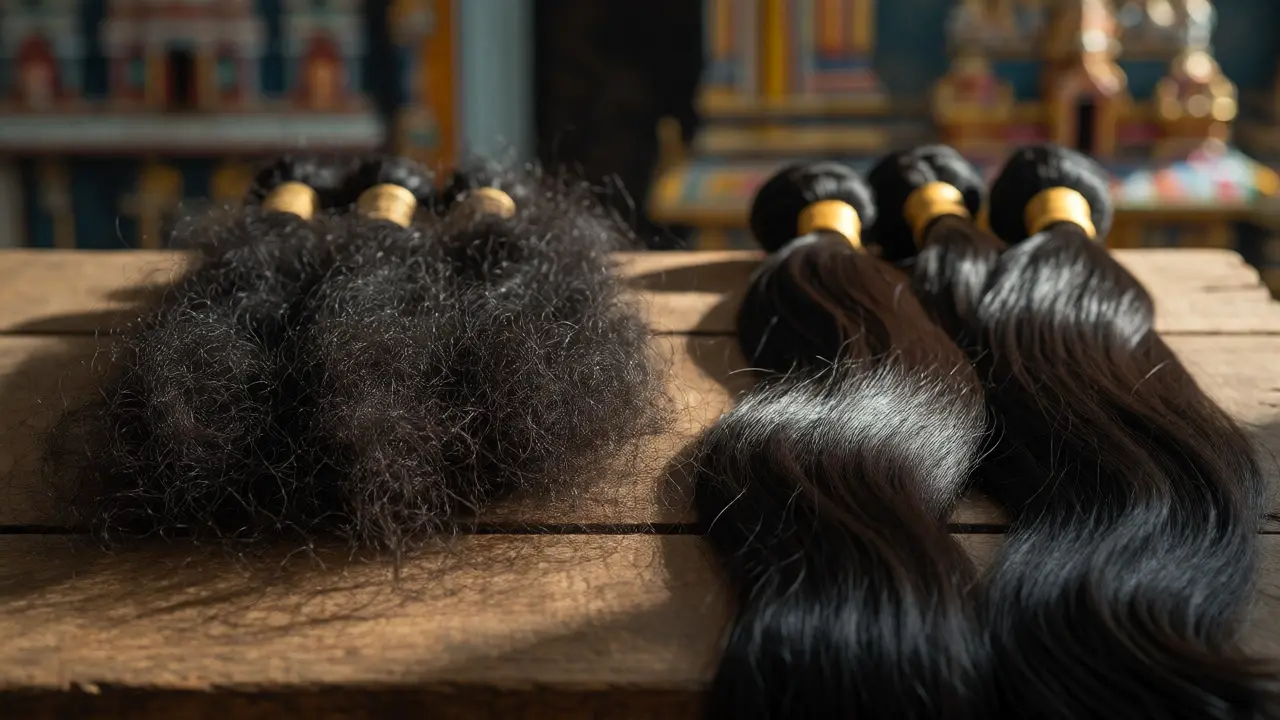
Remy Hair is the sweet spot for most buyers. The key here is "cuticle alignment." Imagine each strand of hair has tiny scales pointing downward. If these scales are all pointing the same way, the strands slide past each other smoothly. If they’re mixed, they lock together like Velcro, causing knots. Ethical brands prioritize Remy processing because it respects the hair’s natural structure.
Non-Remy Hair is often sold as "virgin" at suspiciously low prices. To make it look smooth, manufacturers coat it in silicone. Wash it three times, and the silicone washes off, leaving rough, tangled straw behind. Avoid this unless you’re on a tight budget and only need it for a weekend event.
The Ethical Checklist: How to Vet a Brand Yourself
Don’t just take a brand’s word for it. Use this checklist when shopping online or visiting a store.
- Ask for Origin: Does the brand specify the source? "Indian Temple Hair" is vague. "Donated hair from Tirumala Tirupati Devasthanams" is specific. Specificity equals transparency.
- Check the Cuticle Test: Run your fingers down a single strand from root to tip, then tip to root. If it feels smooth going down and rough going up, the cuticles are intact. If it feels smooth both ways, the cuticles were likely stripped (acid-washed).
- Look for Certifications: While there isn’t one universal "ethical hair" stamp yet, look for memberships in industry bodies or partnerships with NGOs that support donor communities.
- Read the Return Policy: Reputable brands stand by their product. If they don’t allow returns on opened bundles, ask why. Often, it’s because they suspect customers will return damaged goods, but sometimes it’s a sign of low confidence in quality.
- Social Proof: Look for reviews with photos taken months after purchase. A fresh review tells you nothing about longevity. You want to see how the hair looked after six months of use.
Maintenance: Keeping Your Ethical Investment Alive
You’ve spent good money on ethically sourced hair. Now, treat it like silk, not cotton. Human hair extensions lack the natural oils produced by your scalp, so they dry out faster. In India’s climate, this is exacerbated by sweat and pollution.
Wash your extensions only when necessary-every 7-10 days is usually enough. Use sulfate-free shampoos. Sulfates strip moisture and fade color. Always condition from mid-length to ends, avoiding the bonds or tapes. When drying, pat gently with a microfiber towel; never rub aggressively.
Heat styling is possible, but keep temperatures below 180°C (350°F). High heat damages the protein structure of human hair. If you’re using a curling iron, apply a heat protectant spray every single time. Skipping this step is the fastest way to ruin even the best Remy hair.
Final Verdict: Which Brand Should You Choose?
There is no single "best" brand for everyone. It depends on your budget, lifestyle, and ethical priorities.
If you want luxury and guaranteed quality, go with Keratin Lab. Their attention to detail is unmatched, though it hits your wallet harder. If you’re a first-time buyer wanting reliable performance and good customer support, Mane Addicts offers a balanced approach with great educational resources. For salon professionals or those who value consistency above all, Roots Hair Extensions is the safe bet. And if you’re budget-conscious but eco-aware, IndiHair provides excellent value without cutting corners on sourcing.
Remember, the most ethical choice is also the one that lasts longest. Buying cheap hair that you replace every three months creates more waste and costs more over time than investing in one high-quality set that lasts a year. Do your homework, ask questions, and wear your hair with pride.
Is temple hair really ethical?
Yes, generally speaking. Temple hair comes from voluntary religious donations. The proceeds often go toward maintaining the temple and community welfare projects. However, it's crucial to ensure the brand buys directly from the temple auctions rather than through exploitative middlemen who underpay the institutions.
How long do high-quality hair extensions last?
With proper care, high-quality Remy or Virgin hair extensions can last between 6 months to 2 years. Clip-ins last longer than permanent methods like tape-ins or keratin bonds because they aren't subjected to continuous tension and removal processes. Factors like washing frequency, heat styling, and environmental exposure significantly impact lifespan.
Can I dye my ethically sourced hair extensions?
Yes, since they are 100% human hair, you can dye them. However, because they have already been processed once during manufacturing, they may absorb color differently than your natural hair. It is highly recommended to perform a strand test first and consider having a professional stylist handle the coloring to prevent damage.
Why is Remy hair more expensive than regular human hair?
Remy hair is more expensive because of the labor-intensive process required to keep the cuticles aligned. Workers must sort each strand individually to ensure they all face the same direction. This prevents tangling and matting, resulting in a smoother, longer-lasting product compared to non-Remy hair where cuticles are stripped or randomly oriented.
Are synthetic hair extensions a good alternative?
Synthetic extensions are much cheaper and come pre-styled, which is convenient. However, they cannot withstand high heat, look less natural under sunlight, and have a shorter lifespan. For daily wear and a natural look, human hair is superior. Synthetic options are best for occasional costume use or very tight budgets.