

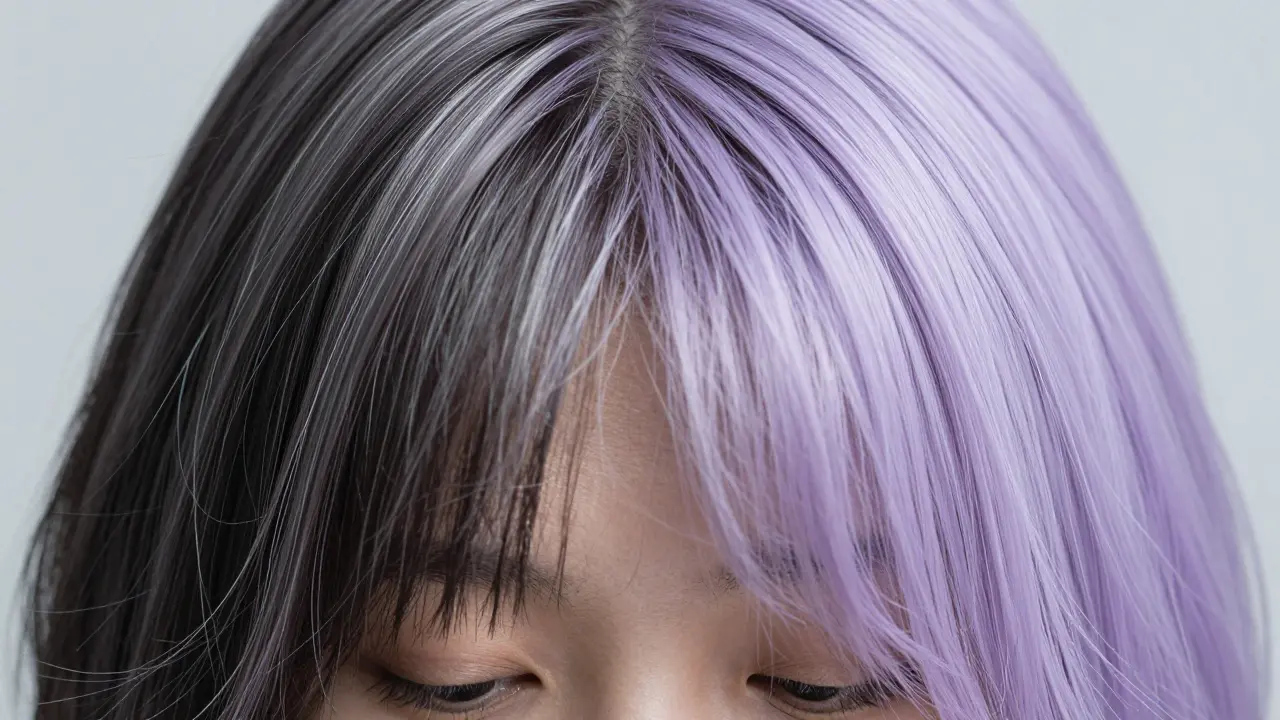
Imagine walking into a salon with your natural salt-and-pepper hair and asking for pastel lavender or baby blue. It sounds like a dream, but if you’ve ever tried to put a sheer color on mixed gray hair at home, you know the reality can be messy. You might end up with muddy tones, uneven patches, or worse-hair that feels like straw.
The good news? You absolutely can tint salt and pepper gray hair is a natural mix of dark pigmented strands and white or light gray strands that requires specific techniques to achieve even color results. The trick isn’t just picking a pretty shade; it’s understanding how those two very different types of hair react to chemicals. White hair is porous and grabs color fast. Dark hair resists it until you lift it. Getting both to play nice takes a bit of strategy, but once you nail it, the result is luminous and unique.
Why Pastels Are Tricky on Mixed Gray Hair
Pastel dyes are not like standard box dyes. They are translucent. Think of them like watercolor paint rather than oil paint. If you try to paint a pale pink over a dark brown canvas, you won’t see the pink-you’ll just see dirty brown. For a true pastel effect, your hair needs to be a Level 9-10 blonde base is a very light yellow to almost white hair level that serves as the necessary foundation for sheer pastel colors to appear vibrant and true-to-tone.
This creates a split challenge for salt-and-pepper hair:
- The White Strands: These are already light enough (often Level 10). However, they are usually more porous. They will suck up color quickly, potentially turning darker or more intense than you want.
- The Dark Strands: These sit around Levels 3-6. They need to be bleached significantly to reach that Level 9 baseline. If you skip this step, the pastel will only show on the white hairs, creating a mottled look rather than a cohesive color.
If you don’t address this difference, your head becomes a patchwork quilt. To get a uniform pastel, you have to treat these two hair types differently during the process.
Preparing Your Hair: Porosity and Health Checks
Before you buy a single bottle of dye, you need to assess your hair’s condition. Gray hair often has uneven porosity. Some white strands are coarse and resistant, while others are old, weathered, and highly absorbent. High-porosity hair absorbs color unevenly, which can lead to dull or muddy pastels instead of bright ones.
Here is how to prep correctly:
- Clarify First: Use a clarifying shampoo one or two days before coloring. This removes product buildup and oils that block dye uptake. Do not condition after this wash.
- Strengthen: In the weeks leading up to coloring, use deep conditioning treatments. Healthy hair holds color better and survives bleach with less breakage.
- The Strand Test: This is non-negotiable. Take a small section of hair that includes both white and dark strands. Bleach the dark part, then apply your pastel dye. Watch how long it takes to lift and what the final color looks like. This tells you exactly how your hair behaves.
If your strand test shows the white hair getting way too dark too fast, you’ll need to adjust your application time later. Always do a patch test 48 hours before using any oxidative dye or bleach to check for allergic reactions.
Lightening Strategy: Handling the "Pepper"
To get a full-head pastel look, you must lighten the dark strands. But here is the critical rule: do not bleach the white hairs again. They are already light. Bleaching them further will turn them mushy, overly porous, and prone to breakage. This damage leads to flat, dull pastel tones.
Instead, use a targeted approach:
- Sectioning is Key: Part your hair carefully. Identify the areas with the most dark pigment.
- Foil or Paint Only the Dark Parts: Apply bleach only to the pigmented (“pepper”) sections. Leave the white hairs untouched or lightly toned if they have yellow undertones.
- Monitor Closely: Check every 5 minutes. You are aiming for a pale yellow (Level 9). Once the dark strands match the brightness of the white strands, rinse immediately.
After rinsing the bleach, apply a bond-building treatment or deep conditioner. Let your hair rest for a day or two if it feels fragile. Never apply direct dye to wet, freshly bleached hair that is still compromised.
Choosing the Right Product Type
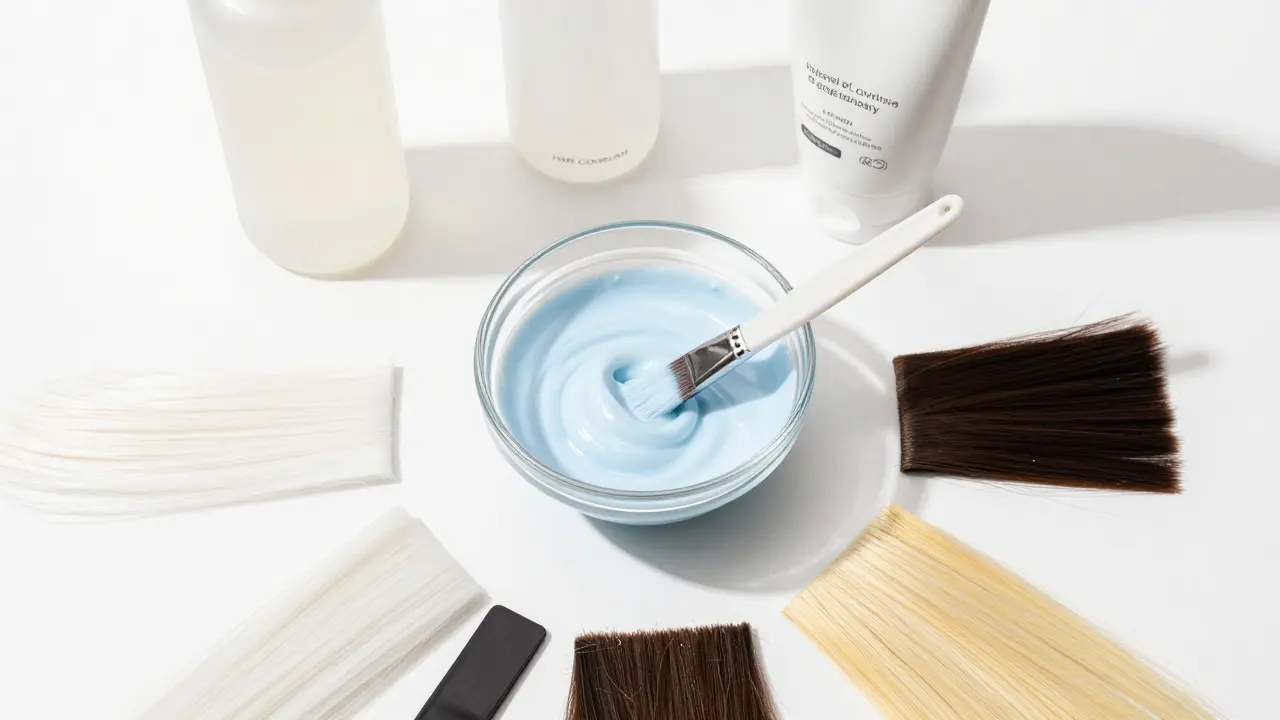
You have three main paths for applying pastel color, depending on how committed you are to the look and how much damage you want to risk.
| Method | Best For | Damage Risk | Longevity |
|---|---|---|---|
| Semi-Permanent Direct Dye | Vibrant, true pastel shades | Low (if hair is pre-lightened) | 4-6 weeks |
| Color-Depositing Conditioner | Subtle tints, low maintenance | Very Low | 1-3 washes |
| Temporary Sprays/Chalk | Testing colors, events | None | 1 wash |
Semi-Permanent Direct Dyes: Brands like XMONDO offer formulas infused with bond boosters. These are applied to damp hair. Because they deposit-only, they are gentler than oxidative dyes. They work best when you’ve already lifted the dark hair to Level 9.
Color-Depositing Conditioners: These are great for a subtle shift. You can mix a small amount of semi-permanent dye into your regular conditioner to create a custom mask. Apply it once or twice a week. This method enhances the white strands with a soft veil of color without fully committing to a fashion color.
Temporary Options: If you’re unsure, start here. Spray pastels or chalks will show up strongly on the white strands and faintly on the dark ones. It’s a safe way to see if a cool lavender suits your skin tone before you bleach anything.
Application Steps for Even Coverage
Once your hair is prepped and lightened (if needed), follow these steps to apply the pastel evenly across both hair types:
- Dampen Hair: Towel dry your hair so it’s damp, not dripping. Water dilutes the dye slightly, helping it spread more evenly.
- Section Again: Divide hair into four quadrants. Start at the nape of the neck.
- Apply to White Hairs First: Since white hair is more porous, apply the dye to these strands first. They will grab the color quickly.
- Apply to Lightened Dark Hairs: Move to the previously bleached sections. These may need a slightly longer processing time to absorb the same intensity of color.
- Comb Through: Use a wide-tooth comb to ensure saturation. Avoid brushing vigorously to prevent tangling.
- Time It: For a soft pastel, leave it on for 5-10 minutes. For deeper intensity, go up to 20 minutes. Check frequently. Remember, you can always add more color later, but you can’t take it out easily.
- Rinse Cool: Rinse with cool water until it runs clear. Cool water seals the cuticle, locking in color and shine.

Maintenance: Keeping Pastels Fresh
Pastel colors are fleeting. They sit on the surface of the hair cuticle, so they fade faster than permanent dyes. Water is the biggest enemy. Here is how to make your color last longer:
- Wash Less: Aim for 2-3 times a week max. Use dry shampoo between washes.
- Cool Water Only: Hot water opens the cuticle and lets dye escape. Stick to lukewarm or cool showers.
- Sulfate-Free Shampoo: Sulfates strip color aggressively. Use a gentle, color-safe formula.
- Refresh Often: Re-apply a color-depositing conditioner every few washes. This acts as a toner and keeps the pastel looking fresh without heavy chemical exposure.
- UV Protection: Sunlight fades pastel shades rapidly. Wear a hat or use a UV-protection spray when outdoors.
Which Pastels Suit Salt and Pepper Hair?
Not all pastels flatter everyone. Color theory suggests that cool, clear tones harmonize best with the natural silver and gray tones in your hair. Warm pastels like peach or apricot can sometimes clash with metallic gray, making skin look sallow unless you have warm undertones.
Generally, these cool pastels work well:
- Lavender/Lilac: Complements silver tones beautifully.
- Icy Pink: Soft and feminine, works well with lighter grays.
- Powder Blue/Mint: Provides a crisp, clean contrast against white strands.
If you’re unsure, hold a piece of colored fabric up to your face in natural light. If the color brightens your complexion, it will likely work on your hair too.
When to Skip the DIY
Tinting salt-and-pepper hair pastel is technically difficult because you are managing multiple starting levels and porosities on one head. If your hair is already damaged, breaking, or extremely fine, consider skipping the bleach entirely. Instead, opt for temporary sprays or clip-in pastel extensions. This gives you the fun of the trend without risking further structural damage to your natural hair.
Also, if you have less than 30% gray, blending the gray with a demi-permanent ash tone first might give you a smoother canvas for pastel application later. This technique softens the contrast between dark and light strands, making the final pastel look more unified.
Do I need to bleach my white gray hair to get pastel colors?
No, you should not bleach white gray hair. It is already light enough (Level 10) for pastel dyes to show up. Bleaching it further will cause severe damage and make the hair porous, leading to dull, uneven color absorption. Only bleach the dark "pepper" strands to match the lightness of the white ones.
Will pastel dye cover my gray hair completely?
Pastel dyes are translucent, not opaque. They will not provide solid coverage like a permanent dye. Instead, they deposit a sheer layer of color over the existing hair. On salt-and-pepper hair, this means the white strands will show the pastel vividly, while any remaining dark strands will look muted or unchanged unless pre-lightened.
How long does pastel color last on gray hair?
Pastel colors typically last 4-6 weeks with proper care, but they begin fading after 3-6 shampoos. Because pastel dyes sit on the cuticle, frequent washing, hot water, and sun exposure accelerate fading. Using sulfate-free products and cool water extends longevity.
Can I use semi-permanent dye on unbleached salt-and-pepper hair?
Yes, but the results will be uneven. The dye will show up brightly on the white strands and barely at all on the dark strands, creating a marbled effect. If you want a uniform pastel look, you must lighten the dark strands first. If you like the mottled look, you can apply it directly without bleach.
What is the best way to maintain pastel color on gray hair?
Maintain pastel color by washing hair infrequently (2-3 times a week) with cool water and sulfate-free shampoo. Use a color-depositing conditioner or mask once or twice a week to refresh the tone. Protect hair from UV rays with hats or sprays to prevent rapid fading.
Sandi Johnson
May 28, 2026 AT 22:51Oh, fantastic. Another guide telling people to essentially dissolve their hair follicles with industrial bleach just to look like a faded Smurf for three weeks. I’m sure the structural integrity of keratin is just *thrilled* about this development.
But hey, if you enjoy spending your weekends staring at a strand test like it’s the Rosetta Stone, by all means, proceed. Just don’t come crying to me when your 'pastel lavender' looks more like 'moldy eggplant' because you skipped the part about not bleaching white hair twice.
Ian Maggs
May 30, 2026 AT 08:06One must consider; is the pursuit of such ephemeral aesthetics truly worth the sacrifice of one's natural state? The white strands are already light! They are pure! To bleach them further is an act of hubris against nature itself.
The dark strands require lifting, yes, but the white ones... they are already Level 10. To treat them as if they need correction is a philosophical error in logic. One should embrace the salt and pepper, not try to erase the history written in each strand. Why do we feel the need to conform to a pastel standard that fades so quickly? It is a metaphor for vanity, really. Very poignant.
Michael Gradwell
May 31, 2026 AT 16:10look i dont know why everyone is making this so complicated. if you have gray hair just dye it black or brown and be done with it. these pastel trends are for kids who have nothing better to do than ruin their hair. real people have jobs and responsibilities not time to sit around doing strand tests every five minutes. its just lazy and wasteful to keep changing colors like that
Flannery Smail
June 2, 2026 AT 12:01I actually think the whole concept of 'even coverage' on salt and pepper hair is flawed. Who wants uniformity? The mottled look is way more interesting aesthetically. If you want a solid block of color, go get extensions. The beauty of DIY is the imperfection. Also, bleach is cheap, buy more if you mess up. It’s not rocket science.
Rob D
June 2, 2026 AT 20:34Listen here, you soft-pedaled snowflakes. In my day, we didn't have these fancy 'bond boosters' or whatever corporate garbage you're shoving into our skulls. We used what was available and we liked it. This pastel crap is weak. Real Americans don't walk around looking like washed-out dish soap. Get some backbone and wear your gray with pride, or dye it a respectable navy blue. Stop letting these foreign beauty influencers dictate how you should look. It’s disgusting.
Franklin Hooper
June 3, 2026 AT 23:44It is frankly embarrassing to see the level of misinformation spread here. The article mentions 'Level 9-10 blonde base' yet half of you seem incapable of understanding basic color theory. Pastels are translucent pigments deposited on pre-lightened hair. You cannot simply paint watercolor over a dark canvas and expect vibrancy. It is elementary chemistry. Please educate yourselves before attempting to apply oxidizing agents to compromised cuticles. Your ignorance is palpable through the screen
Jess Ciro
June 4, 2026 AT 21:38you think this is just about hair? no. the chemicals in these dyes are tracking us. big beauty knows exactly what they are putting in our pores. that's why pastels fade so fast because they are designed to make you buy more poison. i tried the temporary spray once and felt dizzy immediately. wake up sheeple. the gray hair industry is a front for something much darker. do your own research instead of trusting these step-by-step guides from controlled media outlets
saravana kumar
June 5, 2026 AT 06:45The methodology described herein is fundamentally sound yet practically tedious. The differentiation between porous white strands and resistant dark strands is crucial. However, the suggestion to use clarifying shampoo two days prior is somewhat arbitrary. One could argue that immediate clarification yields similar results provided the scalp barrier is intact. Furthermore, the reliance on commercial bond-building treatments is excessive. Natural oils suffice. The author fails to acknowledge the economic disparity in accessing such specialized products. It is a luxury problem disguised as a technical challenge.
Tamil selvan
June 6, 2026 AT 17:00I completely understand the hesitation many feel! Hair health is paramount, and it is wonderful to see such detailed guidance on porosity checks. Please remember to be gentle with yourself during this process. If your hair feels fragile, take extra time to rest and condition. You are doing great by researching first! The strand test is indeed a brilliant idea to prevent disappointment. Keep going, you can achieve this beautiful look safely!
Mark Brantner
June 6, 2026 AT 20:44OMG this is so cool!!! i totally wanna try the icy pink one. but wait, does it work on curly hair too?? cause my curls are kinda frizzy and i dont wanna end up looking like a bird nest. also typos r everywhere in my head rn bc im so excited. anyone else tried xmondo? is it worth the hype or just another scam?? let me know plz!!
Kate Tran
June 7, 2026 AT 19:58i mean, if you got the money and time why not? just dont blame me if it turns green lol. ive seen it happen before. better safe than sorry tho. maybe start with the chalk first like it says. cant hurt right?