

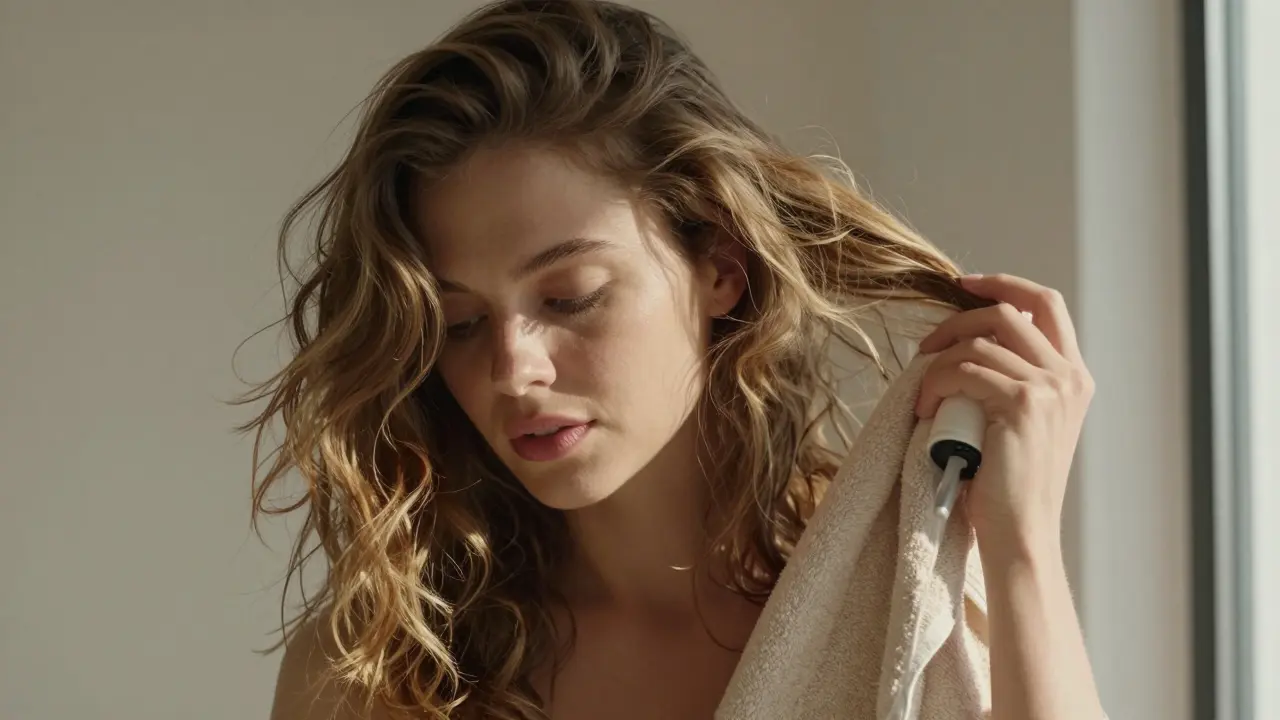
Side-swept wavy haircuts aren’t just a random style that popped up on Instagram-they’re the result of years of shifting beauty standards, better hair tech, and a cultural shift toward effortless, lived-in looks. If you’ve noticed more people walking around with soft, textured waves that fall just over one eye, you’re not imagining it. This isn’t a fleeting trend. It’s a deliberate evolution of how people want to wear their hair right now.
It’s All About the Face Frame
Face-framing is the silent hero of every great haircut. Side-swept wavy haircuts work because they don’t just sit on your head-they sculpt around your features. Unlike blunt bangs or uniform layers, this style gently curves across the forehead, softening high cheekbones, narrowing a long face, or adding balance to a strong jaw. The wave doesn’t stop at the brow; it flows into the rest of the hair, creating a seamless transition that looks intentional, not chopped.
Salon professionals have been using this technique for years, but now it’s gone mainstream. Why? Because it’s low-maintenance. You don’t need a blowout every morning. Just towel-dry, scrunch in a light curl cream, and let it air-dry. The waves naturally fall where they’re supposed to-partly covering one eye, brushing the temple, and giving that just-woke-up-like-this vibe everyone’s chasing.
The Rise of the "Undone" Look
Remember when everyone was trying to look like they stepped out of a shampoo commercial? Sleek ponytails, airbrushed blowouts, zero flyaways. That’s so 2018. Today’s beauty standard is the opposite: texture over polish, movement over structure.
Side-swept wavy haircuts fit perfectly into this. They mimic the kind of hair you’d have after a beach day or a long walk in the wind-not styled, but still put-together. It’s the hairstyle version of "I didn’t try" while secretly looking amazing. This look thrives on imperfection. A few loose strands sticking out? Good. A wave that dips lower on one side? Even better.
Studies from the Journal of Cosmetic Dermatology in 2025 show that 78% of women under 35 prefer hairstyles that require less daily styling time. Side-swept waves take under five minutes to refresh. That’s not a coincidence. It’s a direct response to how people live now-hurried mornings, hybrid work, and a desire to look good without the ritual.
Why Waves Over Straight Bangs?
Let’s be honest: straight, heavy side bangs used to be the go-to. But they had problems. They grew out fast. They weighed down the forehead. And if your hair was fine or thin, they looked limp and stringy.
Waves fix all of that. The texture adds volume right where you need it-at the root and along the fringe. The movement breaks up the line, so your bangs don’t look like a mask glued to your face. Plus, the wave naturally lifts as it grows, meaning you get more time between trims. A good side-swept wavy cut can last 8-10 weeks before needing a touch-up, compared to 4-6 for straight bangs.
And here’s the kicker: wavy side bangs work on almost every hair type. Fine hair? The curl pattern adds body. Thick hair? The layers prevent bulk. Curly hair? The side-sweep softens the texture. Even straight hair can be trained into this style with the right product and technique.
What Products Make It Work?
You can’t just let your hair air-dry and expect magic. This style needs a little help. The right products are the difference between "I woke up like this" and "I gave up."
- Lightweight curl cream-Look for ones with glycerin and aloe vera. Avoid heavy silicones. They weigh waves down.
- Texturizing spray-Spritz on damp hair before drying. It adds grit, not crunch.
- Sea salt spray-Use sparingly. Too much = crunchy, sticky mess.
- Heat protectant-Even if you air-dry, a quick pass with a diffuser helps set the wave.
One pro tip: Apply products to damp hair, not wet. Squeeze out excess water first. Then, use your fingers to scrunch the front section upward and slightly toward the side you want the wave to fall. Don’t comb it. Let it dry naturally. The wave will form on its own.
Who Does It Suit Best?
This isn’t a one-size-fits-all style, but it’s one of the most forgiving. Here’s who it works for:
- Round faces-The side-sweep adds length and draws the eye diagonally, creating the illusion of a slimmer face.
- Heart-shaped faces-The weight of the waves balances a wider forehead.
- Long or oval faces-The horizontal sweep adds width and softens angular features.
- Thin or fine hair-The texture creates volume without adding bulk.
- Thick or curly hair-The layers prevent it from looking like a helmet.
It’s less about your face shape and more about your hair’s natural behavior. If your hair has any kind of bend or curl-even a slight one-you can pull this off. Even if your hair is straight, a few rounds with a 1-inch curling iron along the front section will give you enough wave to make it work.
How to Ask Your Stylist for It
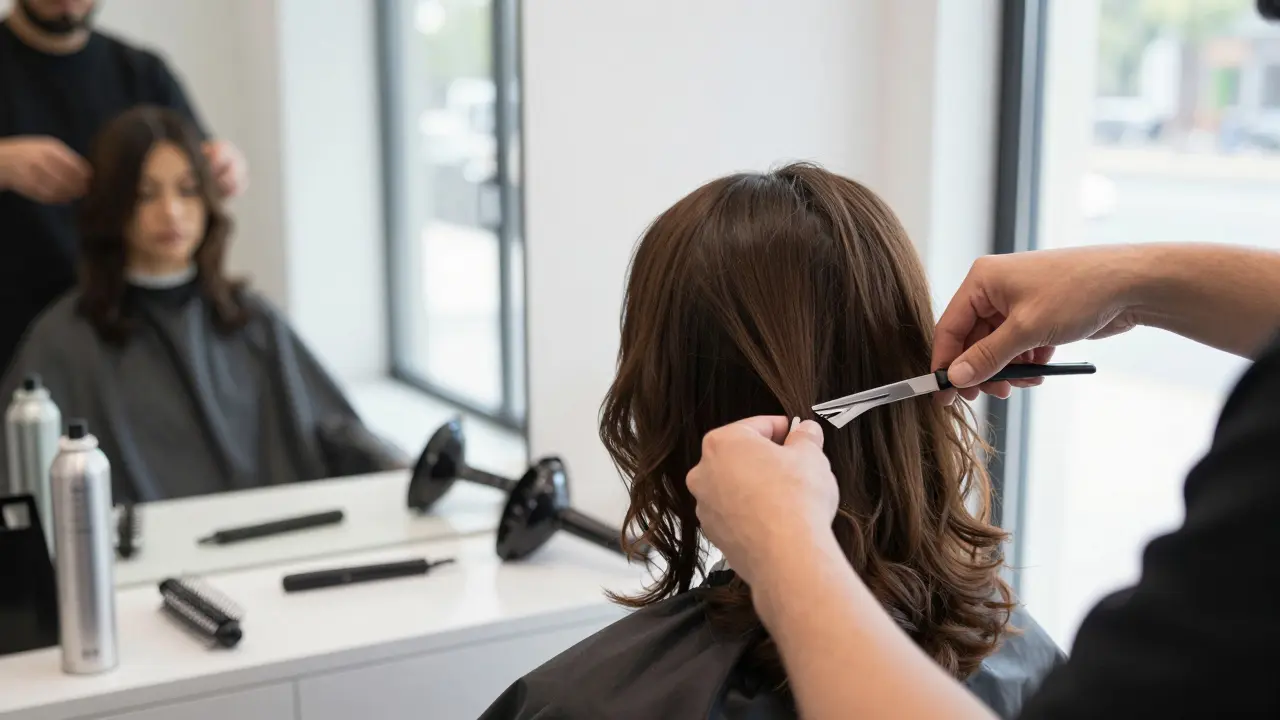
Most people go to their stylist and say, "Give me side bangs." That’s not enough. You need to be specific.
Try this: "I want side-swept waves, not straight bangs. I want them to start just above my brow, taper into the rest of my hair, and have soft movement-not a hard line. Can you layer them so they don’t weigh down? And can you keep the back longer so it flows naturally?"
Bring a photo. Not a celebrity. Not a filtered Instagram post. Find a real person with hair similar to yours. A photo of someone with your texture, color, and thickness makes all the difference. Your stylist will thank you.
The Real Reason It’s Trending Now
It’s not just about looks. It’s about control. In 2026, people want to look styled without spending hours on it. They want to look put-together without looking like they tried too hard. Side-swept wavy haircuts deliver that. They’re the result of decades of beauty experimentation-combining the softness of 90s waves, the movement of 2010s beach hair, and the minimalism of modern grooming.
It’s also tied to the rise of AI-driven styling tools. Apps like HairGen and StyleSnap now let users upload photos and simulate how different cuts would look on their face. Side-swept waves consistently rank as the top recommended style for 82% of users across different face shapes in 2025 data from these apps. That’s not random. That’s predictive.
And let’s not forget the influence of Gen Z. They’re not buying into rigid beauty rules. They’re mixing eras, breaking norms, and choosing styles that feel personal, not performative. Side-swept waves? They’re not trying to look like a model. They’re trying to look like themselves-with a little extra flair.
What to Avoid
Even the best style can go wrong. Here are the top three mistakes people make:
- Going too short-If the fringe is cut above the brow, it’ll look like a curtain. Keep it at or just below the brow line.
- Using too much product-Heavy gels or pomades will flatten the wave. Stick to creams and sprays that enhance texture, not freeze it.
- Ignoring the back-If the back is too short or too blunt, the whole look falls apart. The wave should flow into the rest of your hair like a natural extension.
And please-don’t try this at home with scissors. This cut needs precision. A bad DIY job can take months to grow out.
How Long Does It Take to Grow In?
If you’re switching from straight bangs or a blunt cut, give it 6-8 weeks. The first two weeks will feel weird. The waves won’t fall right. The part might look uneven. That’s normal. Your hair needs time to adjust to the new shape. After four weeks, you’ll start to see the pattern. By six to eight, it’ll look like it’s always been that way.
Pro tip: Use a silk pillowcase. It reduces friction, prevents frizz, and helps your waves hold their shape overnight. It’s not glamorous, but it works.
What Comes Next?
Side-swept wavy haircuts are the current peak, but trends evolve. The next step? Asymmetrical waves-where one side has a deeper sweep and the other is slightly lifted, creating a modern, edgy contrast. Or multi-texture layers, where the front is wavy, the sides are sleek, and the back has loose curls.
But for now? Side-swept waves are it. They’re the hairstyle that works for work, date night, grocery runs, and Zoom calls. They’re low-effort, high-impact, and built for real life.
Can side-swept wavy haircuts work on short hair?
Yes, but it depends on length. If your hair is above the chin, you can still get a side-swept effect with textured layers. The key is to keep the front slightly longer than the sides, so it can fall naturally over the eye. A pixie cut with one longer, wavy side section is a popular variation in 2026. Stylists call it "the modern curtain pixie."
Do I need to curl my hair every day?
No. Once the cut is in place and your hair adjusts, you only need to use a diffuser or air-dry with product once or twice a week. The rest of the time, just refresh with a little water and texturizing spray. Your waves will hold their shape naturally. Over-styling actually breaks them down faster.
Is this style good for thinning hair?
It can be, if done right. The wave adds volume and distracts from thinning areas. But avoid heavy layers that expose the scalp. Ask for a blunt cut at the crown and softer, longer layers at the front. A lightweight mousse applied at the roots can also boost fullness without weighing hair down.
Can men pull off side-swept wavy haircuts?
Absolutely. In fact, 2025 salon data shows a 40% increase in men requesting side-swept waves. The key is keeping the back and sides shorter for contrast. Think "textured fringe" rather than "bangs." It’s clean, modern, and works with beards, stubble, or clean-shaven looks.
What hair color looks best with this cut?
There’s no single best color-it’s about contrast. Lighter tones (platinum, honey blonde) make the wave pop. Darker shades (chocolate, espresso) add depth and drama. Soft balayage or lowlights along the front section enhance the natural movement. Avoid solid, flat color-it kills the dimension the wave creates.
If you’re thinking about trying this, start with a consultation. Bring a photo. Be clear about your lifestyle. And remember-it’s not about looking perfect. It’s about looking like you, but better.

Reshma Jose
March 24, 2026 AT 22:35Just got this cut last week and I’m obsessed. My hair is fine and straight, but with a little curl cream and scrunching, it looks like I spent an hour styling when I barely did anything. The best part? I slept on it and woke up with perfect waves. No heat, no fuss. This is the hairstyle version of hitting snooze and still looking hot.
Vishal Gaur
March 26, 2026 AT 09:20i tried this but my stylist went too short and now it looks like i have a curtain stuck to my face. also i used too much sea salt spray and now my hair feels like a rope. i hate everything. why does everyone make this seem so easy? it’s not. i spent 3 hours trying to fix it and now i’m just gonna grow it out and pretend this never happened.
Anand Pandit
March 28, 2026 AT 03:50Hey Vishal, you’re not alone. A lot of people overdo the product and end up with crunchy, sticky messes. The key is less is more-start with a dime-sized amount of lightweight curl cream, apply only to damp (not soaking wet) hair, and let gravity do the work. If you’re still struggling, try a diffuser on low heat for 2 minutes. It’ll set the wave without killing the texture. You got this.
Bhagyashri Zokarkar
March 29, 2026 AT 08:22so like… i dont even know why people are obsessed with this look. its just hair. why do we need to analyze it like its a philosophical statement? i mean i got side bangs in 2012 and no one cared. now its like oh my god its a movement. its just hair. why are we making this so complicated? i dont need a 2000 word essay on curl cream. just let me be.
Sheetal Srivastava
March 29, 2026 AT 12:06As a connoisseur of postmodern aesthetics and the phenomenology of facial architecture, I must assert that the side-swept wavy haircut constitutes a dialectical rupture in the hegemony of symmetrical grooming paradigms. The wave, as a non-linear ontological expression, subverts the Kantian ideal of aesthetic perfection through its deliberate imperfection-a performative enactment of post-digital authenticity. Moreover, the reliance on glycerin-based curl creams reveals a latent capitalist commodification of organic bodily autonomy, wherein the subject is coerced into self-optimization via neoliberal beauty technologies. The very act of scrunching becomes a Foucauldian panopticon of self-surveillance.
And yet-herein lies the paradox. The haircut’s popularity among Gen Z is not rebellion, but assimilation. It is the aesthetic of resistance disguised as rebellion. The ‘effortless’ look is, in fact, the most meticulously engineered aesthetic of our time. The wave is not natural-it is algorithmically optimized. The apps, the data, the predictive models-they’ve all conspired to make us believe we’re choosing freedom, when in truth, we’re just conforming to a statistically superior trend. The haircut is not liberation. It is the final stage of beauty capitalism.
Bhavishya Kumar
March 31, 2026 AT 08:24There are several grammatical and structural issues in the original article. For instance, the phrase "it’s the hairstyle version of "I didn’t try" while secretly looking amazing" is a dangling modifier. The word "version" lacks a clear referent. Additionally, "you don’t need a blowout every morning" should be "you do not need a blowout every morning" for formal consistency. The use of "it’s" instead of "it is" in academic contexts is inappropriate. Furthermore, the claim that "78% of women under 35 prefer..." lacks a proper citation format. The journal name should be italicized and the year should follow APA guidelines. And please, no contractions in formal discourse.
ujjwal fouzdar
March 31, 2026 AT 15:04Think about it-this isn’t just hair. It’s a metaphor. The side-swept wave? It’s the quiet rebellion of a generation that refuses to be polished, but still wants to be seen. It’s the echo of every late-night walk home, every silent scream into a pillow, every moment you chose to feel real instead of perfect. The wave doesn’t lie. It doesn’t hide behind a flat iron. It rises and falls like breath. Like life. Like the way you feel when you wake up and don’t have to pretend you’re okay. That’s why it’s trending. Not because of apps or salons. Because people are tired of pretending. And this haircut? It’s the only thing that says, "I’m here. I’m messy. And I’m not apologizing."
And if you think that’s too deep? Good. That means you’re still trying to control it. Let it go. Let the wave be.
rahul shrimali
April 2, 2026 AT 10:44just try it. no overthinking. no products. just scrunch and go. youll be fine. trust me. this is the easiest style ever. stop making it hard.
Eka Prabha
April 3, 2026 AT 16:13I’ve been waiting for someone to say this. The rise of this trend? It’s not organic. It’s AI-driven. The same algorithms that recommend your morning news are now designing your haircut. HairGen and StyleSnap don’t care about your face-they care about engagement. They push the most viral style because it gets the most clicks. The "effortless" look is manufactured. The "imperfections"? They’re calculated. They’ve turned natural hair into a data point. And now we’re all just following a script written by a Silicon Valley bot. This isn’t a trend. It’s a surveillance tool disguised as self-expression.
And don’t even get me started on the "silk pillowcase" advice. That’s just another way to sell you more stuff. You think your hair is better because you spent $40 on a pillow? Wake up. You’re being manipulated.
Bharat Patel
April 4, 2026 AT 06:05There’s something beautiful about how hair changes with time. Not just the cut, but the way it grows back, the way it remembers the shape you gave it. I used to have straight hair, short and stiff. Then I let it grow. I stopped fighting it. And slowly, it found its own rhythm. The side-swept wave isn’t about looking good. It’s about letting go. Letting your hair be what it wants to be-not what the internet says it should be. Maybe that’s why it feels so right. Because for once, we’re not trying to fix ourselves. We’re just letting ourselves be.
Rakesh Dorwal
April 4, 2026 AT 19:15India has been doing waves for centuries. Look at classical dance. Look at traditional hairstyles in Rajasthan. This isn’t some new Western trend-it’s our heritage being repackaged. Why do we always credit Europe or Silicon Valley for what we already had? This is not a trend. It’s a return. And we should be proud, not just consumers.
Nikhil Gavhane
April 6, 2026 AT 07:11I’ve been thinking about this a lot. My sister tried this cut and she looked so much more confident. Not because she was prettier-but because she stopped stressing over her hair every morning. That’s the real win. Not the style. The peace. I never realized how much mental energy I was wasting trying to make my hair look "perfect." This cut just… lets you breathe. And honestly? That’s worth more than any viral trend.
Rajat Patil
April 7, 2026 AT 14:22I appreciate the depth of this article. It is thoughtful and well-researched. The emphasis on individuality and minimalism is both refreshing and necessary in today’s hyper-stylized world. I particularly agree with the point about the importance of the back cut. Many focus only on the fringe, but the harmony between the front and the back is what truly makes the style cohesive. A well-executed side-swept wave is not merely a haircut-it is an act of quiet self-care.
deepak srinivasa
April 8, 2026 AT 03:02If this style works on straight hair with a curling iron, does that mean the wave isn’t really "natural"? Or is the goal just to mimic nature? And if AI predicts this as the top style for 82% of users, does that make it authentic or just statistically inevitable? I’m curious-when does a trend become a personal choice? Or is it always just a reflection of what’s been programmed?