


When you see someone with a long, lush ponytail that looks like it just grew out of their head - chances are, it’s a ponytail human hair extension. But not all of them are made the same. If you’re looking for one, especially if you care about where your hair comes from, you need to know what you’re really buying. This isn’t just about looks. It’s about ethics, quality, and how real the hair actually is.
What Exactly Is a Ponytail Human Hair Extension?
A ponytail human hair extension is a single, pre-styled piece of hair that clips, snaps, or weaves into your natural hair to instantly add length, volume, or both. Unlike wefts or strands that blend across your scalp, a ponytail extension is designed to mimic a full, natural ponytail. It usually has a built-in comb or elastic band that grips your own hair at the base, so it stays put without glue or sewing.
The key word here is human. That means the hair used isn’t synthetic fiber or polyester. It’s real human hair, collected from donors, processed, and styled to match natural texture and color. The best ones feel soft, move naturally, and can be washed, heat-styled, and treated like your own hair.
Why Ethical Sourcing Matters More Than You Think
Here’s the uncomfortable truth: a lot of human hair on the market comes from places with little to no oversight. In some countries, women sell their hair out of desperation - for $20, $50, sometimes even less. That hair then gets sold to middlemen, mixed with synthetic fibers, dyed, and shipped overseas as "premium" extensions. The original donor never sees a dime beyond their initial payment. And no, that’s not sustainable.
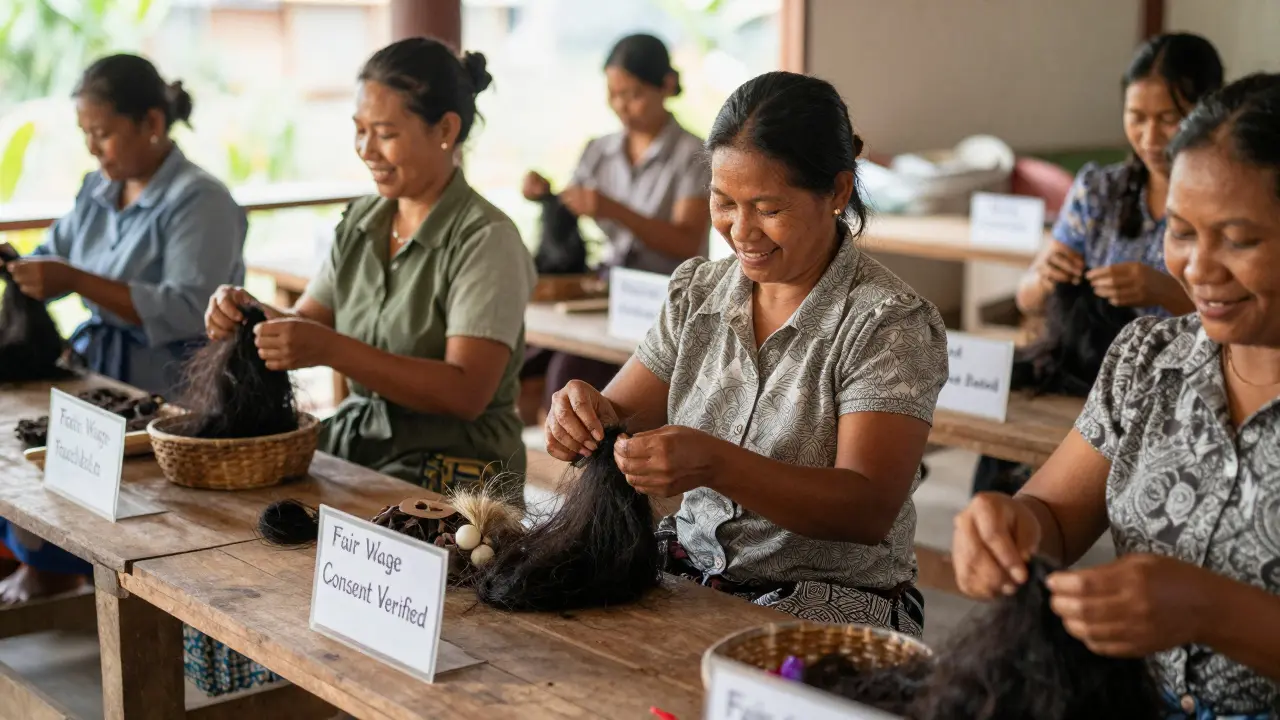
Ethically sourced ponytail extensions change that. They come from donors who are paid fairly, often through cooperatives or direct-trade programs. Companies that do this right track every batch. They verify consent, document fair wages, and avoid exploitative labor. Some even partner with nonprofits that support women’s education or health care in the communities where the hair is collected.
Brands like Verity Hair a U.S.-based company that sources hair directly from women in India and Brazil through fair-trade partnerships and TrueLock a brand that uses hair from certified donors in Vietnam with transparent payment records have built their entire business around this model. They don’t just say "ethically sourced" - they show receipts.
How to Spot Real Ethically Sourced Hair
It’s not always easy. Labels like "100% human hair" or "Remy" don’t guarantee ethics. Here’s what to look for:
- Transparency reports - Do they name the regions where hair is collected? Do they list partner organizations?
- Donor stories - Ethical brands share real stories, not stock photos. You should see names, ages, maybe even short videos of donors talking about why they sell their hair.
- Price point - If a 22-inch ponytail extension costs $40, it’s likely not ethically sourced. Ethical extensions start at $120 and go up. That’s because fair wages, testing, and traceability cost money.
- Certifications - Look for third-party seals like Fair Trade Certified, Ethical Hair Trade Alliance, or B Corp status.
One brand we’ve seen consistently deliver? Harmony Hair Co. They source hair from women in rural Nepal who earn 3x the local average wage for their hair, and they donate 10% of profits to girls’ education programs. Their ponytails come with a QR code that takes you to the donor’s profile and the exact batch your hair came from.
Quality Differences Between Ethical and Non-Ethical Extensions
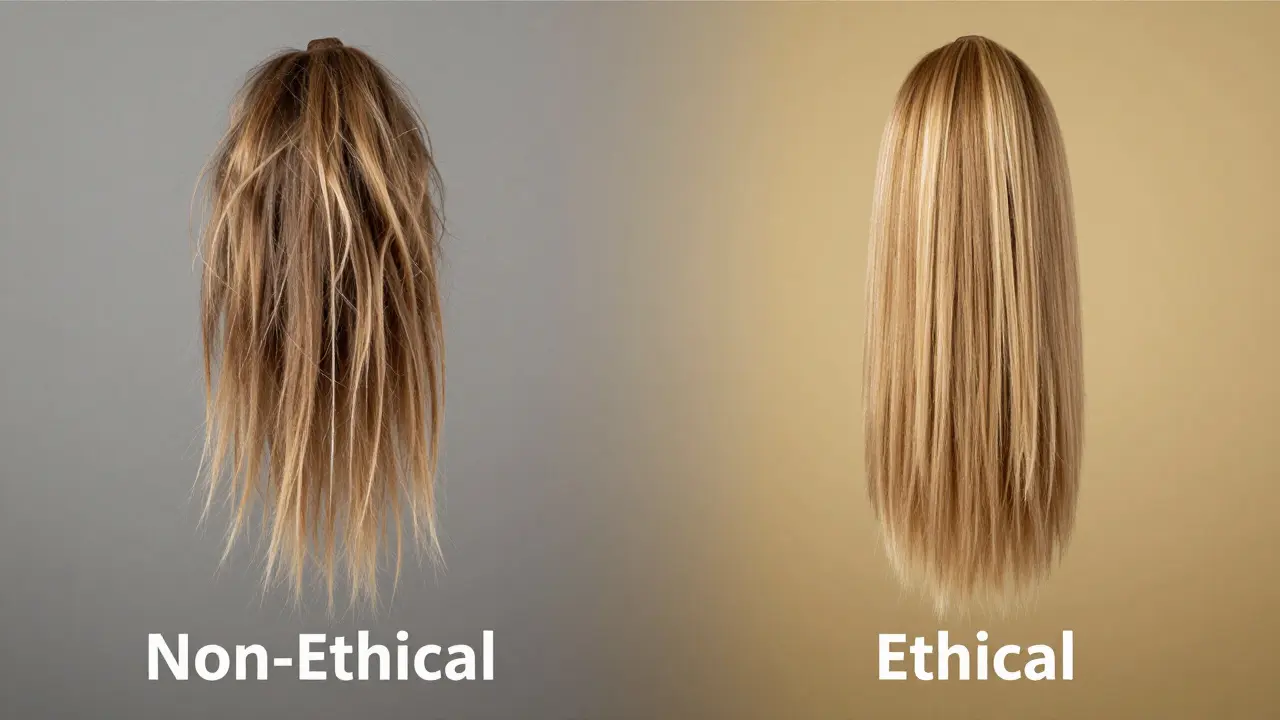
It’s not just about feeling good - ethical hair lasts longer and looks better.
| Feature | Ethically Sourced | Non-Ethical |
|---|---|---|
| Hair Cuticle Direction | All cuticles aligned (Remy) | Mixed cuticles, often stripped |
| Texture Consistency | Uniform, natural wave pattern | Patchy, inconsistent, often blended |
| Shedding After 3 Months | Less than 5% | Over 30% |
| Heat Tolerance | Up to 450°F (can be flat-ironed) | Starts fraying at 300°F |
| Longevity | 1-3 years with proper care | 3-6 months |
The difference shows up in how it behaves. Ethical extensions don’t tangle as easily. They hold color better. They don’t get brittle or frizzy after a few washes. And yes - they cost more upfront. But if you buy one every year instead of three, you’re saving money and supporting real people.
How to Care for Your Ethical Ponytail Extension
Once you’ve invested in a good one, treat it right. Here’s how:
- Wash it every 8-10 wears with sulfate-free shampoo. Use lukewarm water - hot water damages the cuticle.
- Never sleep in it. Always remove it before bed to prevent tugging on your natural hair.
- Store it on a wig stand or hang it by the clip. Don’t toss it in a drawer.
- Use heat protectant before styling. Even though it’s human hair, it’s been processed once already.
- Deep condition every 4-6 weeks with a protein-free mask. Protein can make extensions stiff.
Don’t bleach it. Don’t try to strip color. Most ethical extensions are already processed to match natural tones. Over-processing will ruin them.
Who Should Use a Ponytail Extension?
These aren’t just for people who want long hair. They’re for:
- Women recovering from chemotherapy or hair loss
- Anyone wanting a quick style change without commitment
- People with thinning hair at the crown who need volume
- Those who want to protect their natural hair from heat or chemicals
- Stylists who need professional-grade pieces for clients
They’re especially popular among women in their late 20s to early 40s who are starting to notice changes in their hair texture or density. It’s not vanity - it’s practical self-care.
What to Avoid
Steer clear of:
- Brands that don’t disclose their sourcing
- "Cheap" extensions sold on marketplaces like Amazon or Wish
- Products labeled "virgin hair" without proof
- Claims like "100% human hair from Brazil" - that’s a red flag. Brazil doesn’t export large volumes of hair like India or Vietnam do
There’s a reason those cheap ones are so cheap. Someone paid for it - and it wasn’t the donor.
Final Thoughts: It’s Not Just Hair
When you buy a ponytail human hair extension, you’re not just buying a beauty product. You’re making a choice about how people - often women in developing countries - are treated. You’re choosing between exploitation and empowerment. Between a quick fix and a real solution.
There’s no shame in wanting long hair. But there’s power in knowing where it came from. And if you care about quality, ethics, and longevity - you’ll find that the best ponytail extensions aren’t the cheapest. They’re the ones that honor the hands that gave them to you.
Are ponytail human hair extensions real hair?
Yes, if they’re labeled as human hair extensions, they’re made from real human hair collected from donors. But not all are created equal. Some are mixed with synthetic fibers or chemically stripped. Ethically sourced brands verify the hair is 100% human, with intact cuticles, and traceable back to the donor.
How long do ponytail human hair extensions last?
With proper care, ethically sourced ponytail extensions can last 1 to 3 years. Non-ethical ones, especially those with damaged cuticles or synthetic blends, often start shedding after just 3 to 6 months. How long they last depends on how often you wear them, how you wash them, and whether you use heat tools.
Can you dye or bleach a ponytail human hair extension?
You can dye them, but it’s not recommended unless you’re experienced. Most ethical extensions are already processed to match natural tones. Bleaching can strip the cuticle and cause breakage. If you want a different color, it’s better to buy a new extension in the shade you want.
Where does ethically sourced human hair come from?
Ethically sourced human hair typically comes from regions with established donor networks: India, Vietnam, Brazil, and parts of Eastern Europe. The key difference is how the hair is collected - fair-trade brands pay donors directly, often above local market rates, and ensure informed consent. Avoid brands that claim hair is "from China" or "untraceable" - those are red flags.
Why are ethically sourced ponytail extensions more expensive?
Because they’re not mass-produced with cheap labor. Ethical brands pay fair wages to donors, use sustainable processing methods, avoid chemical stripping, and often support community programs. You’re paying for transparency, quality, and dignity - not just hair.


Buddy Faith
March 17, 2026 AT 15:16you think the girl selling her hair in rural India gives a damn about your ethics checklist? she's feeding her family. stop pretending you're saving the world with a $150 extension
Michael Thomas
March 19, 2026 AT 08:19Sandi Johnson
March 19, 2026 AT 15:16Eva Monhaut
March 19, 2026 AT 22:55Scott Perlman
March 21, 2026 AT 15:44Rakesh Kumar
March 23, 2026 AT 08:55Abert Canada
March 24, 2026 AT 05:55Tony Smith
March 26, 2026 AT 04:26Xavier Lévesque
March 27, 2026 AT 01:48you're not saving the world. you're just buying a prettier hair accessory.
mark nine
March 27, 2026 AT 02:35Karl Fisher
March 28, 2026 AT 13:06Thabo mangena
March 28, 2026 AT 18:54