
Look in the mirror. You see hair falling over your forehead. In New York, you call them bangs. In London, they are "fringe." But why did Americans settle on a word that sounds like a sudden collision? It’s not just random slang. The term has roots in military drills, Victorian fashion, and a linguistic shift that happened right under our noses.
If you’ve ever scrolled through Pinterest looking for curtain bangs a hairstyle featuring face-framing layers that part in the middle, you might have noticed the term "bangs" is ubiquitous. But the story behind this word is weirder than you think. It involves soldiers marching, women rebelling against tight hairstyles, and a specific type of fabric trim.
The Military Origin: Marching in Step
To understand why we say "bangs," we have to look away from beauty salons and toward the battlefield-or at least, the parade ground. The most widely accepted theory traces the word back to the mid-19th century.
In military terminology, a "bang-up" or simply "bang" referred to a sharp, decisive action. More specifically, it connected to the phrase "bang up," meaning excellent or first-rate. However, the direct link comes from the way soldiers marched. When troops moved in perfect unison, their boots hit the ground with a rhythmic "bang." This synchronization was called "marching to the bang."
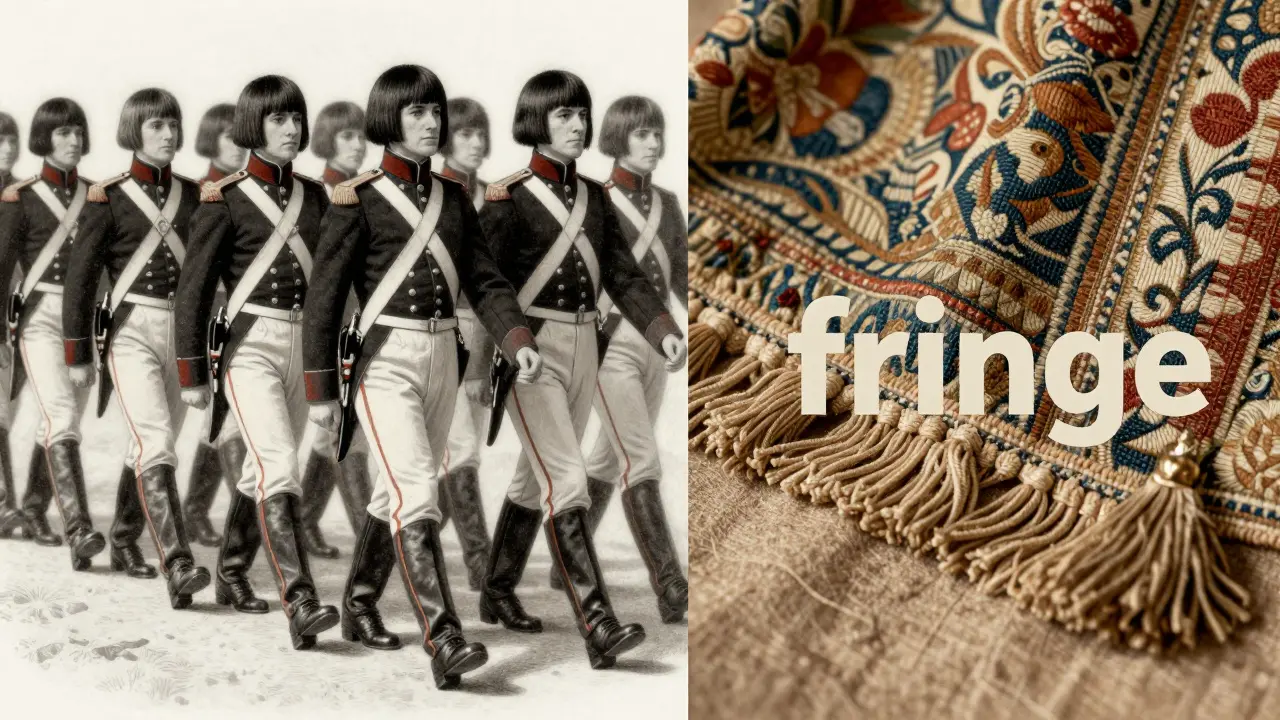
How does marching relate to hair? Imagine a line of soldiers walking forward. Their movement is uniform, straight, and hits the front line all at once. Now, picture a haircut where the hair falls evenly across the forehead, creating a straight, uniform line. To early American observers, this blunt, synchronized cut looked exactly like a regiment marching in step. The hair wasn't wispy or uneven; it was a solid front, hitting the forehead with the same precision as a drumbeat.
| Term | Origin/Region | Meaning/Context |
|---|---|---|
| Bangs | United States (Mid-1800s) | Derived from military "marching to the bang" (unison) |
| Fringe | United Kingdom/Europe | Refers to decorative border/trim on fabric |
| Bob | Global (Early 1900s) | Shortened from "bobbed hair," referring to the bobtail of a horse |
This visual metaphor stuck. By the late 1800s, "bangs" had entered common American vernacular. It described any haircut where the front hair was cut short and even, mimicking that disciplined, straight line. It was efficient, clear, and distinctly American in its preference for punchy, monosyllabic words.
The British Alternative: Why "Fringe"?
While Americans were thinking about marching soldiers, the British were thinking about textiles. If you travel to the UK, Australia, or much of Europe, you’ll hear the word fringe hair cut short at the front of the head, hanging over the forehead.
The logic here is textile-based. A fringe is the decorative border of tassels or loose threads found at the end of a scarf, rug, or curtain. When hair is cut to hang loosely over the forehead, it resembles this decorative edge. It frames the face, much like a curtain frames a window.
This distinction highlights a cultural difference in language. American English often favors words related to action, impact, or structure (bang, chop, cut). British English tends to favor descriptive terms related to appearance, texture, or decoration (fringe, trim, lace). Neither is wrong; they just come from different mental images. One sees a soldier; the other sees a tapestry.
The Rise of Curtain Bangs: A Modern Revival
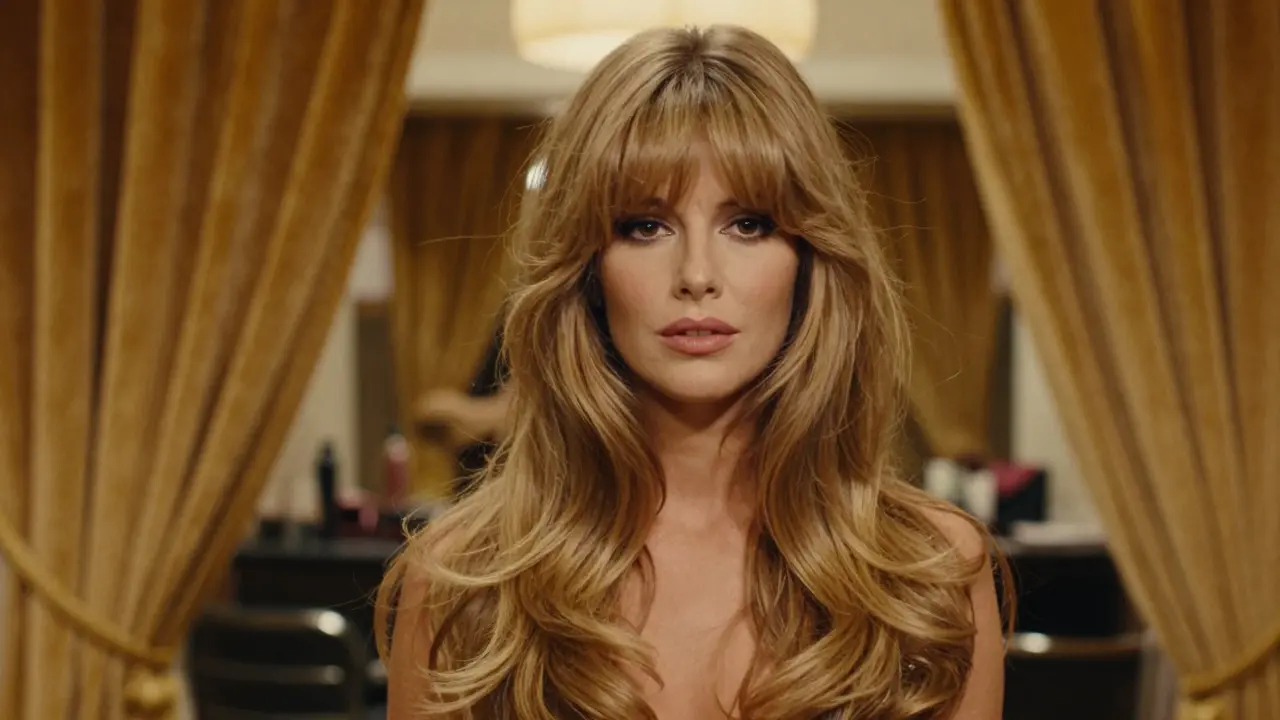
Fast forward to today. The conversation around bangs isn’t just about the word anymore; it’s about the style. Specifically, the resurgence of curtain bangs longer, parted bangs that frame the face like open curtains. This style dominates social media feeds in 2026, but it’s actually a retro throwback.
Curtain bangs exploded in popularity during the 1970s, thanks to icons like Farrah Fawcett and Stevie Nicks. Unlike the blunt, military-style bangs of the 1950s, curtain bangs are longer, softer, and parted in the middle. They don’t "hit" the forehead; they sweep aside.
So why the name? It’s literal. When you part these bangs down the center, they fall to either side of your face, resembling two curtains pulled open to reveal a stage. Your eyes become the performance. This style requires less maintenance than blunt bangs because the length grows out more gracefully. It blends into the rest of your hair, making it a low-commitment option for people afraid of the "shock" of a full fringe.
Other Names for Bangs Around the World
Language is local. While "bangs" and "fringe" cover most of the English-speaking world, other languages offer fascinating insights into how cultures view facial hair.
- France: Franges (same root as fringe) or Voile (veil), suggesting a covering or screen.
- Germany: Pony (ponytail), which is confusing since it refers to the front, but likely relates to the idea of a mane.
- Japan: O-mae-gami (front hair), straightforward and descriptive.
- Italy: Francine (little fringes) or Tesa (flat/straight).
Notice the pattern? Most languages use words related to veils, borders, or front positions. The American "bangs" remains an outlier, standing alone with its martial heritage.
Why the Word Matters in Styling
You might wonder: does the name change how we style them? Surprisingly, yes. The word "bangs" carries a certain weight. It implies commitment. When you ask for "bangs," stylists often assume you want something bold, short, and high-maintenance. It triggers thoughts of daily blow-drying and frequent trims.
Conversely, "curtain bangs" or "face-framing layers" sound softer. They suggest ease. This linguistic nuance affects client-stylist communication. If you’re hesitant about cutting your hair short, asking for "curtains" rather than "bangs" can signal that you want a gradual, blended look rather than a stark contrast.
In 2026, the trend is moving away from severe, geometric cuts toward textured, lived-in styles. The rigid "marching" origin of the word feels outdated compared to the fluid nature of modern hair. Yet, the term persists because it’s concise. You can’t beat one syllable for efficiency.

Common Misconceptions About Bangs
There’s a myth that bangs make your face look smaller. For some face shapes, yes. For others, no. Blunt bangs can widen a round face, while side-swept bangs can elongate a square jaw. The key isn’t the name; it’s the geometry.
Another misconception: bangs ruin thin hair. Actually, well-cut bangs can add volume by removing weight from the top. If your hair is fine, heavy lengths pull it flat. Cutting the front lightens the load, allowing the roots to lift. This is physics, not magic.
Finally, many believe bangs require daily styling. That’s true for blunt, wet-look bangs. But curtain bangs? They air-dry beautifully. With a little mousse or sea salt spray, they dry with natural wave. The effort depends entirely on the subtype, not the category.
How to Choose the Right Bangs for You
Before you pick up the scissors (please don’t), consider these factors:
- Face Shape: Oval faces can pull off almost anything. Round faces benefit from side-swept or curtain styles to create angles. Square faces soften with wispy, textured bangs.
- Hair Texture: Straight hair holds blunt lines well. Curly hair needs longer, layered bangs to avoid shrinkage and poofiness.
- Maintenance Level: Be honest. Do you have time to blow-dry every morning? If not, go long. Curtain bangs grow out invisibly. Blunt bangs grow out awkwardly.
Bring pictures. Not just of the style, but of the texture. A photo shows the length and part, but describing the feel helps the stylist match your hair type.
Are bangs and fringe the same thing?
Yes, they refer to the exact same hairstyle. "Bangs" is the American English term, while "fringe" is used in British English and most other English-speaking countries outside the US.
Where does the word "bangs" come from?
The term likely originated in the mid-19th century from the military phrase "marching to the bang," referring to soldiers marching in perfect unison. The straight, even line of the haircut resembled the synchronized front of a marching regiment.
What are curtain bangs?
Curtain bangs are a style of bangs that are parted in the middle and swept to the sides, framing the face like open curtains. They are typically longer than traditional bangs and blend seamlessly into the rest of the hair.
Do bangs work for thin hair?
Yes, bangs can add volume to thin hair by removing weight from the crown. Light, wispy bangs or curtain bangs are particularly effective as they create the illusion of fuller hair without looking sparse.
How often do bangs need trimming?
Blunt bangs usually need trimming every 2-4 weeks to maintain their shape. Curtain bangs and longer styles can go 6-8 weeks between trims as they grow out more gradually.