

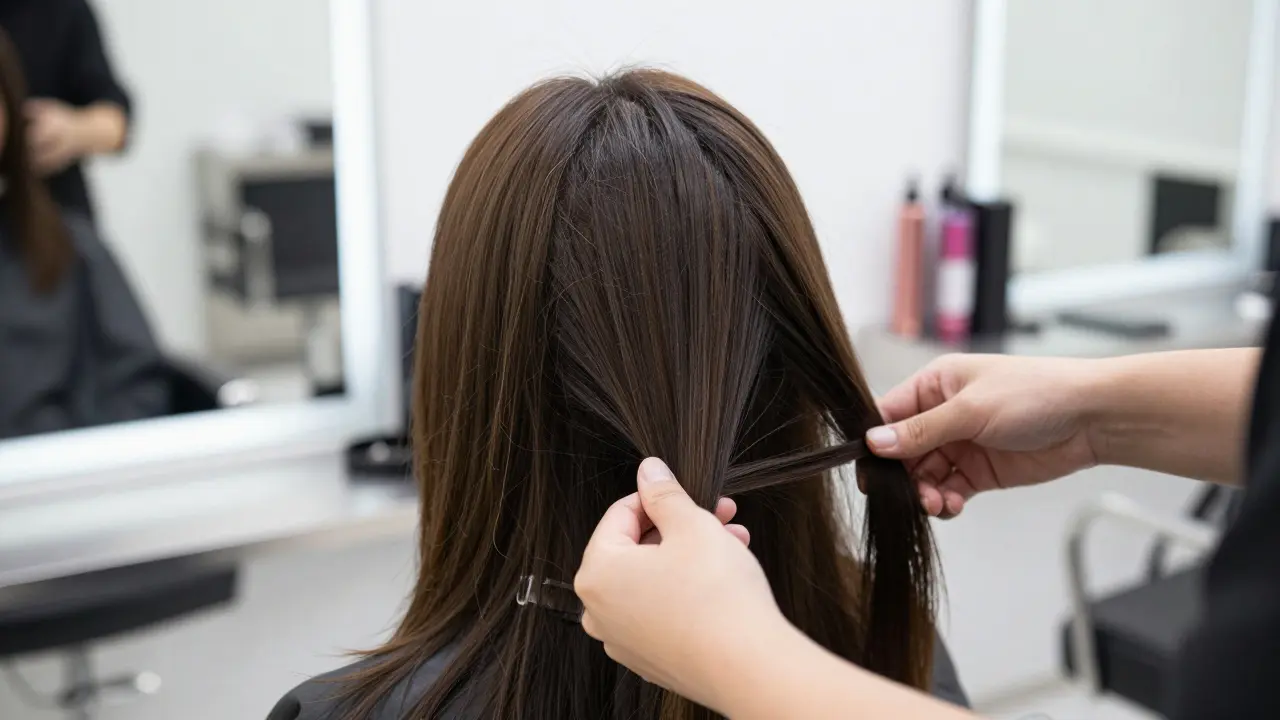
You've just spent hours in a salon chair getting your hair lightened, or maybe you're at home staring at a box of dye, wondering if you should just "tone" your hair or go for a full color. It sounds like the same thing-putting pigment on your head-but in the beauty world, these two processes are completely different animals. Using the wrong one can lead to a color disaster or, worse, fried hair that feels like straw. To get the look you want without destroying your locks, you need to know exactly how these two methods interact with your hair structure.
| Feature | Hair Toning | Permanent Coloring |
|---|---|---|
| Primary Goal | Neutralize tones & refine shade | Change base color or cover grays |
| Hair Penetration | Stays on the cuticle (outer layer) | Deeply penetrates the hair shaft |
| Longevity | Short-term (washes out in 3-8 washes) | Long-term (only grows out at roots) |
| Damage Level | Low (gentle on the hair) | Moderate to High (uses stronger peroxides) |
| Processing Time | Fast (~10 minutes) | Slow (longer development time) |
What Exactly is Permanent Hair Coloring?
When we talk about permanent hair dye is a chemical treatment that fundamentally alters the natural pigment of the hair by depositing color deep into the hair structure, we're talking about a total transformation. Unlike a temporary rinse, permanent color doesn't just sit on top of the hair; it moves in and stays there.
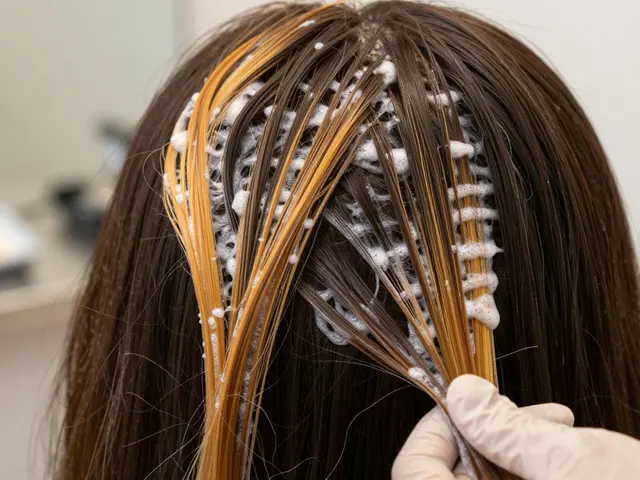
The magic (and the damage) happens because permanent dyes use higher concentrations of hydrogen peroxide. This chemical opens up the hair cuticle-think of it like opening a door-so the pigment can slide inside and settle permanently. Because it's such a heavy-duty process, you can use it to go significantly darker, cover stubborn gray hairs completely, or create a bold new identity for your hair. The only way this color leaves your head is if you dye over it or as your natural hair grows out from the scalp. This is why you'll usually see a "root line" appearing every 5 to 7 weeks, signaling it's time for a touch-up.
The Art of Hair Toning
Now, let's talk about hair toner. If permanent color is a total renovation, toning is more like a fresh coat of paint or a filter on a photo. A toner is a semi-permanent treatment used to adjust, neutralize, or enhance specific tones in hair that has already been lightened or colored.
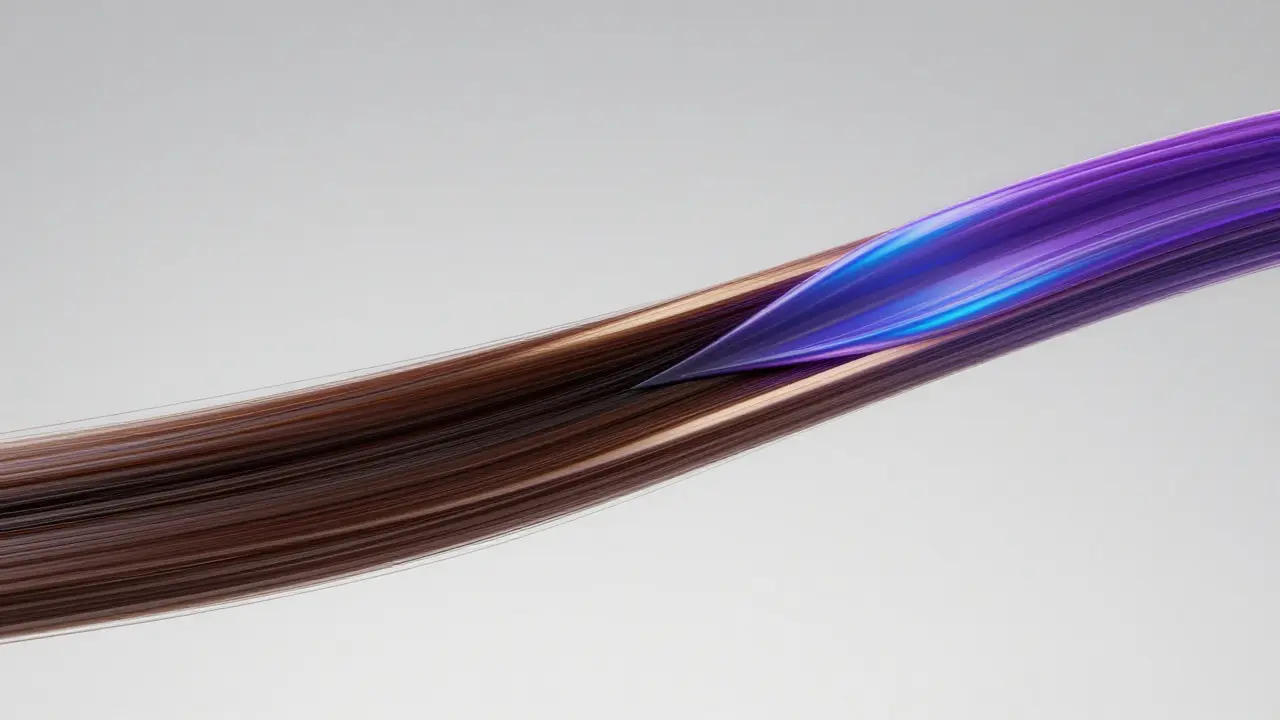
Here is the key: toners cannot lighten your hair. If you have dark brown hair and apply a blonde toner, absolutely nothing will happen. Toner requires a "blank canvas," which is why it's almost always used after bleaching. When you bleach hair, you often end up with "brassy" tones-those annoying yellow or orange hues that make blonde hair look cheap. A purple toner neutralizes yellow, while a blue toner cancels out orange. This is based on color theory: opposite colors on the wheel cancel each other out.
Because toners only target the cuticle layer and use a much milder version of peroxide, they are far gentler. They don't blast open the hair shaft, which means your hair stays softer and shinier. The trade-off? It doesn't last. Standard toners typically vanish within 3 to 4 weeks, often washing out completely after about 6 to 8 shampoos.
Which One Should You Choose?
Deciding between these two depends entirely on your end goal. Are you trying to change who you are, or just polish the look? Let's look at a few real-world scenarios:
- Scenario A: You want to go from a brunette to a platinum blonde. You can't use toner for this. You need a lifting agent (bleach) and then permanent hair dye or a series of toners to get the specific shade of blonde you want.
- Scenario B: You're a blonde, but your hair is starting to look a bit "yellow" in the sun. This is a classic job for a toner. A quick 10-minute application of a cool-toned toner will snap that color back to a crisp, ashy blonde without damaging your hair.
- Scenario C: You have gray hairs appearing and want them gone. Toning won't cut it here. You need permanent color to penetrate the hair and provide full coverage.
- Scenario D: You just got a balayage and the transition between colors looks a bit harsh. A stylist will often use a toner to blend those shades and give the whole look a cohesive, polished finish.
The Impact on Hair Health and Cost
If you're worried about breakage, toning is your best friend. Because it doesn't aggressively penetrate the hair shaft, it avoids the structural damage associated with permanent dyes. In fact, some toners can actually improve the look of porosity, making bleached hair appear healthier and smoother.
When it comes to your wallet, it's a bit of a toss-up. A single toning session is usually cheaper than a full-head permanent color. However, because toners fade so quickly, you might find yourself returning to the salon every 2 or 3 weeks to keep that perfect ash blonde. Permanent color is a larger investment upfront but requires fewer visits per year, generally every 5 to 7 weeks for root maintenance.

How Professionals Use Both Together
In a high-end salon, it's rarely an "either-or" situation. Most pros use a synergistic approach. For example, if you're getting highlights, the stylist first uses a lightener to lift the natural pigment. This leaves the hair in a raw, often uneven state. They then apply a toner to "perfect" the result, ensuring the blonde is consistent across your entire head.
This combination allows for maximum precision. The permanent elements build the foundation, and the toner acts as the finishing glaze. This is how you get those multi-dimensional, expensive-looking colors that don't look like they came from a box.
Can toner cover gray hair?
No, toner cannot cover gray hair. Because it only deposits pigment on the outer layer of the hair and does not penetrate the shaft, it isn't strong enough to mask the lack of pigment in gray hair. For gray coverage, you need permanent hair color.
Will toner make my dark hair lighter?
Absolutely not. Toners do not have the power to lift or lighten natural pigment. If you apply a light blonde toner to dark brown hair, you likely won't see any change at all. You must lighten your hair with bleach or permanent dye first before a toner can have any effect.
How often should I tone my hair?
Standard toners typically need refreshing every 2 to 4 weeks, as they wash out with each shampoo. If you use an intensive toner, you might be able to stretch that to 6 to 8 weeks. It depends on how often you wash your hair and the quality of the products you use.
Does toning damage hair more than coloring?
Generally, no. Toning is much gentler because it uses a lower concentration of hydrogen peroxide and stays on the surface. Permanent coloring is more invasive and causes more structural stress to the hair shaft.
What is the difference between a toner and a semi-permanent dye?
While they are similar, a toner is specifically designed to neutralize unwanted tones (like brassiness) and refine a shade. Semi-permanent dye is more about adding a new color or a temporary tint to the hair. Toners are usually used as a corrective step after lightening.
Next Steps for Your Hair Journey
If you're currently dealing with brassy, orange, or yellow tones after a home bleach job, your next step is a toning session. Look for a purple-based toner if you're blonde and a blue-based one if you're light brown.
If you're looking for a complete change-like going from light brown to a deep burgundy or covering a new patch of grays-skip the toner and go for a professional permanent color service. To keep either look fresh, invest in a sulfate-free shampoo, as harsh detergents will strip both toners and permanent dyes much faster.


Bridget Kutsche
April 14, 2026 AT 18:55I've seen so many people panic when their blonde turns yellow after a few weeks, but toning is honestly a lifesaver for this. Just a pro tip for anyone doing this at home: always use a deep conditioner right after you rinse out your toner to seal those cuticles back down. It helps the color stay a bit longer and keeps the shine alive. You've got this!
John Fox
April 15, 2026 AT 11:58makes sense
Nathan Pena
April 16, 2026 AT 17:16The superficial nature of this discussion is almost as tedious as the process of toning itself. While the article provides a pedestrian overview, it fails to analyze the chemical volatility of the peroxides involved. Most amateurs simply follow the instructions without understanding the molecular degradation of the keratin structure. It is truly exhausting to witness the general public treat complex chemical reactions as if they were merely applying a filter to a photograph. The lack of intellectual rigor in home beauty routines is precisely why so many end up with the straw-like texture mentioned in the intro. One would think that a basic understanding of pH balance would be common knowledge before manipulating one's scalp with alkaline agents. However, we live in an era of instant gratification over actual expertise. It's simply pathetic.
Christina Morgan
April 17, 2026 AT 09:01It is so wonderful to see a clear breakdown of these processes! Many of my friends always get confused between the two, and having a guide like this makes it much easier to explain. I absolutely love the focus on hair health as well. Maintaining the integrity of your hair is just as important as the final color. Everyone deserves to feel confident in their look!
Anuj Kumar
April 17, 2026 AT 18:51This is all lies. The salons just want you to come back every two weeks for toners so they can take your money. They tell you it fades fast but it is just a trick to make you pay more. Big Beauty is controlling your brain with these chemicals.
Mike Marciniak
April 18, 2026 AT 09:59Think about why they push these specific chemical combinations. It is not about the color. They are putting things in the toner that make you dependent on the professional cycle. If you look at the ingredients, they are probably using it to track your health data through your follicles. Don't trust the corporate stylists.
Kathy Yip
April 20, 2026 AT 02:43i wonder if the ph balance of the water at home afects how fast the toner washes out. some places have such hard water and i feel like it strips everything way faster than soft water does. it makes me think about how our enviorment shapes our physical apperance in ways we dont even notice until we try to change it
Sarah Meadows
April 22, 2026 AT 01:04If you want a real result, you need to use high-grade American pigments. These low-tier imports can't handle the oxidative stress of a proper lift. We need to stop pretending that these generic semi-permanents are comparable to the industrial-strength formulations developed in our own labs. It's a matter of national quality standards.
Jack Gifford
April 23, 2026 AT 01:03I'm glad you mentioned the sulfate-free shampoo at the end! That's a huge point that people often overlook. Using a harsh detergent on a fresh toner is basically like scrubbing a painting with sandpaper. It's the fastest way to ruin all that hard work.