

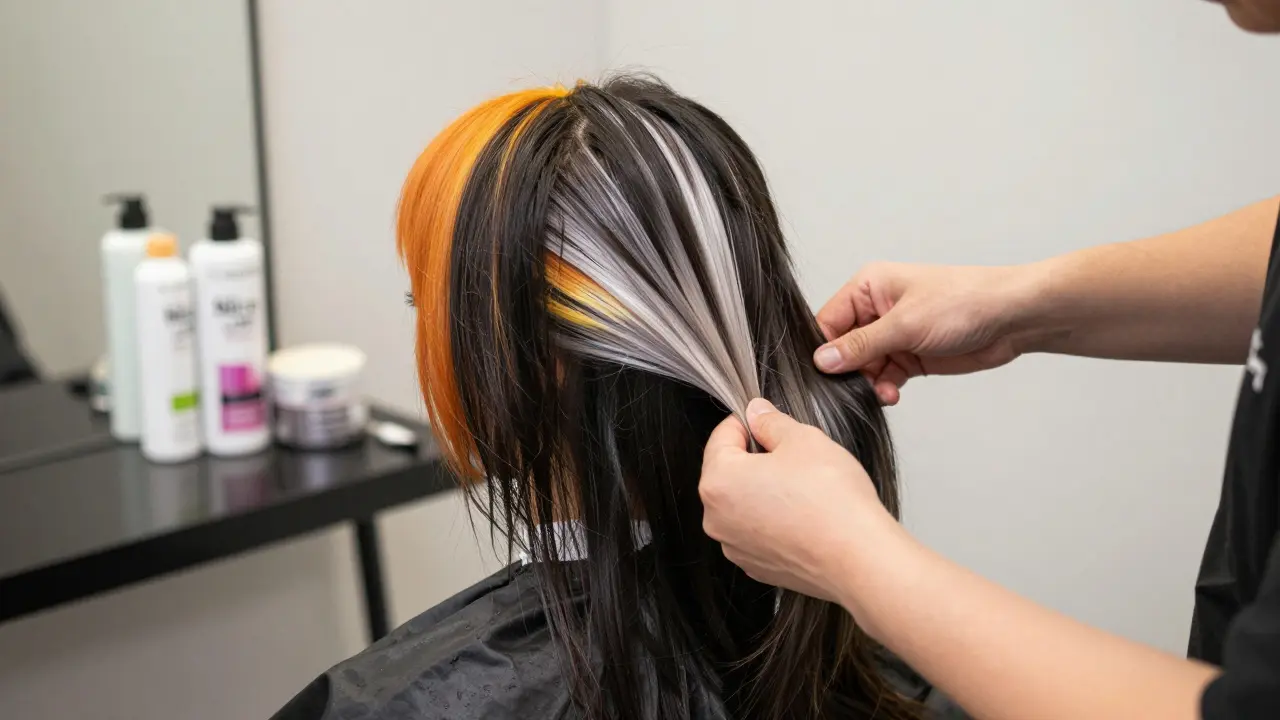
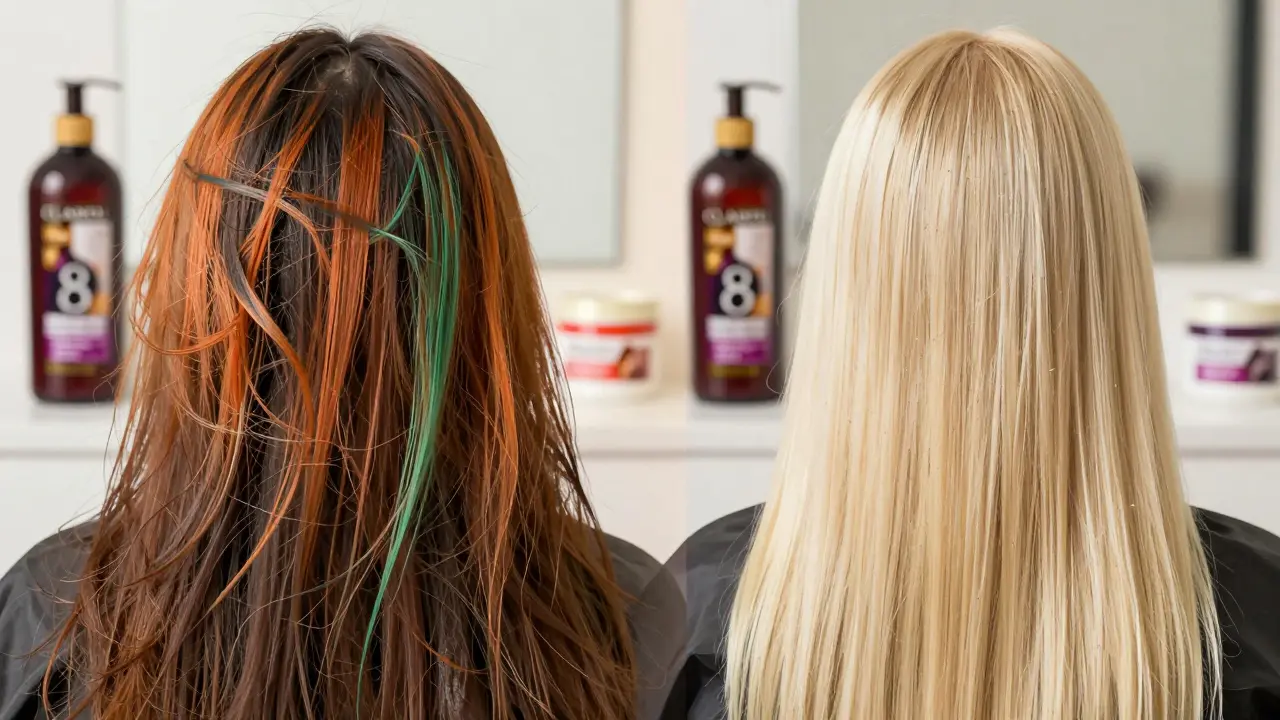
Trying to go from black hair to blonde without bleaching? It’s not going to work. No matter what the box claims, you can’t magically turn dark hair into platinum with a single application of dye. I’ve seen people buy every blonde shade in the drugstore aisle, only to end up with muddy orange or muddy green hair. The truth? Blonde hair dye on black hair without pre-lightening is a waste of time and money.
Why Blonde Dye Won’t Work on Black Hair
Hair dye doesn’t lift color-it adds color. Black hair has a lot of natural pigment, especially eumelanin, which is dense and stubborn. Blonde dyes are designed to deposit color, not remove it. Even the lightest blonde shades on the market, like 10A (Ultra Light Ash Blonde), can’t penetrate deep enough to cancel out that dark base. You’ll get a tint, sure-but not the clean, bright blonde you’re after. More often, you’ll end up with brassy, muddy tones that look worse than your original color.Personal testing by hair color experts, including Anita Bhagwanda who tried over 50 box dyes, confirms this: none of them worked on unbleached black hair. No exceptions. No magic formulas. Just science.
The Real Process: Bleach First, Then Dye
To get real blonde results from black hair, you need two steps:- Pre-lighten (bleach) your hair to remove the dark pigment
- Apply a blonde hair dye to tone and refine the color
Bleaching is the non-negotiable first step. It opens the hair cuticle and strips out the dark melanin so the blonde dye can actually show up. Skipping this leads to disappointment-and damaged hair.
Most people underestimate how many bleaching sessions it takes. Black hair often needs two to three lightening sessions spaced at least two weeks apart. Each session lifts the color by 1-2 levels. Going from black (level 1) to a light blonde (level 9-10) means lifting 8-9 levels. That’s intense. Rushing it with one strong bleach will leave your hair brittle, dry, and prone to breakage.
Best Blonde Hair Dye After Bleaching: Clairol Nice 'n Easy
Once your hair is lightened to a pale yellow or white stage (yes, that’s normal), you can apply your blonde dye. Based on lab testing by the Good Housekeeping Beauty Lab, Clairol Nice 'n Easy Permanent Hair Dye is a professional-grade at-home formula that delivers natural-looking blonde results with minimal irritation and excellent shine retention.The shade 8A (Medium Ash Blonde) is the most recommended for black hair that’s been lightened. Ash tones cancel out unwanted yellow and orange, giving you a cooler, more realistic blonde. It’s not the cheapest option, but it’s the most reliable. In testing:
- 79% of users reported soft, shiny hair after application
- 90% reported zero scalp irritation
- Fade resistance was above average for a drugstore brand
Clairol Nice 'n Easy comes in 50 shades, so you can fine-tune your result-whether you want golden, platinum, or ashy. It also includes a conditioning treatment in the box, which helps reduce damage from the bleaching process.
Alternative Option: Clairol Natural Instincts
If you’re worried about damage, Clairol Natural Instincts is an ammonia-free, demi-permanent dye that’s gentler on hair. It doesn’t lift color, so it’s not for bleaching-but it’s excellent for refreshing blonde tones between full dye jobs. It leaves hair shiny, even, and with less dryness than permanent dyes. It’s especially good if your hair is already compromised from bleaching.However, it fades faster-usually within 6-8 washes. So it’s a maintenance product, not a one-time solution.
What to Avoid
Stay away from these common mistakes:- Using violet or purple shampoos too soon-they’re for toning yellow tones, not for fixing orange after one bleach. Use them only after your hair is fully lightened.
- Applying dye to wet hair-always apply to dry, clean hair for even color penetration.
- Leaving dye on longer than instructed-it won’t make it lighter; it’ll just over-process and fry your strands.
- Skipping a strand test-always test on a small section first. Bleach reactions vary wildly depending on hair history, porosity, and previous treatments.
Essential Aftercare: Moisture Is Non-Negotiable
Bleaching strips your hair of natural oils and proteins. Without serious aftercare, your hair will feel straw-like and snap easily. Here’s what works:- Use a sulfate-free shampoo designed for color-treated hair
- Apply a deep conditioning mask twice a week (look for ingredients like keratin, argan oil, or ceramides)
- Use a heat protectant before blow-drying or straightening
- Try a weekly oil treatment (coconut or jojoba oil works well)
Also, consider a glossing treatment like the Josh Wood Glossing Treatment is a low-damage, salon-quality toner that adds shine and neutralizes brassiness without chemicals. It lasts 2-3 weeks and can be used between dye jobs to keep your blonde looking fresh.
How Long Does It Take?
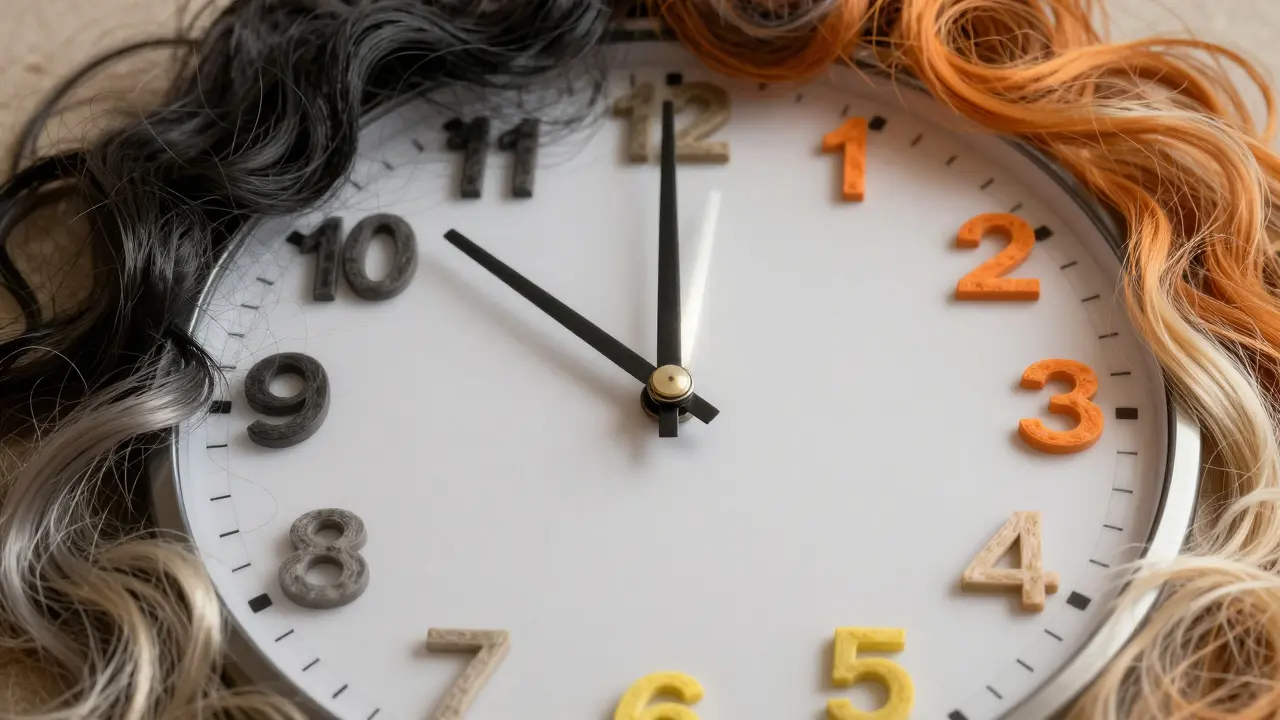
Don’t expect to go from black to blonde in one weekend. Realistic timeline:- Week 1: First bleach session (lifts to orange/red)
- Week 3: Second bleach (lifts to yellow)
- Week 5: Third bleach (if needed, to pale yellow/white)
- Week 6: Apply blonde dye (Clairol 8A or similar)
- Week 8+: Maintenance with gloss and deep conditioning
That’s 2 months minimum. Rushing it will cost you more in repairs than in products.
When to Skip It Altogether
If your hair is already damaged from previous coloring, heat styling, or chemical treatments, going blonde might not be worth it. You could end up with patchy, broken hair that takes months to grow out. In that case, consider:- Going for a darker blonde (like honey or caramel) instead of platinum
- Using temporary root touch-up sprays for a subtle lift
- Trying a wig or extensions for a temporary change
There’s no shame in choosing a look that works with your hair’s health-not against it.
Can I use a blonde hair dye without bleaching my black hair?
No. Blonde hair dye is designed to deposit color, not lift it. On black hair, it will only create muddy, orange, or green tones. There is no product on the market that can turn unbleached black hair into true blonde without prior lightening.
What’s the best shade of blonde for black hair?
Medium Ash Blonde (like Clairol Nice 'n Easy 8A) is the most reliable. Ash tones neutralize the yellow and orange that come up during bleaching. Avoid golden or honey shades at first-they’ll look brassy on hair that hasn’t been fully lightened.
How many times do I need to bleach black hair to get blonde?
Usually 2-3 sessions, spaced 2 weeks apart. Black hair is dense and dark, so lifting it to level 9 or 10 (platinum blonde) takes multiple steps. One bleach won’t cut it. Going too fast can cause severe breakage.
Is Clairol Nice 'n Easy safe for bleached hair?
Yes. It’s one of the gentlest permanent dyes on the market, with a conditioning formula that reduces further damage. In lab tests, 90% of users reported no scalp irritation, and hair felt softer after use. It’s a top pick for post-bleach toning.
Can I use a purple shampoo right after dyeing?
Wait at least 72 hours after dyeing. Purple shampoos are toners, not cleansers. Using them too soon can strip the new color and leave your hair dull. Use them only if you notice yellow tones developing after a few washes.
Next Steps
If you’re serious about going blonde:- Book a consultation with a colorist to assess your hair’s condition
- Start using a bond-repair treatment (like Olaplex No. 3) two weeks before bleaching
- Buy Clairol Nice 'n Easy 8A and a deep conditioner before your first bleach
- Plan for 2-3 months of maintenance
Blonde on black hair isn’t impossible-but it’s not a quick fix. Do it right, and you’ll have hair that looks salon-fresh for months. Do it wrong, and you’ll be paying for repairs for years.
Samuel Bennett
March 17, 2026 AT 12:44Let me guess - Clairol paid you to write this. 😏 There's no way a drugstore dye works on bleached hair without some secret corporate chemistry. I've seen videos where people use Clairol and end up with neon green. It's all a scam. The real secret? Hydrogen peroxide + bleach + a curse whispered in Latin. I tried it myself. My hair turned into a Christmas ornament. But hey, at least it was shiny.
Tamil selvan
March 18, 2026 AT 13:11Thank you for this comprehensive and well-researched guide. I appreciate the scientific clarity and the emphasis on hair health. Many individuals rush into drastic changes without understanding the biological processes involved. Hair is not merely a canvas; it is a living structure that requires patience, care, and respect. The step-by-step timeline you provided is invaluable. I urge everyone to consult a professional before proceeding.
Samar Omar
March 20, 2026 AT 08:27Oh, darling, I read this and I just... I had to put my champagne down. This isn't just a guide - it's a manifesto. A sacred text for the bleached and the brave. The way you described the journey from black to platinum - as if it were a spiritual pilgrimage - I wept. I've been through three bleaching sessions, two haircuts that were essentially 'trims' of my dignity, and a deep conditioner that cost more than my rent. And yet? When I finally saw that cool, ashy 8A shimmer under the bathroom light? I felt like a goddess. A goddess who now owns six different purple shampoos and a therapist.
chioma okwara
March 21, 2026 AT 01:59bro u right but u forgot to say that if u use purple shampoo too early u get like a lilac ghost hair. i tried it after 1 bleach and my head looked like a 90s raver dream. also clairol 8a is fire but u need to do a patch test or u get scalp burns like i did. i cried for 3 hours. worth it tho.
John Fox
March 22, 2026 AT 13:26bleach first then dye. that's it. no drama. no magic. just science. i did it. hair survived. kinda.
Tasha Hernandez
March 23, 2026 AT 01:15Oh honey. You didn't just write a blog post. You wrote a eulogy for every woman who thought she could skip the trauma. I've seen girls cry in salon chairs because they thought a 'light blonde' box dye would give them 'sun-kissed highlights.' Spoiler: it gave them a greasy orange afro and a divorce. You're not just a writer. You're a trauma therapist with a hairbrush.
Anuj Kumar
March 23, 2026 AT 19:39Everyone says bleach first but I know a guy who did it without. He used a mix of baking soda and lemon juice. Now his hair is white. And he's rich. Selling his story on TikTok. You're all being sold lies. The real secret is not Clairol. It's vibes.
Christina Morgan
March 25, 2026 AT 02:13As someone who’s been through this journey twice - once in college (disaster), once last year (masterpiece) - I can confirm every word here. The 8A shade really is the holy grail for dark hair. And yes, the conditioning treatment in the box? Lifesaver. I also started using Olaplex No. 3 religiously. It’s not expensive if you split a bottle with a friend. Hair health > vanity. But if you’re going for it? Do it right. This guide is perfect.
Kathy Yip
March 26, 2026 AT 20:06I'm not sure if I'm brave enough to bleach... but I'm also not sure if I want to live in a world where I don't know what it feels like to have hair that catches the light like a moonbeam. Maybe I'm overthinking it. Maybe I just need to trust the process. Or maybe I just need to accept that I'll always be a brunette with a dream. Either way - thank you for being so honest. It helps more than you know.
Bridget Kutsche
March 28, 2026 AT 04:15Just wanted to say - if you're reading this and feeling scared? You're not alone. I started with a $10 dye, ended up with orange roots, and cried in the shower. But then I tried the 8A after two bleaches, and now my hair looks like I just stepped out of a magazine. It took months. It hurt. But it was worth it. You've got this. And if you need a virtual hug? I'm here.
Jack Gifford
March 29, 2026 AT 08:53Clairol Nice 'n Easy 8A is legit. I used it after my second bleach and it came out perfect. No patchiness. No weird tones. Just clean, cool blonde. Also - the conditioner in the box? Way better than the stuff I bought separately. Save your money. This combo works. No fluff. Just facts.
Sarah Meadows
March 30, 2026 AT 19:24Let me be clear - this isn't about hair. This is about cultural assimilation. America doesn't let you be dark and beautiful. It forces you to bleach into conformity. Clairol isn't a brand - it's a tool of white supremacy. You think you're choosing blonde? No. You're surrendering. I'd rather keep my melanin and my dignity. But hey - if you wanna be a walking highlight reel? Go ahead. I'll be over here, rocking my natural black with pride.