
Ever had your eyebrows threaded and wondered why it feels like someone’s tugging your skin with tweezers? You’re not imagining it - it hurts. And if you’ve switched from waxing to threading thinking it’d be gentler, you might be surprised. Threading isn’t less painful because it’s "natural" or "chemical-free." It hurts because it’s literally pulling hair out from the root - one by one - using a twisted cotton thread. That’s not magic. That’s physics.
Why threading hurts more than you expect
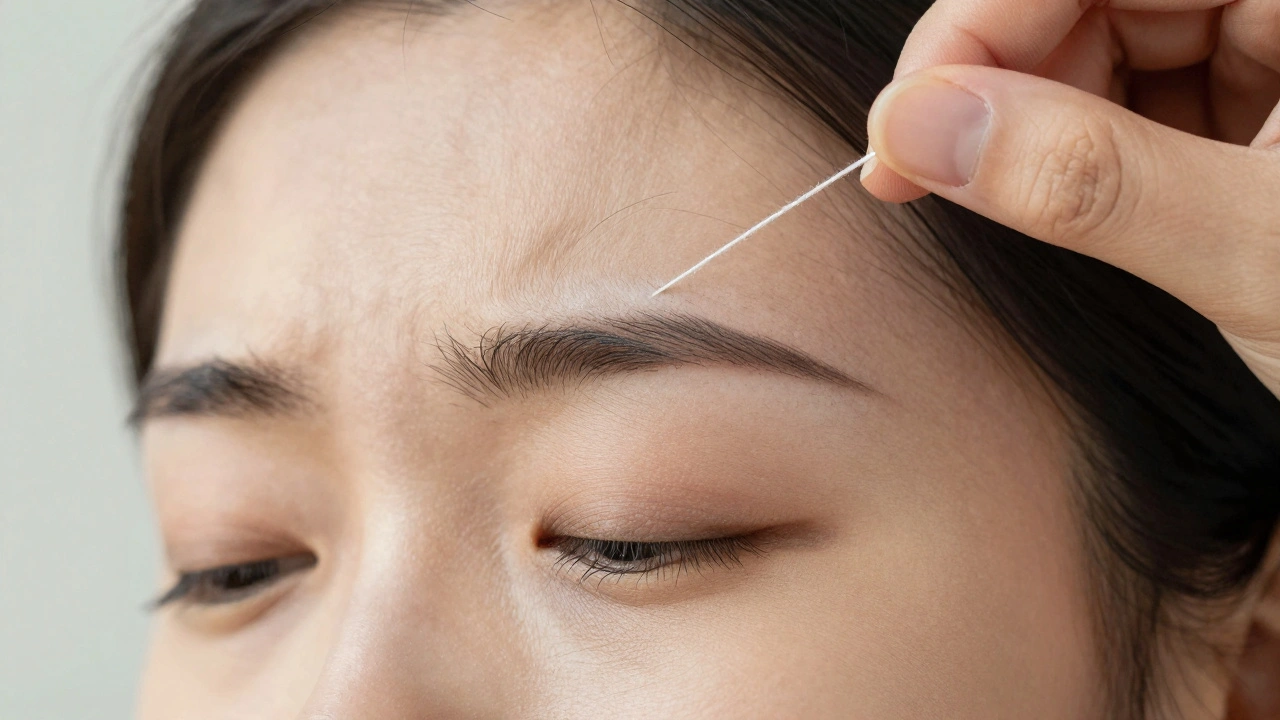
Threading works by twisting a thin cotton thread against the skin to trap and yank out hairs. Unlike waxing, which removes a whole patch at once, threading targets individual hairs. That means more precise control - but also more repeated tugs. Each hair has a tiny root anchored deep in the follicle, surrounded by nerve endings. When the thread snaps that root free, those nerves send a signal: "Pain!"
It’s not just about the hair. Your eyebrows sit on thin skin with a high concentration of sensory nerves. That’s why even a light touch there can feel intense. Think of it like pinching the inside of your wrist versus the back of your hand. One area’s packed with nerves. The other? Not so much.
Studies show the eyebrow area has one of the highest densities of pain receptors in the face - even more than the lips or fingertips. So yes, threading there is going to sting. It’s not the technique being "bad." It’s biology.
Threading vs. waxing: which hurts more?
People assume waxing is worse because it pulls more hair at once. But here’s the twist: threading often feels sharper and more localized. Waxing is a quick, broad yank - like ripping off a bandage. Threading is a series of quick, sharp twinges. One is a punch. The other is a thousand pinpricks.
Some find waxing more uncomfortable overall because it can pull loose skin along with the hair, causing redness or even tiny tears. Threading doesn’t touch the skin directly - it only grabs hair. But if your skin is sensitive, or the threader isn’t skilled, they might pull too hard or catch the skin, which makes it feel worse.
One 2023 survey of 420 women in Houston who tried both methods showed:
- 47% said threading felt more intense in the moment
- 38% said waxing was more uncomfortable overall due to lingering redness
- 15% found no difference
So it’s not about which is "less painful." It’s about what kind of pain you tolerate better - quick bursts or lingering irritation.
Why your eyebrows might hurt more than someone else’s
Not everyone reacts the same. Your pain level depends on three things: your skin, your hair, and your timing.
1. Skin sensitivity - If you have rosacea, eczema, or just naturally reactive skin, threading will feel like fire. The cotton thread doesn’t irritate like wax, but your nerves are already on high alert. A 2024 dermatology study found that people with sensitive skin reported 60% higher pain scores during threading than those with normal skin.
2. Hair thickness and growth cycle - Coarse, dark hairs are harder to pull. If you’re in the middle of your growth cycle, the hair is longer and thicker - meaning more resistance. That’s why threading right after shaving feels worse. You’re pulling thick, stubborn hairs that haven’t softened yet.
3. Time of month - Hormones matter. In the days leading up to your period, estrogen drops and your skin becomes more sensitive. Pain receptors are more reactive. Many women report threading feeling twice as painful during that week. It’s not in your head - it’s science.
How to make threading less painful
You don’t have to suffer. There are real, proven ways to reduce the sting.
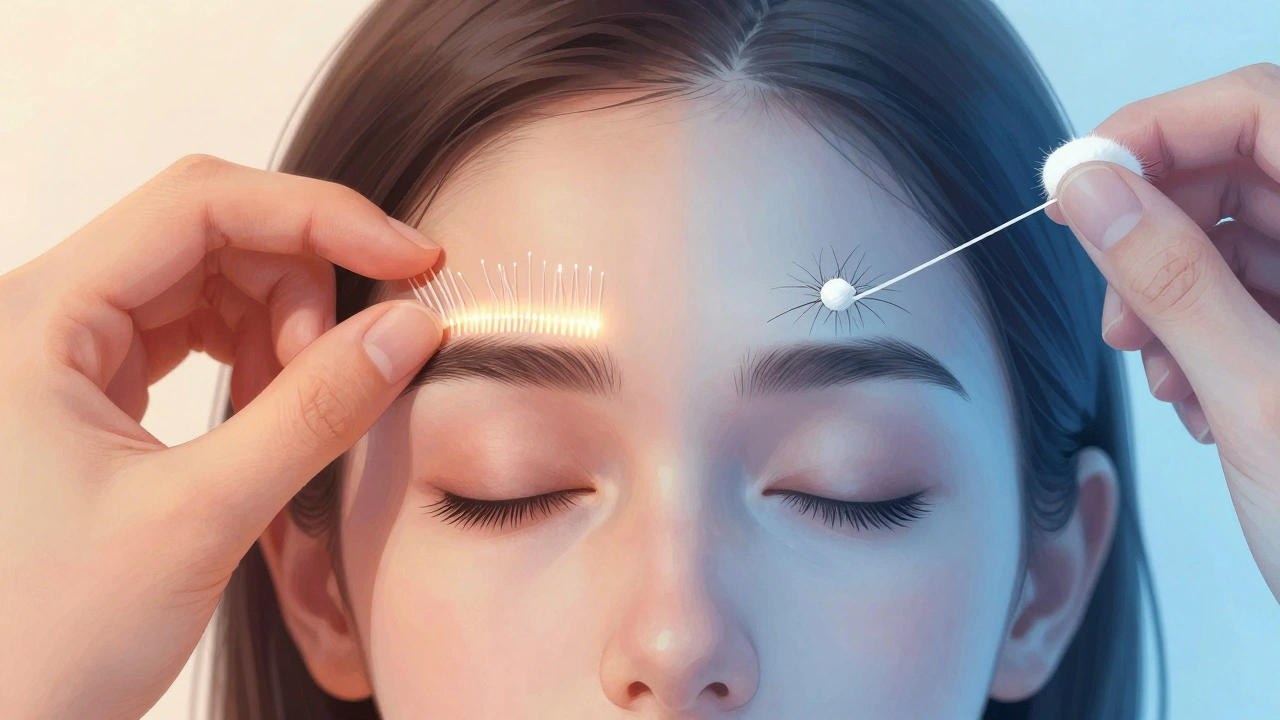
- Cool your skin first - Apply an ice pack to your brows for 2 minutes before threading. Cold numbs the nerves slightly. It doesn’t block pain, but it dulls it enough to make it manageable.
- Don’t thread after exfoliating - If you’ve used a scrub, retinol, or chemical peel in the last 24 hours, your skin is vulnerable. Wait at least a day. You’ll avoid extra stinging and possible micro-tears.
- Go during the right time of month - Schedule threading between days 7 and 14 of your cycle. That’s when estrogen is highest and your skin is least sensitive.
- Use a numbing cream (sparingly) - Over-the-counter lidocaine gels (like 4% lidocaine) work if applied 20 minutes before. Don’t overdo it - too much can make the threader slip and cause uneven results.
- Breathe through it - Holding your breath makes pain feel worse. Try slow, deep breaths in through your nose, out through your mouth. It calms your nervous system and helps your brain ignore the signal.
What to expect after threading
Right after, your brows might look red or slightly swollen. That’s normal. It usually fades in 10 to 30 minutes. If it lasts longer, you might have a mild allergic reaction to the thread (rare) or the threader pulled too hard.
Some people get tiny red dots where hairs were pulled. That’s not ingrown hairs - it’s just the follicle reacting. Avoid touching or rubbing your brows for 2 hours. No makeup, no sunscreen, no steamy showers. Let your skin recover.
Most people find the pain fades fast - but the results last 3 to 6 weeks. That’s longer than tweezing and cleaner than waxing. If you’re okay with a quick sting for long-lasting shape, threading is worth it.
When to skip threading altogether
There are times when threading isn’t worth the risk:
- You’re using prescription retinoids (like Retin-A or Tretinoin) - these thin your skin and make threading dangerous.
- You’ve had laser hair removal in the last 4 weeks - your follicles are still healing.
- You have active acne, open sores, or cold sores near your brows - threading can spread bacteria.
- You’re pregnant and have extreme skin sensitivity - hormonal changes can make threading unbearable.
If any of these apply to you, stick with tweezing or wait. Your skin will thank you.
Final thought: Pain isn’t the enemy - surprise is
The real reason threading feels worse than it should is because most people expect it to be gentle. They think "threading = natural = painless." But it’s not. It’s a manual hair removal method that relies on friction, tension, and precision. If you go in knowing it’s going to sting - and you’ve prepared your skin - the pain becomes something you manage, not something that controls you.
Threading hurts because it works. And if you want clean, sharp brows that last for weeks, sometimes you’ve got to pay the price in a few seconds of discomfort.
Does eyebrow threading hurt more than waxing?
It depends on your pain tolerance. Waxing feels like a quick, broad pull and may cause redness or skin irritation. Threading feels like a series of sharp, localized tugs because it removes hairs one by one. Many find threading more intense in the moment, but waxing can leave skin feeling sore for hours. Neither is universally worse - it’s about what kind of discomfort you handle better.
Why do my eyebrows hurt after threading?
Mild redness or tenderness after threading is normal because the hair is pulled from the root, which irritates the follicle. This usually fades within 30 minutes. If it lasts longer, you might have sensitive skin, the threader pulled too hard, or your skin was already irritated from exfoliation or skincare products.
Can I numb my eyebrows before threading?
Yes, but use caution. Over-the-counter lidocaine gels (up to 4%) can help dull the pain if applied 20 minutes before threading. Don’t use too much - it can make the thread slip and lead to uneven results. Avoid numbing creams if you have sensitive skin or allergies.
Is threading safe for sensitive skin?
Threading is generally safer for sensitive skin than waxing because it doesn’t use chemicals or heat. But if you have rosacea, eczema, or active acne, it can still cause irritation. Test a small area first, and avoid threading if your skin is freshly exfoliated or sunburned.
How often should I get my eyebrows threaded?
Most people get threading done every 3 to 6 weeks, depending on how fast their hair grows. Waiting too long means thicker, coarser hairs that hurt more to remove. Going too often can irritate the follicles. Stick to a schedule based on your hair regrowth, not convenience.