

If you have thin hair and want more volume without surgery or chemicals, double weft hair extensions might be the simplest solution you haven’t tried yet. Unlike single-layer extensions, double weft means two rows of hair are sewn together side by side, creating a thicker, more natural-looking base that blends seamlessly with fine hair. This isn’t just about adding length-it’s about adding real, noticeable volume where you need it most.
What Exactly Is a Double Weft?
A weft is a strip of hair, usually attached to a thin, flexible track. Single wefts are common, but they’re often too thin to give enough fullness to fine or sparse hair. Double weft takes that same strip and layers another identical one right next to it. Think of it like stacking two thin blankets instead of using one-you get more warmth, more coverage, and it stays in place better.
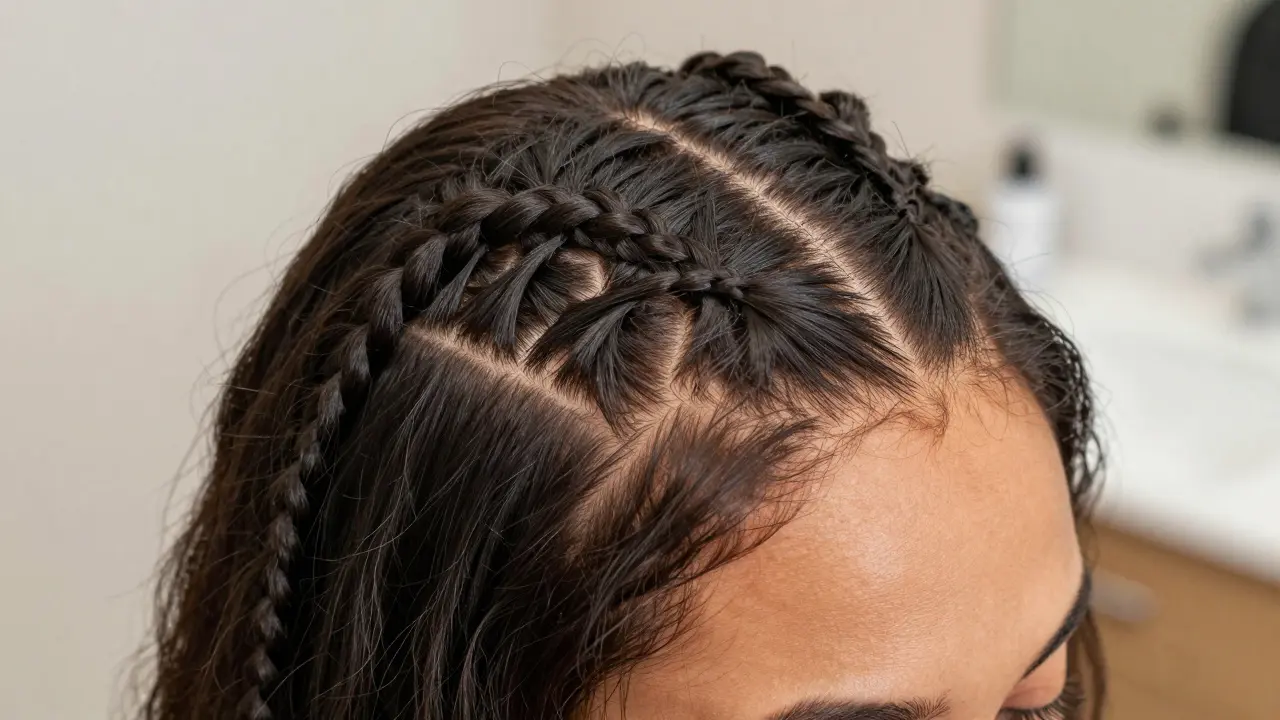
The hair used in double weft extensions is typically 100% human hair, hand-tied, and comes in a variety of textures and colors. The weft itself is usually made of a soft, breathable mesh that lays flat against your scalp, so it doesn’t bulk up or look obvious. Most double weft extensions are installed by sewing them onto a track of your natural hair, which is braided into cornrows for a secure hold.
Why Double Weft Works Best for Thin Hair
Thin hair doesn’t have the density to support heavy, bulky extensions. Single wefts often slip, look patchy, or pull on your scalp because they’re too light to balance the weight of the added hair. Double weft fixes this by distributing the weight evenly across a wider area. Instead of one thin line of hair sitting on top of your scalp, you get two lines that sit side by side, creating a more natural transition from your roots to the extension.
Real people with fine hair report that double weft extensions feel lighter than they look. That’s because the hair is carefully matched to their natural texture and density. A 16-inch, 120-gram double weft can add the same volume as a 200-gram single weft-but without the pressure or discomfort. It’s like getting twice the coverage with half the strain.
Benefits You Can Actually Feel
- Instant volume-No more flat roots. Double weft adds body from the crown down, making hair look fuller even when styled simply.
- Longer wear time-Because the weight is spread out, the extensions stay put for 6 to 8 weeks with proper care, unlike single wefts that often loosen after 3 weeks.
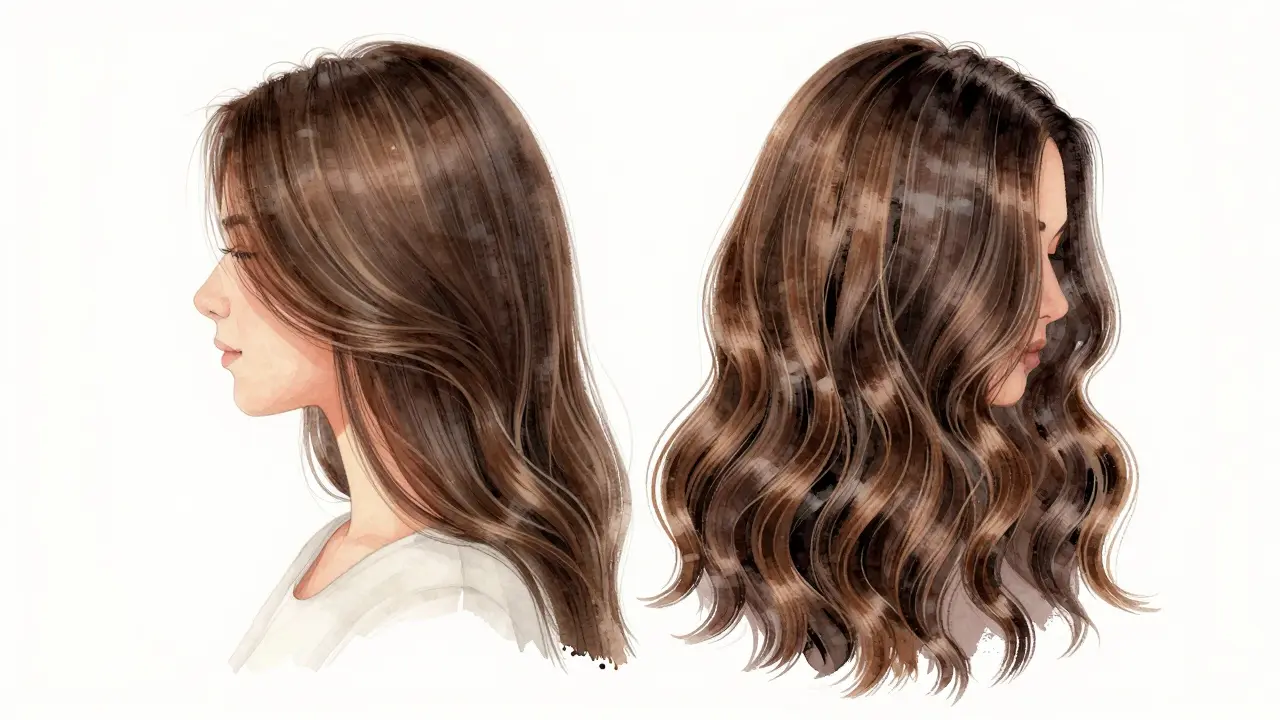
- Better blending-The double layer mimics how natural hair grows in clusters, not single strands. This makes the transition from your hair to the extension almost invisible.
- Less damage-Since you’re not using glue, clips, or micro-links, there’s no pulling or tugging on delicate strands. Sew-in methods with double weft are one of the gentlest options for fine hair.
- More styling freedom-You can curl, straighten, or color double weft extensions just like your own hair. Heat tools up to 410°F won’t ruin them if they’re 100% human hair.
How Double Weft Compares to Other Extension Types
| Extension Type | Volume Added | Weight on Scalp | Longevity | Best For |
|---|---|---|---|---|
| Single Weft | Low to Medium | Light | 3-5 weeks | Adding length, not volume |
| Double Weft | High | Low (evenly distributed) | 6-8 weeks | Thin hair needing volume |
| Clip-Ins | Medium | High (pulls on roots) | 1-2 weeks | Temporary use, events |
| Micro-Links | Medium | High (individual bonds) | 4-6 weeks | Thick hair, long-term wear |
| Tape-Ins | Medium | Medium | 4-6 weeks | Easy install, moderate volume |
As you can see, double weft stands out for one key reason: it’s the only method that gives high volume without high stress. Clip-ins look obvious and pull on fine hair. Tape-ins can slide if your hair is oily. Micro-links require too many bonds for thin hair and can cause breakage. Double weft? It’s the Goldilocks zone-just right.
Who Should Avoid Double Weft?
It’s not for everyone. If your hair is extremely fragile-think shedding more than 100 strands a day, or if you have active scalp conditions like eczema or psoriasis-you should talk to a stylist first. Double weft isn’t harsh, but your scalp needs to be healthy enough to hold braids for weeks.
Also, if you’re looking for dramatic length (like 24 inches), double weft might not be ideal. It’s designed for volume, not extreme length. For long hair with thin roots, a combination of single wefts at the ends and a double weft at the crown works better.
How to Care for Double Weft Extensions
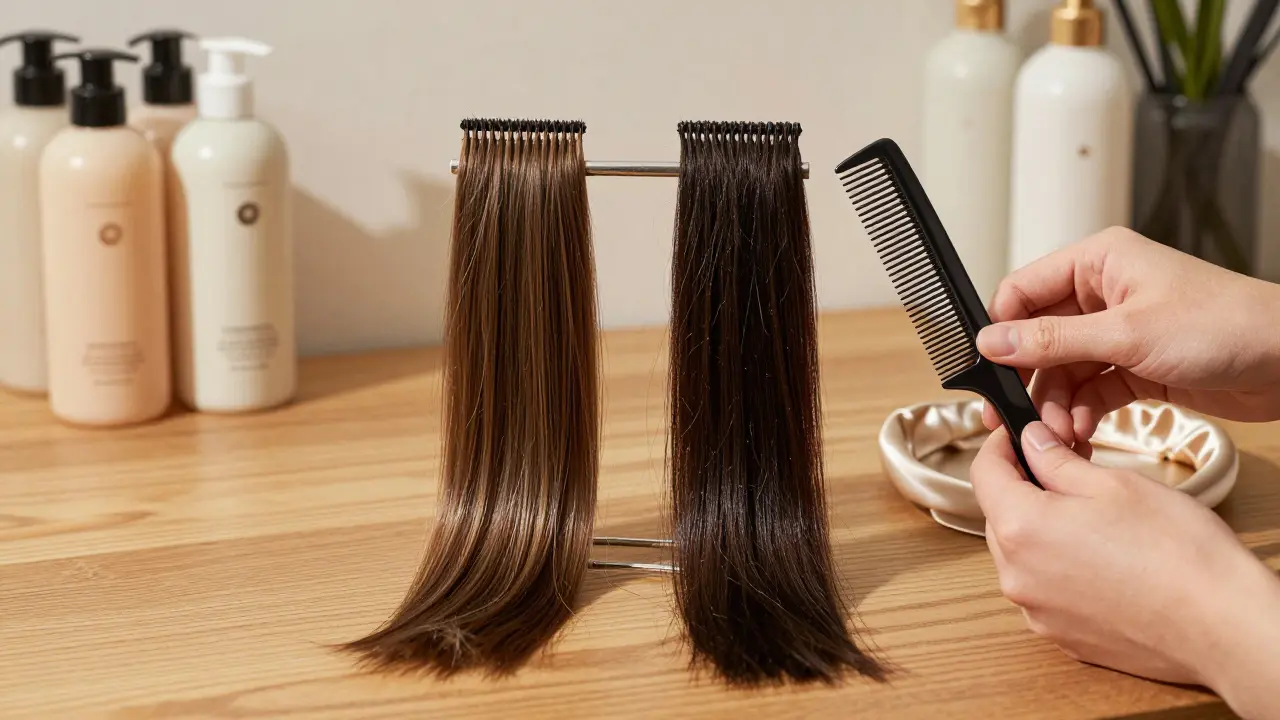
Once installed, treat them like your own hair-but with a few extra rules:
- Wash every 10-14 days with sulfate-free shampoo. Overwashing loosens the sew-in.
- Condition the ends but avoid applying conditioner to the weft track-it can make the thread slippery.
- Brush gently from the bottom up with a wide-tooth comb. Never yank from the top.
- Sleep with a satin bonnet to prevent friction and tangles.
- Get a maintenance check every 4-5 weeks. A stylist can tighten the braids and re-sew any loose areas.
With proper care, a good set of double weft extensions can last up to 6 months. That’s two installments for the price of one.
Where to Buy Quality Double Weft Extensions
Not all double weft extensions are created equal. Look for these signs of quality:
- 100% Remy human hair (cuticles aligned in one direction)
- Double-stitched weft (not glued)
- Matching texture to your natural hair (curly, wavy, straight)
- Color that’s blended, not flat
- No synthetic fibers (they tangle and melt under heat)
Reputable brands like Bellami, Great Lengths, and Hair U Weave offer double weft sets in 12-20 inch lengths. Prices range from $150 to $400 depending on length and density. Avoid bargain bundles on Amazon or AliExpress-they’re often synthetic or mixed hair.
Final Thoughts
Double weft hair extensions aren’t a miracle cure, but for people with thin hair, they’re one of the most effective, low-damage ways to get the volume and confidence you’ve been missing. They’re not flashy, they don’t scream "extensions," and they don’t require daily upkeep. You just put them in, live your life, and take them out when you’re ready.
If you’ve tried clip-ins, tape-ins, or single wefts and felt like something was off-this might be the missing piece. Start with a 16-inch, 120-gram double weft in your natural color. You might be surprised how much difference two layers can make.
Are double weft extensions good for thin hair?
Yes, double weft extensions are one of the best options for thin hair because they add volume without adding too much weight. The dual-layer design spreads the hair’s weight evenly, reducing tension on delicate strands and preventing slippage or breakage common with single wefts or clip-ins.
How long do double weft extensions last?
With proper care, double weft extensions typically last 6 to 8 weeks before needing a retightening or removal. The sew-in method holds better than clips or tape, and the double layer reduces stress on your natural hair, helping both the extensions and your scalp stay healthy longer.
Can you style double weft extensions with heat tools?
Yes, if they’re made from 100% human hair. You can blow-dry, curl, or straighten them just like your natural hair, up to 410°F. Avoid high heat if the extensions are labeled as heat-friendly but not 100% human, as synthetic blends can melt or become brittle.
Do double weft extensions damage your hair?
When installed and maintained correctly, double weft extensions cause minimal damage. Unlike glue or micro-links, the sew-in method doesn’t pull on individual strands. However, if your hair is already fragile or if the braids are too tight, they can cause traction alopecia. Always use a licensed stylist and avoid wearing them continuously for more than 3 months at a time.
How do you choose the right color for double weft extensions?
Match the root color of your natural hair, not the ends. Hair naturally darkens at the roots, so choosing a shade that matches your scalp line ensures the most seamless blend. Many brands offer color blends-like "dark brown with highlights"-that mimic natural hair gradation better than solid colors.



Kieran Danagher
March 2, 2026 AT 14:08Double weft extensions are just the latest scam dressed up as science. You think two layers magically fix thin hair? It’s still glue and braids under there. You’re not fixing your hair-you’re just taping on a wig and calling it a lifestyle upgrade.
Sheila Alston
March 3, 2026 AT 14:58You people are so desperate for quick fixes you’ll swallow marketing like it’s gospel. Double weft? More like double trouble. Your scalp isn’t a runway-it’s a living organ. You sew two layers into it, and suddenly you’re ‘voluminous’? Nah. You’re just one bad wash away from a bald patch and a lawsuit.
And don’t get me started on the ‘100% human hair’ lies. Half of those are recycled from temples in India. You’re literally wearing someone else’s trauma on your head.
poonam upadhyay
March 4, 2026 AT 07:42OMG I tried double weft after watching some influencer’s ‘glow-up’ and let me tell you-IT WAS A DISASTER!! My scalp felt like it was being slowly strangled by a silk rope made of lies!! I had to cut it all off after 3 weeks and now I have this weird patchy halo where the braids ripped out my follicles!!
Also the color? They sent me ‘warm honey’-turned out it was literally a 90s sitcom filter slapped onto synthetic hair that smelled like burnt plastic after one blowout!!
And the ‘maintenance check’? $150 just to tighten stitches?? I could’ve bought a whole new head of hair for that!!
STOP PROMOTING THIS!! It’s not beauty-it’s scalp slavery with a side of influencer commission!!
Patrick Sieber
March 5, 2026 AT 01:40There’s some truth here. Double weft does distribute weight better than clip-ins or micro-links-especially for fine hair. I’ve worn both, and the difference in comfort is real. No tugging, no slipping, no constant readjusting.
But the real win? The blending. When done right, you can’t tell where your hair ends and the extension begins. That’s not marketing-that’s craftsmanship.
Just don’t go cheap. I spent $320 on Remy hair from Bellami, got it installed by a licensed stylist, and it lasted 7 months with two touch-ups. Worth every penny.
And yes, you can style it. I’ve curled it, flat-ironed it, even dyed it darker. It held up like my own hair. Just don’t go above 410°F and avoid sulfate shampoos. Basic stuff.
OONAGH Ffrench
March 5, 2026 AT 20:28sampa Karjee
March 6, 2026 AT 19:24How ironic that Americans pay $400 for ‘100% human hair’ while millions in India sell their locks for pennies. You call it ‘extension’-I call it colonial hair economy. The same hair that grows on a poor woman’s head becomes your ‘volume solution’ while she’s left with scalp infections and zero compensation.
And you think this is empowerment? It’s just capitalism wearing a silk scarf.
Natasha Madison
March 7, 2026 AT 06:50Did you know the FDA doesn’t regulate hair extensions? That’s right. No safety standards. No ingredient disclosure. You’re literally gluing strangers’ hair to your scalp and calling it ‘beauty.’
And who’s behind these brands? Big Hair. They own the salons, the influencers, the YouTube tutorials. They’re selling you a fantasy so you don’t notice your hairline is disappearing.
Double weft? It’s just the new chemical relaxer. You think you’re fixing your hair-you’re just buying into a system that profits from your insecurity.
Wake up. This isn’t hair. It’s a trap.
Shivam Mogha
March 9, 2026 AT 02:08