

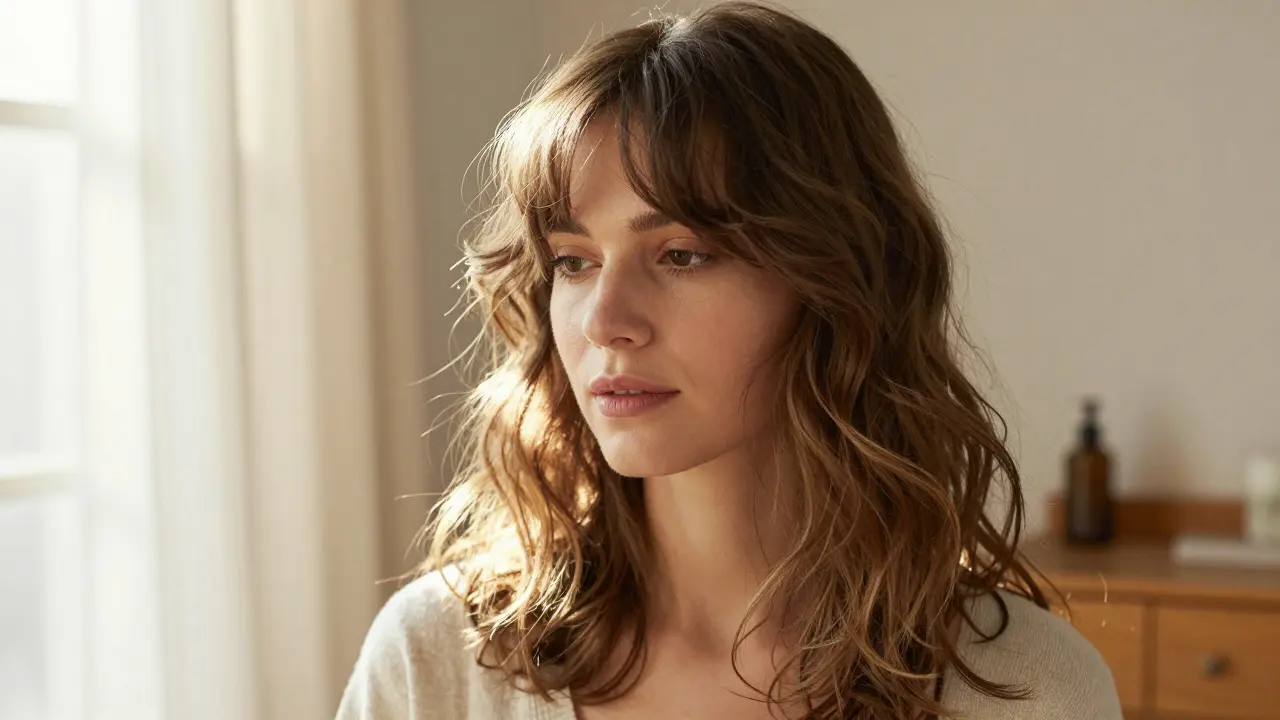
Hairstyles for women aren’t just about looking good-they’re about feeling like yourself. In 2026, the trends are less about following rigid rules and more about embracing movement, texture, and personal expression. If you’ve been wondering what’s actually popular right now, forget the old-school bobs and blunt layers. The real winners? Styles that work with your natural texture, require minimal upkeep, and still turn heads.
Curtain Bangs Are Still King
Curtain bangs didn’t just fade in-they evolved. What started as a TikTok trend in 2021 is now a staple in salons from Tokyo to Toronto. Unlike thick, heavy bangs that need constant trimming, curtain bangs are softer, longer, and parted down the middle. They frame the face like a natural halo, softening cheekbones and drawing attention to the eyes. The key? They’re cut to blend into your layers, not sit like a wall across your forehead. Most women get them cut to just above the cheekbones, with longer pieces that fall past the jaw. They work on straight, wavy, or curly hair, and they grow out gracefully. No need for a full trim every four weeks-just a light touch-up every six to eight weeks.
Long Layered Cuts with Face-Framing Pieces
If you’re not ready to chop off your length, go for long layers with movement. The goal isn’t volume for volume’s sake-it’s dimension. Think of it like a sculpted wave: thicker at the crown, gradually thinner toward the ends. This cut adds bounce without weight, making fine hair look fuller and thick hair look more manageable. The magic happens when the layers start around the chin and cascade down. Add a few face-framing pieces that fall just past the shoulders, and you’ve got a style that looks expensive but took zero time to style. Just toss your hair, apply a texturizing spray, and scrunch. Done.
Shag Cuts Are Back-But Smarter
The 70s shag is making a comeback, but today’s version isn’t a wild, fuzzy mess. Modern shags are precise, intentional, and built for texture. Think shorter layers around the crown, longer pieces at the back, and a messy fringe that doesn’t require gel or hairspray. Salons are calling this the "lived-in shag," and it’s perfect for women who want low-maintenance volume. It works best on medium to thick hair, but with the right cutting technique, even fine hair can pull it off. The secret? A razor cut. It creates soft, feathered ends that don’t look like a blunt line. Pair it with a little sea salt spray, and you’ve got an instant "I woke up like this" look.
Shoulder-Length Bobs with Soft Ends
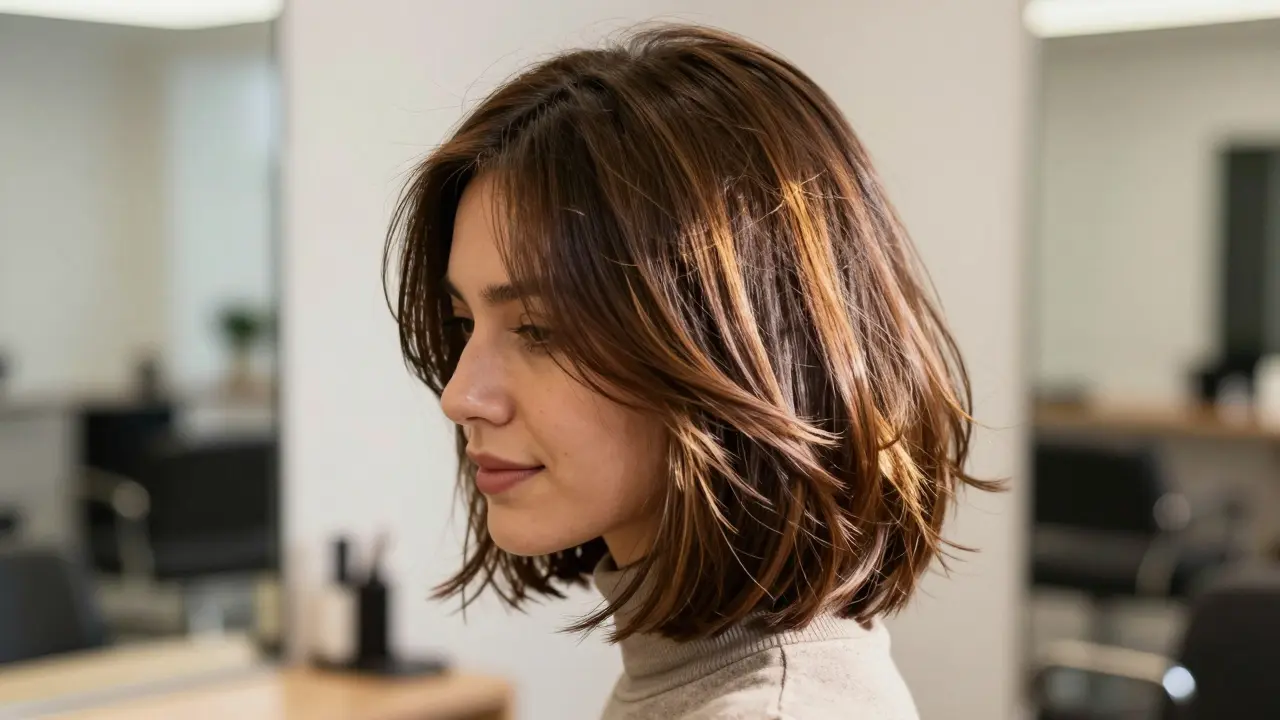
The bob isn’t dead-it just got softer. In 2026, the blunt bob is out. The new favorite? The shoulder-length bob with slightly flipped ends. It’s not a strict 90-degree angle-it’s more like a gentle curve that follows your neck. This cut flatters nearly every face shape, especially oval, heart, and square. It’s also the easiest to maintain. Wash, blow-dry with a round brush, and you’re done. No fancy tools needed. For extra dimension, ask for subtle internal layers that add movement without bulk. If you’re tired of your long hair feeling heavy, this is your upgrade.
Wavy Hair with Defined Texture
Wavy hair is no longer treated like something to be tamed. Today’s trend is celebrating natural waves with definition. Products with lightweight hold-like curl creams and mousse-are replacing heavy serums. The goal isn’t curls-it’s clumps. When you wash your hair, apply product while it’s soaking wet, then let it air-dry or diffuse on low heat. The result? Beachy, tousled waves that look like you just came from the coast. This style works best with medium to thick hair, but even fine wavy hair can get volume with the right cut. Ask your stylist for a blunt cut at the ends to enhance the wave pattern. No layers? That’s fine. Sometimes, less is more.
Undercuts and Hidden Details
For women who want to make a statement without going full platinum, undercuts are quietly everywhere. It’s not about shaving one side-it’s about subtle, hidden texture. Think a slight taper at the nape, or a few shaved lines behind the ear. It’s not meant to be seen unless you tie your hair up. It adds edge without commitment. This style pairs beautifully with curtain bangs or a long bob. It’s also a great way to add personality without changing your color. And if you’re worried about maintenance? It only needs a touch-up every six weeks.
How to Choose the Right Style for You
Not every trend works for every person. Here’s how to pick:
- Face shape: Round faces? Go for longer layers and side-swept bangs. Square faces? Soften with rounded bobs and curtain bangs. Heart-shaped? Balance with volume at the chin and shorter sides.
- Hair texture: Fine hair needs layers to look full. Thick hair benefits from weight removal. Curly hair thrives with blunt cuts that enhance natural shape.
- Lifestyle: If you’re always on the go, skip styles that need heat tools. Opt for air-dry friendly cuts like the shag or long layers.
There’s no "perfect" hairstyle-only the one that feels like you.
What to Avoid
Some styles look great on Instagram but fall apart in real life. Here’s what to skip:
- Super short pixie cuts if you’re not ready for daily styling.
- Heavy, one-length bobs-they make hair look boxy and static.
- Overly processed curls that require three products and a blowout every morning.
Less is more. The best styles today don’t need a whole arsenal of products.
Are curtain bangs high maintenance?
No, not if they’re cut right. Curtain bangs are designed to grow out naturally. You don’t need to wash and style them daily. Just brush them to the side when you wake up. A trim every 6-8 weeks keeps them looking fresh. They’re one of the lowest-maintenance bang styles out there.
Can curtain bangs work with curly hair?
Absolutely. Curly hair actually enhances curtain bangs because the natural texture adds volume and movement. The key is to have them cut while dry, so the stylist can see how your curls fall. Avoid cutting them too short-they should land just above the cheekbones, not right at the brow line.
What’s the best way to style curtain bangs?
After washing, towel-dry your hair and apply a lightweight styling cream. Use a round brush to blow-dry the bangs sideways, away from the center. Let them cool in that position to set the shape. On non-wash days, just brush them gently to the sides with your fingers. A light mist of texturizing spray adds grip without stiffness.
Do layered cuts make thin hair look thicker?
Yes, when done correctly. Layers remove weight and create the illusion of fullness. But avoid too many layers-especially around the crown. Too many can make fine hair look sparse. Instead, ask for long, gradual layers that start below the chin and taper down. This lifts the hair without thinning it out.
How often should I get a trim if I have a shag cut?
Every 8-10 weeks. Shag cuts rely on texture, not sharp lines, so they don’t need frequent trims. But if you wait too long, the layers can get too long and lose their shape. A light trim keeps the movement alive without resetting the whole style.
Final Thought
Popular hairstyles in 2026 aren’t about copying celebrities or chasing viral looks. They’re about finding what feels easy, natural, and true to you. Whether it’s curtain bangs that soften your features, a shag that adds effortless volume, or a long bob that just makes your hair feel lighter-your best style is the one that doesn’t fight you. Let your hair move. Let it breathe. And if it looks good without a mirror? That’s the real win.

Aafreen Khan
February 11, 2026 AT 04:08lol curtain bangs are still a thing?? 😂 i got mine in 2022 and they’ve been growing out like a bad dream. why are we still pretending this is fresh? also, shag cuts? more like ‘i woke up in a hurricane’ cut. 🌪️
Pamela Watson
February 12, 2026 AT 18:23you dont need layers at all. just wash and go. i did it for 3 years and my hair looks better than all these ‘trends’. stop overcomplicating it. 💁♀️
michael T
February 13, 2026 AT 22:35the fact that we’re still talking about ‘curtain bangs’ like it’s the holy grail of hair is wild. 🤡 i’ve seen more bad curtain bangs than i’ve seen good ones. half these women look like they got their hair cut by a blind raccoon. and don’t get me started on the ‘lived-in shag’-that’s just what happens when you forget to cut your hair for 6 months and call it ‘aesthetic’. 😭
Christina Kooiman
February 14, 2026 AT 01:33There is a grammatical error in the article. It says ‘you don’t need to wash and style them daily’-but then later it says ‘just brush them to the side when you wake up.’ That’s styling. And it’s inconsistent. Also, ‘texturizing spray’ is not a real product. It’s marketing jargon. Real people use sea salt spray. And ‘curl cream’? No. That’s for people who think their hair is a science experiment. Also, ‘blunt cut’ is misspelled in the subtitle. It’s not ‘blunt’-it’s ‘blunt cut.’ You can’t say ‘blunt’ as a noun. This article is a disaster.
Stephanie Serblowski
February 15, 2026 AT 06:34ok but like… isn’t it wild that we’ve gone from ‘hair is a canvas’ to ‘hair is a vibe’? 🌈✨ i mean, 2020 was all about ‘do what feels right’ and now we’re in the ‘i didn’t do anything and still look expensive’ era. the shag? the curtain bangs? they’re not trends-they’re emotional support haircuts. we’re not styling our hair, we’re healing. also, undercuts? baby, that’s just your soul peeking out. 💫
Renea Maxima
February 15, 2026 AT 13:43if you’re chasing ‘natural’ hair, why are you still going to a salon? isn’t that the ultimate contradiction? we say ‘let your hair breathe’ but then we pay someone to cut it into a shape that ‘enhances your wave pattern.’ the real trend is rejecting the idea that hair needs to be ‘managed.’ just… stop. let it be chaos. let it be wrong. let it be ugly. that’s the only real beauty left.
Jeremy Chick
February 17, 2026 AT 02:29nah, this whole article is a scam. i got a shag cut last year and my hair looks like a bird nest. nobody cares about ‘texture’-they care about looking like they didn’t just roll out of bed. also, curtain bangs? i tried it. now i look like a confused owl. 🦉
selma souza
February 17, 2026 AT 12:12There is no such thing as a ‘blunt bob.’ The term is ‘blunt cut.’ ‘Bob’ refers to a length, not a cut. The article confuses terminology. Additionally, ‘face-framing pieces’ is not a professional term. It is a marketing phrase invented by influencers. This is not journalism. It is clickbait disguised as advice. You do not ‘scrunched’ hair. You ‘scrunch’ it. The verb is not past tense. This is unacceptable.
allison berroteran
February 18, 2026 AT 11:00i’ve been thinking about this a lot lately-not just hair, but how we’ve turned self-expression into another chore. we used to say ‘do what feels right,’ but now it’s ‘do what’s trending but also low-maintenance and Instagram-approved.’ the irony is thick. i have curly hair, and i used to spend hours trying to ‘define’ it. now? i just wash it, let it dry, and call it a day. no product, no brush, no mirror. and honestly? it’s the first time i’ve ever felt like my hair was mine, not a project. maybe the real trend isn’t the cut-it’s the quiet rebellion of not caring anymore.
Gabby Love
February 19, 2026 AT 16:57just a quick tip: if you have fine hair and want layers, don’t go too short on the top. keep the layers starting at the chin and let them get longer toward the ends. that gives lift without thinning. also, for curtain bangs-always cut them dry. wet hair stretches, and you’ll end up with bangs that hit your eyebrows. trust me, i’ve been there. 😅
Jen Kay
February 20, 2026 AT 18:02you’re all missing the point. the real win isn’t the cut-it’s the fact that women are finally allowed to have hair that doesn’t look like it was designed by a 1990s shampoo commercial. the ‘lived-in shag’? that’s not a style. that’s a middle finger to perfection. and curtain bangs? they’re not about looking cute-they’re about looking like you didn’t try. and that? that’s power. 🙌
Michael Thomas
February 20, 2026 AT 22:40USA hair trends are garbage. in europe, we just cut it short and move on. no ‘texture,’ no ‘framing,’ no ‘vibe.’ just hair. stop overthinking it.
Pamela Watson
February 21, 2026 AT 01:22you’re all overthinking it. i’ve had the same haircut for 5 years. wash, dry, done. no product, no mirror. it’s called living. 💪