

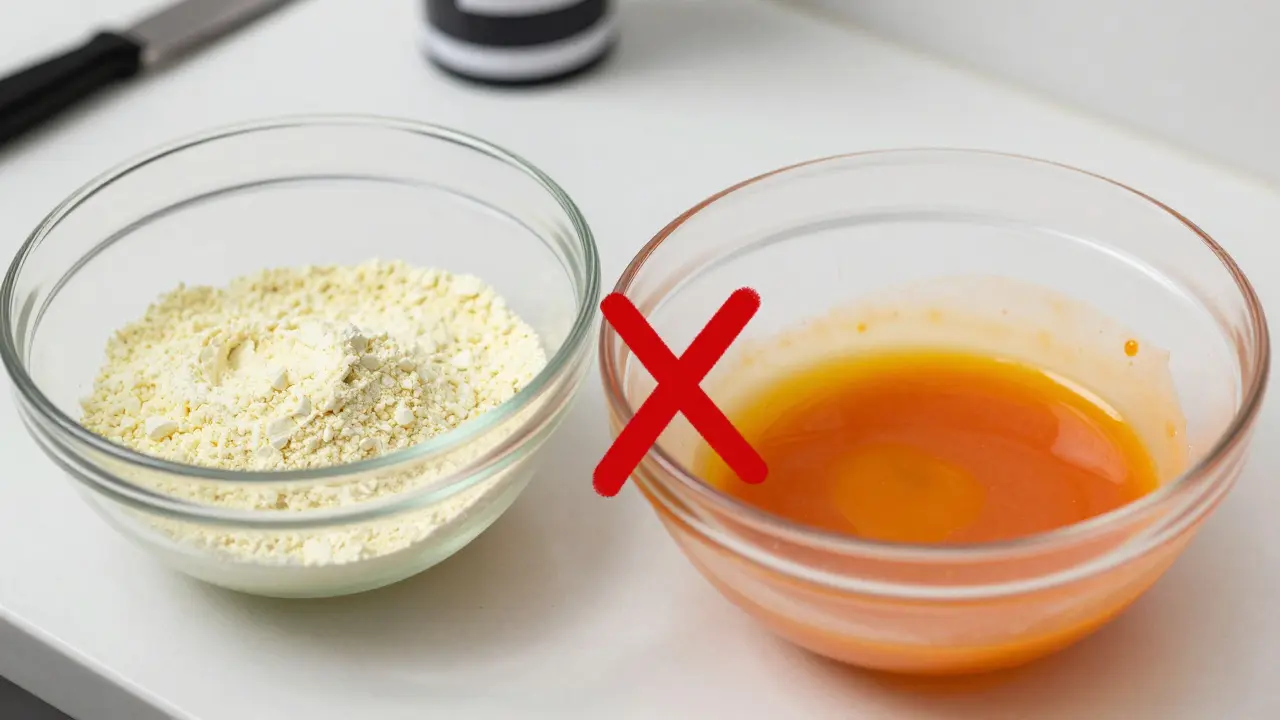
People often wonder if mixing hair color with bleach will cancel out the color or make it disappear. The short answer? Yes-but not because the color gets "deactivated" in the way you might think. It’s not magic. It’s chemistry. And if you do this, you’re not getting a new shade-you’re risking damaged, uneven, or completely unusable hair.
Here’s the truth: bleach and hair color aren’t meant to be mixed. They serve completely different purposes. Bleach breaks down your natural pigment. Hair color adds pigment. When you throw them together, you don’t get a balanced blend-you get a chemical mess that can’t do either job properly.
How Bleach Actually Works
Bleach doesn’t just lighten hair-it strips it. The active ingredient is usually ammonium persulfate or sodium persulfate, combined with hydrogen peroxide (developer). The peroxide opens the hair cuticle and oxidizes melanin, the pigment that gives hair its color. This process takes time, and it needs the right amount of developer to work.
Professional stylists mix bleach with developer in a 1:3 ratio. One tablespoon of bleach to three tablespoons of developer. Too little developer? The bleach won’t lift enough. Too much? It’ll dry out your hair and cause breakage. The mixture has to be thick enough to cling to strands without dripping. If it’s runny, you’ll end up with patchy results.
How Hair Color Works
Permanent hair color works differently. It contains pigment molecules and developer, too-but the developer’s job here is to activate those pigments so they bond inside the hair shaft. The typical ratio is 1:1. One part color, one part developer. The developer opens the cuticle, lets the color in, then helps it lock in place.
But here’s the catch: the developer in hair color isn’t strong enough to lift dark hair on its own. That’s why you need bleach first if you’re going from dark brown to platinum. The color can’t cover dark pigment-it just turns muddy.
What Happens When You Mix Them?
When you dump hair color into bleach, you’re doing two things wrong at once:
- You’re diluting the bleach’s lifting power. The color pigments and oils interfere with the bleach’s ability to break down melanin.
- You’re overwhelming the developer. The peroxide gets used up trying to activate both the bleach and the color at the same time, leaving neither fully processed.
Result? You might get a weird orange or muddy green tone-not because the color "deactivated," but because the bleach couldn’t lift cleanly, and the color couldn’t deposit properly. It’s like trying to paint over rust without sanding first. The paint doesn’t stick. It just looks worse.
Some people try this because they think it’ll save time. "I’ll just mix it and do it all in one step." But hair isn’t a paintbrush. You can’t shortcut science.

Real-Life Examples of What Goes Wrong
Take someone with dark brown hair who wants ash blonde. They buy a box of "lightening color" that claims to "lift and color" in one. They mix it with bleach they found online. After 45 minutes, their hair turns brassy orange, feels like straw, and won’t take any color afterward.
Or someone with virgin black hair who tries to go platinum. They mix bleach with a silver-toned dye, thinking it’ll neutralize yellow as it lifts. Instead, the bleach barely lifts because the dye slowed it down. The color didn’t deposit because the developer got used up. The outcome? Halfway lifted roots, dark ends, and a scalp burn from over-processing.
These aren’t rare cases. Salon owners in New York say they see this mistake at least once a week during holiday seasons, when people try DIY jobs after watching TikTok tutorials.
What Should You Do Instead?
If you want to lighten and color your hair, do it in two steps-never one.
- First, bleach your hair using the correct developer ratio (1:3 for bleach). Leave it on only as long as needed to reach your target level (usually level 9 or 10 for cool tones). Rinse thoroughly.
- Wait 24 to 48 hours. Your hair needs time to recover before you add color. Washing it with a sulfate-free shampoo helps close the cuticle.
- Then apply your chosen hair color with the correct developer ratio (1:1). Use a 10 or 20 volume developer depending on how much lift you need.
This two-step method gives you control. You can adjust the tone after lifting. If your hair’s too yellow, you can tone it with a purple shampoo before coloring. If it’s too orange, you can use a blue-based dye to neutralize it.
Why Some People Say It "Works"
You might have heard someone say, "I mixed bleach and dye and it turned out fine!" But here’s what usually happened:
- They had very light hair to begin with (blonde or highlighted).
- They used a low-volume developer (10 vol), so the bleach barely lifted.
- The color they used was very pigmented (like red or black), which masked the mess.
That’s not success. That’s luck. And it won’t repeat.
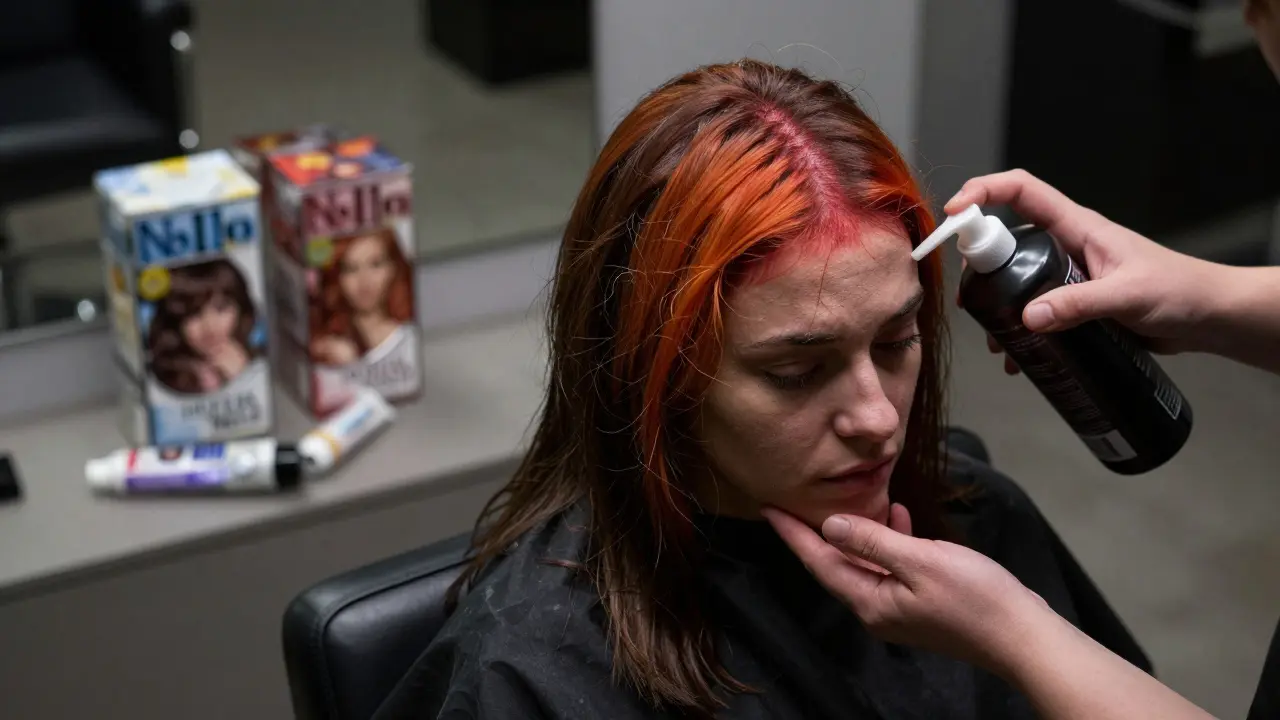
The Real Danger: Damage
Even if the color "worked," your hair paid the price. Mixing bleach and dye means double the chemical stress. You’re opening the cuticle twice, stripping pigment, then forcing new pigment in without giving your hair time to recover.
Long-term effects include:
- Severe dryness and brittleness
- Breakage at the roots or mid-shaft
- Scalp irritation or chemical burns
- Color that fades unevenly or turns brassy in weeks
Salon professionals have seen clients come in with hair that snaps when brushed. One client from Brooklyn lost three inches of hair after a DIY bleach-and-dye job. She didn’t realize how much damage was happening until it was too late.
What About Semi-Permanent or Dye-Only Products?
Semi-permanent color doesn’t contain developer. It doesn’t lift. It just coats the hair. Mixing it with bleach? Still a bad idea. The bleach will still break down the color pigments, leaving you with uneven, patchy results. And since semi-permanent color fades fast anyway, you’re wasting money.
Color-depositing conditioners? Same thing. They’re not meant to be mixed with bleach. They’re for maintenance-not transformation.
Bottom Line
Mixing hair color with bleach doesn’t deactivate the color-it sabotages both. The bleach can’t lift cleanly. The color can’t deposit properly. And your hair? It pays the cost.
There’s no shortcut. No magic trick. No "it’ll work if I use a little extra." Hair coloring is a science, not a guess. If you want clean, even, lasting color-do it right. Two steps. One at a time. Let your hair breathe between them.
And if you’re unsure? Go to a professional. A good stylist will charge you $100 for a bleach and tone job, but they’ll save you $500 in repair treatments later.
Will mixing bleach and hair color make my hair lighter faster?
No. Mixing bleach and hair color actually slows down the lightening process. The pigments in the color interfere with the bleach’s ability to break down melanin. You’ll end up with uneven, patchy results instead of clean lift.
Can I mix bleach with a toner instead of color?
No. Toners are designed to be applied after bleaching, not mixed with it. Mixing a toner with bleach will neutralize its pigment before it even hits your hair, and the bleach won’t work as intended. Always apply toner separately after rinsing out the bleach.
What happens if I accidentally mix them?
If you’ve already mixed them and applied the mixture, rinse it out immediately. Don’t let it sit longer than 10 minutes. Your hair may still be salvageable if you caught it early. After rinsing, use a deep conditioner and avoid heat. Wait at least two weeks before attempting any further color or bleach treatments.
Is there any product that combines bleach and color?
Some at-home kits claim to "lighten and color" in one step. These usually contain very low-peroxide formulas and work only on light to medium brown hair. They’re not true bleach. They’re color with a slight lift. Don’t expect them to turn dark hair blonde. They’re not designed for that.
Can I mix bleach with conditioner to make it gentler?
No. Conditioner dilutes the bleach’s strength and prevents it from lifting properly. It also makes the mixture runny, which leads to uneven application and staining on your scalp or skin. Always use developer, not conditioner, to mix with bleach.

kelvin kind
February 19, 2026 AT 03:50Ananya Sharma
February 20, 2026 AT 14:34Sarah McWhirter
February 20, 2026 AT 22:21Anyway, I once saw a girl try this and her hair turned green. Not like, cool green. Like, "I got hit by a toxic algae bloom" green. She cried. I cried. The salon owner cried. We all cried.
And then she asked if she could "add more color to fix it."
Girl. No. Just... no.
Also, I think the government should ban these "lighten and color" kits. They're public health hazards. 🤡
Ian Cassidy
February 22, 2026 AT 15:26Zach Beggs
February 24, 2026 AT 15:05Paritosh Bhagat
February 26, 2026 AT 02:28Antonio Hunter
February 26, 2026 AT 22:48Sandy Dog
February 27, 2026 AT 13:32SO NOW I JUST WEAR HATS. AND I CRY IN THE HAIR SECTION AT WALMART. 🤡💔😭
Chris Heffron
February 28, 2026 AT 10:06Nick Rios
March 1, 2026 AT 16:39Kenny Stockman
March 2, 2026 AT 00:48Adrienne Temple
March 2, 2026 AT 13:11