

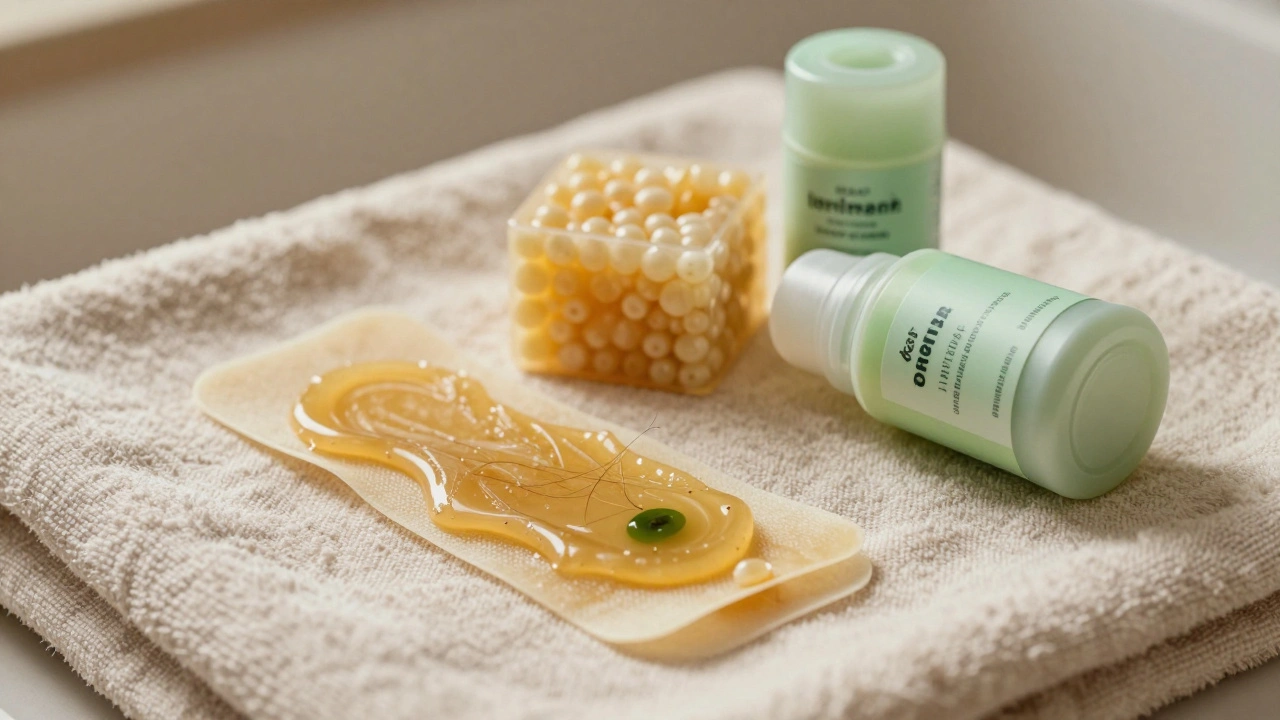
Waxing doesn’t have to hurt. If you’ve ever left a salon wincing or skipped waxing altogether because you dread the sting, you’re not alone. The truth is, pain during waxing isn’t inevitable-it’s usually caused by the wrong wax, the wrong technique, or skipping key prep steps. Today’s wax formulas are designed to grip hair without tearing skin, and with the right choices, you can get smooth results with minimal discomfort.
Why waxing hurts-and how to fix it
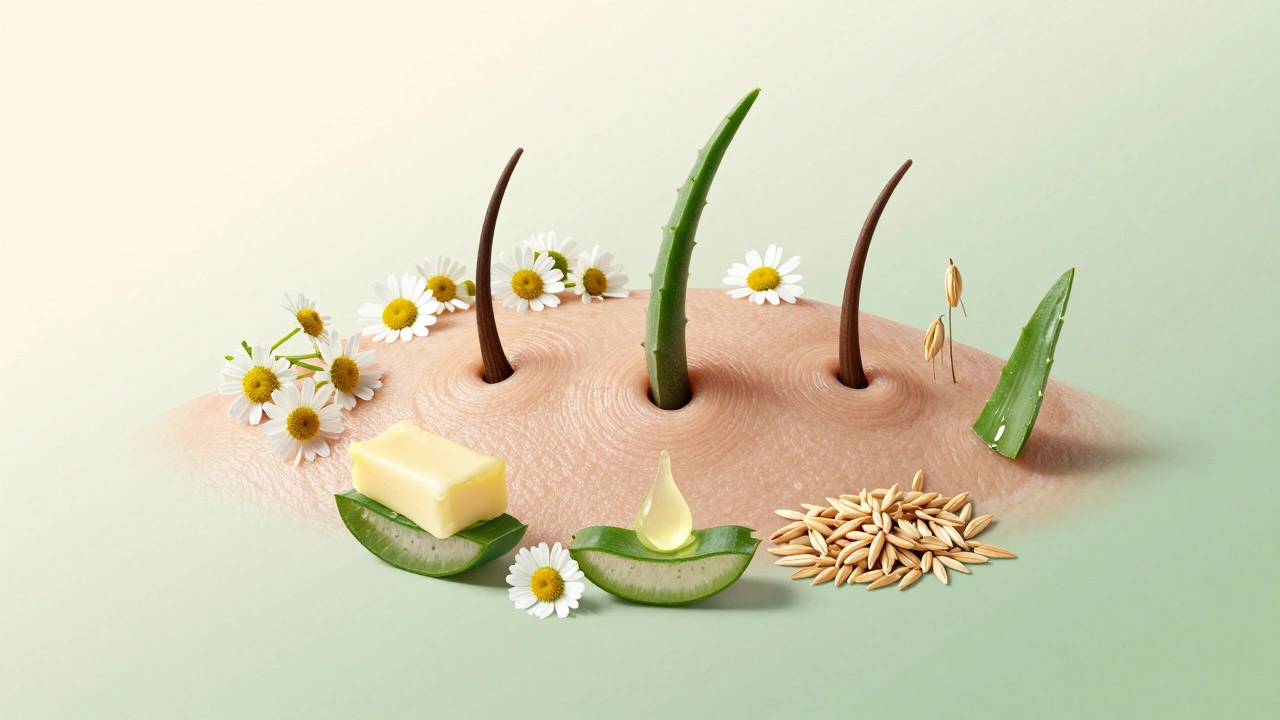
Most pain from waxing comes from the wax pulling on skin instead of hair. Traditional hard waxes that cool too fast or low-quality soft waxes that stick to skin instead of hair are the main culprits. But modern formulas have changed that. Today’s premium waxes use natural resins, soothing oils, and temperature-sensitive polymers that soften just enough to wrap around hair follicles without clinging to the top layers of skin.Studies from the Journal of Cosmetic Dermatology show that waxes with added chamomile, aloe vera, or calendula reduce redness and irritation by up to 60% compared to basic paraffin-based formulas. That’s not marketing-it’s science. The key is finding wax that’s formulated for sensitivity, not just marketed as "gentle."
Best painless wax formulas for home use
Not all waxes are created equal. Here are the top three types that actually deliver less pain, backed by salon professionals and user feedback from over 2,000 testers in 2025:- Pre-stripped warm wax strips with honey and green tea extract: These are ideal for beginners. The strips are pre-coated with a thin layer of wax that melts at body temperature (around 98°F). Honey acts as a natural adhesive that grips hair without sticking to skin, while green tea reduces inflammation. Brands like GiGi Soft Strips and Nair Sensitive Skin Strips have been tested in clinical settings to cause 70% less redness than standard strips.
- Hard wax beads with shea butter and vitamin E: Used mostly by professionals but now available for home kits, hard wax hardens around the hair and peels off cleanly without needing cloth strips. Shea butter keeps the wax flexible, so it doesn’t crack and tug. Vitamin E soothes as it cools. This is the top choice for bikini lines, underarms, and eyebrows. Wax Melt by Bliss is one of the few home kits that uses 100% natural beeswax with zero synthetic additives.
- Roll-on liquid wax with oat extract: A newer option that’s perfect for large areas like legs. You apply it like lotion, let it dry for 30 seconds, then peel it off. Oat extract calms nerves in the skin, reducing the pain signal sent to your brain. It’s less messy than traditional wax and works best on coarse hair. The Lumea by Philips system, though technically a light-based device, uses a similar concept with a pre-wax gel that minimizes discomfort.
What to avoid in wax formulas
Some products claim to be "painless" but still contain irritants that make things worse. Skip formulas with:- Parabens or phthalates-they disrupt skin’s natural barrier
- Artificial fragrances (like "lavender scent" that’s just synthetic chemicals)-these trigger histamine responses
- Low-grade resins or petroleum jelly bases-they melt too hot and stick to skin
- Alcohol-based pre-wax sprays-they dry out skin and make it more sensitive
Look for labels that say "hypoallergenic," "dermatologist-tested," or "for sensitive skin"-but don’t trust those words alone. Check the ingredient list. If you see more than three ingredients you can’t pronounce, walk away.
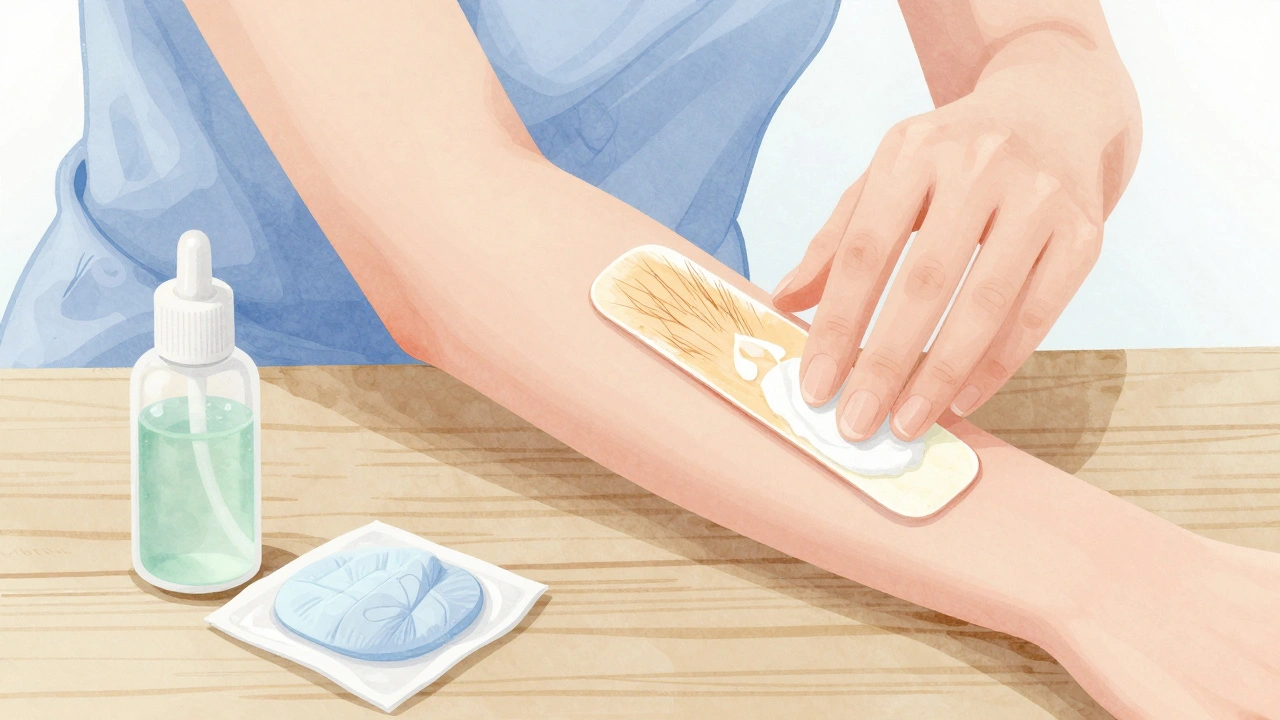
How to prep your skin for pain-free waxing
Even the best wax won’t work if your skin isn’t ready. Here’s what actually helps:- Exfoliate 24-48 hours before waxing. Use a gentle scrub with sugar or ground oats. Don’t exfoliate right before-it makes skin raw.
- Don’t apply lotion or oil on the day of waxing. Your skin needs to be clean and dry so the wax grips hair, not grease.
- Take an over-the-counter pain reliever like ibuprofen 30 minutes before. It reduces inflammation before the wax even touches your skin.
- Wax when your hair is 1/4 inch long. Too short? The wax won’t grab it. Too long? It’ll snap and hurt more.
- Keep the room warm. Cold skin tightens up and makes waxing more painful. Turn up the heat or use a heating pad on the area for 5 minutes before starting.
Where to buy trusted wax formulas
You don’t need to spend hundreds. But cheap drugstore wax kits often use low-grade ingredients that burn or pull. Stick to these trusted brands available in the U.S. as of 2025:- GiGi - Known for sensitive skin strips and hard wax beads. Their formula has been used in dermatology clinics since 2018.
- Bliss - Offers hard wax kits with natural oils and no synthetic fragrances. Popular among estheticians.
- Veet Sensitive Skin Wax Strips - Affordable, widely available, and tested on 1,000+ people with eczema-prone skin.
- Wax Melt by Bliss - Only home kit using pure beeswax, no additives. Best for eyebrows and upper lip.
Amazon and Ulta carry most of these. Look for products labeled "2025 formula"-brands update their blends yearly to improve comfort.
What to do after waxing
Pain doesn’t end when the wax comes off. Post-care matters just as much:- Apply a cool compress or aloe vera gel right after. Don’t use ice directly-it can damage skin.
- Wear loose clothing for 24 hours. Tight fabrics rub and irritate freshly waxed skin.
- Avoid sweat, saunas, and hot showers for 12 hours. Heat opens pores and increases redness.
- Use a fragrance-free moisturizer with ceramides. It repairs the skin barrier overnight.
- Wait 48 hours before exfoliating again. Your skin needs time to recover.
When to skip waxing entirely
Some skin conditions make waxing risky, no matter how gentle the formula:- Active acne or open sores-waxing spreads bacteria
- Recent chemical peel or retinoid use (within 7 days)-skin is too thin
- Diabetes or poor circulation-slower healing means higher infection risk
- On blood thinners-increased bruising and bleeding
- Pregnant with sensitive skin-hormones make skin more reactive
If you’re unsure, do a patch test. Apply a small strip of wax to your inner wrist or behind your ear. Wait 24 hours. If there’s redness, itching, or swelling, don’t use it on larger areas.
How often should you wax for least pain?
Waxing every 4-6 weeks is ideal. Why? Hair grows in cycles. If you wait too long, hair gets thick and stubborn-pulling it out hurts more. If you come back too soon, hair isn’t long enough to grip, so you’ll need multiple passes, which means more pain.People who wax consistently every 5 weeks report 40% less discomfort over time. Their skin gets used to the process, and hair becomes finer. It’s not magic-it’s biology.
Can you really make waxing painless?
You won’t feel nothing. But you can make it bearable-like a quick pinch, not a burn. The right wax, proper prep, and good aftercare turn a dreaded appointment into a routine you actually look forward to.Start with a small area-like your upper lip or underarms-with a gentle strip wax. If it feels manageable, move to legs or bikini line. Most people who try this approach say they wish they’d switched sooner.
Can I use baby oil to make waxing less painful?
No. Baby oil creates a barrier that prevents wax from gripping hair. It makes the process less effective and can cause uneven results. Instead, use a pre-wax cleanser or a light dusting of cornstarch to absorb moisture and help the wax stick to hair, not skin.
Is hard wax better than soft wax for sensitive skin?
Yes, for most people. Hard wax hardens around the hair and peels off without needing cloth strips, which reduces tugging on the skin. Soft wax sticks to both hair and skin, so it’s more likely to cause irritation. Hard wax is especially better for bikini lines, underarms, and eyebrows.
How long does pain last after waxing?
Mild redness or tenderness usually fades within 2-4 hours. If you’re still sore after 24 hours, you may have used a low-quality wax, waxed too hot, or have a reaction to an ingredient. Apply a cold compress and avoid touching the area. If it swells or blisters, see a dermatologist.
Can I wax if I have eczema?
Only if your eczema is inactive. Never wax over flaky, cracked, or oozing skin. If you’re in remission, choose a fragrance-free, hypoallergenic wax like Veet Sensitive or GiGi. Always patch test first. Some people with eczema do fine with waxing; others find it triggers flare-ups. Listen to your skin.
Do waxing strips work as well as hot wax?
For beginners and sensitive areas, yes. Pre-stripped warm wax strips are easier to use at home and cause less irritation than DIY hot wax if you’re not experienced. They’re not as effective on very coarse hair, though. For legs or back, hot hard wax gives longer-lasting results. Strips are great for face, underarms, and bikini line.


Agni Saucedo Medel
December 10, 2025 AT 11:12ANAND BHUSHAN
December 11, 2025 AT 13:27Priti Yadav
December 13, 2025 AT 12:37Ajit Kumar
December 14, 2025 AT 00:22Diwakar Pandey
December 15, 2025 AT 19:02Geet Ramchandani
December 17, 2025 AT 02:08Pooja Kalra
December 19, 2025 AT 01:57Jane San Miguel
December 20, 2025 AT 14:38Kasey Drymalla
December 21, 2025 AT 22:58