

Quick Takeaways
- Extensions can cause permanent hair loss through tension (Traction Alopecia).
- Maintenance is a grueling cycle of expensive salon visits every 6-10 weeks.
- Certain methods, especially glues and tapes, can strip the hair of natural oils and cause breakage.
- Sleeping and washing become more complex, often taking double the time.
- The risk of matting and tangling is significantly higher than with natural hair.
The Physical Toll on Your Scalp
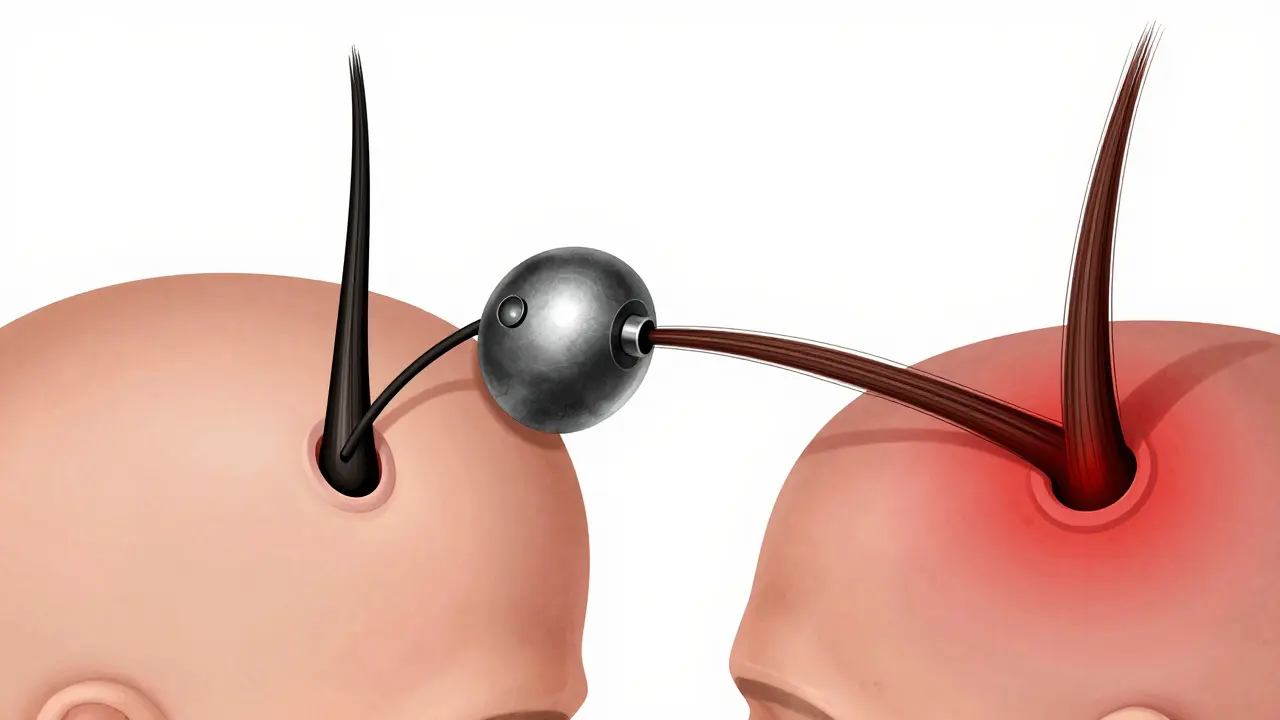
The biggest risk isn't just a few stray hairs; it's the health of your follicles. Traction Alopecia is a form of hair loss caused by repeated tension to the hair follicle. When you add heavy extensions to a thin strand of natural hair, the weight doesn't just pull on the hair shaft-it pulls on the root. Over time, this constant stress can damage the follicle so severely that the hair stops growing back entirely.
Think of your hair like a bridge. If the bridge is designed to hold 10 pounds but you put 50 pounds on it, the structure will eventually collapse. This is especially true for those with fine hair. If you notice tiny red bumps or feel a persistent "tightness" at the root, your scalp is screaming for a break. Ignoring these signs often leads to thinning patches around the hairline and crown, which are the hardest areas to recover.
The Maintenance Trap and Financial Drain
Most people focus on the installation cost, but the real "con" is the lifelong subscription model of hair extensions. You aren't just buying hair; you're buying a maintenance schedule. Hair Extensions are semi-permanent additions of human or synthetic hair attached to natural strands to increase length and volume. Depending on the method, you'll need to return to the salon every 6 to 10 weeks for a "move-up" or "re-installation."
If you miss an appointment by even two weeks, the extension begins to slide down the hair shaft. This creates a gap between the bond and the scalp, which leads to tangling and matting. Once hair mats at the root, you can't just brush it out; often, the only solution is to cut the natural hair, defeating the whole purpose of wearing extensions in the first place. When you add up the cost of the hair, the installation, and the bi-monthly maintenance, you're looking at a significant annual budget that could easily rival a monthly car payment.
| Method | Attachment Type | Primary Downside | Risk Level for Thin Hair |
|---|---|---|---|
| Tape-ins | Adhesive strips | Chemical residue/Scalp irritation | Medium |
| Sew-ins/Weaves | Stitched to braids | High tension/Traction Alopecia | High |
| K-Tips/Fusion | Keratin glue | Heat damage during install | Medium |
| Clip-ins | Temporary snaps | Slippage/Daily effort | Low |
The Battle with Tangling and Matting
Natural hair and extension hair are rarely a perfect match in terms of texture and oil production. Your scalp produces sebum to keep your hair lubricated. Extensions, even high-quality Remi Hair (which is hair where cuticles are kept aligned in one direction to prevent tangling), do not have a living root. This means they get dry much faster than your own hair.
When dry extension hair rubs against your natural hair, they create friction. This friction leads to knots, specifically at the point where the extension is bonded to your head. If you don't use a specific, heavy-duty brush and a lot of leave-in conditioner, these knots turn into "birds nests." There is nothing more frustrating than spending 45 minutes detangling your hair in the shower only to realize the knots are so tight they've fused your natural hair to the extension.
Changes in Your Daily Routine
Wearing extensions completely changes how you interact with your own body. For starters, washing your hair becomes a strategic operation. You can't just jump in the shower and scrub. You have to be careful not to scrub the bonds too hard, or you'll risk the extensions sliding out. Drying is another nightmare; because the hair is so much denser at the root, it can take two to three times longer to air dry or blow dry. If you leave the roots damp for too long, you risk developing a fungal infection or a musty smell caused by trapped moisture.
Sleeping is equally complicated. You can't just toss and turn. Many users find they have to sleep on their backs or use silk bonnets to prevent the extensions from tangling overnight. If you wake up with a knot in your extensions, you can't just shake it out-you have to carefully work it out to avoid pulling on your scalp. It adds a layer of anxiety to something that should be as simple as getting a good night's sleep.
The Emotional Crash After Removal
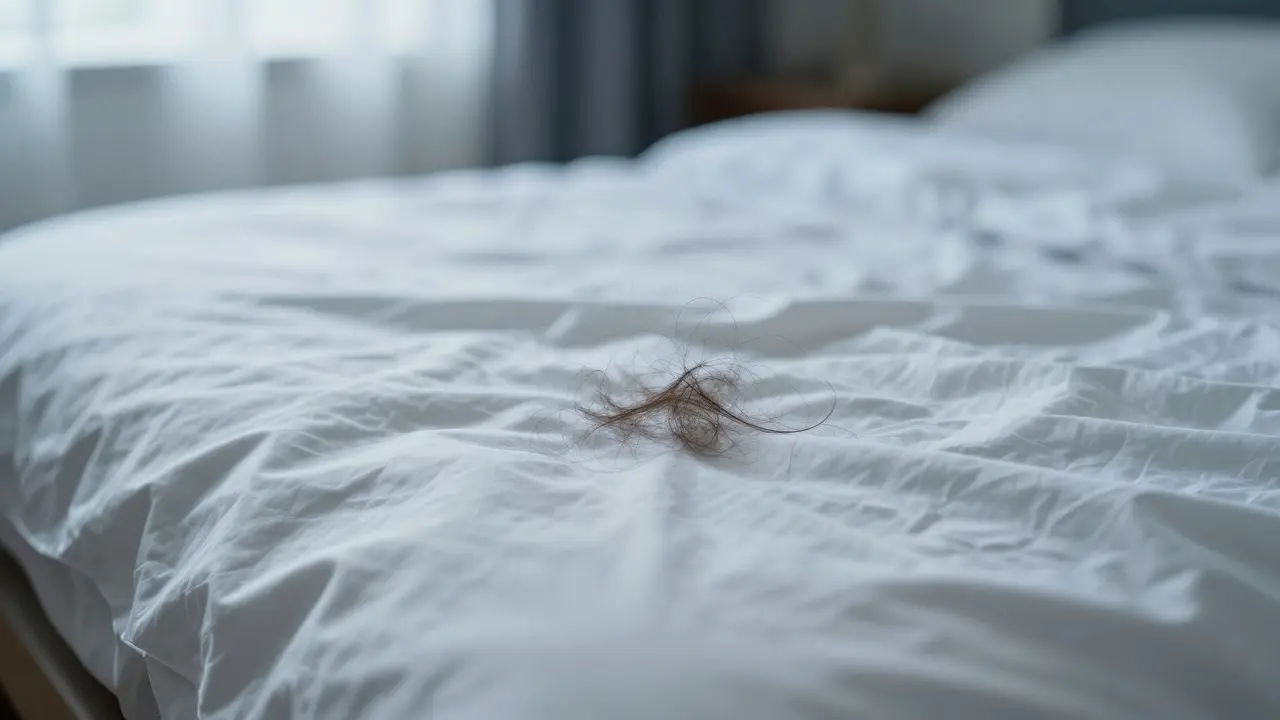
There is a psychological component to these extensions that no one warns you about: the "removal shock." After months of seeing yourself with thick, waist-length hair, the moment the extensions come out is jarring. Because of the natural shedding process (we lose about 50-100 hairs a day), those shed hairs get trapped in the extension bonds. When the extensions are removed, all those months of shed hair come out at once.
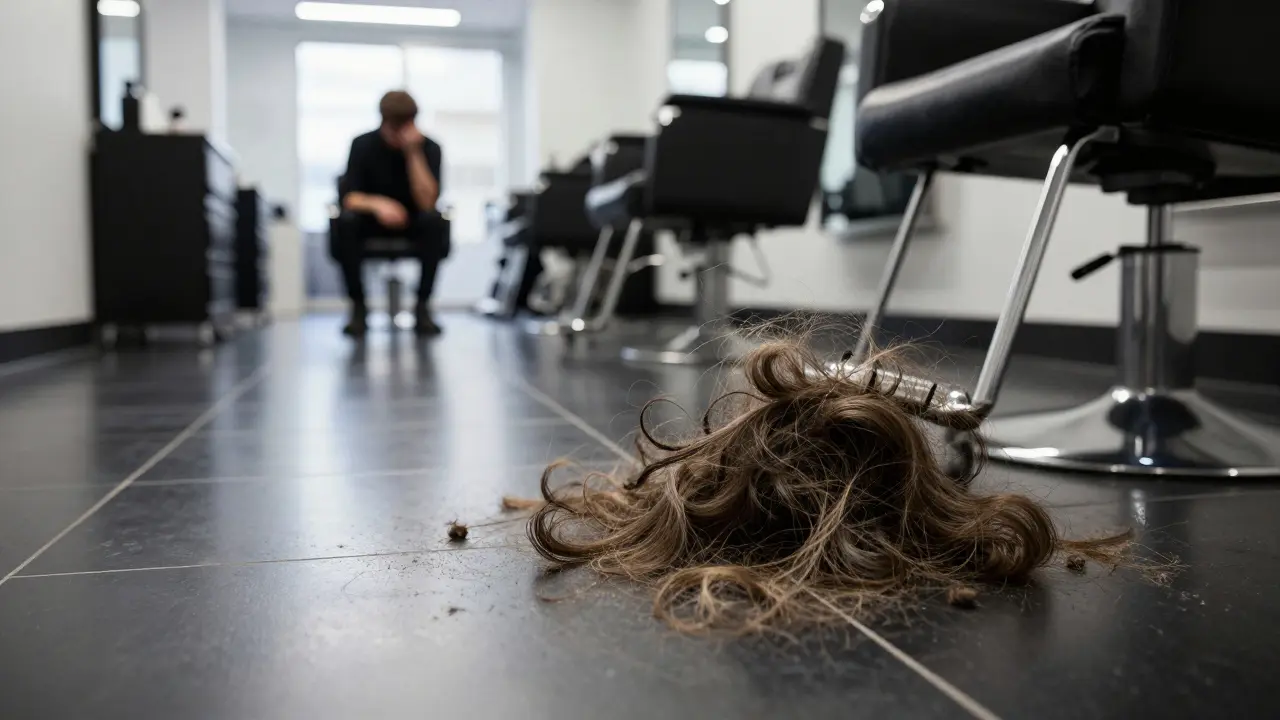
Looking at a giant pile of hair on the salon floor can be terrifying. While most of it is just normal shedding, the sight often leads to panic. Moreover, if the extensions have caused any thinning, you're suddenly faced with the reality of your actual hair density, which may have decreased due to the weight. This often leads to a cycle where people immediately reinstall extensions to hide the damage caused by the previous set, creating a dangerous loop of scalp deterioration.
Can hair extensions cause permanent bald spots?
Yes, they can. This happens through a process called Traction Alopecia. When extensions are too heavy or installed too tightly, they put constant stress on the hair follicle. If this tension lasts for months or years, the follicle can be permanently damaged, leading to areas where hair will no longer grow.
Why does my hair feel thinner after taking them out?
It's usually a combination of two things. First, you see months of trapped shed hair coming out all at once, which looks like massive loss. Second, the weight of the extensions may have caused some actual breakage or follicle stress, making your natural hair appear thinner than it was before the installation.
How often do I actually need to get them moved up?
Generally, every 6 to 10 weeks. If you wait longer, the bond moves away from the scalp, creating a gap. This gap is where most tangling and matting occur, and it makes the extensions look unnatural and "separated" from your real hair.
Are synthetic extensions more damaging than human hair?
Not necessarily the material, but the weight and the attachment method matter more. However, synthetic hair is often coarser and can cause more friction and tangling against your natural hair, which can lead to more breakage during brushing.
Can I use regular shampoo with extensions?
You should avoid shampoos with high sulfate content, as these can strip the adhesives used in tape-ins or keratin bonds. It's better to use a sulfate-free, gentle shampoo and focus on conditioning the ends of the extensions, as they don't receive natural oils from your scalp.
Next Steps for Your Hair Health
If you're already wearing extensions and noticing a lot of shedding, the best move is to take a "detox break." Remove the additions for at least 4-8 weeks to let your scalp recover and breathe. Use a scalp massage oil to stimulate blood flow to the follicles.
For those who still want the look but are scared of the damage, try Clip-in Extensions, which are temporary hair pieces that snap into the hair and can be removed daily. They eliminate the long-term tension on the root and allow you to wash your hair normally without worrying about adhesive bonds. If you insist on semi-permanent options, always prioritize a stylist who performs a "tension test" during installation to ensure the weight is distributed safely across your natural strands.




Kenny Stockman
April 13, 2026 AT 23:21Just take it easy everyone, it's all about finding a balance that works for you.
Aaron Elliott
April 15, 2026 AT 18:08The overarching paradox of the beauty industry is the pursuit of a synthetic ideal at the expense of organic biological integrity. One must ponder if the transient aesthetic satisfaction justifies the permanent physiological degradation of the follicle. It is a quintessential example of superficiality eclipsing rationality.
Paritosh Bhagat
April 16, 2026 AT 07:30It is truly heartbreaking to see people sacrifice their health for a trend, but I suppose we must be kind to those who don't know better. However, I must point out that your use of the term "con" in the second section is slightly colloquial for a guide, though I'll let it slide for the sake of friendliness!
Johnathan Rhyne
April 17, 2026 AT 22:30Actually, some of the most high-end extensions are barely noticeable if you have a stylist who isn't a total hack. The "financial drain" is only a problem if you're spending money you don't have on fancy horse hair. Just get some decent clips and stop overthinking the whole ordeal!
Daniel Kennedy
April 18, 2026 AT 20:46Listen, if you're ignoring the tension signs, you're basically asking for bald spots. Stop pretending it's a "mistake" and start admitting it's negligence. Get a professional tension test or just stop putting heavy garbage on your head before you ruin your hairline forever.
Adrienne Temple
April 20, 2026 AT 12:38I tried the clip-ins like the post says and they are way easier! 😊 Just be careful with the clips so you don't pull too hard. I love being able to just take them off at night 🌙
Antonio Hunter
April 20, 2026 AT 20:29While I understand the concerns raised here, it is perhaps worth noting that for many individuals, the psychological boost in confidence provided by added volume far outweighs the periodic inconvenience of salon visits, provided that the practitioner is certified and the tension is monitored with an abundance of caution over a long period of time.
Sibusiso Ernest Masilela
April 22, 2026 AT 10:02Imagine actually paying for this. Truly pathetic. The level of desperation to look like a filtered Instagram model is honestly nauseating. If your natural hair is that thin, maybe try a vitamin instead of gluing synthetic plastic to your skull like some sort of budget doll.
Chris Heffron
April 22, 2026 AT 22:21Fair points here :) just make sure to read the fine print on the glue types! ✌️
Salomi Cummingham
April 23, 2026 AT 16:44My goodness, the description of the "removal shock" is absolutely haunting and resonates with me on such a visceral level because I remember the sheer panic of seeing my hair everywhere! It is an emotional rollercoaster that no one prepares you for, and I truly believe we need to advocate for more honest conversations about the psychological toll of these beauty standards that leave us feeling depleted and fragile in the end.
Mike Zhong
April 25, 2026 AT 08:56The obsession with hair is just a distraction from the inherent void of existence. You're stressing over follicles while the universe is expanding into nothingness. It's a joke.
Ben De Keersmaecker
April 26, 2026 AT 23:32Interesting breakdown of the methods. I wonder if the risks vary significantly across different ethnic hair textures, as the tension might act differently on curly versus straight hair.