

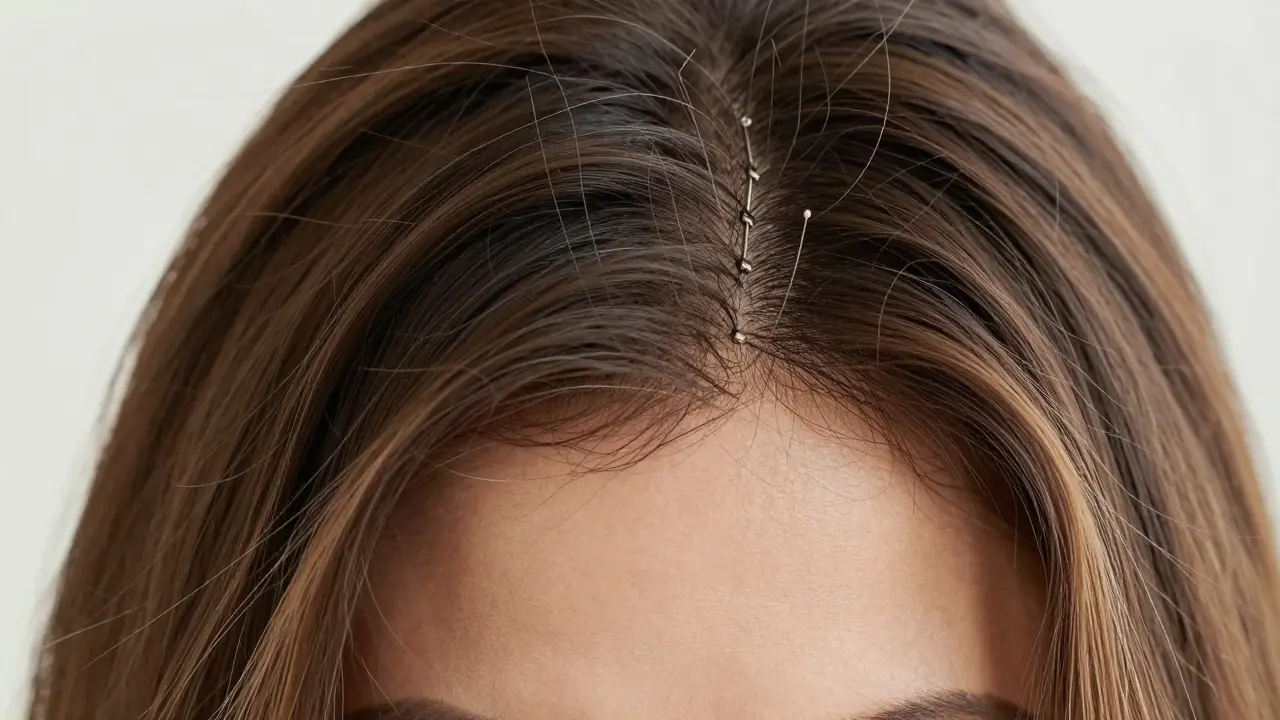
Want hair extensions that look like they grew right out of your scalp? You’re not alone. Thousands of people turn to extensions for length, volume, or color-but the biggest fear isn’t damage or cost. It’s being found out. The worst feeling? Running your hand through your hair and realizing someone else can too.
What Makes an Extension Invisible?
The least visible hair extensions aren’t just thin or lightweight-they’re designed to disappear. That means matching your natural hair in texture, color, movement, and root density. A $200 set won’t look real if it’s too shiny, too thick at the base, or doesn’t blend at the crown. Real invisibility comes from three things: installation method, hair quality, and placement.
Let’s start with installation. Tape-ins, clip-ins, and sew-ins are popular, but they’re not stealthy. Tape-ins leave visible lines if your hair is fine or short. Clip-ins? They catch light at the wrong angle and can bulge if not laid flat. Sew-ins need braids underneath, which show if your hair is thinning or if the weave is too tight.
The real winners? Micro-link and bonded extensions. Micro-links use tiny metal rings to attach single strands of hair directly to your natural hair. No glue, no tape, no bulk. Bonded extensions-also called keratin or fusion-are glued strand by strand using a heat-activated bond. When done right, they lie flat against your scalp and move like your own hair.
Human Hair vs. Synthetic: The Real Difference
Synthetic hair looks fake under sunlight. It doesn’t reflect light the same way human hair does. It’s stiff, static-prone, and won’t hold a curl or blowout like real hair. Even the best synthetic extensions can’t mimic the way your natural hair falls around your face or moves when you turn your head.
Human hair extensions, especially Remy or virgin hair, are the only option if you want true invisibility. Remy hair means all the cuticles are aligned in one direction, which reduces tangling and gives a smoother, shinier finish. Virgin hair hasn’t been chemically processed, so it retains its natural texture and luster. Both types can be heat-styled, colored, and washed like your own hair.
Don’t be fooled by labels like "100% human hair"-some brands mix in lower-grade hair or use silicone coatings to fake shine. Look for vendors who specify the origin: Indian, Brazilian, or Malaysian hair. Indian hair is usually fine and silky, great for straight or wavy textures. Brazilian hair is thicker and has more body, ideal for curls or volume. Malaysian hair is the softest and most lightweight, perfect for fine hair.
Color Matching: The Secret to Disappearing Extensions
Color is where most people fail. Matching your roots isn’t enough. You need to match the mid-lengths and ends too. Hair changes color from root to tip-lighter at the ends from sun exposure, darker at the roots from regrowth. A single shade won’t cut it.
Professional colorists use 2-4 shades in one set to create a seamless blend. For example, if your natural hair is a level 6 (light brown) with level 8 (honey blonde) ends, your extension set should include a mix of 6, 7, and 8. The installer places the darkest pieces near your roots and the lightest near the ends. This mimics natural hair growth and avoids harsh lines.
Don’t try to match your hair with a photo. Lighting changes everything. Take your hair to a salon and hold it next to extension swatches under natural daylight. If you’re buying online, order multiple shade samples. Most reputable brands offer free swatch kits.
Placement Matters More Than You Think
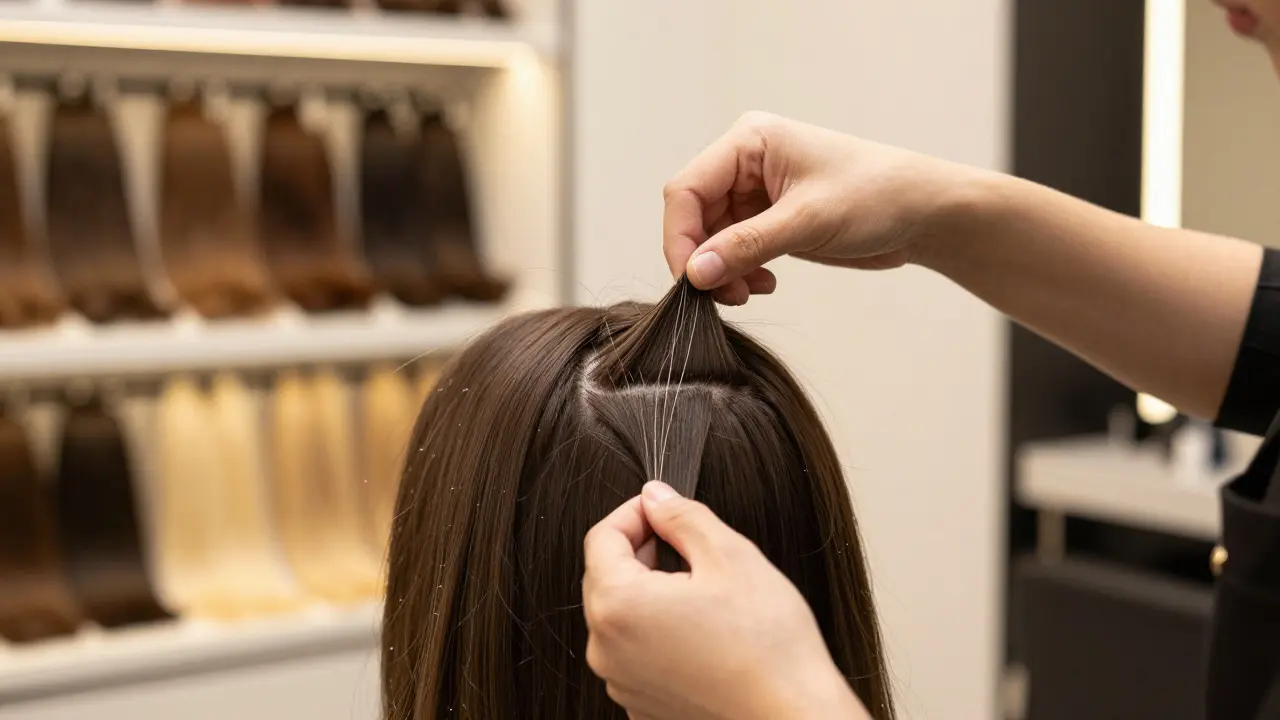
Where you put the extensions determines how visible they are. Most people focus on the back and sides-but the crown and temples are the giveaway zones.
The crown is where your natural hair is thinnest. That’s why extensions placed too high here look like a wig. The trick? Start your first row of extensions just below the crown, about an inch down. This covers thinning without creating a bulky bump. For fine hair, use single strands spaced 1/4 inch apart. For thicker hair, you can go slightly closer.
Temple pieces are often ignored. If your hairline is receding or you have baby hairs, extensions that don’t reach the front can make your face look disconnected. Use 2-3 small wefts or single strands along the hairline, blending them into your natural fringe. This creates the illusion of fuller, more textured edges.
And never forget the nape. Extensions that stick out at the back of your neck are a dead giveaway. Make sure the last row sits flush against your scalp. If you can feel the weft when you run your hand over your neck, it’s too thick.
Top 3 Least Visible Extensions in 2026
Based on salon reviews, client feedback, and stylist preferences, these three types consistently rank as the most invisible:
- Micro-link extensions - Best for fine to medium hair. No glue, no heat, no residue. Lasts 3-4 months. Each strand is attached individually, so they move naturally. Ideal for people who want to wash and style normally without worrying about glue breakdown.
- Keratin bonded extensions - Best for thick or curly hair. The bond melts into your hair and becomes nearly undetectable. Can last up to 6 months with proper care. Requires professional removal-never try to pull them out yourself.
- Hand-tied wefts - Best for beginners. These are thin, flat wefts sewn onto a silk base. They lay flat against the scalp and are less bulky than machine-sewn wefts. Great for temporary use or people who want to try extensions without commitment.
Clip-ins are still popular for quick fixes, but they’re not invisible. They’re for events, photos, or days you want volume-but not your everyday look.
What to Avoid
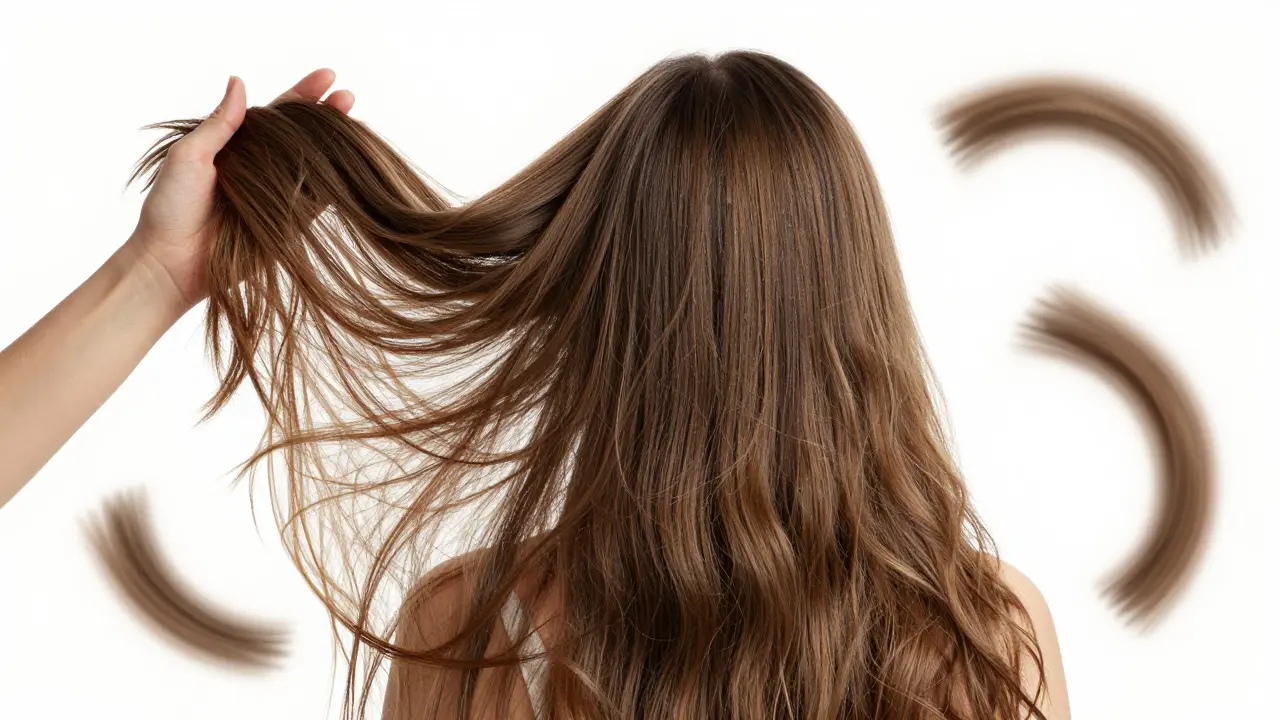
Some brands sell "invisible" extensions that are anything but. Watch out for:
- Extensions with plastic or silicone tips-these reflect light unnaturally and look fake up close.
- Pre-bonded extensions with thick adhesive strips-these leave residue and damage your hair over time.
- One-size-fits-all wefts-your hair isn’t uniform, so your extensions shouldn’t be either.
- Buying from Amazon or Alibaba without seeing swatches-most are synthetic or low-grade human hair.
Also, avoid salons that promise "instant results" in under an hour. Proper installation takes 2-4 hours. If it’s done too fast, the stylist is cutting corners. You’ll pay for it later with visible lines or breakage.
Care Tips to Keep Them Hidden
Even the best extensions become obvious if you neglect them. Here’s how to keep them looking natural:
- Wash with sulfate-free shampoo. Sulfates dry out both your hair and the extensions.
- Brush gently from the ends upward. Start at the bottom and work your way up to avoid tugging on the bonds.
- Sleep with your hair in a loose braid or silk bonnet. Friction causes tangling and loosens bonds.
- Don’t use heavy oils or serums near the roots. They can loosen keratin bonds and make the wefts slide.
- Get maintenance every 6-8 weeks. That’s when your hair grows, and the extensions start to show.
With the right care, your extensions can last 6-12 months and still look like your own hair.
Final Thought: It’s Not About Hiding-It’s About Belonging
The goal isn’t to trick people. It’s to feel confident walking into a room without wondering if someone noticed your hair isn’t real. The least visible extensions aren’t magic. They’re the result of patience, quality, and attention to detail. Choose well. Install right. Care for them like your own hair-and no one will ever know the difference.
Are invisible hair extensions damaging to natural hair?
When installed and maintained properly, micro-link and keratin bonded extensions cause minimal damage. The key is avoiding tight tension, using quality products, and getting regular maintenance. Poor installation, like pulling too tight or leaving extensions in too long, can lead to breakage. But with professional care, your natural hair stays healthy.
Can I swim with invisible hair extensions?
Yes, but chlorine and saltwater can dry out both your natural hair and the extensions. Rinse your hair with fresh water immediately after swimming. Use a leave-in conditioner designed for extensions. Avoid swimming daily if you have keratin bonds-salt and chlorine can weaken the adhesive over time.
How long do the least visible extensions last?
Micro-link extensions last 3-4 months before needing a touch-up. Keratin bonded extensions last 4-6 months, sometimes up to 8 with perfect care. Hand-tied wefts typically last 6-12 weeks, depending on how often you wash and style. All types require maintenance every 6-8 weeks to stay invisible.
Do invisible extensions work for thin or fine hair?
Absolutely. Micro-link and hand-tied wefts are ideal for fine hair because they add volume without weight. Single strands are placed carefully to avoid stressing the scalp. Avoid heavy clip-ins or thick wefts-they’ll pull and look unnatural. Focus on quality over quantity: fewer, lighter pieces blend better.
Can I color my extensions to match my hair better?
If your extensions are 100% human hair, yes-you can color them. But never dye them yourself unless you’re experienced. Extensions are more porous than natural hair and can turn patchy or brassy. Always have a professional colorist blend them using toners or glosses. Never bleach extensions-they’ll become brittle and break.
Where should I buy the best invisible extensions?
Buy from reputable salons or vendors who provide swatch kits and real customer reviews. Brands like Great Lengths, Remy Matter, and Bellami offer high-quality Remy or virgin hair. Avoid Amazon, Temu, or eBay unless you can verify the hair is 100% human and unprocessed. Always ask for the origin and processing method before buying.



kelvin kind
January 29, 2026 AT 21:19Micro-links are the real MVP. I’ve had them for 5 months and zero one has slipped. My mom still thinks it’s all my hair.
Ian Cassidy
January 30, 2026 AT 23:44From a stylist’s POV, keratin bonds are the most scalable for thick hair, but the maintenance window is tight. If you miss your 6-week retouch, you’re looking at root halo and traction alopecia risk. Also, avoid sulfates-period. They eat the bond like it’s candy.
Zach Beggs
February 1, 2026 AT 07:33Agreed on the hand-tied wefts for beginners. I tried clip-ins first and felt like a Halloween wig. Hand-tied? Felt like I woke up with longer hair. No one noticed until I told them.
Kenny Stockman
February 1, 2026 AT 21:09Don’t stress over the brand-stress over the installer. I got my micro-links from a salon that did them in 90 minutes and they looked like a bad wig job. Went back to a specialist who took 3 hours? Pure magic. You get what you pay for, and sometimes you pay for patience.
Antonio Hunter
February 2, 2026 AT 11:33There’s a cultural blind spot here: in many South Asian and African hair traditions, the idea of blending extensions seamlessly isn’t about deception-it’s about artistry. We’ve been layering, braiding, and weaving for centuries. The modern obsession with ‘invisibility’ feels like a Western standard imposed on natural variation. Maybe the goal shouldn’t be to disappear, but to elevate what you already have.
Paritosh Bhagat
February 4, 2026 AT 08:40Wait, you’re telling me you spent $800 on human hair so you can ‘blend in’? What’s next? Getting a nose job to look less ethnic? This whole ‘invisible’ thing is just another way to police natural hair. Why not just embrace your texture? I’ve got locs and I don’t need extensions to feel worthy. Also, ‘Malaysian hair’? That’s just Indian hair repackaged with a luxury label. Wake up.
Ben De Keersmaecker
February 5, 2026 AT 11:21The distinction between Remy and virgin hair is critical, yet frequently conflated. Remy refers to cuticle alignment; virgin refers to absence of chemical processing. A strand can be Remy and non-virgin (e.g., color-treated but cuticle-intact). Mislabeling this leads to consumer deception. Always request documentation-reputable vendors provide lab reports on cuticle integrity.
Aaron Elliott
February 6, 2026 AT 10:12One must question the epistemological foundation of the entire discourse: if the purpose of hair extensions is to achieve an aesthetic that mimics biological origination, then are we not engaging in a form of ontological fraud? The pursuit of invisibility presupposes a normative ideal of naturalness that is itself a social construct. Furthermore, the commercialization of this ideal commodifies insecurity. One might argue that the truest form of self-expression lies in embracing the visible-rather than concealing it.
Chris Heffron
February 8, 2026 AT 04:17lol i just got clip-ins for a wedding and my aunt said ‘you look like you got a hair transplant’ 😂
Sarah McWhirter
February 8, 2026 AT 13:13Did you know most ‘virgin’ Indian hair sold online is actually collected from temple offerings and resold? Yeah. Women shave their heads as offerings, then middlemen sell it to American salons. You’re literally wearing someone else’s devotion. And they get pennies. Meanwhile, you’re paying $1200 for ‘luxury’. Also, did you know the FDA doesn’t regulate hair extensions? No one’s checking for lice, mold, or pesticides. You’re putting unknown hair on your scalp. Think about that next time you blow-dry your ‘invisible’ extensions.
Jessica McGirt
February 9, 2026 AT 13:13My stylist said the crown placement tip was game-changing. I used to put extensions right on top and looked like a toupee. Now I start an inch down? Instant natural flow. Also, silk bonnets are non-negotiable. I sleep like a queen now.
Donald Sullivan
February 10, 2026 AT 07:12Ugh, I spent $600 on ‘premium’ extensions from some influencer and they looked like plastic cornrows. Don’t trust TikTok. Go to a real salon. Or just grow it out. Less drama.
Tina van Schelt
February 12, 2026 AT 06:01I call my extensions my ‘hair BFFs’-they show up when I need them, don’t judge my bad hair days, and don’t ask for rent. My favorite? Hand-tied wefts. They’re like whispering your hair into existence. No drama, no bulk, just… more of you.
Mark Tipton
February 12, 2026 AT 15:12Let’s be real: the entire ‘invisible extensions’ industry is a scam engineered by beauty conglomerates to monetize insecurity. The real ‘least visible’ thing is your self-worth when you’re spending $1,000 to look like someone who doesn’t need help. And don’t get me started on the environmental cost of sourcing ‘Malaysian virgin hair’-it’s deforestation, child labor, and colonial extraction wrapped in a silk bonnet. The only extension you need is self-acceptance.
Ananya Sharma
February 12, 2026 AT 17:21You claim micro-links are best for fine hair, but you ignore the fact that they require a minimum of 3 inches of natural hair for grip. What about women with postpartum thinning, chemotherapy recovery, or alopecia? You’re speaking to a privileged demographic who still have enough hair to anchor anything. For the rest of us, the real invisible extension is the one that doesn’t exist-the societal expectation that we must ‘fix’ our hair to be worthy. You talk about blending, but you don’t talk about belonging. And that’s the real issue here.