
Does your vibrant new hair color turn dull and brassy after just two weeks? You are not alone. Most people blame the dye itself, but the real culprit is often your daily routine-specifically, the shampoo you use every few days. Regular shampoos are designed to strip away dirt and oil, which unfortunately means they also strip away your expensive hair color. This is where color protect shampoo steps in, acting as a specialized shield for your dyed strands.
But how does it actually work? Is it just marketing hype, or is there real science behind those bottles? Let’s break down the chemistry of why your hair fades and how specific formulations stop that process in its tracks.
The Biology of Fading: Why Hair Loses Color
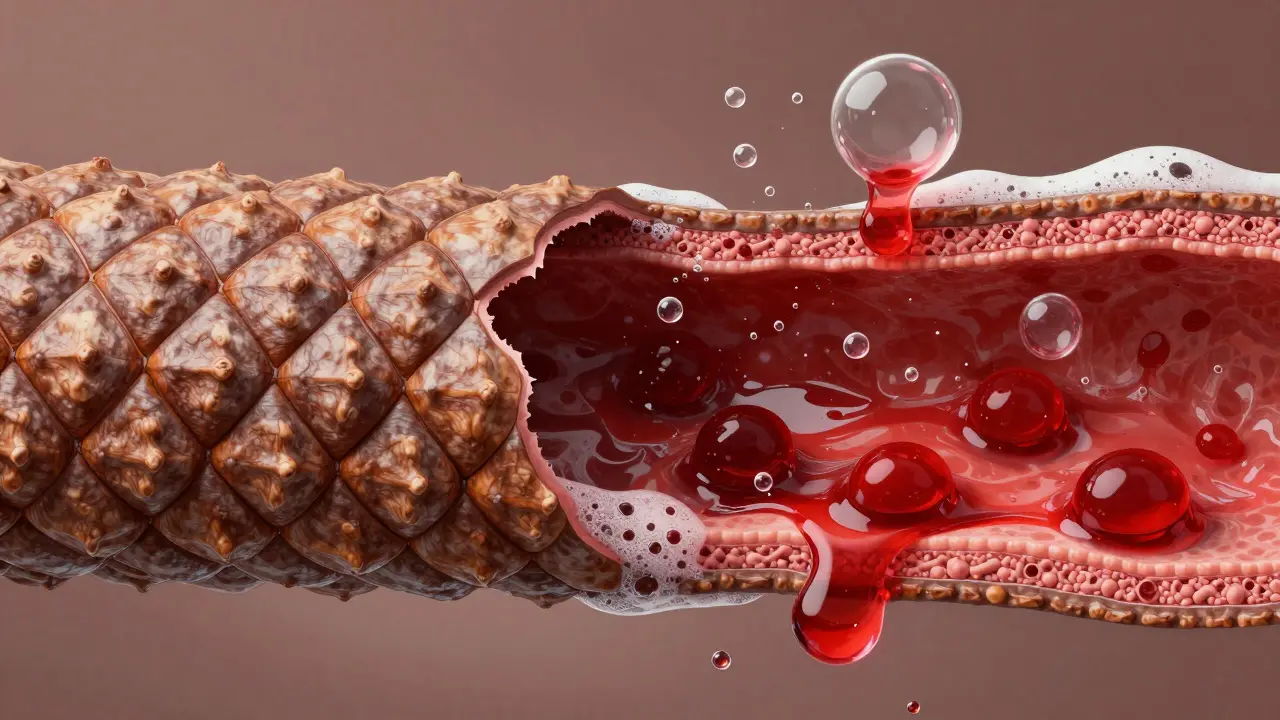
To understand how these shampoos help, we first need to look at what happens when you dye your hair. When a stylist applies permanent or demi-permanent dye, they use alkaline chemicals to lift the outer layer of your hair, known as the cuticle. Think of the cuticle like the scales on a pinecone. Once lifted, small dye molecules penetrate deep into the cortex (the inner core) and oxidize to form larger, colored pigments.
Here is the problem: those pigment molecules are trapped inside, but they are not glued there forever. Every time you wash your hair with water, especially hot water, the cuticle swells and opens up again. If you use a harsh detergent, it acts like a vacuum, pulling oils, dirt, and those precious dye molecules right out of the cortex. This physical leaching is the primary reason your red turns orange or your blue turns pastel gray within a month.
Surfactants: The Gentle Cleanse vs. The Strip
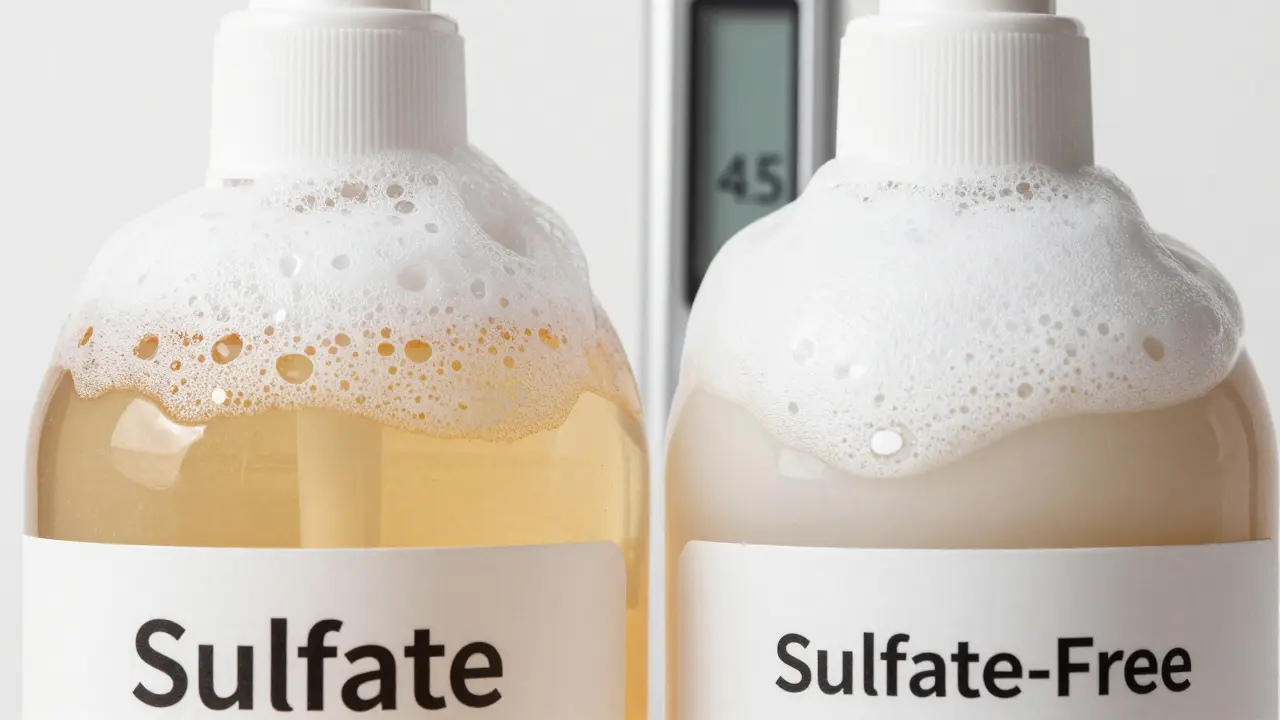
The biggest difference between regular shampoo and color-safe options lies in the surfactants-the ingredients that create lather and clean. Standard shampoos often rely on strong anionic surfactants like Sodium Lauryl Sulfate (SLS) or Sodium Laureth Sulfate (SLES). These are powerful degreasers. While great for removing heavy buildup, they are too aggressive for porous, dyed hair. They dissolve the natural lipids that help hold the cuticle closed, accelerating color loss.
Sulfate-free shampoos are formulations that replace harsh sulfates with milder cleansing agents like cocamidopropyl betaine, sodium cocoyl isethionate, or decyl glucoside. These alternatives clean effectively without stripping the hair’s protective lipid layer. A study indexed on Semantic Scholar regarding the "Effectiveness of Sulfate Free Shampoo for Hair Fade" confirmed that properly formulated sulfate-free products result in measurably less fading over repeated washes compared to conventional formulas. However, cosmetic scientist Michelle Wong notes that "sulfate-free" isn't a magic bullet; some sulfate-containing shampoos can be gentle if balanced correctly, while some sulfate-free ones can still be harsh. It is about the overall blend, not just one ingredient.
The Power of pH Balance
If surfactants are the engine, pH is the steering wheel. Healthy hair has a slightly acidic surface pH, typically between 4.5 and 5.5. In this acidic environment, the cuticle scales lay flat and tight, creating a smooth barrier that locks moisture and color inside. Many standard shampoos sit closer to neutral (pH 7), which causes the cuticle to swell and roughen.
This is why brands like Schwarzkopf Professional have heavily marketed their Bonacure Color Freeze system, which utilizes pH 4.5 Balancer Technology to stabilize the hair matrix and keep the cuticle sealed. By maintaining that low pH, the shampoo prevents the cuticle from opening during the wash cycle. Retailers like Smooth and Charming highlight that this specific acidity helps "freeze" color in place by reducing the pathway for dye molecules to diffuse out. If your shampoo has a high pH, no amount of conditioning will fully stop the leakage caused by an open cuticle.
Conditioning Polymers and Antioxidants
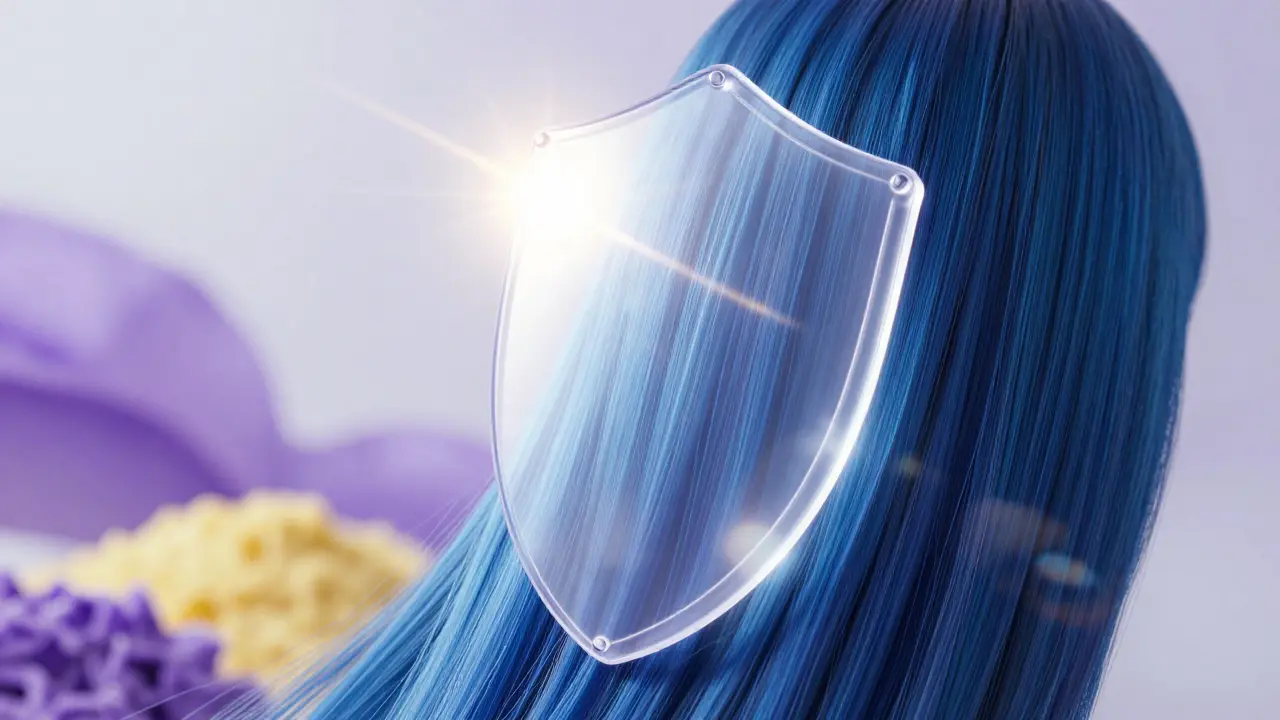
Cleaning and sealing aren’t enough; you also need to reinforce the structure. Color-protect shampoos often include conditioning polymers and proteins. As Nexxus explains in their 2024 guide, color processing depletes the hair’s internal protein and lipid content. These shampoos deposit lightweight films or bind proteins to the hair shaft, filling in micro-cracks where color could escape. This creates a smoother surface that reflects light better, making the color appear more vibrant even as it naturally fades.
Furthermore, oxidation is a silent killer of hair color. UV rays and heat styling cause chemical changes in the chromophores (the color-carrying molecules), turning them dull or brassy. Many salon-grade color shampoos now include antioxidants and UV filters. For instance, Pantene’s 2026 color-safe line emphasizes protective agents that shield against UV exposure. Lazartigue’s vegan Colour Protect shampoo uses intense hydration and film-forming ingredients to lock in pigments at the core of the hair. These additives don’t just clean; they actively fight the environmental stressors that degrade dye chemistry.
Specialized Solutions: Anti-Brass Shampoos
For those with blonde, highlighted, or gray hair, fading often looks like unwanted yellow or orange tones. This is where anti-brass or "silver" shampoos come in. These are a subcategory of color protection that includes direct dyes-usually violet or blue pigments. When you wash, these temporary pigments deposit on the hair surface, neutralizing yellow tones through color theory (violet cancels yellow). Products like the Schwarzkopf BC Bonacure Color Freeze Silver Shampoo serve a dual purpose: they protect the underlying lightened hair from further damage while correcting the tone. They follow the same acidic, gentle-surfactant rules but add this tonal correction step.
Comparison: Regular vs. Color-Safe Shampoos
| Feature | Regular Shampoo | Color-Safe Shampoo |
|---|---|---|
| Primary Surfactants | Often SLS/SLES (Strong) | Mild betaines, glucosides, or optimized blends |
| pH Level | Neutral to slightly alkaline (6.0-7.0+) | Acidic (4.5-5.5) to seal cuticle |
| Cleansing Action | Deep stripping of oils and buildup | Gentle removal of dirt without lipid loss |
| Additives | Fragrances, volumizers | Proteins, UV filters, antioxidants, conditioning polymers |
| Impact on Cuticle | Can cause swelling and lifting | Keeps cuticle flat and smooth |
Realistic Expectations: What It Can and Cannot Do
It is important to manage expectations. No shampoo can make your color last forever. Stylists at Studio Alkali note that even with perfect care, semi-permanent fashion colors fade significantly after 10-15 washes, while permanent dyes may stay vibrant for 20-30 washes. Color-protect shampoo slows the rate of fading; it does not stop it entirely.
User experiences vary. On Reddit’s r/HaircareScience, users report dramatic extensions in color life for vivid shades like teal and purple when switching to sulfate-free formulas. However, others note little difference if they continue to wash daily with hot water. Dermatologist Joyce Park reminds us that lifestyle factors-wash frequency, water hardness, and sun exposure-often impact color longevity more than the shampoo bottle alone. If you wash your hair every day, even the best color-protect shampoo will struggle to keep up.
Best Practices for Maximum Color Retention
To get the most out of your color-protect shampoo, integrate these habits:
- Wait before washing: Wait 24-48 hours after coloring before your first shampoo. This allows the cuticle to close and the dye to fully set.
- Use cool water: Hot water opens the cuticle. Wash with lukewarm or cool water to keep it sealed.
- Reduce frequency: Aim to wash 2-3 times a week instead of daily. Use dry shampoo between washes if needed.
- Pair with conditioner: Always follow with a color-safe conditioner to replenish moisture and smooth the cuticle further.
- Avoid clarifying shampoos: Save harsh clarifying treatments for once a month or only when removing product buildup, as they will strip color instantly.
By understanding the mechanics-gentle surfactants, acidic pH, and protective additives-you can choose a product that truly supports your hair health rather than just relying on marketing labels. Your color deserves a partner, not a predator.
Does sulfate-free shampoo really protect hair color?
Yes, generally speaking. Sulfate-free shampoos use milder surfactants that do not strip natural oils and dye molecules as aggressively as traditional sulfates like SLS. Studies show they reduce fading rates, though the overall formulation (including pH and conditioners) matters just as much as the absence of sulfates.
What pH should my shampoo be for dyed hair?
Your shampoo should have an acidic pH, ideally between 4.5 and 5.5. This matches the natural pH of healthy hair, keeping the cuticle scales flat and sealed, which prevents dye molecules from leaking out during washing.
How long does hair color last with color-protect shampoo?
With consistent use of color-protect shampoo and proper care, permanent dye can maintain vibrancy for 4-8 weeks. Semi-permanent fashion colors may last 2-4 weeks. Without these products, fading can occur significantly faster, often within 2-3 weeks.
Can I use regular shampoo if I have dyed hair?
You can, but it is not recommended. Regular shampoos often have higher pH levels and stronger detergents that lift the cuticle and strip color pigments, leading to faster fading, dullness, and potential damage to the hair structure.
Do color-protect shampoos work on all hair types?
Yes, they are formulated for all hair types, including fine, thick, curly, and straight hair. However, individuals with scalp conditions like seborrheic dermatitis may need to alternate with medicated shampoos, balancing scalp health with color retention needs.