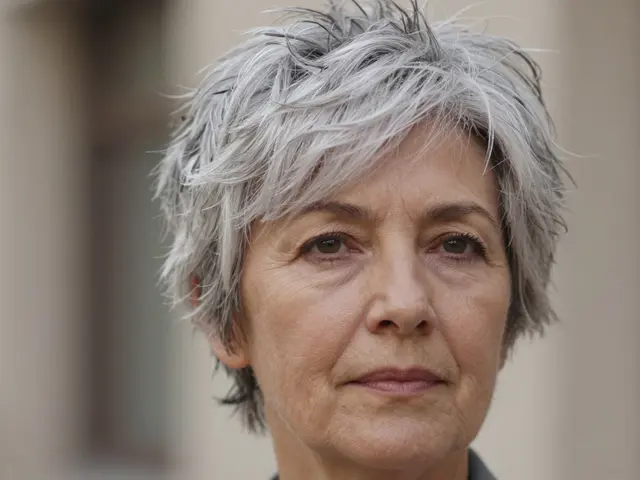

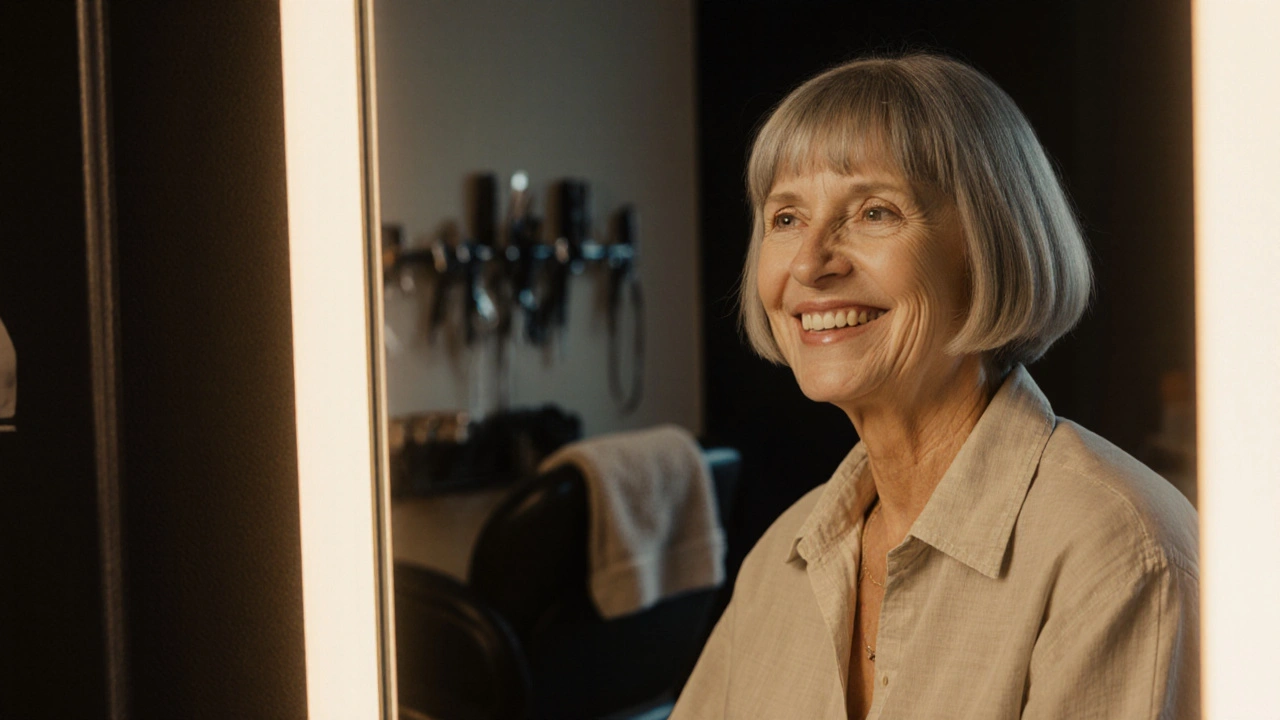
Many women over 50 start noticing something quiet but powerful: they’re cutting their hair short. Not because it’s trendy, not because a stylist pushed them, but because it just feels right. There’s no single reason. It’s a mix of comfort, confidence, and real-life practicality that adds up over time.
It’s Not About Looking Younger
A lot of people assume older women cut their hair short to look younger. That’s not the main driver. Most women I’ve talked to don’t want to look 30 again. They want to look like themselves-just easier. Short hair doesn’t hide age. It embraces it. And that’s the point.Take Carol, 62, from Asheville. She had shoulder-length hair for 30 years. After chemotherapy, her hair grew back thin and patchy. She tried extensions, wigs, even hair-thickening shampoos. Nothing stuck. One day, she walked into the salon and said, ‘Just cut it all off.’ When she saw herself in the mirror, she didn’t cry. She smiled. ‘I finally feel like me again,’ she told me. Her hair wasn’t a disguise. It was a declaration.
Less Maintenance, More Freedom
As women age, life gets busier. Grandkids, travel, part-time jobs, caring for aging parents-time becomes a luxury. Washing, blow-drying, and styling long hair can take 45 minutes a day. That’s over five hours a week. Multiply that by 52 weeks. That’s a full workweek spent on hair.Short hair cuts that time in half. Or even more. A quick wash, a towel dry, maybe a dab of product, and you’re done. No more brushing out tangles after a windy walk. No more ponytail headaches. No more worrying about hair sticking to your collar during a summer day. It’s not just convenient-it’s liberating.
Health Comes First
Hair changes as we age. It gets finer. It loses pigment. It grows slower. And sometimes, it falls out more. That’s normal. But it’s also frustrating. Long hair makes thinning more obvious. It looks stringy. It doesn’t hold volume. A shorter cut hides that unevenness. It creates shape. It gives the illusion of thickness.Studies from the American Academy of Dermatology show that by age 60, about 40% of women experience noticeable hair thinning. That doesn’t mean you lose all your hair-it means the texture changes. Short cuts are designed to work with that. Layers, bobs, pixies-they’re built to add volume where it’s needed and reduce weight where it’s not.
It’s a Statement of Control
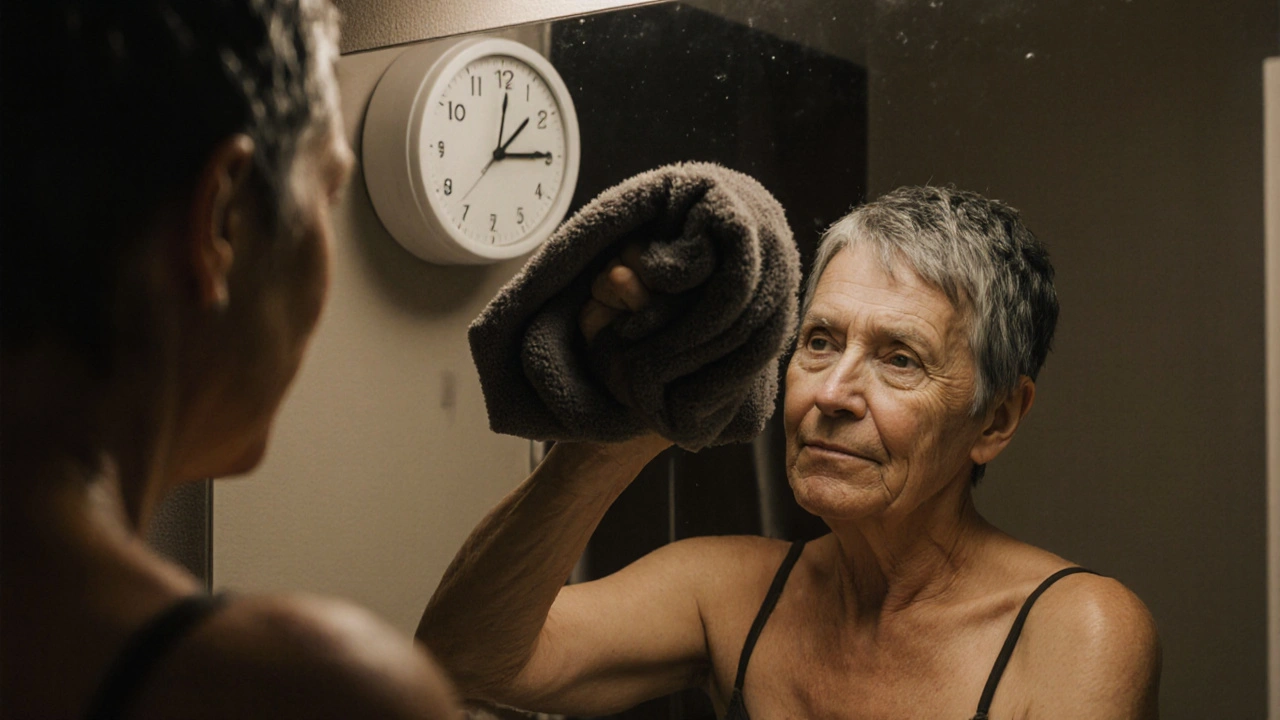
Life has a way of taking control away. Health issues. Retirement. Loss. Changing roles. When you can’t control much, your hair becomes one of the few things you can change on your own terms.For many women, cutting hair short is an act of reclaiming power. It’s not about rebellion. It’s about ownership. One woman in her 70s told me, ‘I spent decades doing what everyone else wanted me to do. Now, I cut my hair because I like how it feels. That’s enough.’
There’s no shame in wanting to feel good in your own skin. And short hair? It’s often the easiest way to do that.
It’s Easier to Style with Gray
Gray hair is beautiful. But it’s also different. It’s coarser. It’s drier. It doesn’t hold curls the way it used to. Long gray hair can look frizzy or flat. It needs more product. More time. More effort.Short cuts make gray hair shine. They let the natural texture show. A cropped bob or a textured pixie lets the silver catch the light. It looks intentional. It looks confident. And it doesn’t require dyeing every four weeks.
More women are choosing to go gray-and short hair makes it easier. The American Hair Loss Council reports that since 2020, requests for ‘natural gray short cuts’ have increased by 68% among women over 55. That’s not a trend. That’s a shift.
It’s Not One Style Fits All
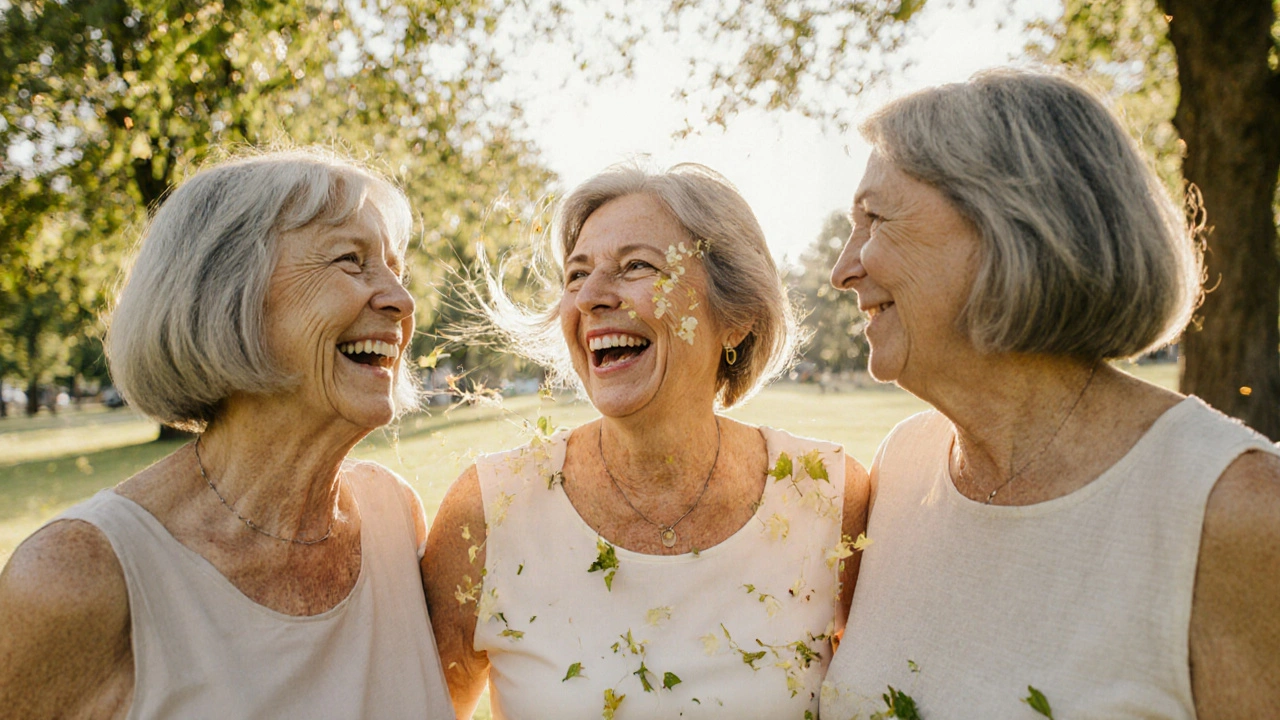
There’s no single ‘older woman haircut.’ You don’t need a pixie to be valid. Some women prefer a chin-length bob. Others like a layered shag. Some keep a bit of length but chop it into a blunt cut. The key isn’t the length-it’s the shape.Good short cuts for older women focus on:
- Balance: Hair that frames the face without overwhelming it
- Texture: Layers that add movement and volume
- Low upkeep: Styles that dry quickly and need minimal styling
- Face shape: Cuts that complement jawline and cheekbones
For round faces, a side-swept fringe or angled bob helps lengthen the face. For square jaws, soft layers around the chin soften the look. For heart-shaped faces, a chin-length bob with side-swept bangs brings balance.
It’s not about copying celebrities. It’s about finding what works for your face, your lifestyle, and your hair’s natural behavior.
What About the Social Pressure?
Let’s be honest: some people still stare. A cousin might say, ‘But you looked so pretty with long hair.’ A coworker might ask, ‘Did something happen?’That pressure? It’s fading. But it’s not gone. And that’s okay. You don’t need everyone to understand. You just need to understand yourself.
Short hair doesn’t make you less feminine. It doesn’t make you less graceful. It doesn’t make you less of a woman. It just makes you less burdened.
One woman in her 60s told me, ‘I used to think long hair was the only way to be elegant. Now I know elegance is in how you carry yourself-not how much hair you have.’
It’s a New Chapter, Not an Ending
Cutting your hair short after 50 isn’t about giving up. It’s about choosing something better. Something lighter. Something that fits the life you’re living now-not the one you lived 20 years ago.It’s not about hiding. It’s about showing up. Fully. Clearly. Without the weight of expectation.
Women aren’t cutting their hair short because they’re afraid of aging. They’re doing it because they’ve finally learned how to love themselves exactly as they are-and sometimes, that means letting go of what no longer serves them.
And that’s not just a haircut. That’s a revolution.
Is short hair only for women with thinning hair?
No. While short hair can help hide thinning, many women choose it simply because it’s easier, more comfortable, or just feels right. Thinning hair is one reason-but not the only one. Women with thick, healthy hair also cut it short for freedom, style, and low maintenance.
How often do you need to get a short haircut?
Short styles usually need a trim every 4 to 6 weeks to keep their shape. If you have a pixie or a very cropped cut, you might need it every 3 to 4 weeks. For a bob or layered cut, 6 weeks is usually enough. Regular trims prevent split ends and keep the style looking fresh.
Will short hair make me look older?
Not if it’s cut well. Poorly styled short hair can look dated or harsh, but a modern, face-framing cut actually softens features and highlights your best attributes. The key is working with your face shape and hair texture-not against it. A good stylist will know how to add volume and movement, not just chop it short.
Can I still style short hair with curls or waves?
Absolutely. Short hair can be curled, textured, or tousled with the right products. A light mousse, sea salt spray, or curl cream applied to damp hair and scrunching gently can create soft waves. Even a pixie can have movement. It’s not about length-it’s about technique and product.
What if I’m nervous about cutting my hair short?
Start small. Ask your stylist for a chin-length bob or a layered cut that’s still a little longer. You can always go shorter later. Many women try a wig or hair extensions first to see how they feel. But most say the real test is in the mirror after the cut. That moment of surprise? It’s often the moment they realize they’ve been waiting for this change their whole life.