
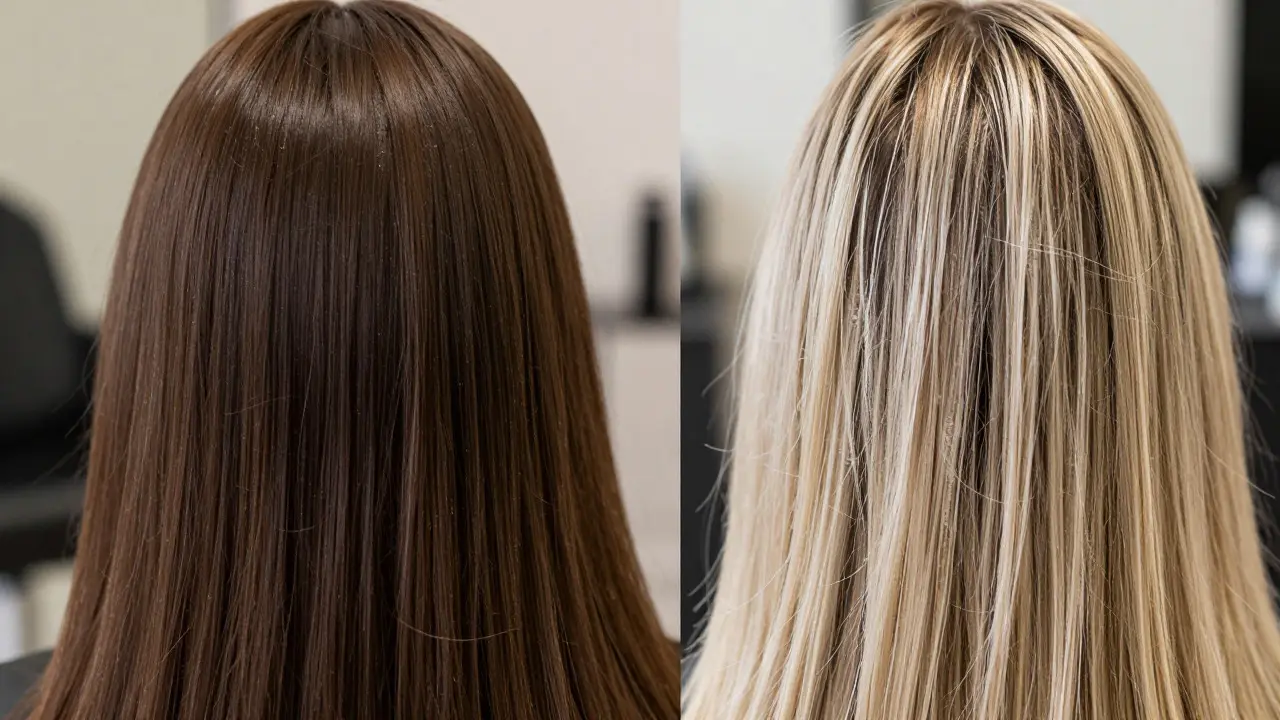
There is a persistent myth in the beauty world that one specific chemical process is "safe" for your hair while the other is a disaster. The truth is more nuanced and depends entirely on how much of your head you are treating and how aggressively you are lifting the pigment. If you are trying to decide between a full-head permanent color or foiled highlights, the answer isn't just about which product is gentler; it is about the total volume of hair exposed to chemical stress.
Hair color and highlights both alter the structure of your hair shaft, but they do so in different ways. Permanent oxidative hair color opens the cuticle to deposit large molecules deep inside the cortex. Bleach-based highlights, on the other hand, use stronger oxidation to strip natural melanin and break down internal protein bonds. While each highlighted strand suffers more intense structural changes than a dyed strand, highlights typically affect only a portion of your total hair mass. This distinction is crucial when evaluating long-term hair health.
The Mechanics of Chemical Damage
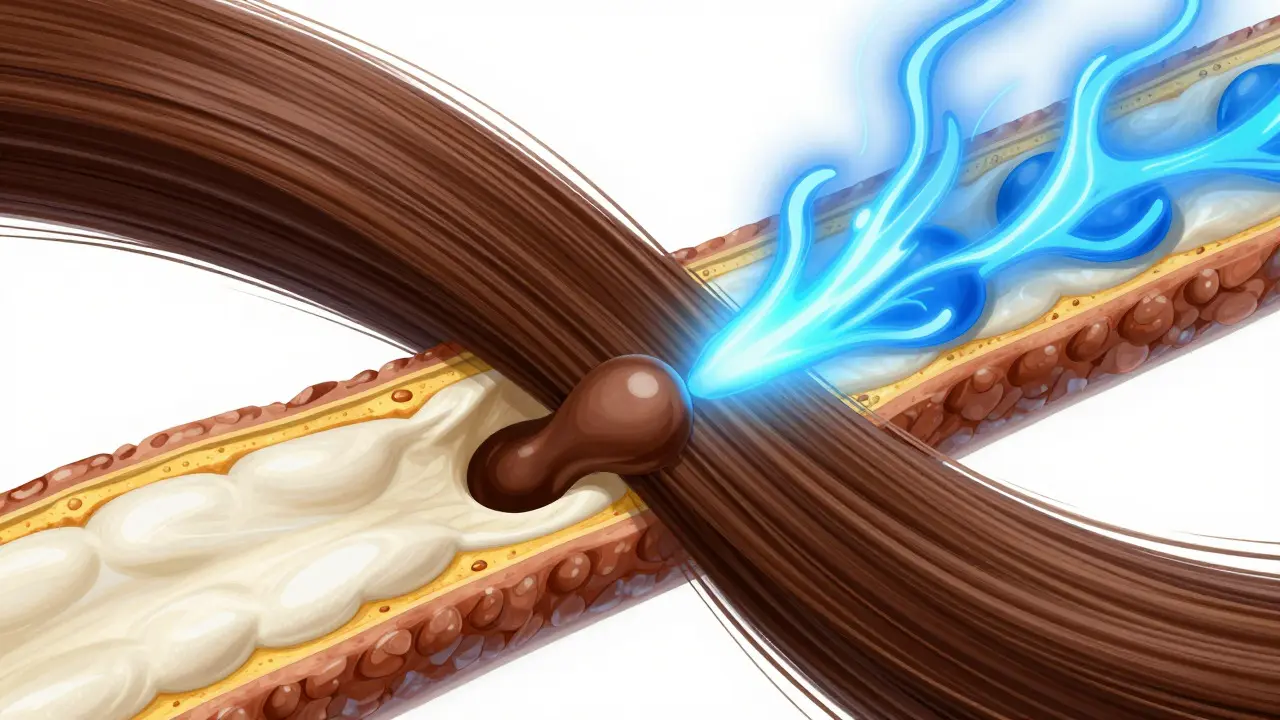
To understand why one might be less damaging than the other, you have to look at what happens at the microscopic level. When you apply Permanent Hair Color is an oxidative dye system that uses an alkaline base and hydrogen peroxide to open the hair cuticle and alter melanin. The alkaline base, often ammonia or monoethanolamine, lifts the protective scales of the cuticle. This allows the dye molecules to penetrate the cortex, where they oxidize and bond with the hair's natural pigment. Once inside, these new color molecules are too large to wash out easily, resulting in a permanent change until new growth appears.
This process inevitably causes some degree of structural disruption. Scientific imaging studies show that immediately after coloring, the hair fiber exhibits disturbed cuticle scales and increased surface roughness. The lipid film that protects the hair from moisture loss is broken down, leading to higher water evaporation rates. However, this damage is distributed across nearly every strand on your head if you opt for a single-process color. The intensity per strand is moderate, but the coverage is extensive, often affecting 80% to 100% of your hair.
In contrast, Bleach-Based Highlights is a lightening technique using hydrogen peroxide to break down melanin and disulfide bonds in targeted sections of hair. Bleach performs two irreversible reactions simultaneously. First, it shatters melanin granules to lighten the color. Second, and more critically for hair integrity, it partially destroys the disulfide bonds within the keratin structure. These bonds are what give hair its elasticity and strength. Because bleach is applied to selected strands using foils, balayage, or caps, it typically affects only 20% to 50% of your total hair mass, depending on the style.
Comparing Exposure: Whole Head vs. Targeted Sections
The core of the debate comes down to math. Is it better to have 100% of your hair undergo moderate chemical stress, or 30% of your hair undergo severe chemical stress? For most people, the latter results in less overall damage to the head of hair. When you get a full-head permanent color, every single strand is subjected to the alkaline lift and oxidative process. Even if you are only going one or two levels darker, the cumulative effect on the entire scalp area is significant.
With highlights, the un-bleached sections act as a buffer. These untouched strands retain their natural lipid barrier and protein structure. They provide volume, texture, and resilience to the overall hairstyle. The bleached sections, while weaker and more porous, represent a smaller fraction of the total hair weight. This means that when you brush your hair, dry it, or style it, a significant portion of your hair remains structurally sound. This distribution of damage often makes highlights feel less "straw-like" than a fully colored head, especially if the highlights are spaced out over time.
| Factor | Full-Head Permanent Color | Bleach-Based Highlights |
|---|---|---|
| Percentage of Hair Treated | 80-100% | 20-50% |
| Intensity of Chemical Reaction | Moderate (Deposit/Light Lift) | High (Pigment Strip/Bond Break) |
| Primary Structural Impact | Cuticle lifting, pigment alteration | Keratin bond breaking, high porosity |
| Recovery Time per Strand | ~8 weeks for cuticle stabilization | Permanent until cut off |
| Recommended Frequency | 3-4 times per year | 2-3 times per year (heavy lift) |
The Role of Frequency and Overlap
It is not just about the initial service; it is about what happens over months and years. The most common mistake people make is overlapping color. When you apply permanent dye to already-dyed lengths, you are subjecting those fibers to repeated alkaline shock. Since hair is dead tissue, it cannot biologically heal. Each application creates microscopic wounds in the shaft that never fully close. Cosmetic chemists note that visible damage typically becomes apparent after repeated coloring over 12 to 18 months, especially on fine hair.
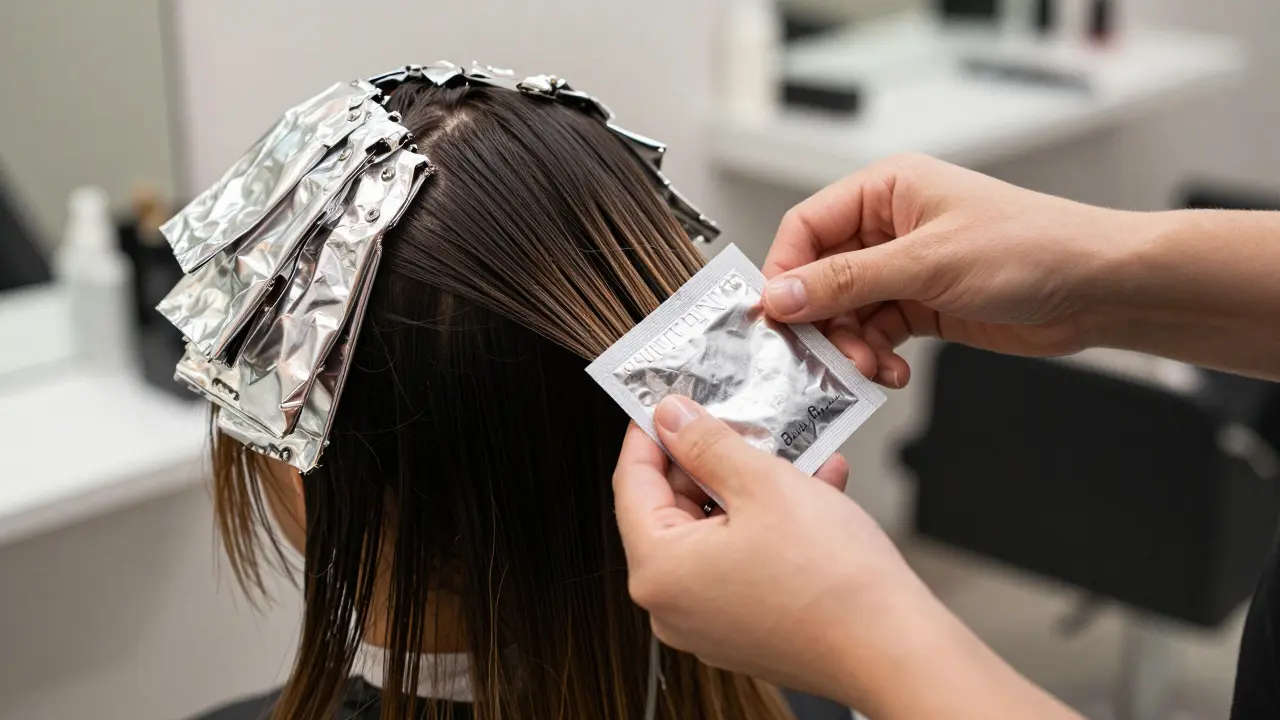
Highlights offer a strategic advantage here. Because they are placed in specific sections, you can rotate where the bleach is applied during refresh services. A skilled stylist can target only the regrowth areas or shift the pattern slightly, allowing previously bleached sections to rest. This rotation prevents the same fragile strands from being attacked repeatedly. In contrast, root touch-ups for full-head color require careful application to avoid overlap, but the risk of concentrating damage on the mid-lengths is always present if the application is uneven.
Frequency also plays a massive role. Experts recommend waiting at least eight weeks between permanent color sessions to allow the cuticle to stabilize. For heavy bleaching, the recommendation is often longer, or fewer sessions per year. If you are doing highlights every six weeks without adequate care, the accumulated loss of elasticity will lead to breakage. However, if you space them out and use bond-building additives, the impact is manageable.
Aftercare and Mitigation Strategies
No chemical process is truly "damage-free." Claims of non-damaging color are marketing fluff. What you can control is how well you maintain the hair after the service. Both color and highlights leave the hair more porous and thirsty. The key difference is that highlighted hair requires more intensive intervention because the internal bonds are broken, whereas colored hair primarily needs surface protection and moisture replacement.
For permanent color, focus on protecting the cuticle. Use sulfate-free shampoos to avoid stripping the color and drying out the lifted scales. Deep conditioning masks once a week help replenish lipids. Avoid hot water, which further opens the cuticle and fades color faster. The goal is to keep the outer layer smooth and sealed.
For highlights, you need to address the internal structure. Bond-repair products, such as those containing oligopeptides, can help bridge broken disulfide bonds. Protein treatments can temporarily reinforce the keratin matrix, though they must be balanced with moisture to prevent brittleness. Oils like argan or coconut can provide a protective barrier against heat styling and environmental stress. If your curls are affected by highlighting, you may notice looser patterns or increased frizz; this is due to the altered weight and elasticity of the bleached strands. Patience and consistent care are essential.
Which Option Should You Choose?
If your priority is minimal overall structural compromise and you want a subtle change, low-lift permanent color or demi-permanent glossing is likely the safer bet. It spreads the load evenly and avoids the harsh chemistry of bleach. It is ideal for adding richness, covering gray, or shifting tone without drastically altering the hair's physical properties.
If you want brightness, dimension, and a sun-kissed effect, highlights are the way to go. Yes, the individual strands are more damaged, but because only a portion of your hair is treated, the overall health of your head of hair remains robust. Just be prepared to commit to a rigorous aftercare routine and accept that the bleached sections will always be more fragile than the rest. Rotate your highlight placement, limit frequency, and invest in bond repair. With the right approach, you can enjoy the aesthetic benefits of highlights without sacrificing the integrity of your hair.
Is bleach worse than permanent color?
Per strand, yes. Bleach breaks down internal protein bonds and strips pigment, causing more severe structural changes than deposit-only permanent color. However, because highlights treat fewer strands, the total damage to the whole head of hair is often lower than full-head permanent color.
How often should I get highlights to minimize damage?
Limit heavy bleaching to 2-3 times per year. For maintenance refreshes, wait at least 8-12 weeks between sessions. Always ensure your stylist rotates the placement of the foils to avoid applying bleach to the exact same fragile strands repeatedly.
Can damaged hair from highlights ever heal?
Not biologically. Hair is dead tissue, so broken bonds and stripped cuticles do not regenerate. Repair products can bridge bonds and improve appearance and feel, but true healing only happens when the damaged lengths are cut off and replaced by new growth.
Do highlights cause hair loss?
Rarely. Properly applied highlights affect the hair shaft, not the follicles. Hair loss is usually associated with mechanical breakage from handling weak hair or severe chemical burns to the scalp, rather than the coloring process itself stopping growth.
What is the least damaging way to change my hair color?
Semi-permanent direct dyes or glossing services are the least damaging options. They sit on the surface of the hair or penetrate minimally without using strong alkaline bases or high-volume developers, causing negligible structural damage compared to permanent oxidative systems.