
Walk into any salon in Asheville and ask for a pixie cuta very short haircut that is typically shorter than a bob, and you might hear the same warning: "It will make your face look wider." Is that true? Not necessarily. The idea that round facesface shapes where the length and width are roughly equal with soft curves can’t handle short hair is one of the biggest myths in beauty. It’s not about avoiding short hair; it’s about choosing the right *kind* of short hair.
I’ve spent years watching clients leave salons crying because they got a blunt bob that hit exactly at their chin, turning their oval face into a perfect circle. But I’ve also seen women with wide cheeks rock a textured crop and look sharper than ever. The secret isn't hiding your face; it's framing it. If you have a round face, your goal is to create the illusion of length and angles. Here is how you actually pull off short hair without looking like you just woke up from a nap.
The Geometry of Your Face Shape
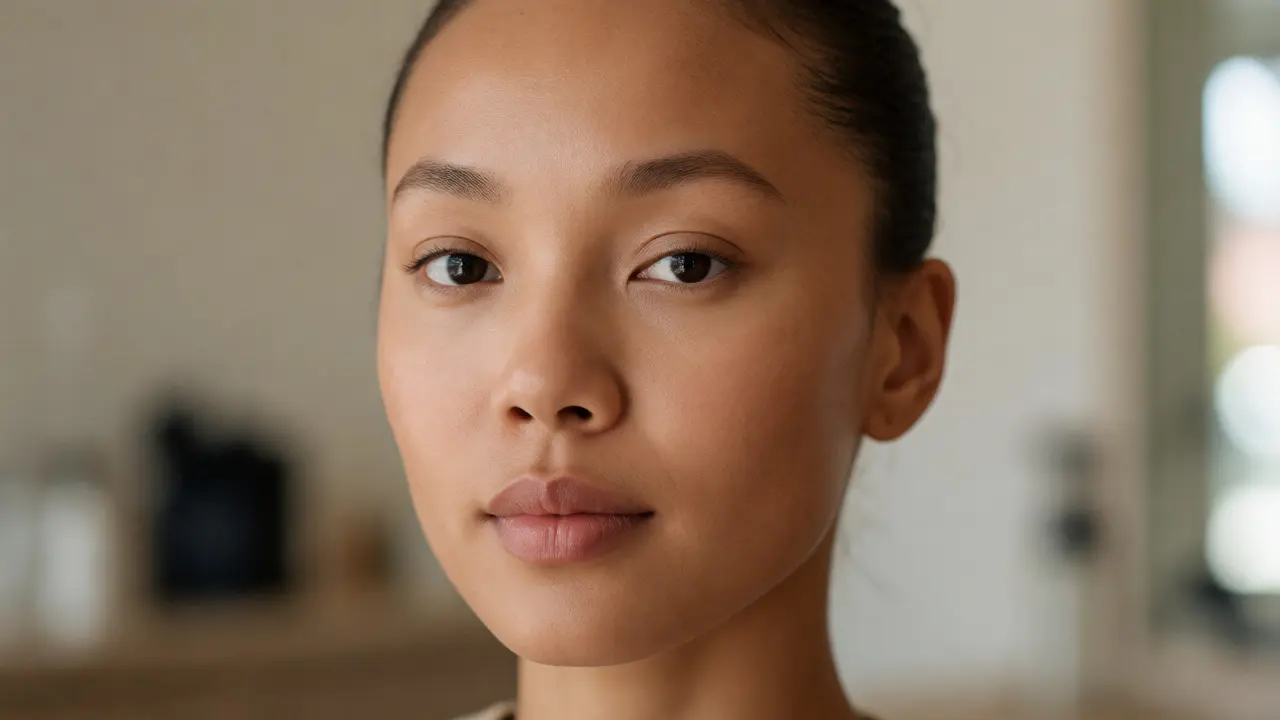
Before we talk cuts, let’s get real about what a round face actually looks like. You don’t need a protractor to figure this out. Stand in front of a mirror, pull your hair back, and measure two things: the width of your forehead and the width of your cheekbones. If those numbers are close, and your jawline is soft rather than angular, you’re likely working with a round face shape. The defining feature here is the lack of sharp corners. Your face is essentially a circle.
Why does this matter for haircuts? Because hair creates shadows and lines. A horizontal line (like a straight bang) emphasizes width. A vertical line (like long side-swept layers) emphasizes length. When stylists say "don't wear short hair," they usually mean "don't wear hair that adds volume on the sides while flattening the top." That combination widens the silhouette. But if you add height on top and keep the sides sleek, you change the entire perception of your proportions.
Short Haircuts That Actually Work
Not all short hair is created equal. Some cuts are traps for round faces, while others are magic tricks. Let’s break down the ones that deliver results.
The Long Bob (Lob)a hairstyle that falls between the chin and shoulders is arguably the safest bet. Why? Because it sits below the chin. This elongates the neck and draws the eye downward. If you pair a lob with deep side parts, you create an asymmetrical line that breaks up the symmetry of a round face. Symmetry tends to emphasize roundness; asymmetry disrupts it.
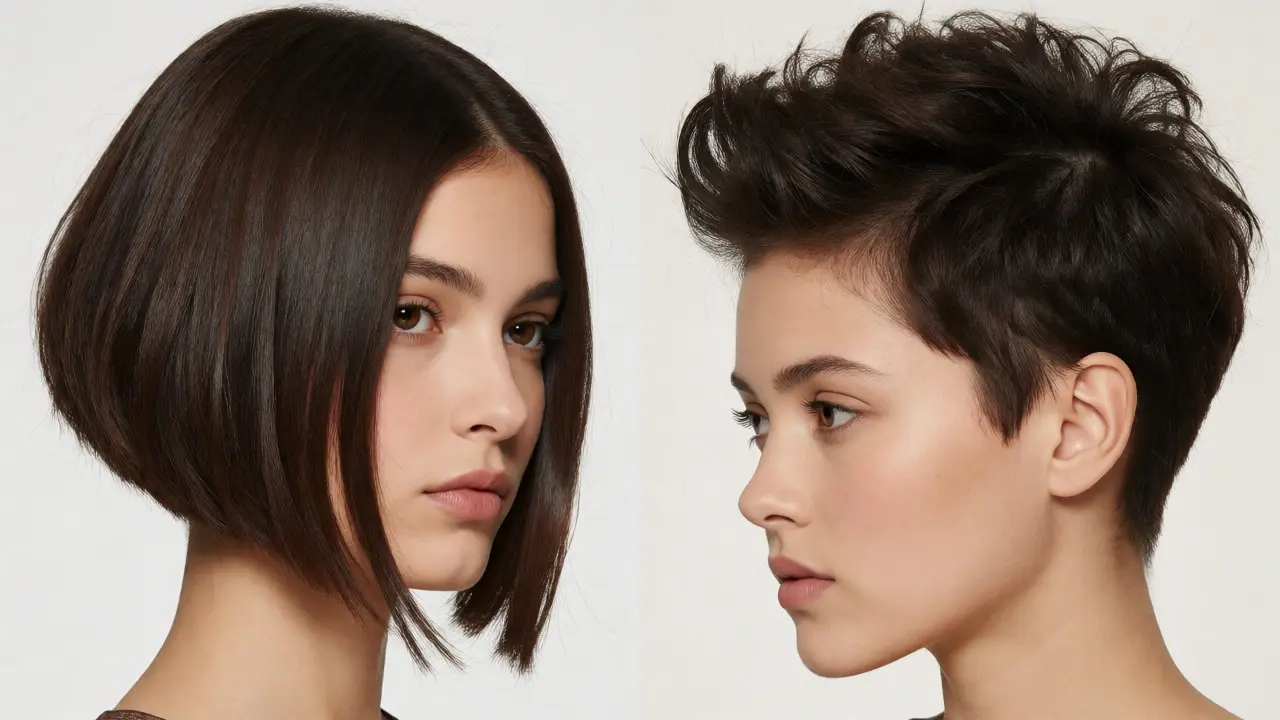
If you want something shorter, consider the A-Line Boba bob cut where the back is shorter than the front. This cut is angled. The back is cropped tight, and the front pieces hang longer near the collarbone. Those longer front pieces act as curtains, framing the face and cutting off the visual width of the cheeks. It’s architectural. It gives structure to a soft face.
What about the pixie? Yes, you can wear it. But skip the bowl-cut version. Go for a textured pixie with volume on top. Think Michelle Williams or Anne Hathaway. They have rounder features, but their hair has height. By lifting the roots at the crown, you stretch the face vertically. Keep the sides tapered or tucked behind the ears to remove bulk from the widest part of your head.
Cuts to Avoid (The Trap List)
You know that feeling when you see a celebrity with a specific haircut and think, "I want that"? Be careful. Just because it works on them doesn’t mean it works on your bone structure. For round faces, certain styles amplify the width you’re trying to minimize.
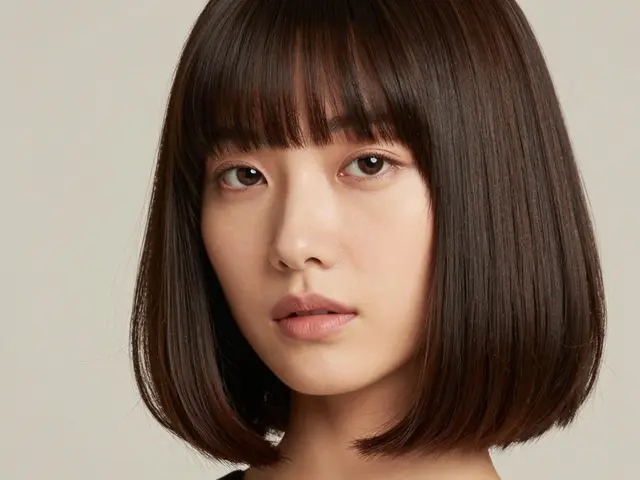
- Blunt Bobs at Chin Length: This is the number one offender. A straight line ending right at the jaw highlights the widest part of your face. It acts like a bracket, boxing in your cheeks.
- Straight-Across Bangs: Unless you have a very small forehead, heavy bangs cut the face horizontally. This makes the lower half of your face look heavier and rounder. If you love bangs, opt for curtain bangs or wispy fringe that hits the eyebrows lightly.
- Voluminous Curls on the Sides: Big, bouncy curls starting at the ear level add immediate width. If you have curly hair, keep the volume high on the head or low at the ends, not in the middle.
The Role of Texture and Volume
Texture is your best friend. Straight, flat hair clinging to a round face can sometimes emphasize the roundness more than messy, textured hair. Why? Because texture creates irregular lines. Irregular lines distract from the circular outline of the face.
If your hair is naturally straight, use a texturizing spray or sea salt mist. Scrunch it. Mess it up. The goal is to avoid a helmet-like appearance. If your hair is wavy or curly, embrace it, but control the placement. Ask your stylist to remove weight from the sides so the hair doesn't puff out. You want the volume to go up, not out.
| Style | Best Feature | Risk Factor | Styling Tip |
|---|---|---|---|
| Textured Pixie | Adds height, modern look | Can look boyish if too flat | Use pomade to lift roots |
| A-Line Bob | Elongates neck, frames face | Requires regular trims | Blow-dry forward for angle |
| Shag Cut | Adds movement, hides jaw | Can look messy if overgrown | Diffuse for natural waves |
How to Style for Maximum Elongation
Getting the cut is only half the battle. How you style it determines whether it flatters or fights your face shape. Here is a simple routine to ensure your short hair works for you.
Start with the part. Never center-part a round face with short hair. Center parts divide the face into two equal halves, reinforcing symmetry and width. Instead, go for a deep side part. This throws off the balance and creates a diagonal line across your forehead, which visually slims the face.
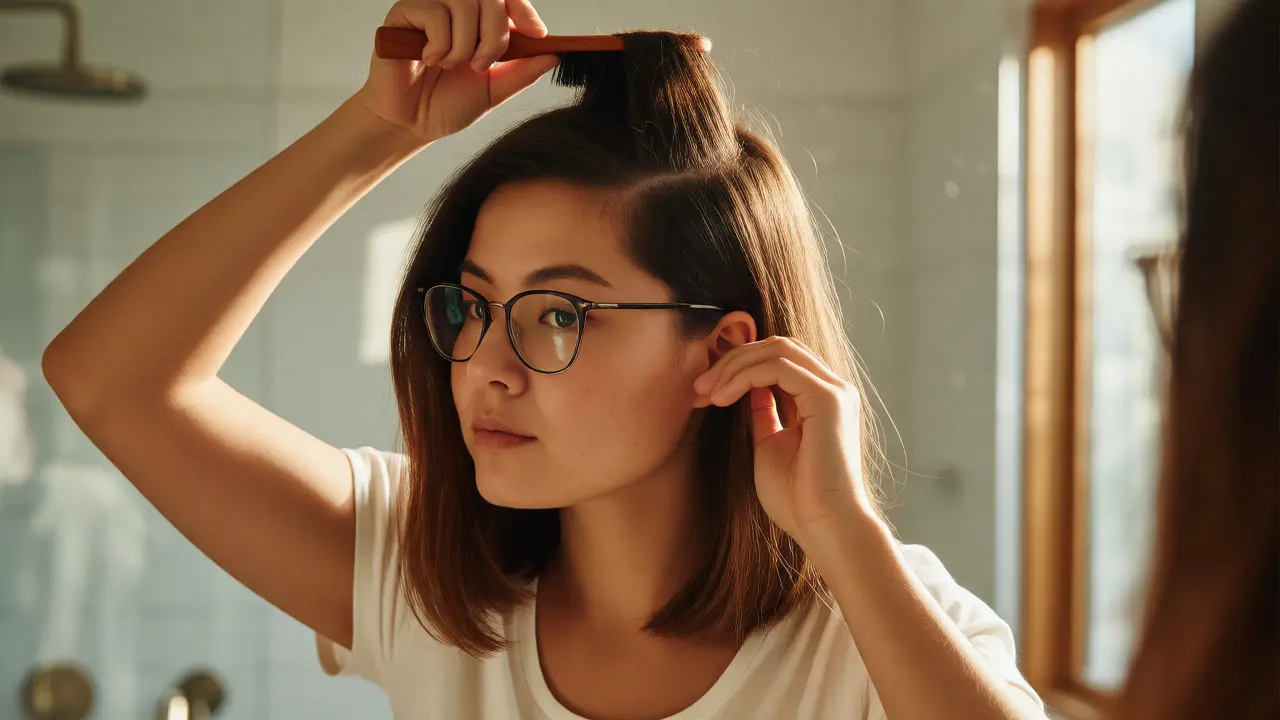
Next, focus on the crown. Use a round brush when blow-drying. Lift the hair at the roots at the top of your head. You want that peak. Even an inch of extra height changes the ratio of your face. If you air dry, try sleeping with your hair loosely clipped up on top of your head to encourage volume there.
Finally, manage the sides. Tuck one side behind your ear. Leave the other side hanging loose to frame the cheek. This asymmetry is powerful. It breaks the circle. If you tuck both sides, you expose the full width of your face, which can feel exposing if you aren't used to it. Start with one side tucked and see how it feels.
Confidence is the Best Accessory
Here’s the thing nobody tells you: rules are suggestions, not laws. There are women with round faces who rock blunt bobs and look stunning because they own the look. There are women with square jaws who hate angular cuts. Beauty is subjective.
However, understanding these guidelines saves you money and heartache. When you walk into a salon, bring photos. But don’t just bring pictures of celebrities with different face shapes. Bring pictures of women with similar facial structures to yours who have short hair. Point to the elements you like-the length, the texture, the part.
Trust your stylist, but advocate for yourself. If they suggest a chin-length blunt cut, ask why. Ask if a slight angle would be better. Most good stylists will appreciate the conversation. They want you to leave happy. Remember, short hair grows back. It’s not a life sentence. It’s an experiment. And for most round-faced folks, that experiment turns out pretty great.
Does curly hair make a round face look bigger?
Curly hair itself doesn't make a face look bigger, but the placement of the volume does. If curls start right at the scalp around the cheeks, they add width. To flatter a round face, ask for layers that remove weight from the sides, encouraging the curls to fall away from the face or stack higher on the head.
Can I have bangs with a round face and short hair?
Yes, but avoid heavy, straight-across bangs. Opt for curtain bangs, side-swept bangs, or wispy fringe. These styles break up the roundness and draw attention to the eyes rather than the width of the forehead.
Is a pixie cut okay for chubby cheeks?
Absolutely. In fact, many people find that a well-executed pixie cut minimizes the appearance of chubby cheeks by drawing the eye upward toward the eyes and lips. Choose a textured pixie with volume on top and keep the sides tapered to reduce bulk.
How often should I trim my short hair if I have a round face?
Short hair requires more maintenance than long hair. For styles like bobs and pixies, aim for a trim every 6 to 8 weeks. This keeps the shape defined. If the shape gets fuzzy, especially around the neckline or cheeks, it can lose its flattering effect and start to widen the face again.
Do glasses help with round faces and short hair?
Yes, glasses can be a great tool. Angular frames (square or rectangular) contrast nicely with a round face, adding definition. Since short hair exposes the face, glasses become a prominent accessory. Choose bold frames to add structure and interest to your overall look.