
You’ve probably heard the horror stories. Someone dyes their hair blonde, and suddenly their straight locks turn frizzy, or their tight curls loosen into waves. It feels like magic-or maybe a curse. But here is the hard truth: hair dye does not rewrite your DNA. Your follicle shape stays exactly the same. However, the chemicals used to change your color absolutely wreck the structural integrity of the hair shaft, creating a *perception* of texture change that can feel permanent.
If you are sitting in a salon chair wondering if going platinum will kill your bounce, or if you’re at home with a box of brown dye worried about dryness, you need to understand what is actually happening under the cuticle. This isn’t just about looking different; it’s about how your hair behaves, holds moisture, and reacts to styling.
The Biology: Why Your Follicle Doesn't Care About Color
To understand why dye changes how your hair feels, we first have to look at where texture comes from. Your natural hair texture-whether it is pin-straight, wavy, curly, or coily-is determined by two things: the shape of your hair follicle and the distribution of keratin inside the cortex.
If your follicle is round, you get straight hair. If it is oval, you get waves. If it is flat or kidney-shaped, you get curls. These shapes are genetic blueprints set before you were born. When you apply permanent hair dye, the chemicals penetrate the outer layer of the hair strand (the cuticle) and enter the middle layer (the cortex). They do not reach the root deep enough to alter the follicle’s shape.
This means dyeing your hair cannot biologically convert straight hair into curly hair, nor can it permanently straighten curls. Any claim that color alone changes your genetic texture blueprint is scientifically false. So, if people report their curls loosening after coloring, something else is going on. That "something" is structural damage disguised as a texture shift.
What Chemicals Actually Do to the Hair Shaft
Modern hair coloring, especially permanent oxidative color and bleaching, is aggressive chemistry. To deposit new pigment or remove existing melanin, the dye must force its way into the hair shaft. It does this by using alkaline agents, typically ammonia or ethanolamine, to lift the hair cuticle.
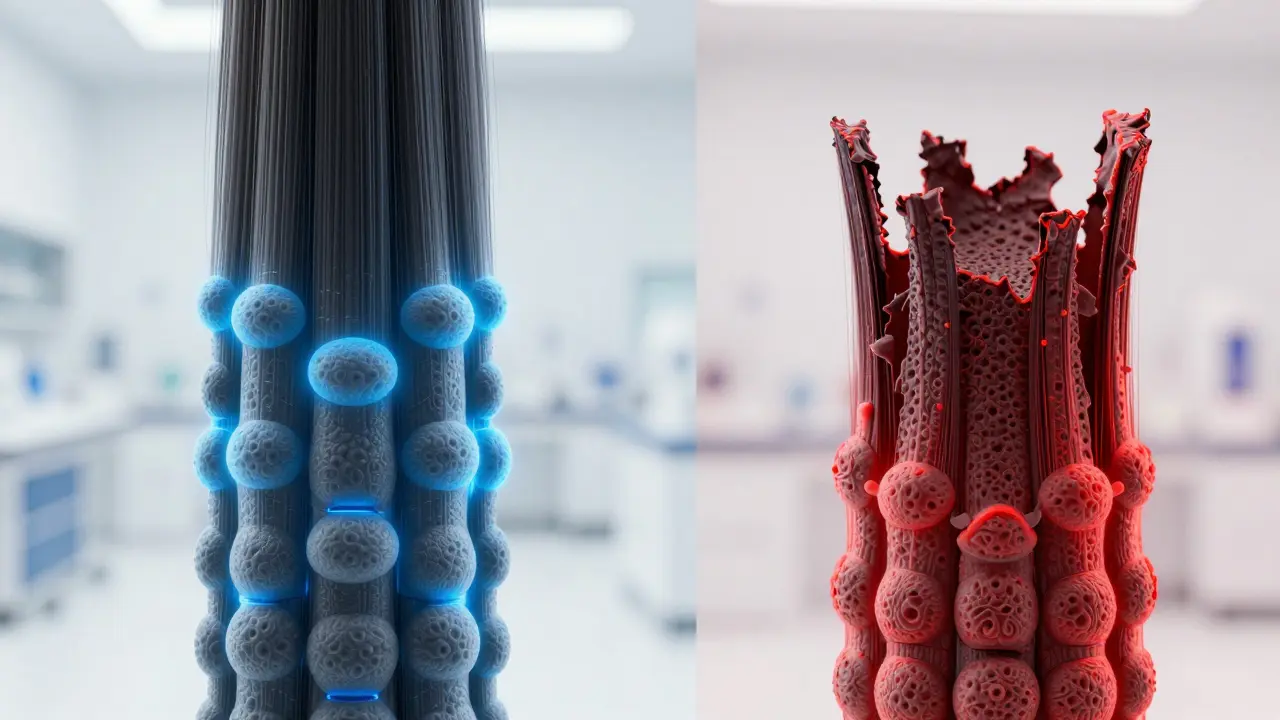
Think of the cuticle like the shingles on a roof. In healthy, virgin hair, these shingles lay flat and tight, protecting the inner layers. When you apply dye, those shingles are pried open. Once inside, oxidizers like hydrogen peroxide break down the natural pigment molecules. For lightening, they bleach them out entirely. For darkening, they build new artificial pigment molecules.
The problem is that opening the cuticle is traumatic for the hair fiber. Even when the process ends and the pH is neutralized, the cuticle rarely seals back up perfectly smooth. It becomes raised, jagged, and porous. This microscopic roughness is what you feel when you run your fingers through dyed hair. It creates friction between strands, leading to tangles, frizz, and a coarse sensation that mimics a change in texture.
| Property | Virgin (Uncolored) Hair | Chemically Colored Hair |
|---|---|---|
| Porosity | Low to Medium; absorbs water slowly | High; absorbs and loses water rapidly |
| Cuticle State | Smooth, tightly closed scales | Lifted, uneven, potentially missing scales |
| Elasticity | High; stretches and returns to shape | Reduced; brittle, snaps easily when stretched |
| Moisture Retention | Strong barrier against evaporation | Weak barrier; prone to rapid dehydration |
| Feel | Silky, soft, uniform | Rough, straw-like, voluminous |
Porosity: The Main Driver of Perceived Texture Change
If there is one metric that defines post-dye texture, it is hair porosity. Porosity measures how well your hair absorbs and retains moisture. When you dye your hair, you increase its porosity significantly.
Highly porous hair acts like a sponge. It soaks up water quickly during washing but also releases it just as fast. This leads to a paradoxical state: your hair might feel heavy and wet immediately after showering, but within hours, it becomes dry, frizzy, and unmanageable. This rapid fluctuation in moisture content makes the hair strand swell and shrink repeatedly, weakening the protein structure over time.
For someone with fine, straight hair, increased porosity can actually be a blessing. The added "grip" between roughened cuticles allows the hair to hold more volume. You might notice your hair feels thicker and easier to style because the strands cling together rather than sliding apart. This is often described as gaining "body" or "texture."
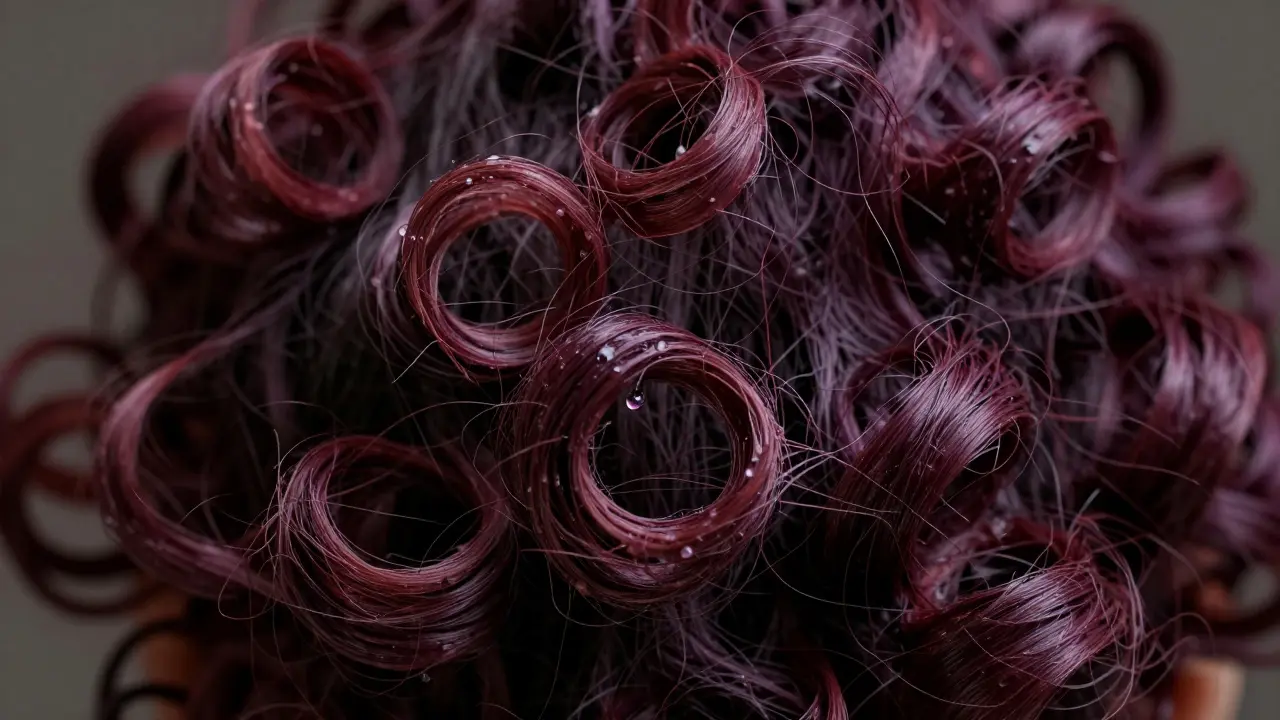
However, for curly or coily hair types, high porosity is usually a nightmare. Curly hair relies on consistent moisture to form defined clumps. When the cuticle is damaged and moisture escapes too quickly, the curl pattern loses its spring. Instead of tight spirals, you get loose, frizzy clouds. This isn’t a change in the follicle’s shape; it’s a failure of the hair shaft to maintain the tension required to hold the curl. The result looks and feels like a looser texture, but it is actually dehydration and structural weakness.
Elasticity and the "Straw-Like" Feel
Another critical factor is hair elasticity. Healthy hair has a rubber-band quality. You can stretch it slightly, and it snaps back to its original length without breaking. This elasticity is provided by the disulfide bonds and hydrogen bonds within the keratin structure.
Chemical processing attacks these bonds. While perms and relaxers intentionally break and reform disulfide bonds to change shape, hair dye causes collateral damage to these connections. As the bonds weaken, the hair loses its ability to stretch and recoil. Instead, it becomes stiff and brittle.
When you touch hair with low elasticity, it doesn’t feel soft or bouncy. It feels rigid and coarse, often compared to straw. This stiffness can make hair appear straighter because it lacks the flexibility to bend into waves or curls. Conversely, it can make curly hair look messy and undefined because the strands break before they can form a complete loop. This loss of mechanical resilience is a primary reason why colored hair often feels fundamentally different from virgin hair.
Cumulative Damage: The Long-Term Texture Shift
A single session of highlighting or root touch-up might cause minor textural shifts that good conditioning can mask. But the real danger lies in cumulative damage. Professional stylists warn that overlapping permanent color-applying dye to previously colored hair-over months or years can lead to major textural changes.
Each time you process the hair, you strip away more of the protective cuticle layer. Eventually, large sections of the cortex are exposed. At this stage, the hair is no longer just "porous"; it is compromised. The strand may become limp and lifeless, lacking any natural body. Or, it may become so fragile that it breaks off at the mid-shaft, changing the overall length and density of your hairstyle.
For clients with locs or tightly textured hair, this cumulative damage manifests as increased tangling and knotting. The raised cuticles catch on each other, making maintenance difficult and altering the neatness of the style. What was once a smooth, mature loc can become fuzzy and unruly, not because the hair type changed, but because the surface integrity was destroyed.
Differences by Hair Type
How much texture changes depends heavily on your starting point. Here is what you can expect based on your natural hair type:
- Fine/Straight Hair: Often benefits from slight texturization. The increased porosity adds volume and makes styling products grip better. However, excessive processing leads to dry, flyaway ends that look damaged rather than voluminous.
- Wavy Hair: May experience a loss of definition. Waves can turn into frizz as the hair struggles to hold its S-shape due to uneven moisture distribution along the strand.
- Curly/Coily Hair: Most vulnerable to perceived texture loss. Curls may loosen, separate, or lose shine. The risk of "shrinkage" decreasing (due to breakage rather than relaxation) is high. Deep conditioning is non-negotiable for these types.
- Locs: Increased risk of fuzziness and tangling. The structural cohesion of the loc can be weakened if the hair becomes too brittle to mat properly.
Mitigation Strategies: Protecting Your Texture
You don’t have to choose between color and healthy texture. With the right routine, you can minimize damage and keep your hair feeling close to its natural state. Here are the most effective strategies recommended by professionals:
- Use Bond-Building Treatments: Products containing ingredients like bis-aminopropyl diglycol dimaleate (often marketed as Olaplex or K18) help repair the disulfide bonds broken during coloring. Use them regularly to maintain elasticity.
- Deep Condition Weekly: High-porosity hair needs intense moisture. Use protein-rich masks to strengthen the cortex and hydrating masks to seal the cuticle. Avoid over-proteinizing, which can make hair stiff.
- Switch to Sulfate-Free Shampoos: Sulfates strip natural oils, exacerbating dryness. Gentle cleansers help retain moisture and preserve color longevity.
- Cool Water Rinses: Hot water opens the cuticle further, increasing frizz and fade. Rinse with cool water to help flatten the cuticle and lock in moisture.
- Limit Heat Styling: Chemically processed hair has lower heat tolerance. Excessive use of blow dryers and flat irons accelerates breakage and texture degradation.
- Professional Application: For complex colors or curly hair, seek a stylist experienced in textured hair. They can customize formulas to minimize damage and avoid overlapping color on already processed sections.
FAQ
Does hair dye permanently change my natural curl pattern?
No, hair dye does not change the shape of your hair follicle, which determines your natural curl pattern. However, severe damage from bleaching or repeated coloring can weaken the hair shaft, causing curls to appear looser, frizzier, or less defined due to loss of elasticity and moisture. This is a temporary or manageable condition, not a genetic change.
Why does my hair feel thicker after dyeing it?
Dyeing increases hair porosity by lifting the cuticle. This creates microscopic roughness that causes strands to grip each other more, adding volume and body. For fine hair, this can make it feel fuller and easier to style, giving the illusion of thicker texture.
Can I reverse texture damage caused by hair dye?
You cannot fully restore dead hair cells, but you can significantly improve the feel and appearance of damaged hair. Regular deep conditioning, bond-building treatments, and trimming split ends can restore moisture and elasticity. Over time, as new healthy hair grows in, the overall texture will return to normal.
Is semi-permanent dye safer for hair texture?
Yes, semi-permanent dyes generally do not contain ammonia or high-volume developers, so they sit on top of the hair shaft or penetrate minimally without forcibly opening the cuticle. This results in less damage to porosity and elasticity compared to permanent oxidative color.
How long does it take for hair texture to normalize after dyeing?
Immediate texture changes due to dryness can be mitigated within weeks with proper conditioning. However, significant structural damage takes months to resolve as new hair grows. Severely damaged sections may never fully recover and should be trimmed for best results.