Here is a fact that surprises a lot of people: Natural blond hair exists without a single drop of bleach. It’s not a myth, and it’s not just for models in shampoo commercials. If you were born with light hair, your body already did the hard work. You have low levels of melanin-the pigment that gives hair its color-specifically a type called eumelanin. Because you start with less pigment, you don’t need chemicals to remove it. You are already there.
So why does it feel like everyone is holding a bottle of peroxide? Because most people aren’t naturally blond. Or, if they are, they want a specific shade that nature didn’t quite provide. Maybe you want platinum instead of honey, or ash instead of gold. That’s where the confusion starts. People think "being blond" requires bleach. In reality, bleach is just a tool. It’s a way to strip pigment when your starting point is too dark, or when you want to change the tone dramatically. If you’re sitting there wondering if you’re doomed to fried ends just to keep your color, take a breath. You might not need any bleach at all.
What Actually Makes Hair Blond?
To understand why bleach isn’t mandatory, you have to look at biology. Hair color comes from two types of melanin: eumelanin (brown/black) and pheomelanin (red/yellow). Natural blond hair has very little eumelanin and mostly pheomelanin. Think of it like a canvas that’s already white or cream-colored. If you want to paint on top of that, you can. But you don’t need to scrub the canvas clean first.
This distinction matters because many people confuse "lightening" with "toning." Lightening removes pigment. Toning adjusts the hue. If you have natural dark blond hair and you hate the yellow brassiness, you don’t need bleach. You need a toner. A toner is a demi-permanent color that neutralizes unwanted tones. It doesn’t lift the hair level; it just changes the reflection. This is a huge relief for anyone worried about damage, because toners are far gentler than oxidative bleach.
When Do You Actually Need Bleach?
Bleach becomes necessary when you want to go lighter than your natural base allows, or when you’re trying to cover up old dye. Here is the golden rule of hair color: Color does not lift color. If you dyed your hair brown five years ago and now want to be platinum, putting a light blond dye over that brown will do nothing but turn your hair orange or muddy. You have to remove the artificial pigment first. That’s where bleach comes in.
But even then, it depends on your goal. Are you going for a subtle highlight? Or an all-over platinum transformation? If you have virgin hair (hair that has never been dyed) and you want to go from medium brown to light blond, you might get away with a "high-lift" permanent color. These formulas use higher volumes of developer to lift the cuticle and deposit color simultaneously. They can lift virgin hair up to four or five levels. That’s enough for many people to reach a nice golden or beige blond without touching actual powder bleach.
| Your Starting Point | Your Goal | Best Method | Damage Level |
|---|---|---|---|
| Naturally Blond | Same shade, different tone (e.g., ash) | Toner or Gloss | Low |
| Naturally Dark Blond/Light Brown | Lighter Blond (1-3 levels) | High-Lift Permanent Color | Moderate |
| Dark Brown/Black (Virgin) | Platinum/Ice Blond | Bleach + Toner | High |
| Previously Dyed Brown | Blond | Color Remover or Bleach | Very High |
The Damage Myth: Is Bleach Always Bad?
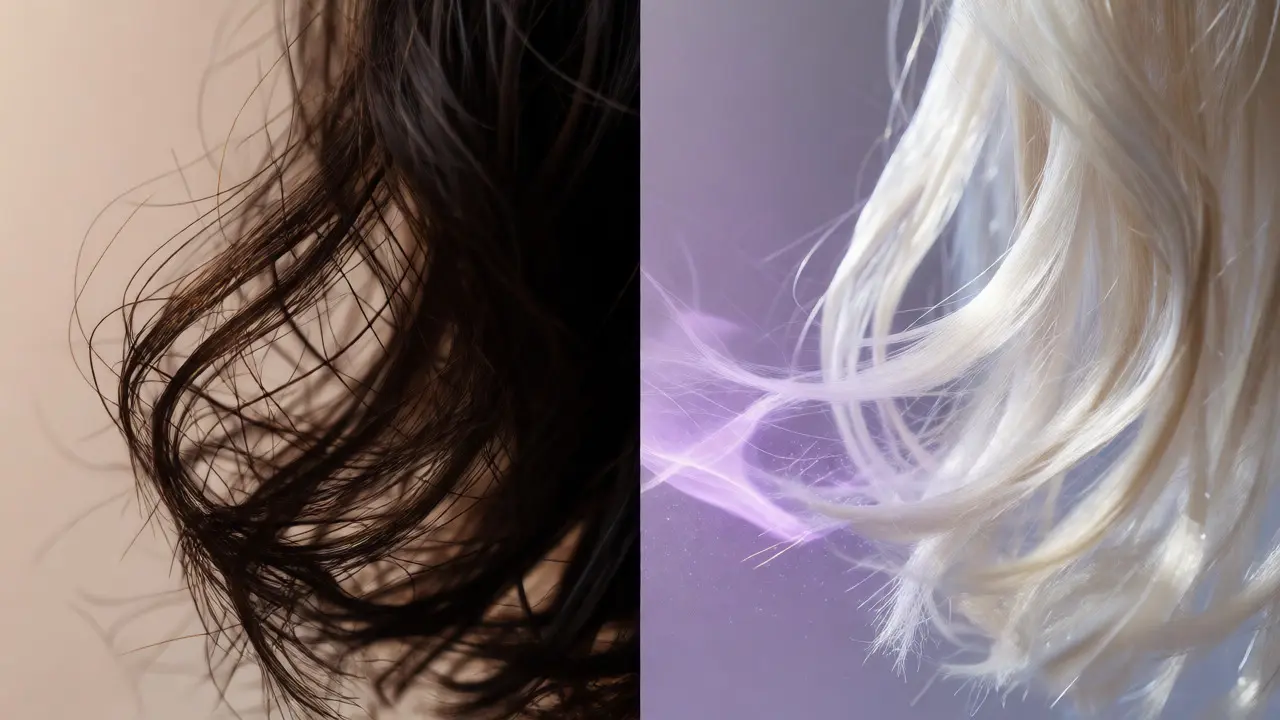
Let’s be real: bleach hurts hair. It opens the cuticle and breaks down disulfide bonds in the keratin protein structure. A 2024 study confirmed that this process creates microscopic holes in the hair shaft, leading to dryness and breakage. But here is the nuance: unnecessary bleach is the enemy. Necessary bleach, done correctly, is manageable.
If you are naturally blond and you bleach your hair just to make it slightly lighter, you are damaging healthy hair for minimal gain. You are stripping out the few remaining melanin granules and weakening the structure. However, if you have coarse, dark hair and you want platinum, you simply cannot get there without breaking those bonds. The key is knowing when to stop.
Dermatologists often advise staying within three shades of your natural color to minimize damage. Going beyond that requires higher volume developers (like 30 or 40 volume), which are more aggressive. If you have fragile hair, skipping the bleach entirely and opting for a darker, richer blond tone might save your strands. Remember, once hair is chemically altered, it never goes back to being "virgin." Conditioners help manageability, but they don’t rebuild the original protein structure.
Alternatives to Traditional Bleach
You don’t always have to choose between "natural" and "bleached." There is a middle ground. High-lift colors are one option. Brands like Wella offer special blond series that claim to lift and tone in one step. These work best on virgin hair. If you have previously colored lengths, these formulas usually fail because they can’t penetrate the artificial pigment layer effectively.
Another option is using bond builders during the service. Products like Olaplex or K18 are designed to protect or repair disulfide bonds during chemical processing. They don’t eliminate the need for bleach if you need heavy lifting, but they reduce the structural damage. Think of them as a safety net, not a substitute for good technique.
Also, consider partial services. Instead of bleaching every strand, try balayage or face-framing highlights. This limits the amount of hair exposed to chemicals. Your roots stay natural (or close to it), reducing maintenance and overall damage. It’s a smarter way to get the blond look without frying your entire head.
Maintenance: The Hidden Cost of Being Blond
If you decide to go blond, whether naturally enhanced or fully bleached, maintenance changes. Natural blond hair grows in with its own pigment. If you bleach your roots, you’ll see a distinct line of demarcation as your natural color grows out. This means regular touch-ups every 6-8 weeks. If you skip this, the contrast can look harsh, especially if your natural color is much darker than your bleached lengths.
Blond hair also needs special care. It’s more porous, so it absorbs moisture quickly but loses it fast. Use purple shampoos sparingly-they can stain hair if left on too long. And please, protect it from UV rays and chlorine. Sunlight oxidizes the pigment further, turning blond hair brassy or greenish in pools. A leave-in conditioner with UV protection is non-negotiable if you live somewhere sunny like Houston.

How to Decide: A Quick Checklist
- Is your hair virgin? If yes, you have more options. High-lift color might work.
- Have you dyed it before? If yes, you likely need a color remover or bleach to lift artificial pigment.
- How light do you want to go? 1-2 levels lighter? Try gloss or high-lift. 4+ levels? You need bleach.
- Is your hair damaged? If it feels gummy or stretches too much, skip the bleach. Go darker or stick to toners.
- Are you willing to maintain it? Bleached blond requires root touch-ups and intensive conditioning. Natural blond with a gloss is lower maintenance.
Frequently Asked Questions
Can I go from black to blond without bleach?
No, not realistically. Black hair has a high concentration of eumelanin. To reach blond, you must remove almost all of that pigment. High-lift dyes cannot lift dark hair enough. You need a bleaching agent to oxidize and dissolve the melanin granules. Trying to force it with just dye usually results in uneven, orange patches.
Does toner count as bleach?
No. Toner is a semi-permanent or demi-permanent color that deposits pigment to neutralize unwanted tones (like yellow or orange). It does not contain strong lightening agents and does not significantly lift the hair level. It is much gentler than bleach and is safe for most hair types.
Why does my natural blond hair turn yellow?
Natural blond hair contains pheomelanin, which has warm, yellow/red undertones. When exposed to sunlight, heat styling, or pollution, the cool tones fade faster, leaving the warm pigments visible. This is normal. Using a violet-based shampoo once a week can help neutralize the yellow and keep the color cooler.
Can I bleach my hair if I have gray hair?
Yes, but it requires caution. Gray hair lacks melanin, so it processes differently than pigmented hair. It can become resistant to color uptake or overly porous. Often, a stylist will pre-pigment the gray areas or use a lower volume developer to ensure even absorption and prevent the gray sections from looking chalky or overly bright.
How long does it take to fix over-bleached hair?
You can’t instantly "fix" the structure, but you can improve appearance immediately with bond-building treatments and deep conditioning masks. For true recovery, you need to grow out the damaged hair. Depending on how fast your hair grows, this could take 6 months to a year. Regular trims help remove split ends and prevent breakage from traveling up the shaft.