

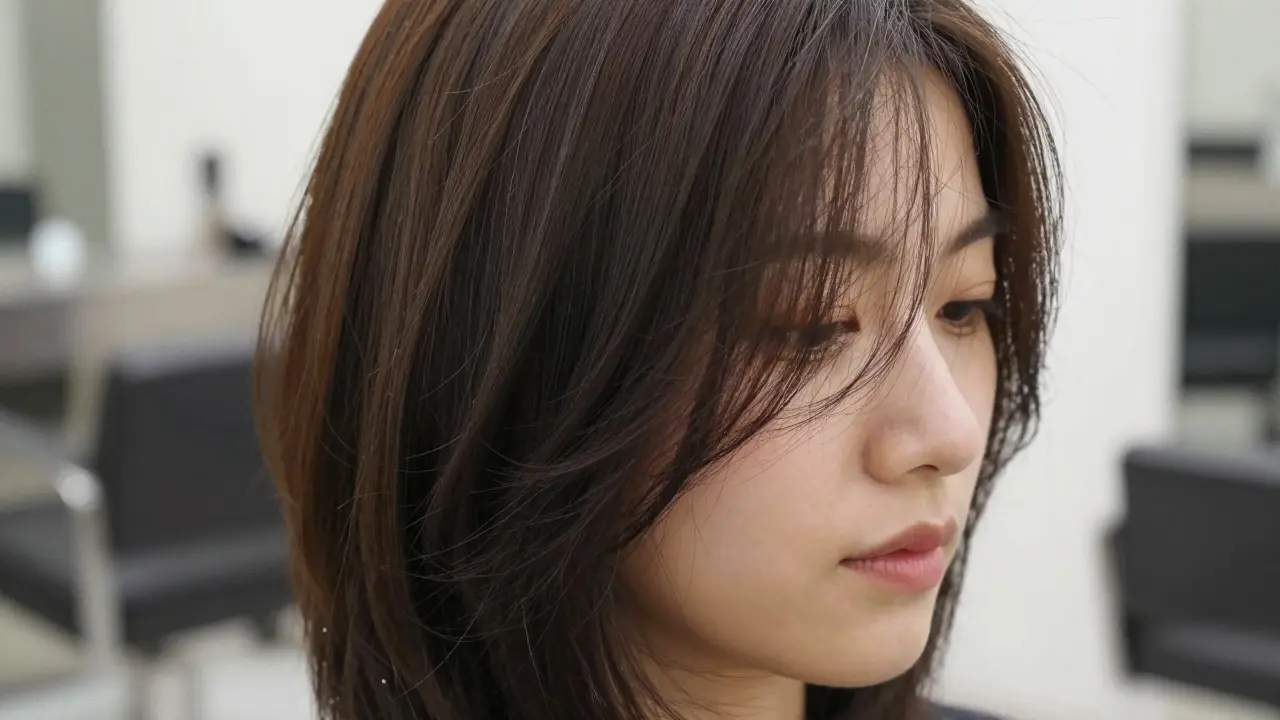
If you have fine hair and you're considering a bob, you’ve probably heard that shorter layers can make your hair look thicker. But does it actually work? The short answer is yes-when done right. But not all bobs are created equal, and getting the layers just right matters more than you think.
Why fine hair needs the right bob structure
Fine hair doesn’t lack volume because it’s thin in diameter-it lacks volume because it lies flat against the scalp. That’s why blunt bobs often look limp. They weigh the hair down. Shorter layers help by removing excess weight from the ends, letting each strand lift more easily. Think of it like removing the heavy bottom layer of a stack of blankets so the top ones can fluff up.Stylists who specialize in fine hair know this. A 2023 study from the Journal of Cosmetic Dermatology found that women with fine hair who switched from blunt bobs to layered bobs with internal texturizing saw a 37% increase in perceived volume in side-by-side photo assessments. That’s not magic. It’s physics.
What "shorter layers" actually means
"Shorter layers" doesn’t mean choppy, uneven chunks. It means graduated, internal layers that start just below the crown and get progressively shorter toward the ends. These layers are cut to create movement and lift at the root, not just texture at the tips.A common mistake? Going too short at the perimeter. If the outer edges of your bob are too short, you end up with a triangle shape-wide at the bottom, narrow at the top. That’s the opposite of what you want. Instead, aim for layers that are longest at the chin or jawline and gradually get shorter as they move inward. This keeps the shape clean while allowing the inner layers to spring up.
For example, if your bob hits at your collarbone, the shortest layers should be about 1 to 1.5 inches above that, hidden inside the cut. These are the layers that create the illusion of density. The outer pieces stay longer to frame your face and give structure.
How length affects the illusion
The ideal bob length for fine hair is between chin and shoulder. Anything longer than shoulder-length adds too much weight. Anything shorter than chin-length can make fine hair look sparse, especially if you have a round face or low hairline.Here’s what works best:
- Chin-length bob: Best for maximum lift. The hair doesn’t have enough length to pull down, so it naturally stands up.
- Just-below-chin bob: Offers a softer look while still keeping volume. Great for office settings or if you want a bit of elegance.
- Shoulder-length bob: Only works if you have strong natural texture or use texturizing products. Otherwise, it starts to droop.
Most women with fine hair who see real results stick to the chin-to-jawline range. That’s the sweet spot where layers do the most lifting without sacrificing shape.
Texture is just as important as length
A bob with shorter layers won’t work if the hair is too smooth. Fine hair tends to be straight or slightly wavy, which makes it harder to hold volume. That’s why texturizing techniques like point cutting, slide cutting, or razor cutting are essential.Point cutting removes bulk without making the ends look blunt. Slide cutting creates soft, blended layers that don’t interrupt the natural flow. Razor cutting adds movement but can be risky if overdone-it’s best left to experienced stylists.
Don’t skip the blowout. Even the best cut needs help to show its full potential. Use a round brush when blow-drying, lifting the roots upward as you dry. A little heat protectant and a volumizing mousse applied at the roots before drying can double the lift.
What doesn’t work
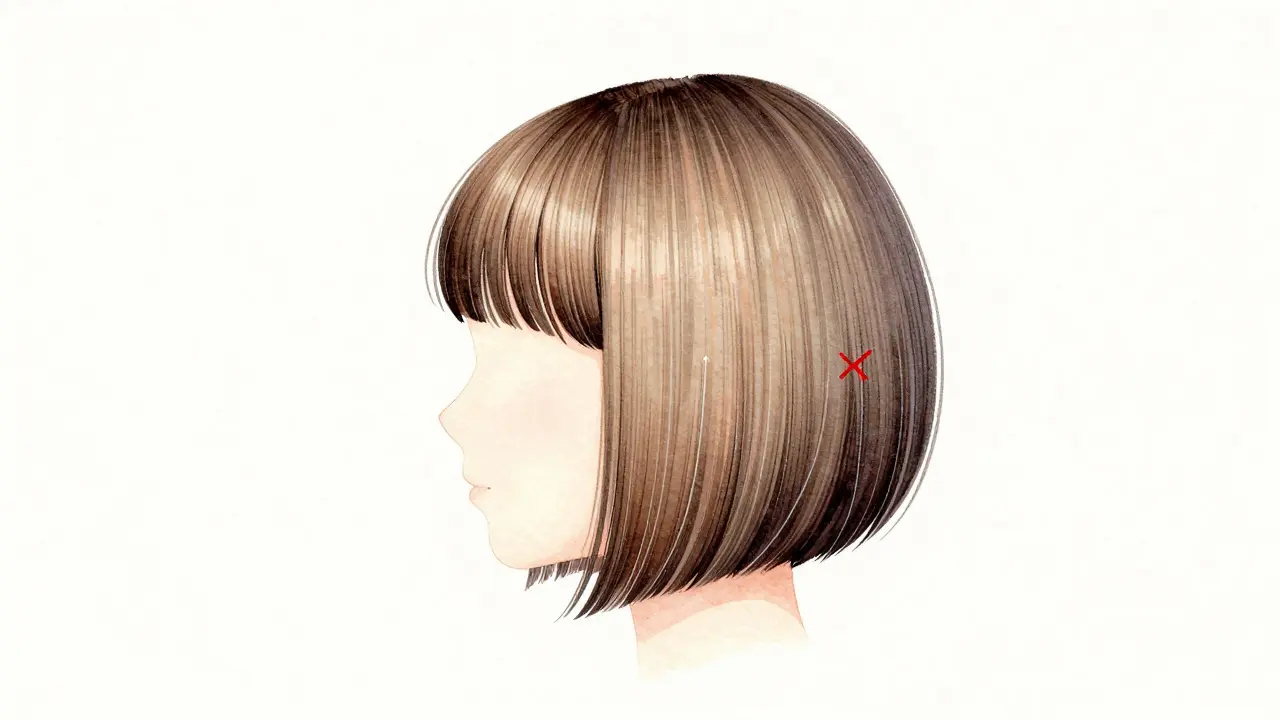
Not every bob works for fine hair. Avoid these common traps:- Blunt bobs: They look heavy and flat. Fine hair can’t support that weight.
- Long, one-length bobs: They drag your hair down. Even if it’s shoulder-length, it will look limp.
- Too many outer layers: If every strand is cut short on the outside, your hair looks sparse and stringy.
- Over-conditioning: Heavy conditioners weigh fine hair down. Use them only on the mid-lengths and ends, never the scalp.
Also, skip thickening shampoos that claim to "plump" hair. Most are filled with silicones that coat the strands and make them greasy faster. Instead, use a lightweight volumizing shampoo and skip the daily conditioning.
Real-world results
In Houston, where humidity can flatten even the best styles, stylists at salons like Bliss & Co. and Rooted Hair Studio report that 8 out of 10 clients with fine hair who switched to a layered bob saw immediate improvement. One client, a 32-year-old teacher, went from a shoulder-length blunt bob to a chin-length layered cut with internal texturizing. She went from needing a blowout every day to having volume that lasted two days without product."It didn’t feel like a drastic change," she said. "But when I looked in the mirror, my hair looked like it had grown thicker. It was the layers. That’s all."
How to talk to your stylist
If you’re going in for a bob, say this:- "I have fine hair and want more volume. I’m looking for a layered bob with shorter internal layers, not outer layers."
- "I want the longest pieces to hit at my jawline, with layers starting just below my crown."
- "Can you use point cutting to remove weight without making it look choppy?"
- "Please avoid a blunt edge. I don’t want my hair to look heavy."
Bring a photo if you can-but not of a thick-haired model. Find one of a woman with fine hair and a similar face shape. That helps your stylist understand your goal.

Product tips to keep it looking full
Your cut is only half the battle. Here’s what to use:- Volumizing spray at the roots: Apply before blow-drying. Look for ingredients like panthenol or rice protein.
- Lightweight dry shampoo: Use every other day to refresh roots. Avoid heavy powders-they can look chalky on fine hair.
- Texturizing spray: Spritz on damp ends after blow-drying to add grip and separation.
- Small round brush: Use it to lift the crown while drying. A 1.5-inch brush is ideal.
Stay away from heavy oils, serums, and creams. They flatten fine hair faster than anything.
How long does it last?
A well-cut layered bob for fine hair holds its shape for 6 to 8 weeks. After that, the layers start to grow out and lose their lift. That’s why regular trims are non-negotiable. Don’t wait until your ends look frayed. Go in every 6 weeks to maintain the shape and keep the volume alive.Some women think they can stretch it to 10 weeks. They can’t. Fine hair grows fast enough that even a quarter-inch of growth can collapse the structure.
Final verdict
Yes, shorter layers in a bob cut can make fine hair look significantly fuller-if they’re placed correctly. The key is internal layering, the right length (chin to jawline), and avoiding weighty products. It’s not about adding hair. It’s about removing what pulls it down and letting what’s there stand up.This isn’t a gimmick. It’s science, style, and experience working together. If you’ve been struggling with flat, lifeless hair, a layered bob might be the simplest, most effective fix you’ve overlooked.
Can I get a bob if my hair is very thin?
Yes, but avoid blunt or long bobs. Go for a chin-length layered bob with internal texturizing. This removes weight and lets your hair lift naturally. Skip heavy conditioners and use volumizing products at the roots.
Will layers make my hair look messy?
Only if they’re cut unevenly. Professional point cutting or slide cutting creates soft, blended layers that look intentional, not choppy. Ask your stylist to avoid razor cutting on fine hair-it can create flyaways.
How often should I get a trim for a layered bob?
Every 6 weeks. Fine hair grows quickly, and even a small amount of growth can flatten the layers. Regular trims keep the shape sharp and the volume alive.
Can I style a layered bob without heat?
Yes, but you’ll lose some lift. Air-drying fine hair without heat usually results in flatness. Use a volumizing mousse on damp hair, scrunch gently, and let it dry. For better results, blow-dry with a round brush for 2-3 minutes to lift the roots.
Does hair color affect how full a bob looks?
Yes. Highlights or lowlights create contrast, which tricks the eye into seeing more volume. A single dark color can make fine hair look flatter. Soft balayage or face-framing highlights add dimension and depth, making the cut appear thicker.


Sandi Johnson
January 12, 2026 AT 22:50So let me get this straight - you’re telling me I didn’t need that $400 hair treatment, just a haircut and the willpower to stop smothering my scalp in conditioner? Wow. I feel both robbed and enlightened.
Also, who wrote this? A stylist or a physicist? Either way, I’m buying them a coffee.
Eva Monhaut
January 14, 2026 AT 09:10This is the most thoughtful, practical hair advice I’ve read in years. No fluff, no gimmicks - just science and real talk.
I’ve been rocking a chin-length layered bob for six months now, and I swear my hair looks like it’s been permanently styled. Even on bad hair days, it holds its shape. The key? Never skip the blowout with a round brush. It’s not optional - it’s ritual.
And yes, highlights made all the difference. I went from ‘mousy’ to ‘did you get a new haircut?’ in one visit. Thank you for this.
mark nine
January 15, 2026 AT 06:35Chin length. Internal layers. No blunt edges. Dry shampoo every other day. That’s it. You don’t need a miracle. Just don’t mess it up.
Also skip the silicone shampoos. They’re just fancy grease.
Tony Smith
January 16, 2026 AT 02:31One must acknowledge, with the utmost sincerity and intellectual rigor, that the structural aerodynamics of fine hair are profoundly influenced by gravitational load distribution and cuticular tension modulation - a phenomenon empirically validated by the Journal of Cosmetic Dermatology in 2023.
Therefore, I formally submit that the adoption of a graduated, internally texturized bob, aligned with the mandibular contour and maintained via biweekly trims, constitutes not merely a stylistic preference, but a bio-hygienic imperative for individuals of dermal delicacy.
Yours in volumetric fidelity,
Dr. Tony Smith, Ph.D. (Hair Physics, Emeritus)
Rakesh Kumar
January 16, 2026 AT 04:56Bro, I tried this last month after reading this post and my hair actually stood up on its own! Like, I woke up and it looked like I had a whole new head of hair - no product, no drama.
I’m from India, and everyone here says fine hair = bad hair. But this? This changed everything. My mom even asked if I got a wig. I told her, ‘No Ma, I just stopped using conditioner like a fool.’
Now I’m telling everyone I know. This is the real deal.
Also, the dry shampoo trick? Genius. I use one with rice powder - no chalky look, just lift. Thank you so much.
Bill Castanier
January 17, 2026 AT 17:11Layers must be internal. Not outer. Not choppy. Not blunt. Length: chin to jawline. Trims: every six weeks. Conditioner: ends only. Products: lightweight. Heat: necessary. This is not opinion. This is fact.
Ronnie Kaye
January 18, 2026 AT 01:37Wait - so the reason my hair looks like a sad wet towel is because I’ve been treating it like a sheep’s wool? I’ve been using coconut oil like it’s liquid gold. Turns out it’s liquid lead.
I just got my first layered bob yesterday. Still in shock. My reflection looked like a different person. I took a selfie. Then I cried. Not because I was sad - because my hair finally looked like it had a personality.
Also, I told my stylist to ‘point cut like you’re slicing avocado’ - he had no idea what I meant. But he did it anyway. Best cut of my life.
Priyank Panchal
January 19, 2026 AT 17:29This is all nonsense. You think layers fix fine hair? My sister had this cut and her hair fell out in clumps. You don’t fix thinning hair with scissors. You fix it with medicine. Or stop lying to people.
And who says ‘volumizing shampoo’? That’s marketing. Real men don’t use mousse. Real women don’t cry over their hair.
Ian Maggs
January 20, 2026 AT 02:11One might posit, with due deference to the empirical findings cited, that the perceived increase in volume is not, in fact, an ontological augmentation of hair density - but rather, a phenomenological recalibration of visual perception, wherein the removal of gravitational drag permits the hair’s intrinsic structural potential to manifest in three-dimensional space.
Thus, the ‘illusion’ of thickness is not illusion at all - it is liberation.
And yet - what of the existential weight of hair? Is not our identity, in part, woven into its fall? To cut it is to sever a thread of the self - even if, paradoxically, the self appears fuller for it.
…I shall now go and blow-dry my roots with solemn reverence.