

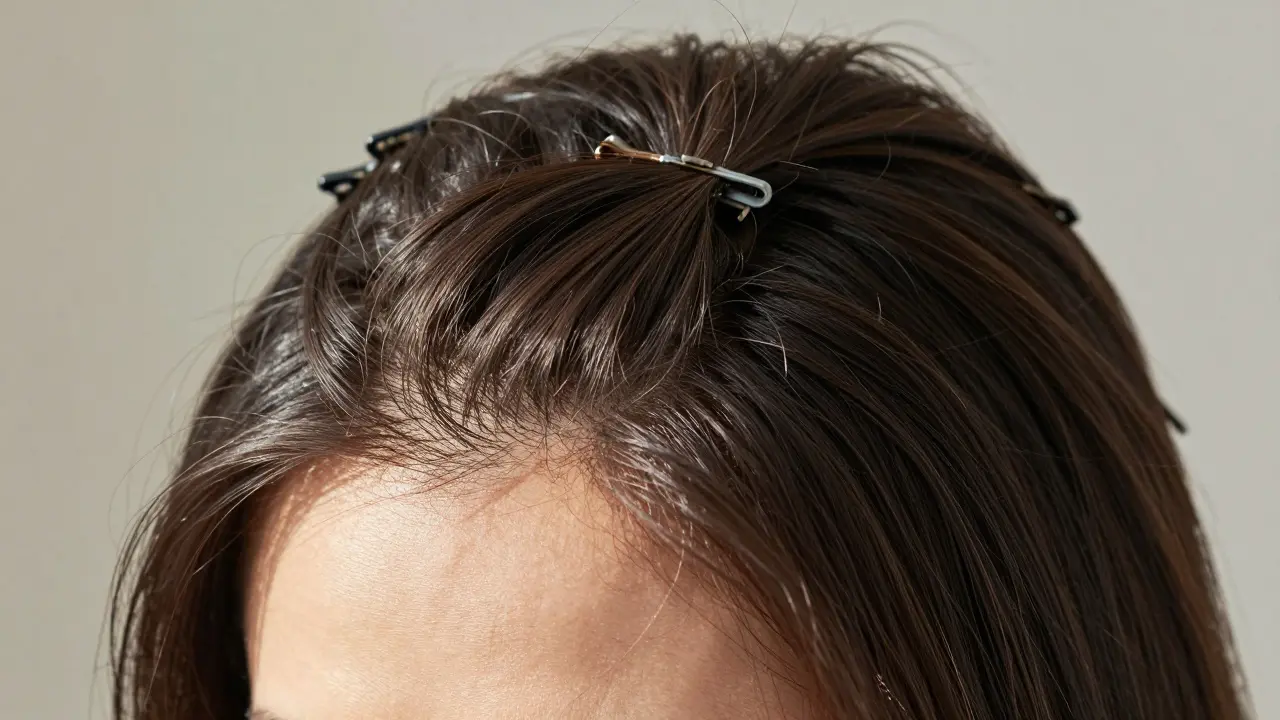
If you’re staring at your reflection and noticing more scalp showing through on top, you’re not alone. Thinning hair at the crown is one of the most common concerns people face-especially as they age, after hormonal shifts, or following stress or medical treatments. Many wonder: can hair extensions provide coverage on top? The short answer is yes-but not all extensions work the same, and getting it right takes more than just picking the longest, thickest pair off the shelf.
Why Top Coverage Matters More Than You Think
The crown area is the most visible part of your hair when you’re standing, sitting, or looking in the mirror. Even a small patch of thinning here can make your whole head look sparse. Unlike the sides or back, where hair naturally falls and hides gaps, the crown is exposed. When you tie your hair up, part it down the middle, or wear it loose, that thinning area becomes impossible to ignore. That’s why people turn to extensions-not just for length or volume, but for real, visual coverage. The goal isn’t to look like you’re wearing a wig. It’s to blend in so seamlessly that no one notices the difference. And that’s possible, if you choose the right type, placement, and installation method.Types of Hair Extensions That Actually Work for the Crown
Not all extensions are built for top coverage. Some are designed for lengthening, others for adding body to the ends. For thinning at the crown, you need something that adds density right where it’s needed.- Clip-in extensions with micro-clips are the most popular for beginners. Look for sets with small, flat clips (under 1 inch wide) that grip close to the scalp. Avoid bulky clips-they dig in, slip out, or create visible lumps. Brands like Kinky Curly and Bellami offer crown-specific sets with 4-6 pieces designed to layer over thin areas.
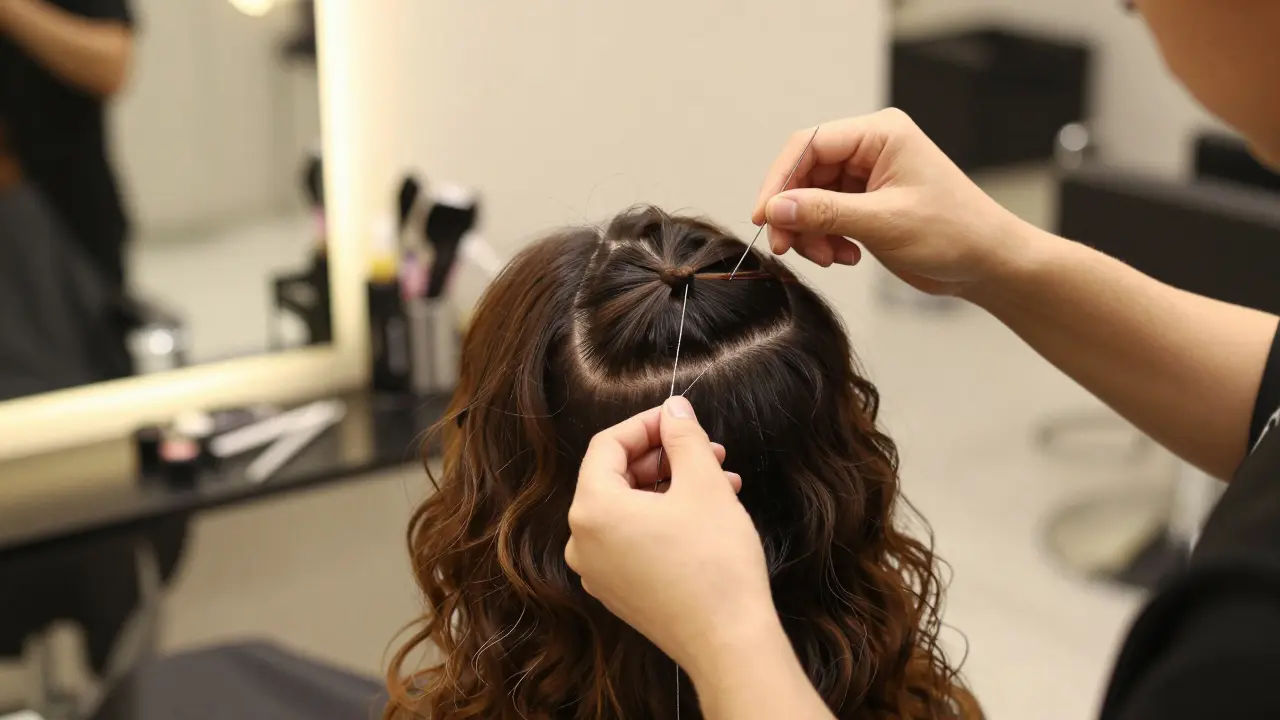
- Micro-bead or micro-link extensions are bonded directly to your natural hair with tiny metal rings. These sit flush against the scalp and last 6-8 weeks. They’re ideal if you have enough natural hair to grip (at least 2-3 inches), and they move naturally with your hair. The key? Installation by a professional who knows how to place them in a staggered pattern to avoid pressure points.
- Tape-in extensions lay flat and are great for blending. They’re applied in thin wefts, usually 1-2 inches wide, and placed just above the crown. The adhesive holds for 6-8 weeks, and when applied correctly, they’re undetectable. Avoid tape-ins if your scalp is sensitive or if you have very fine hair-they can pull and cause breakage.
- Hand-tied wefts are the gold standard for natural coverage. Each strand is sewn by hand onto a thin, breathable mesh that lies flat against the scalp. They’re lightweight, durable, and can be customized to match your hairline. They’re more expensive and require professional installation, but they’re the only option that truly mimics natural growth.
For most people with thinning at the crown, a combination of 3-5 clip-ins or a single hand-tied weft placed directly over the thin area gives the best balance of coverage, comfort, and realism.
How to Choose the Right Color and Texture
A mismatched color or texture screams fake. Even the best extensions look obvious if they don’t blend.- Color matching: Don’t just match the ends of your hair. Match the roots. Your natural hair at the crown is often darker or lighter than the rest. Take a strand from your scalp and compare it under natural light. Many salons offer color-matching services. If you’re buying online, order 2-3 shades and test them against your scalp in daylight.
- Texture matching: If your hair is wavy, don’t buy straight extensions. If it’s coarse, avoid silky, fine strands. The goal is to match the curl pattern, thickness, and porosity. Human hair extensions are the only option that can be heat-styled to match your natural texture. Synthetic hair can’t be curled or straightened safely, and it often has a shiny, plastic look.
- Layering: Don’t put all the extensions in one flat layer. Stagger them in a semi-circle around the crown. This mimics how natural hair grows in different directions and prevents a “patch” look.
Realistic Expectations: What Extensions Can and Can’t Do
Hair extensions won’t fix the root cause of thinning. They’re a cosmetic solution, not a medical one. If your hair loss is due to genetics, thyroid issues, or medication, extensions won’t stop it. But they can give you confidence while you work on treatment. Also, don’t expect miracles. Extensions add volume and coverage-but they don’t magically turn a 30% thinning area into full, thick hair. A 4-piece clip-in set might cover 60-70% of the visible scalp. That’s enough to make a huge difference, but it’s not a full head of hair. And yes, they can cause damage if misused. Tight clips, heavy wefts, or leaving extensions in too long can lead to traction alopecia-a form of hair loss from constant pulling. Always give your scalp a break every 2-3 weeks. Wash your natural hair underneath. Don’t sleep in extensions unless they’re designed for overnight wear.How to Install and Maintain for Best Results
If you’re doing it yourself:- Start with clean, dry hair. Apply a light texturizing spray to your roots to help clips grip better.
- Section your hair into four quadrants: front, two sides, and back. Clip the top section up.
- Place the first extension at the center of your crown, just behind your hairline. Make sure the clip sits flat against your scalp-not on top of your hair.
- Work outward. Add one clip at a time, overlapping slightly but not stacking.
- Use a tail comb to gently blend your natural hair over the extension.
- Style as usual. Use a wide-tooth comb to avoid tugging.
For tape-ins or micro-links, always go to a professional. DIY installation here can ruin your hair. A good stylist will:
- Check your scalp health before applying
- Use a bonding agent that’s safe for your hair type
- Place extensions in a pattern that reduces tension
- Teach you how to wash and sleep with them
Wash extensions every 10-14 days with sulfate-free shampoo. Avoid heavy conditioners on the roots. Brush gently from the ends up. Store clip-ins on a wig stand to keep their shape.
Alternatives to Extensions for Top Coverage
If you’re unsure about extensions-or they’ve caused damage before-here are other options:- Hair fibers like Toppik or Caboki: These are keratin fibers that cling to existing hair and instantly fill in gaps. Great for quick fixes, but they wash out with rain or sweat.
- Scalp micropigmentation: Tiny dots of pigment mimic hair follicles. It’s permanent, looks natural, and works even if you’re bald on top. Costs $1,500-$4,000, but lasts years.
- Wigs or toppers: A lace-front topper with a 4x4 or 5x5 inch base can cover the crown completely. More expensive than clip-ins, but better for severe thinning. Look for ones with monofilament tops for natural parting.
- Topical treatments: Minoxidil (Rogaine) and low-level laser therapy can stimulate regrowth over 3-6 months. Not instant, but addresses the cause.
Many people combine methods-using fibers for daily touch-ups and extensions for special events. Others use extensions while waiting for minoxidil to take effect.
Final Thoughts: Is It Worth It?
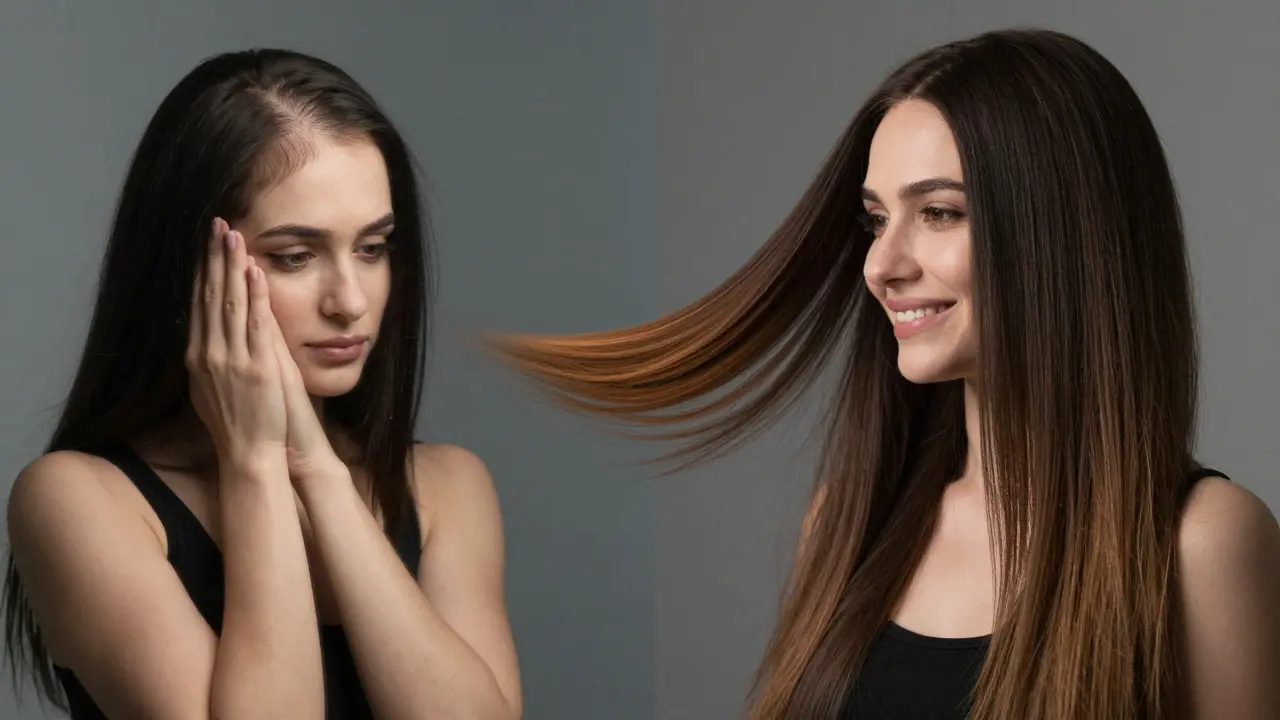
If your goal is to look like yourself-just fuller, more confident, and less self-conscious-then yes, hair extensions can provide real, visible coverage on top. They’re not a cure, but they’re one of the most effective, non-invasive tools available. The key is matching the right type to your hair, your lifestyle, and your budget. Start with clip-ins. Test them for a week. See how they feel, how they blend, and how your scalp reacts. If it works, consider upgrading to tape-ins or hand-tied wefts. If not, explore alternatives like toppers or fibers.Remember: Your hair doesn’t define you. But how you feel in your own skin? That matters. And sometimes, a little extra coverage is all it takes to look in the mirror and smile again.
Can hair extensions cover thinning at the crown without looking fake?
Yes, if you choose the right type and install them properly. Hand-tied wefts and micro-link extensions blend most naturally because they sit flat against the scalp and move with your hair. Clip-ins work well too, as long as you use small, flat clips and layer them in a staggered pattern. Avoid thick, bulky pieces and always match the color and texture to your natural hair.
Do hair extensions damage your natural hair?
They can, if used incorrectly. Tight clips, heavy wefts, or leaving extensions in too long can cause traction alopecia-a type of hair loss from constant pulling. To prevent damage: avoid sleeping in extensions unless they’re designed for it, give your scalp breaks every 2-3 weeks, wash your natural hair underneath, and never install them yourself if you’re using tape or micro-links. Always go to a trained professional for those.
How long do hair extensions last for top coverage?
Clip-ins last indefinitely if cared for properly-they can be reused for years. Tape-ins and micro-links last 6-8 weeks before needing removal or reinstallation. Hand-tied wefts can last 4-6 months with regular maintenance. The lifespan depends on how often you wear them, how you wash them, and whether you give your scalp time to breathe between uses.
Are human hair extensions better than synthetic for top coverage?
Yes, for top coverage. Human hair blends naturally with your own, can be heat-styled to match your texture, and doesn’t have that shiny, plastic look synthetic hair often has. Synthetic extensions are cheaper and good for short-term use, but they can’t be curled or straightened safely and tend to look obvious under bright light or in photos.
Can I use hair extensions if I have a sensitive scalp?
You can, but you need to be careful. Avoid tape-ins and tight micro-links-they can irritate sensitive skin. Clip-ins with soft, silicone-lined clips are the safest option. Make sure your scalp is clean and dry before applying. Use a light scalp-soothing serum before installation. If you feel burning, itching, or pain, remove the extensions immediately and consult a dermatologist.


kelvin kind
December 29, 2025 AT 07:41Clip-ins saved my sanity last year. No one even noticed.
Peter Reynolds
December 30, 2025 AT 20:29I tried tape-ins once and regretted it. My scalp felt like it was being pulled apart every time I moved. Clip-ins are the way to go if you want to keep your hair intact.
Ian Cassidy
December 31, 2025 AT 03:23Hand-tied wefts are the gold standard for scalp integration. The mesh base mimics dermal papillae density and allows for natural follicular angulation. You get zero bulk, zero shine, and zero scalp visibility. Worth every penny if you're serious about blending.
Kenny Stockman
January 1, 2026 AT 06:13Been using micro-links for 8 months now. My stylist placed them in a staggered crown pattern-like a halo. I wash my hair upside down every 10 days, sleep with a silk bonnet, and never pull my hair back tight. No traction, no drama. Just confidence.
Sam Rittenhouse
January 1, 2026 AT 10:54I used to cry in the mirror every morning. I thought I looked old, broken, like I’d given up. Then I found a set of 5 clip-ins that matched my roots perfectly-dark brown with a hint of gray at the crown. I layer them like a puzzle. Now when I walk into a room, people say ‘you look refreshed’-not ‘are you wearing a wig?’ That’s the difference. It’s not about hiding. It’s about coming back to yourself.
Ananya Sharma
January 2, 2026 AT 20:17Everyone’s acting like extensions are some magical cure-all, but let’s be real-this is just another form of cosmetic deception. You’re literally gluing or clipping synthetic or human hair onto your scalp to create an illusion of health while ignoring the real issue: your body is signaling something’s wrong. Are you taking biotin? Are you checking your iron? Your thyroid? Your cortisol? No, you’re just buying more hair to cover up the fact that you’re too lazy to fix the root cause. And then you wonder why your hair keeps falling out. Extensions are a Band-Aid on a hemorrhage.
Paritosh Bhagat
January 2, 2026 AT 22:57Hey Ananya, I get where you're coming from, but not everyone has the luxury of waiting 6 months for minoxidil to work. Some of us have job interviews, weddings, family photos-life doesn’t pause because your hormones are being dramatic. Extensions aren’t about denial, they’re about dignity. And honestly? I’ve seen more people ruin their hair trying to ‘fix it naturally’ than from using extensions properly. You’re not a dermatologist, and your tone is kinda harsh. Maybe chill?
Fred Edwords
January 3, 2026 AT 22:57While I appreciate the sentiment expressed in the previous comment, it is important to clarify that traction alopecia is not merely a risk-it is a documented, clinically validated consequence of improper extension application, particularly with tape-in and micro-link methods when installed without adequate tension distribution. Furthermore, the assertion that extensions provide ‘dignity’ is semantically accurate but epistemologically insufficient; one must distinguish between psychological relief and physiological restoration. The efficacy of keratin fibers as a temporary solution, however, is empirically supported in dermatological literature as a non-invasive, reversible adjunct.
Zach Beggs
January 4, 2026 AT 12:56For anyone thinking about trying this: start with clip-ins. Test them for a week. If your scalp feels fine and you don’t hate how they look, then consider upgrading. Don’t jump into tape-ins or hand-tied wefts without seeing a pro first. I did, and it cost me $400 and three weeks of itchiness. Lesson learned.