
Imagine walking into your job interview, looking sharp and professional, only to be told you can’t work there because of how you wear your hair. For many Black women and people with textured hair, this isn’t a hypothetical nightmare-it’s a recurring reality. You might hear the argument that banning hair extensions is fair because it applies to "everyone." But does treating everyone the same actually create equality? Or does it just mask a deeper bias against cultural expression?
The claim that a blanket ban on hair extensions is neutral falls apart when you look at who relies on them most. While anyone *can* wear extensions, they are not equally distributed across demographics. For Black women, extensions aren't just an aesthetic choice; they are often a protective style necessary for maintaining the health of fragile, coily hair. Banning them disproportionately impacts one group while leaving others unaffected. This isn't about fairness; it's about ignoring biological and cultural realities.
The Myth of the "Neutral" Policy
Employers and schools often defend grooming codes by saying, "We don't care about race; we just want a uniform look." They argue that if no one can wear braids, locs, or extensions, then no one is being discriminated against. This logic sounds reasonable on the surface, but it fails under scrutiny. It assumes that all hair types behave the same way and that all styles carry the same social weight. They do not.
Consider the difference between a white woman wearing clip-in extensions for volume and a Black woman wearing sew-in weaves to protect her natural hair from breakage. For the former, it might be a temporary cosmetic boost. For the latter, it can be a daily necessity for hair health. When a policy bans both without distinction, it ignores the functional need behind the style. It forces Black employees to choose between their hair health and their livelihood. That is not neutrality; that is exclusion disguised as consistency.
This type of policy also reinforces Eurocentric beauty standards. By defining "professional" hair as straight, short, and manageable without tools, institutions implicitly label textured hair as "unprofessional." A ban on extensions prevents Black individuals from styling their hair in ways that align with these narrow standards, effectively penalizing them for their natural texture. If the goal were truly gender-neutral or race-neutral, the policy would accommodate diverse hair textures rather than restricting methods of managing them.
Extensions as Protective Styles
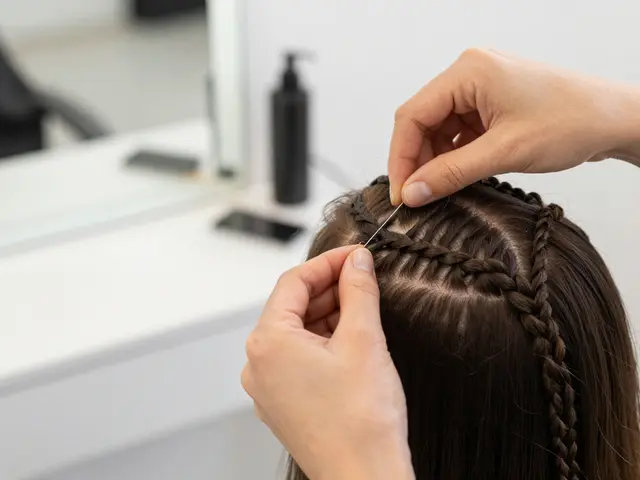
To understand why a ban hurts specific communities, you have to understand the biology of textured hair. Type 4 hair (coily/kinky) is more prone to dryness and breakage than straighter hair types. Without proper retention and protection, it shrinks significantly and tangles easily. Many Black people use braids, twists, and extensions not just for length, but to lock moisture in and prevent mechanical damage from daily combing.
Protective styling is a method of wearing hair in a way that minimizes manipulation and protects the ends of the hair from damage. Extensions play a key role here. When done correctly, they allow the natural hair to rest. Banning these styles forces individuals to expose their fragile strands to constant friction and environmental stress. Over time, this leads to traction alopecia-a condition where hair loss occurs due to excessive pulling. So, a ban doesn't just limit fashion; it actively harms physical well-being for a specific demographic.
Furthermore, the time and cost involved in maintaining natural hair without extensions are disproportionate. A single blowout session for thick, coily hair can take hours and require specialized products. Extensions, once installed, can last weeks with minimal daily effort. Removing this option places an undue burden on Black professionals, forcing them to spend extra time and money on daily maintenance that their colleagues with straighter hair do not face. This creates a hidden economic penalty based on race.
The Legal Landscape: The CROWN Act
Recognizing this disparity, lawmakers have started to act. The CROWN Act (Create a Respectful and Open World for Natural Hair) is legislation designed to combat hair discrimination. As of 2026, over half of U.S. states have passed versions of this act. It explicitly defines discrimination based on hair texture and protective hairstyles as illegal racial discrimination.
Under the CROWN Act, employers cannot enforce grooming policies that ban braids, locs, twists, or extensions if those styles are culturally significant to Black identity. The law acknowledges that "professionalism" should not be defined by Eurocentric norms. If a company bans all extensions, they risk violating this law unless they can prove a direct, non-discriminatory business necessity-which is nearly impossible to justify for office jobs.
However, the CROWN Act is not federal yet. In states without this protection, workers still fight these battles in court. Courts have increasingly ruled that disparate impact-where a neutral rule hurts a protected class more than others-is a form of discrimination. A blanket ban on extensions has a clear disparate impact on Black women, making it legally vulnerable even in jurisdictions without explicit CROWN laws.
| Policy Type | Impact on Straight Hair | Impact on Textured Hair | Racial Bias Indicator |
|---|---|---|---|
| No Extensions Allowed | Minimal (cosmetic loss) | High (health risk, loss of protective style) | Yes (Disparate Impact) |
| No Braids/Locs | N/A (rarely worn) | Critical (cultural erasure, health harm) | Yes (Direct Discrimination) |
| Neat & Clean Standard | Easy to meet | Subjective interpretation | Potential (Implicit Bias) |
Cultural Erasure and Identity
Hair is deeply tied to identity, history, and culture. For African Americans, styled hair has been a form of resistance and self-expression throughout history. From the Afros of the Civil Rights era to the intricate braiding patterns of West Africa, hair tells a story. Extensions are part of this lineage. They allow for versatility and creativity that honors ancestral traditions while adapting to modern life.
Banning extensions sends a message: "Your culture is not welcome here." It forces assimilation. When a school or workplace says, "You can't wear your hair this way," they are saying, "Change yourself to fit our comfort zone." This psychological toll is real. Studies show that Black women experience higher levels of stress and lower self-esteem when forced to alter their appearance to meet white-centric standards. It’s not just about hair; it’s about belonging.
Moreover, the stigma around extensions is often racialized. White women wearing extensions are often seen as "playing around" or "enhancing beauty." Black women wearing them are sometimes labeled as "trying too hard" or "inauthentic." This double standard reveals the underlying racism. A ban exploits this bias, using the guise of professionalism to police Black bodies. It assumes that Black hair needs to be controlled and contained, reinforcing harmful stereotypes about disorder and unprofessionalism.
What Makes a Fair Grooming Code?
If companies want to maintain a professional image without discriminating, they need to rethink their approach. Instead of banning specific styles, focus on hygiene and neatness. A policy should state that hair must be clean and groomed, regardless of texture or method. This allows for diversity. It lets someone wear braids, another wear a bob, and another wear extensions, as long as they are tidy.
Here are practical steps for creating inclusive policies:
- Avoid Specific Bans: Do not list prohibited styles like "braids," "locs," or "extensions." These terms are culturally loaded and discriminatory.
- Define "Professional": Use objective criteria like cleanliness and tidiness, not subjective aesthetics.
- Train Managers: Educate HR and leadership on implicit bias and the CROWN Act. They need to understand why certain rules hurt minority groups.
- Consult Employees: Ask your staff what works for them. Inclusive policies come from listening, not assuming.
- Review Regularly: Laws and social norms change. Update your handbook to reflect current legal standards and cultural understanding.
By shifting from prescriptive rules to outcome-based standards, organizations can foster inclusivity. This doesn't mean lowering standards; it means raising awareness. It recognizes that professionalism comes in many textures and colors. When you remove barriers for marginalized groups, you don't lose quality-you gain talent, loyalty, and innovation.
Conclusion: Beyond the Surface
Saying a ban on hair extensions is "for everyone" is a convenient lie. It ignores the fact that not everyone uses extensions, and not everyone suffers the same consequences when they are removed. For Black women, it’s a barrier to employment, a threat to hair health, and an attack on cultural identity. True equity requires acknowledging these differences, not pretending they don't exist.
We need to move past the idea that neutrality equals fairness. Sometimes, fairness means accommodating different needs. It means recognizing that a one-size-fits-all approach often fits no one-or worse, it crushes some while helping others. As we progress toward a more inclusive society, let’s ensure our grooming codes reflect respect for all identities, not just the dominant one.
Is it illegal to ban hair extensions at work?
In many U.S. states, yes. Under the CROWN Act, banning protective hairstyles like braids, locs, and extensions used by Black employees is considered racial discrimination. Even in states without this law, such bans may violate federal civil rights laws if they have a disparate impact on protected groups.
Why are hair extensions important for Black women?
Extensions serve as protective styles that minimize manipulation of fragile, coily hair. They help retain moisture, prevent breakage, and reduce the risk of traction alopecia. They also offer cultural expression and versatility that aligns with traditional African hairstyles.
What is the CROWN Act?
The Create a Respectful and Open World for Natural Hair (CROWN) Act is legislation that prohibits discrimination based on hair texture and protective hairstyles. It aims to ensure that Black individuals are not penalized for wearing natural hair, braids, locs, or extensions.
How can companies write inclusive grooming policies?
Companies should avoid banning specific styles. Instead, focus on hygiene and neatness. Train managers on implicit bias, consult employees, and ensure policies comply with local anti-discrimination laws like the CROWN Act.
Does a ban on extensions affect white people too?
While white people can wear extensions, the impact is minimal. For them, it’s usually a cosmetic preference. For Black women, it’s often a health and cultural necessity. Therefore, the ban has a disparate impact, harming one group significantly more than the other.