

When your natural hair color is black, you might think your dye options are limited-maybe just darker shades or risky bleaching jobs. But that’s not true. Black hair is actually one of the most versatile bases for color transformation. It doesn’t just hold color well-it enhances it. The deep base makes highlights pop, adds depth to warm tones, and gives even subtle changes a dramatic effect. The key isn’t just picking a color. It’s picking the right color for your skin tone, your hair’s health, and how much upkeep you’re willing to handle.
Why Black Hair Needs a Different Approach
You can’t just slap a box of blonde dye on black hair and expect it to turn light. Color doesn’t lift color. That means if you put a light brown or blonde dye over black hair, you’ll get a muddy, orangey mess. To lighten black hair, you need to remove pigment first-usually with bleach or a color remover. That’s why many people skip straight to professional help. But even if you’re going solo, you don’t need to go full platinum. There are plenty of stunning, low-damage options.Best Colors for Black Hair (And Why They Work)
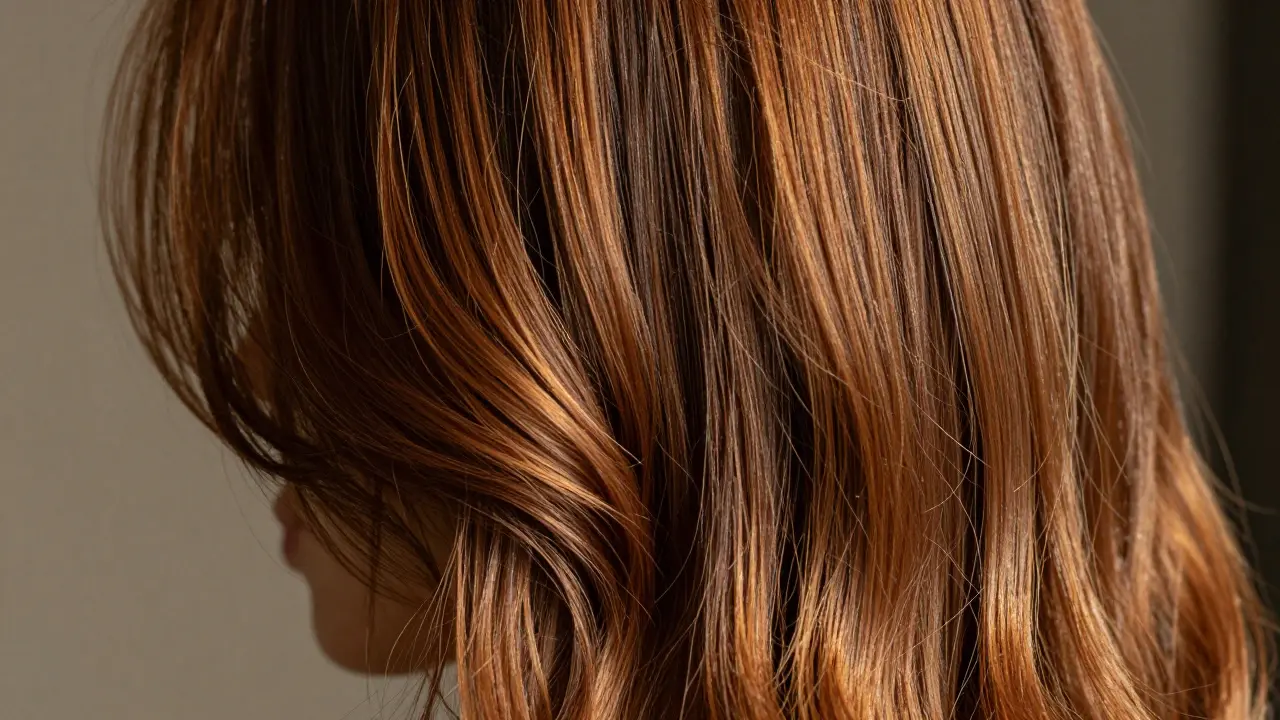
Brown tones are the safest, most popular choice. They blend naturally, fade gracefully, and don’t demand constant touch-ups. Here’s how to pick yours:- Warm skin tones (gold, olive, peach undertones): Go for caramel, honey brown, chestnut. These add warmth without looking artificial. Think of the glow you get in sunlight-this mimics that.
- Cool skin tones (pink, red, or blue undertones): Choose ash brown, mocha, taupe. These keep things sleek and modern. Avoid anything too orange or red-it will clash.
- Neutral skin tones: You’re lucky. Chocolate, bronze, and espresso shades all work. Try a blend of two tones for dimension.
Even if you’re not going for highlights, a full-color application in one of these browns can refresh your look without a drastic change. And because the difference is only 1-2 levels lighter than your natural black, regrowth is barely noticeable. No one will notice you’re due for a touch-up until you do.
Blonde? Yes-but Not Just Any Blonde
Blonde on black hair isn’t impossible. But it’s not a one-session job. You’ll need at least two, maybe three, visits to a salon if you want to avoid fried, brittle strands. Still, if you’re committed, here’s what looks best:- Honey blonde: Warm, golden, radiant. Works great with warm skin tones. Adds a sun-kissed glow that looks natural, not bleached.
- Caramel blonde: A mix of blonde and brown. Perfect for those who want lightness but still want to keep some depth. Great for all undertones.
- Chestnut blonde: The darkest of the blondes. Almost like a deep brown with a shimmer. Ideal if you’re nervous about going too light.
Stay away from platinum, ash, or icy blonde unless you’re ready for serious maintenance. Those shades turn brassy quickly on black hair and need toning every 3-4 weeks. And if you’re over 30, those cool tones can wash you out. Warm blondes are your friend.
Red and Burgundy: Bold, But Not Over the Top
Red is one of the most flattering colors for black hair. It doesn’t require bleaching. You’re just adding pigment, not removing it. That means less damage and more shine.- Auburn red: Rich, warm, with a hint of brown. Best for neutral undertones. Looks like rich wine in the light.
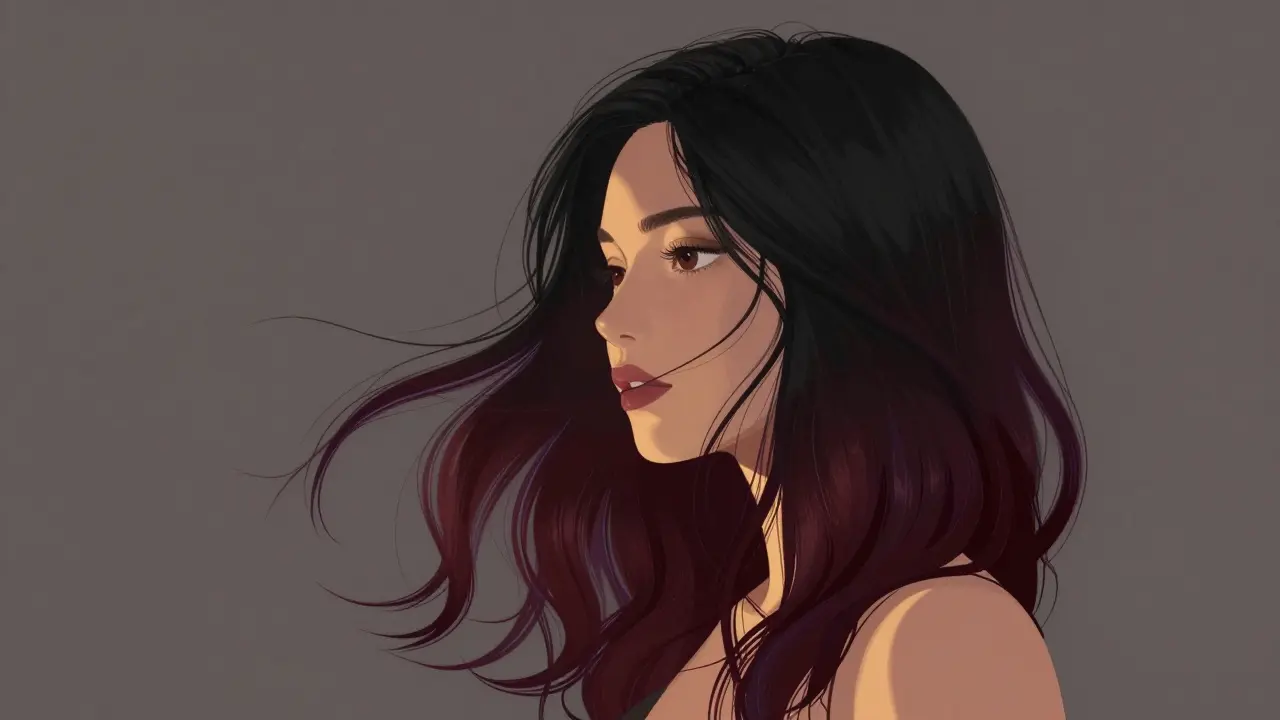
- Burgundy: Deep, wine-toned, almost purple. Works best on cool undertones. It’s dramatic but still sophisticated-perfect for work or a night out.
These shades don’t fade like regular reds. They fade into deeper, richer tones, so they last longer. And because they’re so dark to begin with, they blend beautifully with your natural color as they grow out.
Staying Black? There’s a Science to It
If you’re thinking, “I love my black hair,” that’s fine. But not all black dyes are created equal. A cheap black dye can look ashy, dull, or even greenish under fluorescent lights. Here’s what to look for:- Jet black: The most intense, glossy black. Best for cool undertones. Makes curls and coils look defined and shiny.
- Natural black-brown: A softer, more natural black. Adds depth without looking artificial. Great for neutral and cool tones.
One user on a beauty forum applied a jet black dye over previously lightened hair and said it actually improved the texture. “It felt thicker, shinier,” she wrote. “Like my hair had a second chance.” That’s because darker dyes coat the hair shaft, sealing in moisture. If you’ve been bleaching or coloring for years, going back to black can be a reset button.
Placement Matters: Highlights, Balayage, or All-Over?
The way the color is applied changes the whole look:- Foil highlights: Gives you crisp, defined contrast. Best if you want noticeable brightness-like a salon-style ombre.
- Balayage: Hand-painted, sun-kissed effect. Blends naturally. Perfect for soft, low-maintenance color. Regrowth looks like natural growth, not a harsh line.
- All-over color: Full coverage. Best for a dramatic change or if you want to cover grays. Keeps things uniform.
Most people with black hair go for balayage. It’s the sweet spot between subtle and bold. You get dimension without the upkeep. And if you’re doing it at home, balayage is easier to fake than full highlights.
What to Avoid
- Going more than 4 levels lighter in one go. That’s a recipe for breakage. Even professionals recommend splitting it into sessions.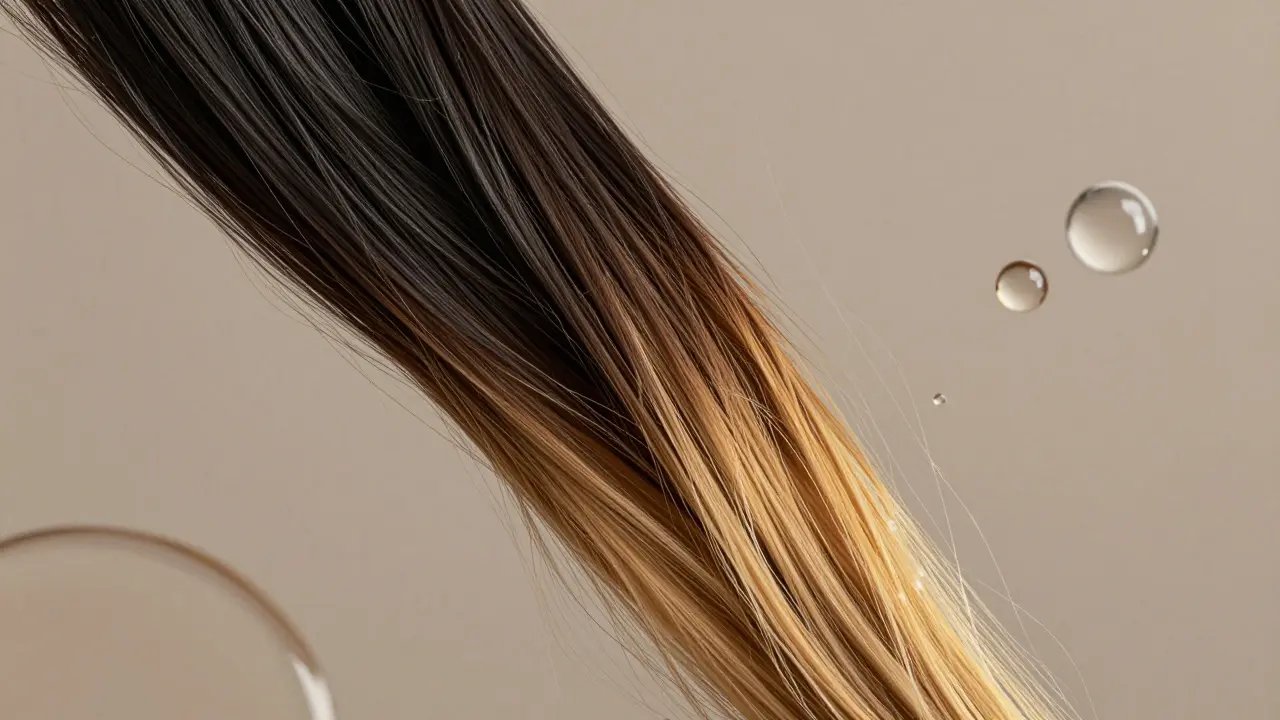
Low-Damage Alternatives
If you’re scared of bleach, try a color remover like Prime For Perfection. It doesn’t strip hair like bleach. It gently lifts artificial pigment over several applications. So if you’ve been dyeing your hair dark for years and want to lighten it slowly, this is your friend. It won’t get you blonde in a week-but it will get you there without the damage.Pro Tips from the Salon
- Always do a strand test. Cut a small section near your ear. Apply the color. Wait 30 minutes. See how it looks. If it’s too dark, too light, or too brassy-change your mind before the full application.Final Thought: Start Small
If you’re unsure, start with a shade that’s just one or two levels lighter than your natural black. Add a few balayage highlights. See how it feels. See how it fades. Then go darker or lighter next time. Hair grows back. You can always change it. But you can’t undo damage.Can I dye black hair blonde at home?
Technically, yes-but it’s risky. Black hair requires heavy bleaching to reach blonde, and at-home kits often don’t lift enough. You’ll likely end up with orange, patchy, or damaged hair. Most salons need 2-3 sessions to safely go from black to blonde. If you’re serious about blonde, book a consultation first.
What’s the easiest color to maintain on black hair?
Jet black, natural black-brown, and chestnut brown are the easiest. They blend with regrowth naturally. No harsh lines. No frequent touch-ups. You can go 6-8 weeks between appointments without anyone noticing.
Will red dye look natural on black hair?
Yes-especially burgundy and auburn. These aren’t bright, neon reds. They’re deep, rich tones that enhance your natural color instead of masking it. They look like high-end salon color, not a Halloween wig.
Do I need to bleach if I want brown highlights?
Not if you’re only going 1-2 levels lighter. But if you want caramel or honey highlights, you’ll need to lighten the sections first. A professional will use a low-volume developer and foil technique to protect your hair. Never try to lift more than 3 levels at home.
How often should I touch up black hair dye?
Every 4-6 weeks if you’re going for jet black. But if you’re using a black-brown or chestnut shade, you can stretch it to 8 weeks. The key is matching the new growth-not fighting it. A slight root shadow looks natural, especially on black hair.

Veera Mavalwala
February 27, 2026 AT 16:26Let me tell you something no one else will: black hair isn't just a base-it's a canvas painted in shadow, and most people treat it like a mistake to be fixed. You don't dye black hair to 'lighten' it-you elevate it. Caramel? Honey? Please. Those are just daylight stealing from midnight. The real magic happens when you go deeper-mocha with a hint of violet undertone, or a black-brown that shifts to burgundy under sun. I've seen women in Mumbai go from jet black to wine-dark locks and look like they stepped out of a Renaissance painting. No bleach. No trauma. Just pigment layered like silk.
And don't even get me started on balayage. That’s not a technique-it’s an act of reverence. Hand-painted, not foiled. You’re not trying to look 'sun-kissed.' You’re trying to look like your hair remembered how to breathe. If you’re doing it at home? Use a fine-tooth comb and a brush with one bristle. Less is more. One strand at a time. Patience isn’t optional-it’s the dye.
Also, stop using 'jet black' unless you’re in a noir film. That stuff looks like tar poured on a cat. Natural black-brown? Yes. It’s not a color-it’s a mood. And if your skin has any warmth? Add a whisper of copper. Not enough to scream. Just enough to make people lean in and say, 'Wait, what did you do?'
Ray Htoo
March 1, 2026 AT 09:10Okay but can we talk about how everyone skips over the fact that black hair holds dye like a sponge soaked in glue? I tried auburn once and it didn’t fade-it transformed. After three weeks it went from ‘rich wine’ to ‘burnt plum’ and honestly? Better. Like, my hair started looking like it had been kissed by dusk. No one told me that darker reds evolve instead of fade. I thought I messed up. Turns out I just got lucky.
Also, the part about toner after bleach? Game changer. I used a purple shampoo meant for gray hair on my orangey mess and suddenly it looked like I’d paid $600 for a salon visit. Cost me $12. That’s the real pro tip right there. No one talks about household items as color saviors.
Kieran Danagher
March 2, 2026 AT 01:35OONAGH Ffrench
March 2, 2026 AT 17:56Black hair does not need to be changed it needs to be honored
The right shade does not compete with your natural tone it speaks with it
Some people seek light they do not need to be seen
Bhavishya Kumar
March 2, 2026 AT 21:13ujjwal fouzdar
March 3, 2026 AT 03:35Let me tell you something about black hair. It’s not hair. It’s a monument. A silent scream in the mirror. Every strand remembers every bleach job, every dye job, every moment you thought you were better than what you were born with.
I once dyed my hair burgundy because I thought it would make me feel like a queen. Instead, I felt like a ghost who forgot her name. The color didn’t change me. It exposed me. The roots grew in like guilt. The shine faded like hope.
But then I went back to black. Not jet black. Not that toxic, death-metal black. Natural black-brown. The kind that looks like midnight after rain. And for the first time in years? I looked in the mirror and didn’t flinch.
Maybe the answer isn’t changing your hair.
Maybe it’s letting your hair change you.
Anand Pandit
March 4, 2026 AT 22:34Hey, just wanted to say this post was so helpful-I’ve been nervous about trying anything new on my black hair for years. You’re right, starting small is everything. I did a few balayage strands with a demi-permanent chestnut and I swear, my hair looks healthier than ever. No bleach, no drama. Just a little glow.
Also, the sulfate-free shampoo tip? Lifesaver. I switched to one with coconut oil and now my curls feel like clouds. If you’re scared to try, start with a deep conditioner and a strand test. You’ve got this. And if you mess up? It grows out. You’re still beautiful.
Reshma Jose
March 6, 2026 AT 09:06rahul shrimali
March 8, 2026 AT 02:16