

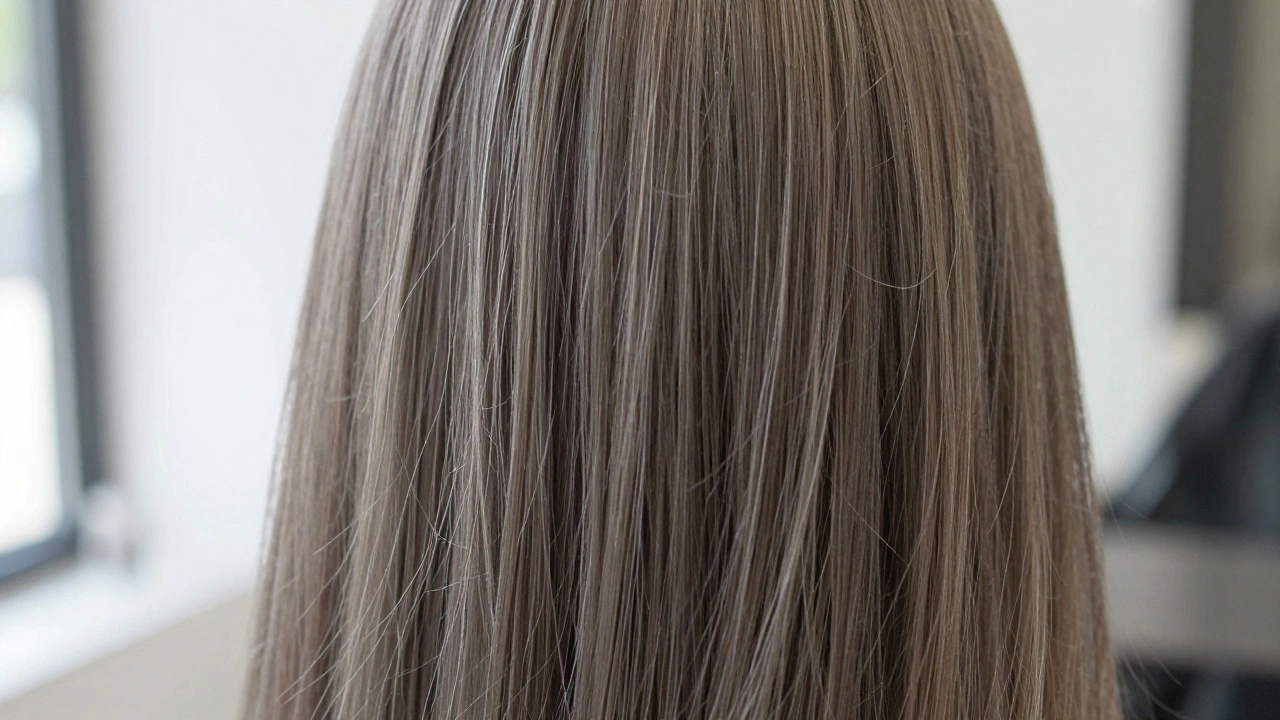
If you’ve ever looked in the mirror and wondered whether your hair is dark blonde or light brown, you’re not alone. People with mousy hair hear it called everything from "dishwater blonde" to "muddy brown"-and no one agrees on what it really is. The truth? It’s not either. It’s something else entirely.
What Exactly Is Mousy Hair?
Mousy hair isn’t a faded shade, a bad dye job, or damaged hair. It’s a real, natural color that sits right between dark blonde and light brown on the hair color scale. Think of it as the quiet middle child of hair tones-neither bold nor boring, but often misunderstood. Professional colorists use a 1-to-10 scale to measure hair color, where 1 is jet black and 10 is the brightest platinum blonde. Mousy hair lands between level 6 and level 7. Level 6 is dark blonde. Level 7 is medium blonde or light brown. So technically, it straddles both. But here’s the catch: it doesn’t belong to either group. What makes mousy hair unique isn’t its lightness or darkness-it’s its tone. Most light browns have golden, honey, or caramel warmth. Most dark blondes have yellow or coppery glints. Mousy hair has none of that. It’s cool. Ashy. Neutral. No warmth. No shine. Just a soft, quiet brown-gray that looks like it was naturally born that way.Why People Get Confused
Many people with mousy hair grew up with lighter hair as kids. They were the blonde kids who didn’t turn golden or brassy when the sun hit their hair-they just went darker, duller, and grayer over time. That’s why some call it "muddy blonde." Others see the depth and say it’s "light brown." The confusion comes from how we describe color. We use words like "blonde" and "brown" like they’re fixed boxes. But hair color doesn’t work that way. It’s a spectrum. And mousy hair lives in the gray zone. A woman in New York told me her hair used to be called "dark blonde" in her 20s. Now, in her 40s, she calls it "ashy brown." Same hair. Same pigment. Just different perception. That’s the reality. Your brain picks a label based on what you’re used to seeing.What Makes It Brown, Not Blonde
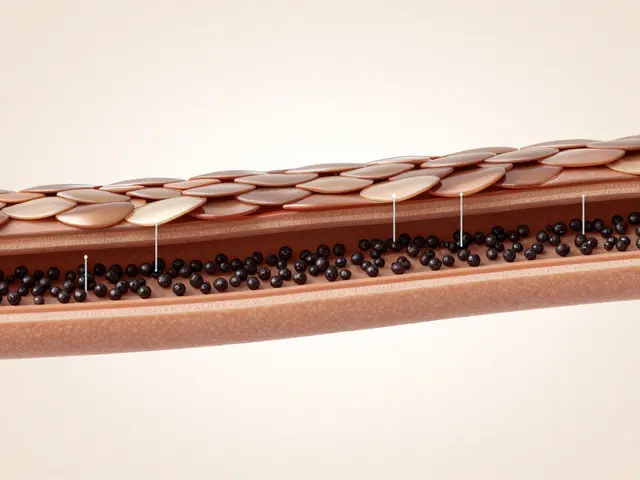
Here’s the science behind the confusion: hair color comes from two pigments-eumelanin (brown/black) and pheomelanin (red/yellow). Dark blonde hair has more pheomelanin. Light brown hair has more eumelanin. Mousy hair has just enough eumelanin to tip it into the brown category, but not enough to create warmth. That’s why professional color brands like Madison Reed classify it as light brunette, not dark blonde. Their color system uses terms like "7N" (level 7, neutral) or "7.5NNA" (level 7.5, neutral natural ash). The "N" and "NA" mean neutral and ash-no gold, no red, no warmth. That’s the signature of mousy hair. If your hair turns green when you dye it brown, you might be trying to force mousy hair into a warm brown shade. That green tinge? It’s the ash in your hair reacting with the red undertones in the dye. You’re not doing anything wrong. You’re just using the wrong color.
How to Tell If You Have Mousy Hair
Ask yourself these three questions:- Does your hair look grayish or silvery in natural light, even when it’s not gray?
- Do warm-toned hair colors (like honey blonde or caramel brown) look unnatural on you?
- Do you look better in silver, pearl, or cool gray jewelry than in gold?
Why It’s Becoming Popular
For years, mousy hair was seen as dull. "Mousy" was a word used to make people feel self-conscious. But things are changing. People are embracing natural, low-maintenance tones. And mousy hair? It’s the perfect neutral. It grows out gracefully. It blends with silver beautifully. It doesn’t need constant touch-ups. Salons are starting to call it "beachy light brunette" or "undone brunette." They’re dropping the word "mousy" entirely. And honestly? That’s a win. It’s not a flaw. It’s a quiet elegance. Women in their 30s and 40s are choosing it on purpose. Not because they’re trying to hide gray, but because it looks healthy, real, and effortless. It’s the opposite of high-maintenance platinum. It’s the color you get when you stop fighting your natural pigment and start working with it.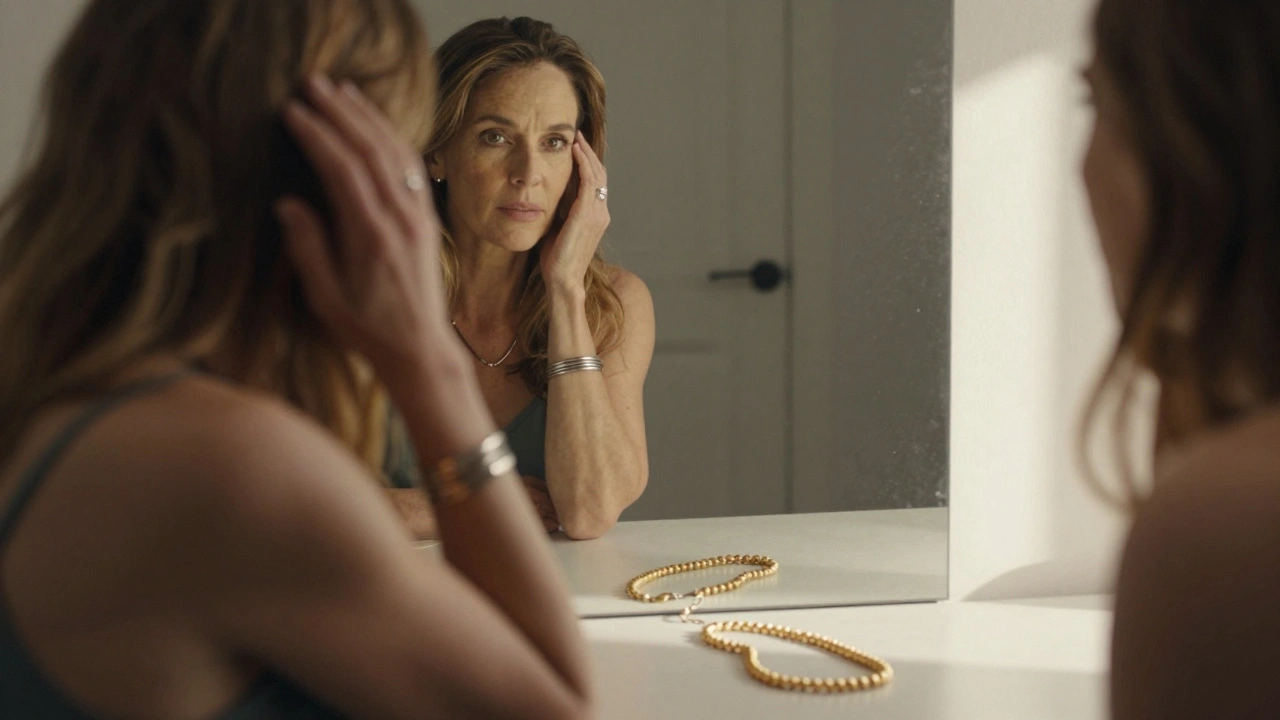
What to Avoid
If you have mousy hair, avoid these three things:- Golden or caramel toners-they’ll make your hair look muddy, not warm.
- Warm brown dyes-they’ll turn your hair green or brassy.
- Blonding your roots-you’ll lose the cool tone and end up with a washed-out, patchy mess.
Final Answer: Is It Dark Blonde or Light Brown?
Technically? It’s light brown. Not because it’s darker than dark blonde-but because of its pigment composition. Mousy hair has more eumelanin than true blonde. It’s classified as light brunette in professional systems. But here’s the real takeaway: labels don’t matter as much as understanding your tone. If your hair looks best with silver earrings, fades into gray without looking patchy, and hates warm tones-you’ve got mousy hair. And that’s not a problem to fix. It’s a natural color worth celebrating.Stop asking if it’s blonde or brown. Start asking: Is it cool? Is it neutral? Does it look like me? If the answer is yes, then you’ve got the color everyone’s starting to want.
Is mousy hair the same as gray hair?
No. Mousy hair is a natural pigment color with cool, ashy undertones, while gray hair is the result of reduced melanin production as you age. Mousy hair can be present at any age, even in children. Gray hair appears as white or silver strands and often shows up unevenly. Mousy hair is consistent in tone and lacks the stark contrast of gray.
Can you dye mousy hair to look more blonde?
Yes, but you need to be careful. If you bleach mousy hair to go blonde, you risk ending up with a green or brassy tone because the underlying ash pigment reacts with yellow tones in bleach. To go blonde successfully, you need a professional toner that neutralizes the ash without adding warmth. A cool platinum or ash blonde shade works best.
Why does my mousy hair look different in sunlight vs. indoor lighting?
Mousy hair has low reflectivity and no warm undertones, so it absorbs light rather than bouncing it back. In bright sunlight, it may look slightly lighter or take on a silvery sheen. Under warm indoor lighting, it can appear duller or more gray. This isn’t a flaw-it’s how cool-toned hair behaves. That’s why it looks best in natural daylight.
Is mousy hair common in certain ethnicities?
Yes. Mousy hair is most common in people of Northern and Eastern European descent, where cool-toned pigmentation is genetically prevalent. It’s also frequently seen in natural blondes who darken with age. It’s less common in individuals with naturally warm or dark hair tones, such as those of Mediterranean, African, or South Asian heritage.
Should I use purple shampoo on mousy hair?
Only if your hair has been lightened. Purple shampoo removes brassiness, but mousy hair is already cool and neutral. Using it on unbleached mousy hair can make it look ashy or even gray in an unnatural way. Stick to sulfate-free, color-safe shampoos that don’t strip pigment. If you’re unsure, ask your stylist for a toning shampoo designed for neutral tones.


Tasha Hernandez
December 6, 2025 AT 04:08Oh sweet mercy, I’ve been called ‘mousy’ since middle school like it’s a personality flaw. Turns out I just have the hair equivalent of a quiet librarian who knows where all the secrets are buried? I’m not damaged, I’m *elegant*. Also, my silver earrings are now officially my spirit animal.
Also, why do warm tones make me look like a sad potato? Because my hair is not a caramel latte, Karen.
Also also: I stopped dyeing it because I got tired of turning green. Turns out, I’m not broken-I’m just scientifically accurate.
Anuj Kumar
December 6, 2025 AT 19:54This is all a government thing. They want us to think hair has levels. There’s no such thing as ‘mousy.’ It’s just blonde that the FDA banned because it doesn’t sell enough shampoo. They’re hiding the truth. You think your hair is cool? It’s programmed. Check your roots again.
Christina Morgan
December 8, 2025 AT 08:54Thank you for this. As someone who spent 15 years trying to ‘fix’ my hair with honey glosses and gold toners, only to end up looking like a burnt toast sandwich, this is the first time I’ve felt seen.
My colorist finally said, ‘You’re not blonde, you’re 7NNA’ and I cried. Not because I was sad-because I was finally understood.
Also, yes, my hair looks different in sunlight. It doesn’t glow. It glimmers. Like a quiet secret. And I’m not ashamed of it anymore.
Also also: purple shampoo is a trap unless you’ve bleached. Don’t let the influencers fool you.
Kathy Yip
December 8, 2025 AT 15:22i never thought about the pigment thing before… like, i always just thought my hair was just… plain. but the eumelanin and pheomelanin thing? that actually makes sense. i’ve always hated gold jewelry but i thought it was just me being weird.
also, i’m 28 and my hair has been ‘mousy’ since i was 12. i thought i was just aging early. turns out i was just… me.
thank you. this is the first time i’ve felt like my hair isn’t a mistake.
Jack Gifford
December 10, 2025 AT 14:55Grammar check: You wrote ‘muddy brown’ in quotes but then later used ‘muddy blonde’ without quotes. Consistency matters. Also, ‘ash-based products’ should be hyphenated as ‘ash-based’ when used as an adjective. I’m not nitpicking-I’m helping.
Also, your science is solid. I’ve been telling my clients for years: if it looks gray in daylight and hates gold, it’s neutral. Don’t fight it. Just style it.
Sarah Meadows
December 12, 2025 AT 04:18Look, I get it. But this ‘mousy’ nonsense is just woke hair culture. We used to call it ‘dirty blonde’ and move on. Now we need a 12-point scale, pigment breakdowns, and a whole damn TED Talk about it? We’re turning hair into a political identity. Next they’ll be classifying eyelashes by melanin content.
Stop overcomplicating it. If it’s not black, it’s blonde. If it’s not blonde, it’s brown. End of story.
Nathan Pena
December 13, 2025 AT 08:41Let’s deconstruct the linguistic fallacy here. You claim mousy hair ‘doesn’t belong to either group’-but classification systems exist precisely because binary distinctions are necessary for functional communication. Your ‘neutral ash’ taxonomy is a semantic evasion. You’re not defining a color-you’re rebranding ambiguity as sophistication.
Also, ‘quiet elegance’ is a coded phrase for ‘I don’t want to pay for highlights.’ The real reason salons dropped ‘mousy’ is marketing, not empowerment. You’re being sold a myth dressed in cool-toned pigment.
Mike Marciniak
December 13, 2025 AT 19:52I’ve been watching this. The hair industry has been lying to us for decades. They invented ‘mousy’ to sell toners. The real reason your hair turns green? It’s not the dye. It’s the fluoride in your water. The government is altering our hair pigment through municipal water systems. You think your 7NNA is natural? It’s a lab experiment. Check your tap. They’re watching.
VIRENDER KAUL
December 14, 2025 AT 10:16With due respect, the classification of human hair pigmentation must adhere to internationally recognized chromatic standards as established by the CIE 1931 color space. The term 'mousy' is colloquial and lacks scientific rigor. One must consult the von Luschan scale or the Fischer-Saller system for accurate anthropometric classification. To label a chromatic phenomenon as 'quiet elegance' is an aesthetic overreach devoid of empirical foundation.
Furthermore, the assertion that mousy hair is prevalent in Northern European populations is statistically accurate, yet the causal mechanism remains under-researched. I recommend peer-reviewed studies from the Journal of Hair Science, Vol. 42, Issue 3.
Mbuyiselwa Cindi
December 15, 2025 AT 06:24I’m from South Africa and I’ve got this hair. My mom called it ‘dull’ growing up. But my stylist here in Cape Town told me it’s ‘cool ash neutral’ and now I feel like a queen.
Don’t fight it. Just use sulfate-free stuff, skip the gold, and wear silver. Your hair doesn’t need fixing. It just needs to be understood.
Also, if you’re tired of people saying ‘you should dye it’-you’re not alone. We’re a quiet tribe. And we’re beautiful.