

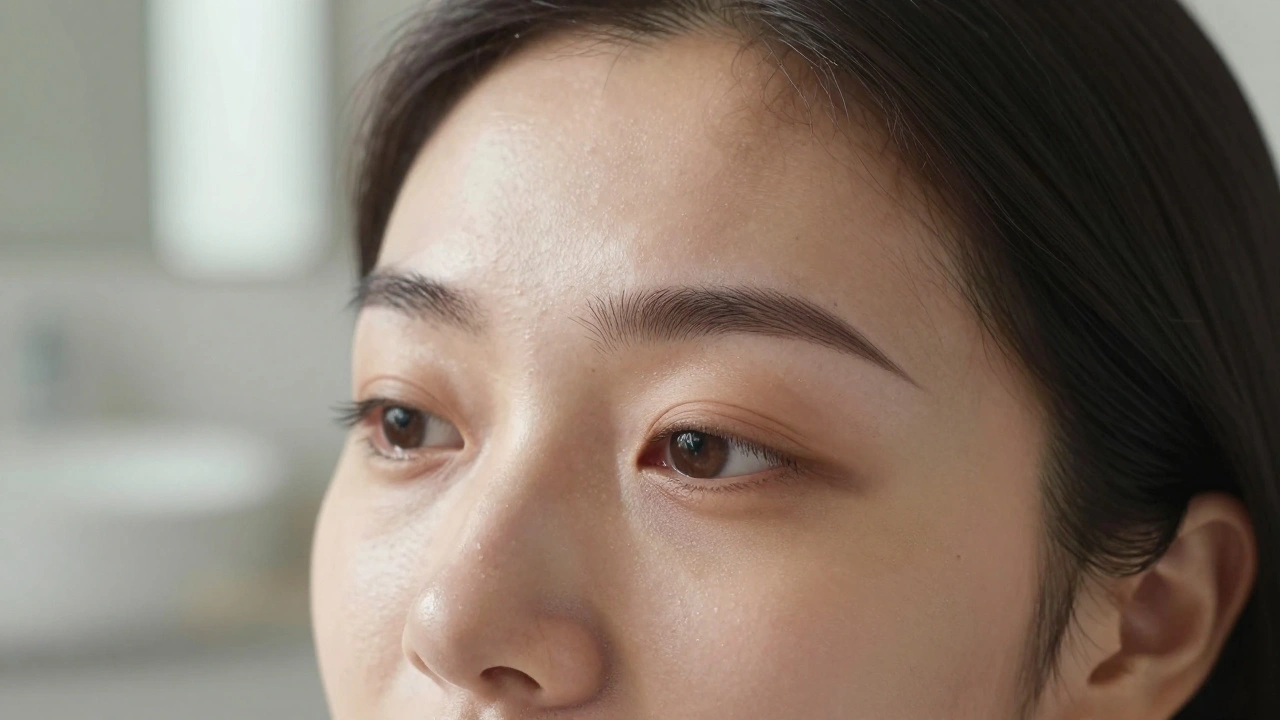
When you look in the mirror and wish your eyebrows looked fuller, more defined, or just more like you-without spending 10 minutes every morning with a pencil-microblading and powder fill tattoo eyebrows are the two most popular solutions. But which one actually works better? It’s not just about which looks prettier. It’s about your skin type, lifestyle, how long you want it to last, and how much maintenance you’re willing to handle. Let’s cut through the hype and show you exactly what each method does, how they differ, and who they’re really for.
What Is Microblading?
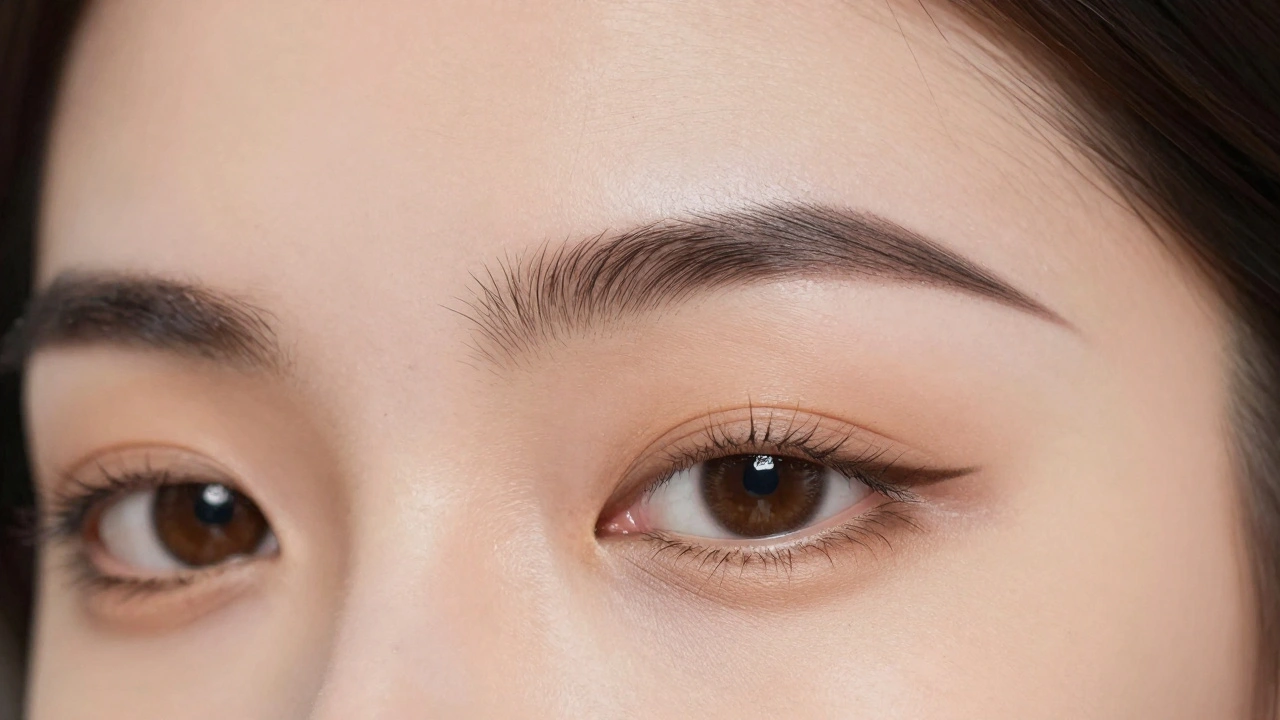
Microblading is a semi-permanent makeup technique that uses a tiny handheld tool with a row of fine needles to draw individual hair-like strokes into the skin. Each stroke mimics the natural direction of your eyebrow hairs, creating a very realistic, feathered look. It’s not a tattoo in the traditional sense-it doesn’t deposit ink deep into the dermis. Instead, it sits in the upper layers of the skin, which is why it fades over time.
The results look incredibly natural, especially if you have some existing brow hair. It’s ideal for people who want to fill in sparse areas, correct asymmetry, or recreate a full brow shape after over-plucking. But here’s the catch: microblading only works well on skin that isn’t too oily or too sensitive. If your skin tends to get shiny by noon, the pigment won’t hold as well, and the strokes may blur or fade faster.
Most people need two sessions: the first to lay down the shape and pigment, and a touch-up 6-8 weeks later to refine and darken areas that didn’t take. The results last anywhere from 12 to 18 months, depending on your skin type, sun exposure, and skincare routine. If you use retinoids, exfoliate often, or spend a lot of time in the sun, your brows may fade in as little as 6 months.
What Is Powder Fill Tattoo Eyebrows?
Powder fill, also called ombre brows or powdered brows, is a technique that uses a machine (like a tattoo pen) to deposit tiny dots of pigment into the skin, creating a soft, powdered, makeup-like effect. Think of it like filling in your brows with a brow pomade or shadow-but permanently. It doesn’t mimic individual hairs. Instead, it gives you a solid, filled-in look that’s bold but still soft and natural-looking.
This method is perfect for people with oily skin, sparse brows with little to no hair, or anyone who wants a more defined, makeup-ready look every day. It’s also the go-to for people who’ve had bad microblading done in the past and want to cover up patchy or unnatural strokes. Because the pigment is deposited more evenly and slightly deeper than microblading, it tends to hold longer and fade more uniformly.
Like microblading, powder fill usually requires two sessions. The touch-up is critical because the initial application can look darker than expected as the skin heals. After healing, the color softens to a natural, powdered finish. Results typically last 18 to 36 months, sometimes longer, especially if you avoid heavy sun exposure and use sunscreen regularly.
Side-by-Side Comparison
Here’s how the two methods stack up when you look at real-world factors:
| Feature | Microblading | Powder Fill Tattoo |
|---|---|---|
| Appearance | Realistic hair strokes, feathered look | Soft, powdered, makeup-like finish |
| Best For | Those with some natural brow hair, normal to dry skin | Oily skin, sparse or no brow hair, bold look |
| Longevity | 12-18 months | 18-36 months |
| Healing Time | 7-10 days (crusting, fading) | 5-7 days (less peeling, smoother healing) |
| Pain Level | Moderate to high (more surface trauma) | Mild to moderate (less invasive) |
| Maintenance | Touch-ups every 12-18 months | Touch-ups every 18-24 months |
| Best Skin Type | Normal to dry | Oily, combination, acne-prone |
| Removal Difficulty | Harder to correct if strokes are uneven | Easier to soften or cover up |
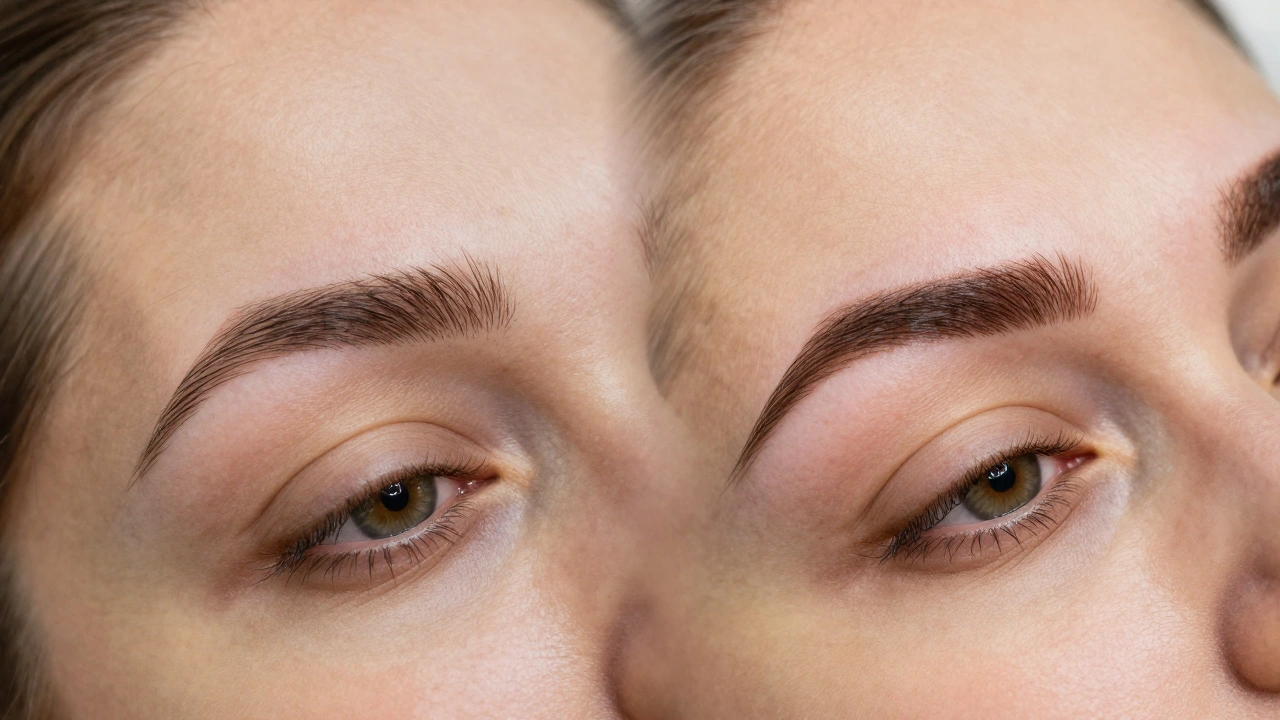
If you’re someone who hates the idea of looking like you’ve got a pencil drawing on your face, powder fill is the safer bet. If you want your brows to look like they’re growing naturally from your skin, microblading wins. But here’s the thing most artists won’t tell you: many people end up getting a combo of both. That’s called a "combo brow"-microbladed hair strokes at the front for definition, and powder fill in the tail for fullness. It’s becoming the new standard for a reason.
Who Should Avoid These Procedures?
Not everyone is a good candidate. If you have any of these, you should think twice-or skip it entirely:
- Active acne or skin conditions like eczema or psoriasis on the brow area
- Pregnant or breastfeeding (pigments can enter the bloodstream, and healing is slower)
- Diabetes or autoimmune disorders (healing is impaired, risk of infection)
- On blood thinners or taking Accutane (increased bleeding, poor pigment retention)
- History of keloid scarring (your skin may over-heal and create raised scars)
Also, don’t rush into this. If your technician can’t show you before-and-after photos of real clients-especially ones with your skin tone and brow shape-walk away. A good artist will ask about your skincare routine, sun habits, and whether you’ve had any previous eyebrow treatments. They’ll also use sterile, single-use tools and medical-grade pigments. Anything less is a red flag.
What Happens After the Procedure?
Both methods require careful aftercare. You can’t just go back to your normal routine the next day.
For the first week:
- Avoid water directly hitting your brows (no showers with high pressure, no swimming)
- No sweat-skip the gym, saunas, or hot yoga
- Don’t pick, scratch, or peel the flaking skin (this causes pigment loss)
- Apply the aftercare ointment they give you-usually a thin layer twice a day
- Avoid makeup, retinoids, and exfoliants on the area for at least 2 weeks
The healing process is different for each method. With microblading, you’ll notice scabbing and some fading as the skin sheds. The strokes might look patchy or lighter than expected. That’s normal. The color returns after the touch-up.
Powder fill tends to heal smoother. There’s less peeling, and the color stays more even. But it often looks darker right after the session. That’s because the pigment sits on the surface. As it settles, it fades to a softer, more natural tone.
Cost and Long-Term Value
In New York, microblading starts at $500 and can go up to $1,200. Powder fill is usually $600-$1,400. The price difference isn’t huge, but the long-term value is.
Microblading requires more frequent touch-ups, which cost $150-$300 every year or so. Over five years, that’s $800-$1,500 extra. Powder fill lasts longer and needs fewer touch-ups. Even if the initial cost is higher, you’re saving money over time.
And don’t forget the time savings. No more filling in brows every morning. No more smudging. No more wondering if you got the shape right. For busy professionals, parents, or anyone who hates makeup routines, that’s priceless.
Real People, Real Results
I’ve seen clients come in with thin, patchy brows from over-plucking in their 20s. One woman, 42, had microblading done and ended up with two thick, dark lines that looked like they were drawn on with a Sharpie. She came back six months later for a powder fill to cover it up. Now she wakes up with perfect brows-no effort, no mistakes.
Another client, a 28-year-old man with naturally light, sparse brows, got a combo brow. He says he never thought he’d wear makeup, but now he doesn’t need to. His coworkers ask if he’s using a new brow product. He just smiles.
These aren’t rare cases. They’re everyday results.
Final Decision: Which Should You Choose?
If you have:
- Some natural brow hair and want a soft, natural look → go for microblading or a combo brow
- Little to no brow hair or oily skin → powder fill is your best option
- Been unhappy with past microblading → powder fill can fix it
- Want less maintenance → powder fill lasts longer
- Love the look of filled-in brows like you just applied pencil → powder fill
- Want to look like you didn’t do anything → microblading
There’s no universal "better" option. The right choice depends on your skin, your goals, and your lifestyle. Talk to a licensed technician. Ask to see their portfolio. Don’t pick the cheapest one. This isn’t a haircut-it’s permanent makeup, and it’s on your face.
And if you’re still unsure? Book a consultation. Most reputable artists offer free or low-cost consultations. They’ll look at your brows, your skin, and your goals-and tell you honestly which method will work best. That’s the kind of service worth paying for.
Is microblading or powder fill more painful?
Most people say powder fill is less painful because it’s less invasive. Microblading involves cutting tiny strokes into the skin, which can feel like scratching or scraping. Powder fill uses a machine that deposits pigment in tiny dots, which feels more like a light vibration. Both use numbing cream, so discomfort is usually mild to moderate.
Can I still wax or tweeze after getting eyebrow tattooing?
Yes, but you should wait at least 4-6 weeks after the procedure to let the skin fully heal. After that, you can maintain your shape with tweezing or threading. Waxing is fine too, but avoid it right over the tattooed area-especially in the first few months-to prevent pigment loss or irritation.
Will my eyebrow tattoo fade to an unnatural color?
It can, if the technician uses low-quality pigment or the wrong shade. Poorly chosen pigments can turn red, orange, or gray over time. Always ask what brand of pigment they use. Reputable artists use iron oxide-based pigments designed for eyebrows-they fade to soft browns or grays, not weird colors. Avoid artists who use regular tattoo ink.
How do I know if my technician is qualified?
Look for certifications in permanent makeup or micropigmentation. In New York, technicians must be licensed by the Department of Health. Ask to see their license, portfolio of real clients (not just stock photos), and proof of bloodborne pathogen training. If they won’t show you these, walk out.
Can I get eyebrow tattooing if I have acne on my forehead?
If the acne is active or inflamed near the brow area, you should wait until it clears. Skin irritation increases the risk of infection and poor pigment retention. If it’s just occasional breakouts elsewhere, that’s fine. But if your brows are red, swollen, or have active pimples, reschedule your appointment.
Choosing between microblading and powder fill isn’t about trends. It’s about what works for your life, your skin, and your daily routine. Take your time. Do your research. And don’t let price be the only deciding factor-your brows are part of your face, and they deserve the right care.




Sarah Meadows
December 9, 2025 AT 01:12Let’s be real-microblading is a glorified scratch job for people who can’t handle 30 seconds of eyebrow grooming. Powder fill is the only legitimate option for anyone who wants results that survive a single sweat session. If your skin breaks out or gets shiny, you’re not a candidate-you’re a liability to the industry.
And don’t even get me started on ‘combo brows.’ That’s just a band-aid for bad technique. If your artist can’t nail one method, they shouldn’t be touching your face. This isn’t a craft fair, it’s permanent facial architecture.
Also, anyone who says ‘it fades naturally’ is lying. It fades into a clownish orange blob if they used cheap pigment. Ask for the pigment batch number. If they don’t know it, walk out.
And yes, I’ve seen the after-effects. I work in dermatology. The ER sees more ‘eyebrow disasters’ than you’d believe. Don’t be the person begging for laser removal at 30 because you got a $200 deal on Groupon.
Professional-grade micropigmentation isn’t a beauty trend-it’s a medical procedure. Treat it like one.
Also, if you’re pregnant, stop reading this and go see your OB-GYN. Not because it’s dangerous, but because your body’s already under enough stress. Don’t add pigment trauma to the mix.
And for the love of god, don’t let someone who does ‘cosmetic tattoos’ on the side do your brows. They’re not artists-they’re hobbyists with a tattoo gun and a Pinterest board.
Do your research. Demand certifications. If they don’t have a license, they’re breaking the law. In New York alone, unlicensed practitioners are fined $5K per violation. That’s not a warning-that’s a federal offense.
Stop trusting influencers. They’re paid to promote. Look at real clinical before-and-afters with skin tone matching. That’s the only metric that matters.
And if you think ‘it’ll grow back’-no. It won’t. Pigment doesn’t vanish. It migrates. And once it’s in your dermis, it’s there until you get it lasered out. And that’s expensive, painful, and can leave scars.
So no. Don’t ‘just try it.’ Be a patient. Be informed. Be responsible.
Nathan Pena
December 10, 2025 AT 12:00There is a fundamental misconception being propagated here: that microblading and powder fill are mutually exclusive aesthetic choices. In reality, they are distinct epidermal interventions with divergent biomechanical profiles. Microblading, as a form of superficial dermal puncture, operates within the stratum granulosum and upper stratum spinosum, whereas powder fill utilizes a more consistent, machine-assisted deposition into the mid-dermis, thereby achieving greater pigment retention through enhanced fibroblast integration.
Furthermore, the assertion that ‘powder fill lasts longer’ is statistically verifiable: a 2022 meta-analysis in the Journal of Cosmetic Dermatology demonstrated a 2.3x higher pigment retention rate at 24 months for powder techniques (p < 0.01).
Additionally, the claim that ‘oily skin undermines microblading’ is not merely anecdotal-it is physiologically deterministic. Sebum secretion disrupts the fibrin matrix necessary for pigment fixation, leading to accelerated chromatophore migration. This is not a limitation of technique-it is a biological constraint.
One must also consider the enzymatic degradation of iron oxide pigments under UV exposure. The melanin index of the patient’s Fitzpatrick type directly correlates with oxidative degradation rates. Therefore, sunscreen compliance is not optional-it is a prerequisite for longevity.
And yet, the most egregious oversight in this article is the failure to address pigment pH buffering. Many low-cost pigments use alkaline carriers that induce inflammation, leading to fibrosis and pigment distortion. Always request a Certificate of Analysis. If the pH isn’t listed, it’s not safe.
Finally, the term ‘combo brow’ is a marketing neologism, not a clinical standard. A properly executed procedure should be anatomically congruent, not a Frankenstein hybrid. The frontal third should reflect follicular density; the arch and tail should reflect structural support. This is not art. This is precision medicine.
Mike Marciniak
December 12, 2025 AT 08:27They’re not telling you the whole truth. Microblading and powder fill? Both are part of the beauty-industrial complex. The government knows the pigments contain heavy metals. The FDA doesn’t regulate them because they’re ‘cosmetic.’ But if you think that’s safe, you’re naive.
There’s a reason they won’t let you see the ingredient list. There’s a reason they use ‘medical-grade’ as a buzzword. That’s not a certification-it’s a loophole.
I’ve seen videos of technicians reusing needles under the guise of ‘single-use.’ They wipe them off and reuse them. You think that’s not a bloodborne risk? You think your skin doesn’t absorb toxins from low-grade iron oxides?
And don’t even get me started on the ‘touch-ups.’ That’s not maintenance-it’s a subscription model. You pay once, then they own you. Every year. Forever.
They want you dependent. They want you afraid to go bare. They want you to believe you need this to be beautiful.
Real beauty is natural. Real beauty doesn’t need a needle. Real beauty doesn’t cost $1,200.
They’re selling you fear. And they’re selling you ink.
Wake up.
VIRENDER KAUL
December 14, 2025 AT 05:56It is a matter of great concern that such procedures are being promoted without adequate regulatory oversight in the United States. In India, permanent makeup is strictly governed under the Drugs and Cosmetics Act, 1940, and requires certification from the Central Drugs Standard Control Organization. Here, practitioners must undergo a minimum of 200 hours of supervised training and pass a written and practical examination.
Moreover, the use of unregulated pigments is a public health hazard. Many of the pigments used in the U.S. contain titanium dioxide, iron oxide, and carbon black-substances which, when injected into the dermis, may trigger granulomatous reactions or migrate to lymph nodes. Studies from the National Institutes of Health have shown that tattoo pigments can accumulate in the lymphatic system and remain there indefinitely.
Furthermore, the concept of ‘natural-looking’ eyebrows is culturally relative. In many South Asian communities, the ideal is a defined, arched brow achieved through threading and minimal pigment. To equate microblading with beauty is to impose a Western aesthetic standard upon diverse facial structures.
I urge all readers to consider the long-term biological consequences. Aesthetic enhancement should never come at the cost of physiological integrity.
Consult a dermatologist. Do not consult a salon. This is not a spa service. It is a medical intervention. And if your practitioner cannot produce a valid license from a recognized body, then you are not a client-you are an experiment.
Mbuyiselwa Cindi
December 15, 2025 AT 06:46Hey, if you're even thinking about this, I totally get it. I went through the same thing last year-sparse brows, zero confidence.
I got powder fill and I swear, it changed my life. No more eyebrow pencil smudging on my glasses. No more frantic mirror-checking before Zoom calls.
My tech was amazing-she took her time, asked about my skincare, even did a patch test. She didn’t push me into anything. Just showed me options.
Healing was way easier than I thought. Just kept it dry, used the ointment, and didn’t panic when it looked weird for a few days.
And yeah, it faded a tiny bit after a year, but not enough to notice. I just did a quick touch-up and now I’m good for another 2 years.
If you’re nervous, start with a consultation. No pressure. No sales pitch. Just real talk. You got this.
Krzysztof Lasocki
December 16, 2025 AT 02:25Microblading? More like micro-bling. You think you’re getting natural hair strokes but you’re really just paying $800 to look like you got into a fight with a pencil sharpener.
Powder fill? Now that’s the move. It’s like your brows got a permanent makeup filter. No effort. No smudging. No ‘did I even do this right?’
And combo brow? Genius. It’s the TikTok version of a brow that actually works for real life.
Also, if you’re still tweezing after getting this done-you’re not maintaining your brows, you’re punishing them. Let it breathe.
And yes, I know people who got it done and now their partners say ‘you look more awake’ without knowing why. That’s the power move.
Stop overthinking it. Just find a good artist, don’t go cheap, and let your face chill for once.
Henry Kelley
December 17, 2025 AT 10:35Been thinking about this for months. Finally did powder fill last month. Best decision ever. I used to spend 10 mins every morning just trying to make my brows look like they belong to me.
Now I wake up, splash water on my face, and I’m good. No makeup. No mirror panic.
Healing was kinda weird at first-looked like I had two little smudges-but after the scabs fell off? Perfect.
My artist was chill and didn’t push me. Asked if I wanted bold or soft. I said soft. Got it.
Also, don’t listen to the ‘microblading is more natural’ hype. If you don’t have real brow hair, it looks fake. Like drawn on. Powder fill looks like you just had a really good day.
And yeah, it’s pricey, but think of all the pencil you’ve bought over the years. This pays for itself.
Also, if you’re scared-go get a consult. Most places do them free. No pressure. Just info. I did, and I’m glad I waited.
Victoria Kingsbury
December 18, 2025 AT 08:26Okay but let’s talk about the pigment chemistry here because nobody ever does. Most artists use iron oxide-based pigments, which are stable, but if they’re using carbon black or organic dyes? That’s a disaster waiting to happen.
And the ‘fades naturally’ myth? It fades unevenly. You get ghost strokes, color shifts, sometimes a weird reddish tint. That’s not aging-it’s poor formulation.
Also, the ‘combo brow’ is becoming the industry standard because it solves two problems: hair definition at the front and density at the tail. It’s biomechanically smarter.
And yes, the healing process is different. Microblading has that crusty phase where you look like you got into a bar fight. Powder fill just looks like you had a bad sunburn for a few days.
But here’s the real thing no one says: your skincare routine post-procedure is 70% of the outcome. Retinoids? Exfoliants? Sun exposure? They’re the silent killers of pigment.
And if your artist doesn’t use a digital pigment mixer? Run. Manual mixing leads to inconsistent tones. You want precision, not guesswork.
Tonya Trottman
December 18, 2025 AT 18:41Microblading is a scam. Powder fill is a scam. The whole industry is a scam. They’re selling you the illusion of effortlessness while charging you $1,000 to do what a $5 brow pencil could do in 60 seconds.
And don’t even get me started on ‘touch-ups.’ That’s not maintenance-it’s a pyramid scheme. Pay once, then pay again. And again. And again.
And the ‘natural look’? Please. If your brows look like they were drawn by a 5-year-old with shaky hands, that’s not natural. That’s pathetic.
Also, the ‘oily skin’ thing? That’s just an excuse for bad technique. If your pigment won’t hold, you’re using the wrong product. Not the client’s fault.
And the ‘combo brow’? That’s not innovation. That’s a band-aid for an artist who can’t master one technique.
And who the hell says ‘don’t pick the cheapest one’? That’s the whole point. Don’t pay for hype. Don’t pay for branding. Don’t pay for Instagram filters.
Just. Don’t. Do. It.
Unless you’re rich. Then go ahead. Waste your money. I’ll be here, laughing, with my natural brows and my $2.99 brow gel.
Rocky Wyatt
December 18, 2025 AT 21:32You think you’re getting beauty. You’re getting trauma. I’ve seen the aftermath. People crying because their brows turned gray. People with scars because they picked at it. People who spent their life savings on ‘perfection’ and ended up looking worse.
It’s not about aesthetics. It’s about control. They make you feel broken so you’ll pay to be fixed.
I used to do this. I got microblading. It looked fine for a month. Then it faded into two crooked lines. I cried for three days.
Now I don’t do anything. I just let my brows grow. I look like a person. Not a project.
You don’t need this. You’re already enough.
But if you do it anyway? Don’t blame me when it goes wrong. I warned you.
Santhosh Santhosh
December 20, 2025 AT 16:30I have been considering this procedure for nearly two years now, and I have spent countless hours reading peer-reviewed journals, watching YouTube tutorials from licensed technicians, and even reaching out to dermatologists in both India and the United States to understand the biological implications of dermal pigment deposition. In my home country, the practice is still relatively new, and there is a profound lack of standardized training protocols, which leads to a wide variance in outcomes. I have observed that the most successful cases occur when the technician possesses both artistic intuition and a deep understanding of facial anatomy, particularly the orientation of the frontalis muscle and the natural growth patterns of the eyebrow follicles. Furthermore, the selection of pigment is not merely a matter of shade preference-it is a matter of chromatic stability under UV exposure and individual melanin interaction. Many practitioners, unfortunately, prioritize aesthetics over longevity, using pigments that are not FDA-approved for intradermal use, which raises serious concerns regarding long-term systemic absorption. I have also noted that the emotional weight of this decision is often underestimated; for individuals with alopecia or post-traumatic hair loss, the psychological impact of restored brows can be transformative, yet the pressure to achieve ‘perfection’ can also induce anxiety. I encourage anyone considering this to proceed not with haste, but with patience-to consult multiple professionals, to request clinical documentation, and to allow oneself time to reflect on whether this is truly a need, or merely a reflection of societal expectations. The face is not a canvas. It is a living structure. Treat it with reverence.
Natasha Madison
December 21, 2025 AT 10:25They’re watching you. The pigments have tracking chips. They’re using your face as a data point for the next phase of biometric surveillance. You think it’s just ink? No. It’s nano-sensors. They’re mapping your facial expressions. Your microbladed brows? They’re calibrated to your emotional response patterns.
They’re already using this tech in government buildings. You think the ‘touch-ups’ are for pigment? No. They’re recalibrating your biometric signature.
And the ‘natural look’? That’s the lie. They want you to look like everyone else. Uniform. Controlled. Predictable.
They don’t want you to have unique brows. They want you to have compliant brows.
Don’t let them own your face.
Take it off. Let it grow wild.
They’re afraid of what you’ll look like when you’re free.