

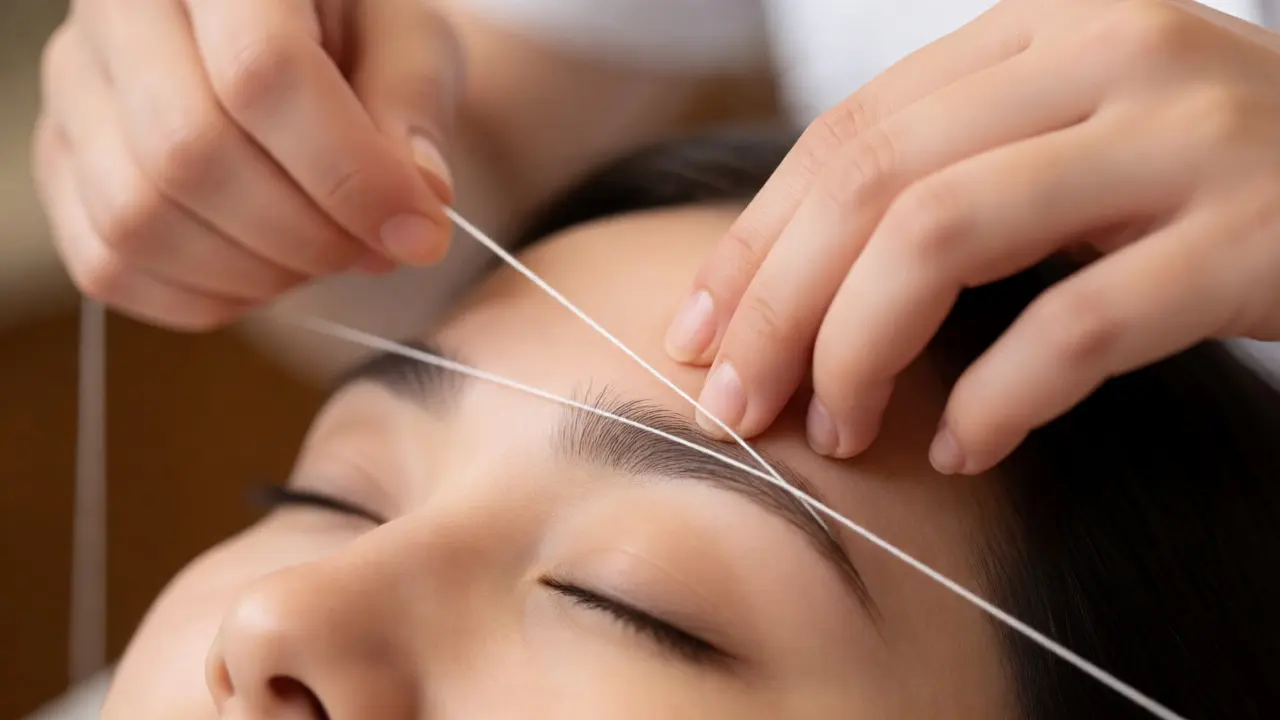
You walk out of the salon with perfect, sharp brows. You feel great. Then, two weeks later, you look in the mirror and see a stray hair popping up near your arch. Panic sets in. You paid for precision, so why is it back already? This is the most common question I hear from clients here in Houston: eyebrow threading is not a permanent method of hair removal, but rather a semi-permanent technique that removes hair from the root. If you are hoping to never pluck again, you need to adjust your expectations before you book that appointment.
The confusion usually stems from mixing up "long-lasting" with "permanent." Let's clear this up right now. No manual hair removal method-whether it is threading, waxing, or tweezing-is truly permanent. True permanence requires destroying the hair follicle itself, which typically involves lasers or electrolysis. Threading just pulls the hair out by the root. It leaves the follicle intact, ready to produce new hair once its growth cycle kicks back in. But don't let that discourage you. There are reasons why threading remains the gold standard for brow shaping, even if it isn't forever.
How Threading Actually Works on Your Skin
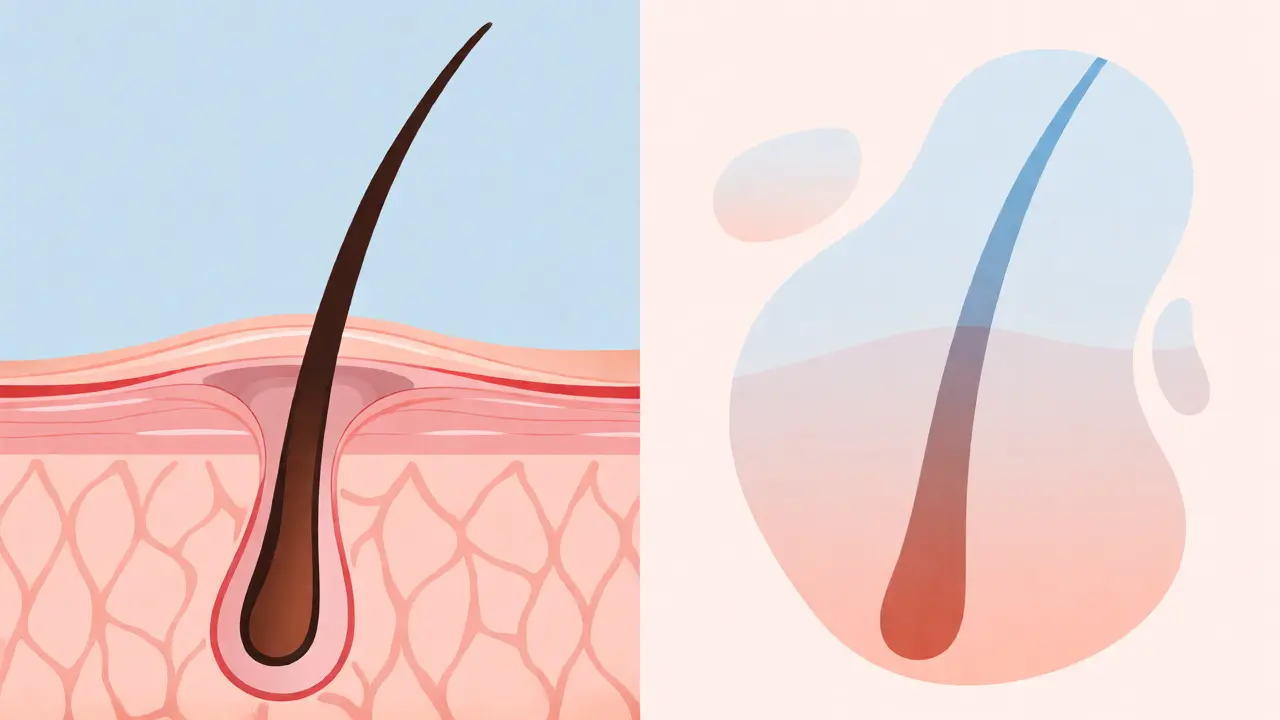
To understand why hair comes back, you have to look at what happens under the skin. Threading uses a twisted cotton thread to trap hairs and pull them out of the follicle. Unlike shaving, which cuts the hair at the surface, threading extracts the entire strand. This means you start with smooth skin because there is no stubble left behind. However, the factory-the hair follicle-remains open and active.
Think of it like pulling a weed from a garden. If you pull the whole plant out, the ground looks clean for a while. But if the roots are still deep in the soil, a new sprout will eventually appear. In your skin, the "roots" are living cells that regenerate hair every few weeks. Threading removes the visible part and the root shaft, but it does not disable the cell production center. That is why regrowth is inevitable.
The Real Timeline: How Long Do Brows Last?
So, if it’s not permanent, how long can you expect those sleek lines to hold? For most people, eyebrow hair grows faster than scalp hair. You might notice fuzz returning within 10 to 14 days. Some lucky folks stretch that to three weeks, but that is rare. The speed depends heavily on your genetics and hormone levels.
- Faster Growers: If you have thick, dark hair, you likely see regrowth in about 10-12 days.
- Average Growers: Most clients find they need a touch-up every 2-3 weeks.
- Slower Growers: Those with finer hair may go up to 4 weeks, though the shape often blurs before the hair is fully visible.
Compare this to other methods. Shaving lasts only a day or two because the blunt tip feels prickly immediately. Waxing offers similar results to threading, lasting roughly 3-4 weeks, but it can be harsher on sensitive skin. Tweezing takes too long for full brow maintenance. Threading hits the sweet spot between efficiency, precision, and duration, even if it requires regular upkeep.
Why People Think Threading Is Permanent (And Why They Are Wrong)
There is a myth floating around that repeated threading makes hair grow back thinner or slower. Is there truth to this? Sort of. Over many years of consistent root removal, some follicles can become damaged or weakened. This might lead to finer regrowth. But it does not mean the hair stops growing entirely. You aren't killing the follicle; you are just stressing it.
Another reason for the confusion is the initial shock to the system. When you first start threading, your skin reacts. Redness subsides, and the area stays smooth longer than usual because the synchronized growth cycle gets disrupted. New hairs come in at different times, making the overall look cleaner for a bit longer. But biology always wins. Eventually, the growth cycles resynchronize, and you are back to the standard 2-week window.
| Method | Duration of Results | Pain Level | Skin Impact | Best For |
|---|---|---|---|---|
| Threading | 2-4 Weeks | Moderate (Quick snap) | Low irritation, no chemicals | Precise shapes, sensitive skin |
| Waxing | 3-6 Weeks | High (Tearing sensation) | Can cause burns or redness | Large areas, quick fixes |
| Tweezing | 2-4 Weeks | Low (Pinch) | Minimal, risk of ingrown hairs | Detail work, stray hairs |
| Shaving | 1-3 Days | None | Risk of cuts, blunt regrowth | Emergency fixes, peach fuzz |
| Laser/Electrolysis | Permanent Reduction | Varies (Heat/Snapping) | Requires professional care | Long-term reduction goals |
Factors That Speed Up Regrowth
If you feel like your brows vanish overnight, something else might be accelerating the process. Hormones play a huge role. Women with PCOS (Polycystic Ovary Syndrome) often experience faster, coarser facial hair growth. Pregnancy can also change hair cycles temporarily. Stress increases cortisol, which can push more hairs into the growth phase simultaneously.
Skincare products matter too. Retinoids and acids exfoliate the top layer of skin. This helps prevent ingrown hairs, but it also reveals new hair sooner. If you use strong actives on your face, you might see regrowth faster than someone who doesn't. It’s not that the hair grew faster; it’s just easier to see because the dead skin covering it is gone.
How to Make Your Threaded Brows Last Longer
You can’t stop the clock, but you can slow it down. Here is how to stretch that 2-week window into 3 weeks without looking unkempt.
- Exfoliate Gently: Use a mild scrub or chemical exfoliant twice a week. This prevents dead skin from trapping hairs, which causes bumps and uneven texture. Smooth skin shows less shadow from emerging hairs.
- Keep Strays in Check: Don’t wait for a full session to fix one rogue hair. Use a clean tweezer to remove single strays between appointments. This keeps the main shape intact without disrupting the entire cycle.
- Avoid Heavy Oils: Some oils can weaken the bond of the hair to the follicle prematurely. While healthy, excessive oil application right after threading might loosen hairs faster than necessary. Stick to lightweight moisturizers.
- Protect from Sun: UV damage can alter skin texture and hair pigmentation. Wearing sunscreen protects the delicate skin around your eyes and keeps the area looking fresh.

When to Consider Permanent Options Instead
If you hate the bi-weekly commitment, threading might not be your end game. If you want to reduce maintenance drastically, look into laser hair removal or electrolysis. Laser targets pigment in the hair, damaging the follicle over multiple sessions. It works best on dark hair and light skin. Electrolysis is the only FDA-approved method for true permanent removal, working on all hair colors by inserting a fine probe into each follicle.
However, these methods cost significantly more upfront and require multiple visits. Many people use threading to maintain their brows while undergoing laser treatments. It’s a hybrid approach. You get the immediate satisfaction of threading while slowly reducing the total amount of hair over months or years.
The Verdict on Permanence
So, is threading permanent? No. It is a temporary, effective, and precise way to shape eyebrows. It offers better control than waxing and lasts much longer than shaving. For most people, the trade-off of visiting a pro every few weeks is worth the crisp, clean look. Embrace the routine. It is self-care, not a punishment.
Does threading make hair grow back thicker?
No, threading does not change the thickness or color of your hair. This is a common myth. Because threading removes the hair from the root, the new hair grows back with a soft, tapered tip, unlike shaving which leaves a blunt, stubbly edge. This tapering effect can sometimes make the hair feel softer, leading to the misconception that it is thinner, but the actual diameter remains the same.
How often should I get my eyebrows threaded?
Most people need their eyebrows threaded every 2 to 3 weeks. This aligns with the natural hair growth cycle of facial hair. Waiting too long can result in an undefined shape and more pain during the next session because the hairs are longer and stronger. Consistency helps keep the brows neat and reduces discomfort over time.
Can I shave my eyebrows between threading appointments?
You can, but it is generally not recommended for the main brow area. Shaving creates a blunt edge that feels coarse as it grows out, ruining the smooth finish of threading. It is better to use tweezers for individual stray hairs. If you must shave, do it carefully with a small facial razor, but be aware that the regrowth will look and feel different than threaded regrowth.
Is threading painful?
Pain tolerance varies, but most people describe threading as a quick, sharp sting rather than prolonged pain. It is often less painful than waxing because it removes smaller sections of hair at a time. The first few sessions might feel more intense, but many people report that the pain decreases as they get used to the sensation and as hair follicles potentially weaken over time.
What is the difference between threading and waxing?
Both remove hair from the root, but the mechanics differ. Threading uses a twisted thread to lift hair out, offering extreme precision and no chemicals. Waxing applies hot or cold wax to the skin, which adheres to hair and is pulled off quickly. Threading is better for detailed shaping and sensitive skin prone to reactions from wax ingredients, while waxing might be faster for larger areas but can cause more irritation.

tiffany King
September 1, 2026 AT 20:17Thank you so much for clearing this up! I used to get so anxious thinking my brows were 'ruined' if they grew back after two weeks. Knowing it's just biology and not a failure of the service makes me feel way better about keeping up with appointments. It really is self-care in disguise.
Vishnu Vardhan Reddy M S
September 3, 2026 AT 01:25Well, aren't we all just shocked that biology works as intended? But seriously, great breakdown. The weed analogy is spot on. If you don't kill the root, it grows back. Simple as that. Keep those brows sharp, friends.
Iva Grekova
September 4, 2026 AT 22:51Appreciate the honesty here. I've been trying to manage expectations with my clients too. It’s nice to see a resource that doesn't overpromise. Sticking to the facts helps everyone relax.
Onyinyechi Nwosu
September 5, 2026 AT 04:45this helped a lot i always thought i was doing something wrong when hairs came back fast but its just hormones and genetics right
Chandan Singh
September 5, 2026 AT 22:49Technically speaking, while electrolysis is FDA-approved for permanent removal, laser hair removal is often mislabeled by clinics as 'permanent' when it is actually 'permanent reduction.' The distinction matters financially. Also, threading does cause micro-trauma which can lead to follicular damage over decades, effectively thinning the hair density without killing the follicle entirely. It's a nuance most people miss.
Brannen Hall
September 7, 2026 AT 20:31Most people are too lazy to deal with maintenance anyway. Just shave them off and call it a day. This whole industry thrives on making simple tasks seem complicated so they can charge you every fortnight.
Joanna Mucha
September 8, 2026 AT 14:46The ephemeral nature of beauty is precisely what gives it value. To expect permanence from a temporary art form is a philosophical error. Threading is a ritual of renewal, not a solution to mortality. We chase the crisp line because we fear the blur of entropy. It is quite poetic, really, how we fight against our own cellular regeneration for the sake of aesthetic symmetry.
Kim Edwards
September 8, 2026 AT 20:11I literally CRIED the first time I got threaded. Like ugly sobbing tears. And then I looked in the mirror and felt like a new woman. Is it worth the pain? YES. Absolutely yes. Do not let anyone tell you otherwise. The drama is part of the process!
Bonnie Watt
September 10, 2026 AT 02:35Honestly, if you have thick coarse hair, threading is just painful waste of money. Waxing gets more out at once. People who say threading hurts less are lying or have peach fuzz. Stop pretending it's gentle for everyone.
Meagan Mueller
September 10, 2026 AT 21:07i swear they make it hurt more on purpose so you keep coming back
also retinoids definitely make it look worse faster because the skin peels
dont trust the salons fully
Dave Gibbeson
September 11, 2026 AT 14:56LISTEN UP. You want results? Consistency is key. Don't skip your appointments. Exfoliate daily. Hydrate. If you treat your skin like trash, your brows will look like trash. Take control of your routine and stop complaining about regrowth. It is called growth. Embrace it and maintain it.
Sabrina Newland
September 12, 2026 AT 11:53omg this is so helpful 🥺 i always wonder why mine grow back so fast even though i use good products... maybe its the stress?? 😩🤔 thanks for explaining the cycle stuff!! ✨
Amara Akbar
September 14, 2026 AT 08:13This is an incredibly well-structured explanation. It is vital to understand that patience is required when dealing with biological processes. Thank you for providing such clear guidance on how to extend the longevity of the results through proper skincare habits.
Mark Harvey
September 14, 2026 AT 11:05great post really cleared things up for me im going to try the tweezer trick for strays instead of booking another appt so soon