


Ever seen a bottle of alum powder in the bathroom and wondered if it could actually slow down facial hair? You’re not alone. Online forums, TikTok clips, and Reddit threads are full of claims that alum - the same stuff used in deodorant sticks - can reduce facial hair growth. But does it work? Or is it just another beauty myth passed down through generations?
Let’s cut through the noise. Alum, also known as potassium alum or potassium aluminum sulfate, is a naturally occurring mineral salt. It’s been used for centuries in traditional medicine, as a natural deodorant, and even as a styptic to stop minor bleeding from shaving cuts. But when it comes to reducing facial hair growth, the evidence tells a very different story.
What Alum Actually Does to Skin and Hair
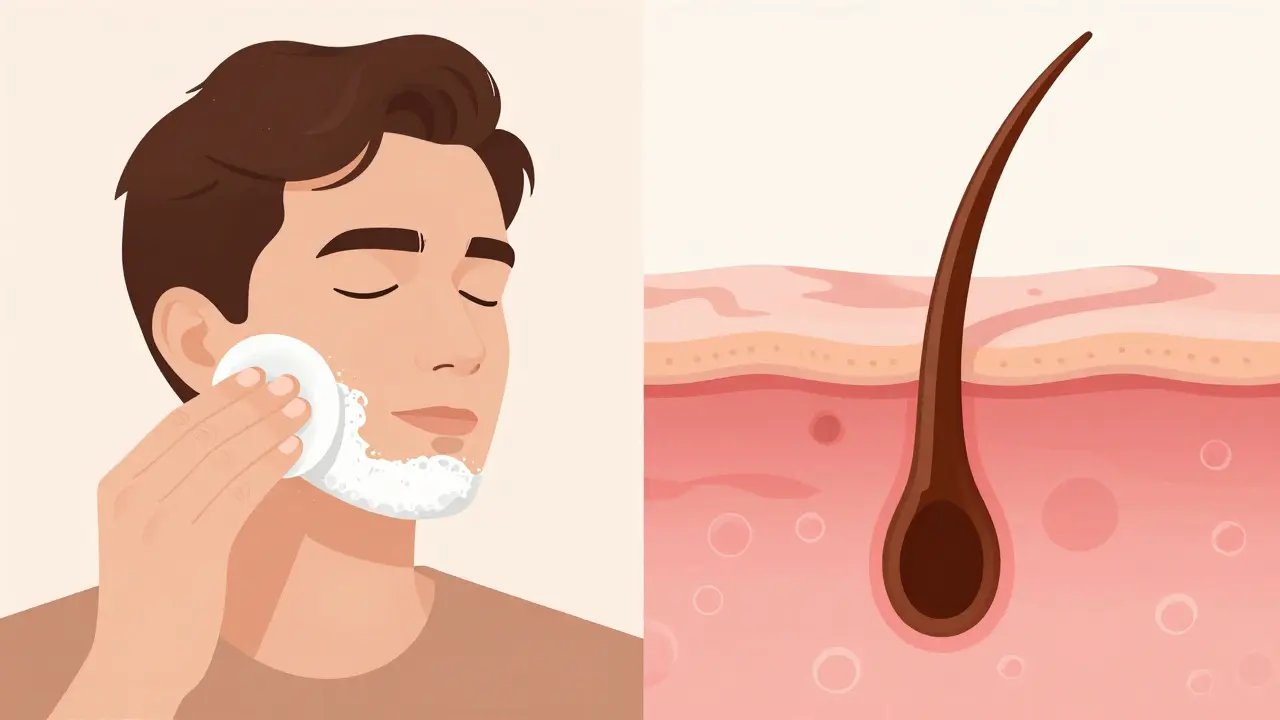
Alum works as an astringent. That means it tightens skin tissues and temporarily shrinks pores. When applied after shaving or waxing, it can soothe irritation, reduce redness, and even help close tiny cuts. Some people swear by it for post-waxing care - and that’s where the confusion starts.
Here’s the real effect: alum doesn’t touch hair follicles deep under the skin. It doesn’t damage them. It doesn’t stop them from producing hair. All it does is sit on the surface. Think of it like a cold compress after a workout - it feels good, reduces swelling, but doesn’t change your muscles.
There’s zero peer-reviewed research showing alum inhibits hair growth. No clinical trials. No dermatology studies. Not even a lab report from a university. If alum could reduce hair growth, we’d see it in medical treatments for hirsutism or in prescription creams. We don’t.
Why People Think It Works
So why do so many believe alum slows hair growth? The answer lies in perception - and timing.
After using alum regularly, many users notice their hair feels finer or grows back more slowly. That’s not because the follicle is weakened. It’s because alum tightens the skin, making the hair shaft sit tighter as it grows out. When hair emerges, it’s less prickly. It feels softer. That tricks the brain into thinking it’s growing slower or thinner.
Also, alum is often used alongside other hair removal methods - like waxing or sugaring. Waxing removes hair from the root, which naturally leads to slower regrowth (usually 3-6 weeks). People then credit the alum, not the waxing.
There’s also the placebo effect. If you believe something works, your brain starts noticing evidence that supports it. You forget the times your hair grew back fast. You remember the time it felt softer. That’s confirmation bias, not science.
What Actually Reduces Facial Hair Growth
If you’re looking to truly reduce facial hair growth - not just mask it - you need to understand what science backs.
There are only two proven methods:
- Electrolysis: The only FDA-approved method for permanent hair removal. It destroys the follicle with a tiny electric current. Requires multiple sessions but works on all hair and skin types.
- Lasers (IPL or Diode): Targets pigment in the hair follicle. Best for dark hair on light skin. Needs 6-8 sessions. Results last years, but not always permanent.
Prescription creams like eflornithine (Vaniqa) can slow hair growth temporarily. It’s applied twice daily and only works while you use it. Stop using it, and hair grows back normally.
Birth control pills or anti-androgen medications can help women with hormonal excess hair (like PCOS). But these require a doctor’s prescription and aren’t meant for men.
Alum? It’s none of these. It’s a surface treatment. Nothing more.
Is Alum Safe for Facial Skin?
Yes - if used correctly. Alum is generally safe for short-term topical use. Many men use it after shaving as a natural antiseptic. It’s gentle, non-irritating for most, and doesn’t contain alcohol or parabens.
But there are caveats:
- Don’t use it on broken skin or fresh waxing wounds. It can sting.
- Some people develop allergic reactions - redness, itching, rash. Patch test first.
- Long-term use may cause dryness. Alum is a drying agent. Moisturize afterward.
- Don’t swallow it. It’s not meant for ingestion.
There’s no evidence that alum causes cancer, hormone disruption, or long-term damage. But that doesn’t mean it’s magic.
What About Alum-Based Wax Formulas?
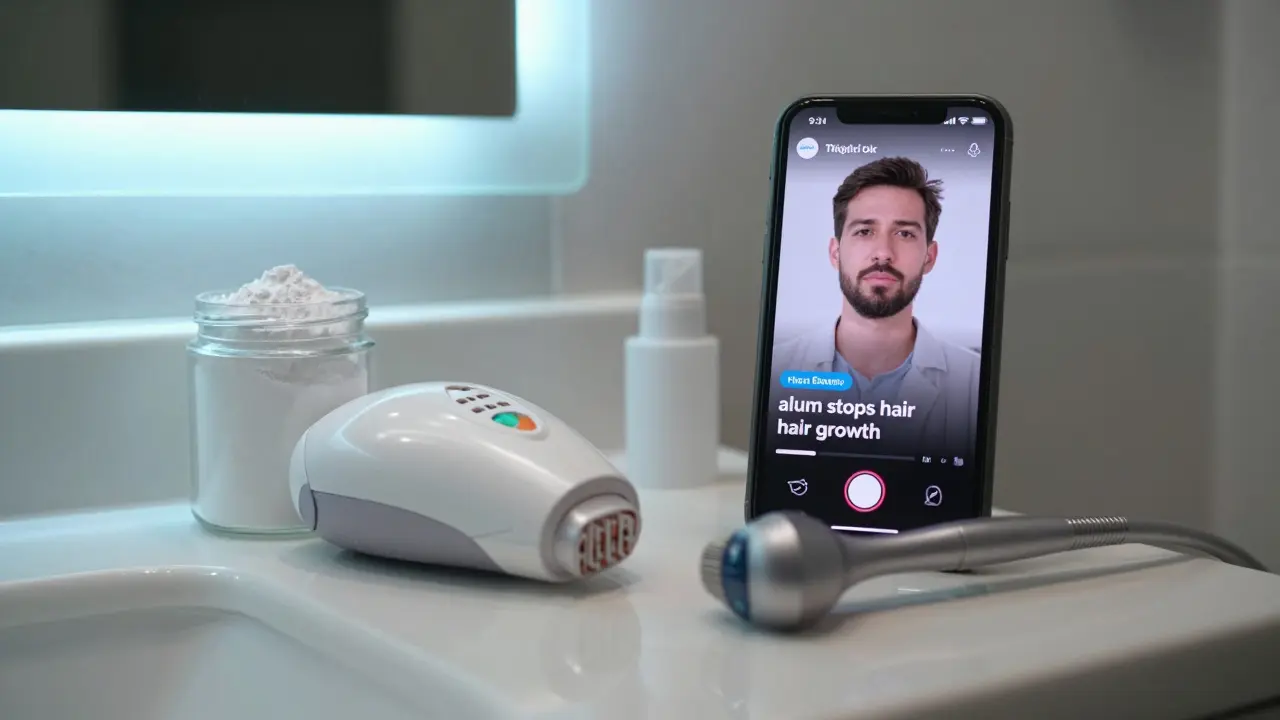
You might have seen products labeled “alum-infused wax” or “alum-enhanced hair removal.” These are marketing gimmicks. The amount of alum in these waxes is microscopic - often less than 1%. It’s added for its antiseptic properties, not to slow hair growth.
Real wax formulas rely on resins, oils, and beeswax to grip hair. Any alum in them is there to reduce infection risk after removal, not to alter follicle behavior. If a brand claims their wax “reduces regrowth,” they’re either misinformed or lying.
Alternatives That Actually Work
If you want to reduce facial hair growth, here’s what you should consider:
- Electrolysis: Permanent. Works on all hair colors. Best for small areas like upper lip or chin.
- Laser hair removal: Fast. Great for larger areas like sideburns or neck. Requires maintenance.
- Prescription cream (Vaniqa): Slows growth. Needs daily use. Safe for women.
- Shaving + alum: For maintenance. Alum helps soothe skin. Doesn’t slow growth.
Alum has its place - as a post-shave toner. But don’t buy into the myth that it changes how hair grows.
Final Verdict
Is alum used to reduce facial hair growth? Technically, yes - people use it for that purpose. But scientifically? No. It doesn’t work.
It soothes. It tightens. It disinfects. But it doesn’t touch the follicle. It doesn’t alter hormones. It doesn’t slow regrowth. The feeling of finer hair? That’s your skin adapting - not your hair changing.
If you want real, lasting results, skip the powder. Go for electrolysis or laser. They’re backed by decades of research. Alum? Keep it for after-shave. It’s great for that.
Can alum permanently remove facial hair?
No. Alum cannot permanently remove facial hair. Permanent hair removal requires destroying the hair follicle, which only electrolysis and laser treatments can do. Alum is a topical astringent that soothes skin and tightens pores - it has no effect on the follicle itself.
Does alum make hair grow back slower?
It doesn’t make hair grow back slower. What people notice is that hair feels finer or less prickly after using alum. This is because alum tightens the skin, making emerging hair seem smoother. The actual growth rate - measured in millimeters per day - remains unchanged.
Is alum better than shaving for reducing hair growth?
Neither shaving nor alum reduces hair growth. Shaving cuts hair at the surface. Alum soothes the skin after shaving. Neither affects the follicle. If you want slower regrowth, you need methods that remove hair from the root - like waxing, sugaring, or laser.
Can women use alum to reduce facial hair from hormones?
No. Hormonal facial hair (like from PCOS) requires medical treatment - such as birth control, anti-androgens, or prescription creams like Vaniqa. Alum has no impact on hormone levels or follicle activity. It’s purely a surface treatment.
Are there any risks to using alum on the face daily?
Daily use can dry out skin or cause irritation in sensitive individuals. Alum is a drying agent. If used too often, it may lead to flaking, redness, or tightness. It’s best used 2-3 times a week after shaving or waxing, followed by moisturizer. Avoid using it on active acne or broken skin.



Bhagyashri Zokarkar
February 9, 2026 AT 18:35Eka Prabha
February 11, 2026 AT 07:06Bharat Patel
February 12, 2026 AT 03:45Rakesh Dorwal
February 13, 2026 AT 11:59Rajat Patil
February 14, 2026 AT 17:03deepak srinivasa
February 16, 2026 AT 01:16NIKHIL TRIPATHI
February 16, 2026 AT 14:04Shivani Vaidya
February 17, 2026 AT 20:38Rubina Jadhav
February 18, 2026 AT 22:14sumraa hussain
February 20, 2026 AT 03:27Raji viji
February 20, 2026 AT 13:18Sandeepan Gupta
February 20, 2026 AT 17:13Tarun nahata
February 21, 2026 AT 03:33Aryan Jain
February 23, 2026 AT 03:20Nalini Venugopal
February 24, 2026 AT 10:12