

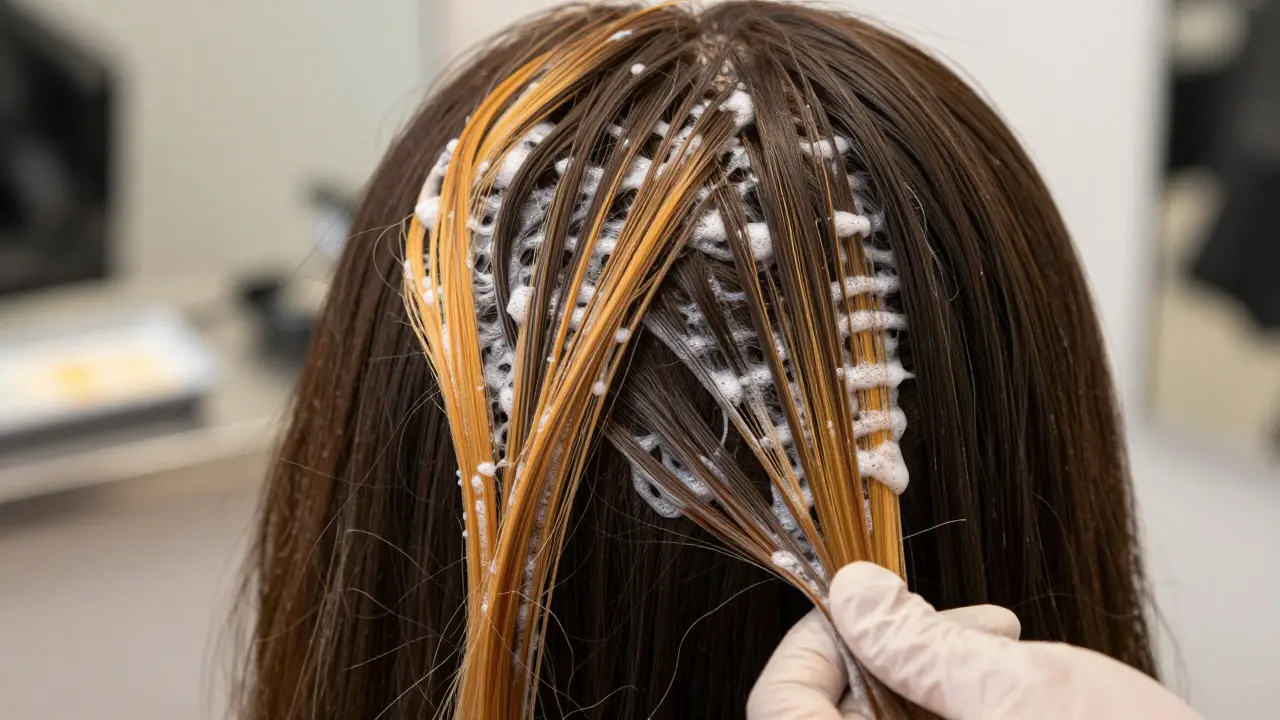
When you’re dreaming of a bright red, icy blonde, or neon pink hairstyle but you’ve got dark brown hair, the first question that pops up is: Do I need to bleach it first? The answer isn’t yes or no-it’s it depends. And that’s okay. Most people assume bleaching is always necessary before dyeing dark hair, but that’s not true. What matters is what color you want to end up with.
When Bleaching Is Necessary
If you’re aiming for anything lighter than a few shades of your natural dark brown, bleaching is almost always required. Think of your hair like a canvas. Dark brown pigment is deep, dense, and stubborn. You can’t paint a pastel yellow over black paint and expect it to show up. The same goes for hair.
According to professional colorists, if you want to go from dark brown to anything past a light brown or honey blonde, you’re looking at needing to lift your hair 4 or more levels. That’s where bleach comes in. Vivid colors-like traffic light reds, electric oranges, hot pinks, or electric blues-need a near-white or pale yellow base to look true to their tone. Without that base, they’ll turn muddy, dull, or even greenish.
Take rose gold or pastel purple, for example. If you apply them directly to dark brown hair, you’ll get a deep burgundy or muddy plum. Not the soft, glowing look you pictured. That’s because the underlying pigment fights with the new color. Bleaching removes the old pigment so the new color can shine as intended.
When You Can Skip the Bleach
Here’s the good news: if you’re going darker, you don’t need bleach at all. Going from dark brown to black, deep auburn, or even a rich chocolate brown? Just apply the dye. Darker colors deposit easily on dark hair. No lifting needed. The pigment sticks, and you get a rich, saturated result.
Even some reds and coppers can be done without bleaching. If you’re going for a warm, coppery red or a deep auburn, and your hair hasn’t been previously colored, a semi-permanent or demi-permanent dye with 20-volume developer can give you a stunning result. You might not get the fiery, high-contrast red you see on influencers-but you’ll get a beautiful, natural-looking richness that lasts.
One common myth is that all reds need bleach. Not true. Unless you’re chasing a neon red or a “lipstick red” that looks like it came out of a candy store, you can skip the bleach. The key is matching your target color to how much lift your hair can handle.
What Happens If You Skip Bleach When You Shouldn’t
Trying to dye dark hair without bleaching when you need it? You’ll likely end up with:
- Colors that look muddy or brownish instead of bright
- Uneven results-some sections take color better than others
- Faded color that disappears after a few washes
- Disappointment because the final result doesn’t match the photo on the box
And if you’re trying to go super light-like platinum or icy blonde-without bleaching? You’ll end up with orange, brassy, or even greenish tones. That’s because the underlying pigment (which is red-orange in dark hair) shows through when the color doesn’t fully lift. It’s not a mistake in the dye-it’s chemistry.
How Many Times Do You Need to Bleach?
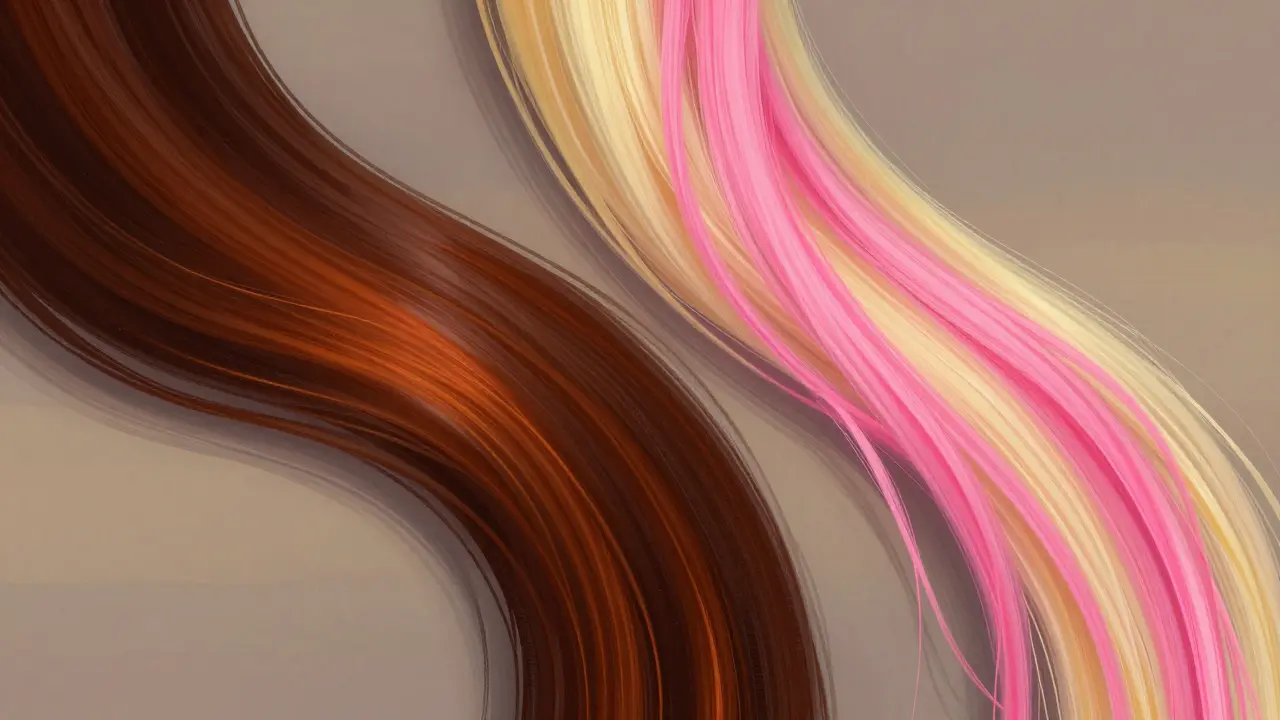
Dark brown hair doesn’t lighten in one go. Most people need two bleaching sessions, especially if they’re aiming for a very light blonde. After the first bleach, your hair will likely turn orange or copper. That’s normal. That’s your natural pigment coming out.
You can’t bleach twice in one day. Hair needs time to recover between sessions. Waiting 10-14 days between bleaches helps prevent breakage. Some people even wait three weeks if their hair is fine or already damaged.
After bleaching, toning is critical. Bleached hair often looks brassy. A purple or blue toner neutralizes those yellow-orange tones. If you’re going for cool tones like ash blonde or silver, toning isn’t optional-it’s mandatory. Skip it, and your hair will look like a sunset instead of a moonlit sky.
Preparing Your Hair Before Bleaching
Don’t wash your hair right before bleaching. In fact, skip washing for 2-3 days. Natural oils protect your scalp from irritation and help the bleach process more evenly. Some experts even recommend applying coconut oil to your hair the night before. Use about two tablespoons for thick hair, and massage it in from roots to ends. This creates a protective barrier that reduces damage.
Also, avoid conditioners before bleaching. They seal the cuticle, which makes it harder for the bleach to penetrate. But if you’re just dyeing without bleach, a clarifying shampoo 24-48 hours before helps remove buildup so the color sticks better.
Is Your Hair Healthy Enough?
Bleaching is harsh. If your hair is already dry, frizzy, or breaking, bleaching it will make things worse. You might end up with patchy, brittle strands that snap off. That’s not a color fail-it’s a hair health emergency.
Ask yourself: Has your hair been colored or bleached in the last 12 months? Do you use heat tools every day? Does it feel rough when you run your fingers through it? If yes to any of these, wait. Give your hair a break. Use deep conditioning masks twice a week. Try a protein treatment if your hair feels limp. Healthy hair takes color better and survives the process.
After Bleaching and Dyeing: What to Do
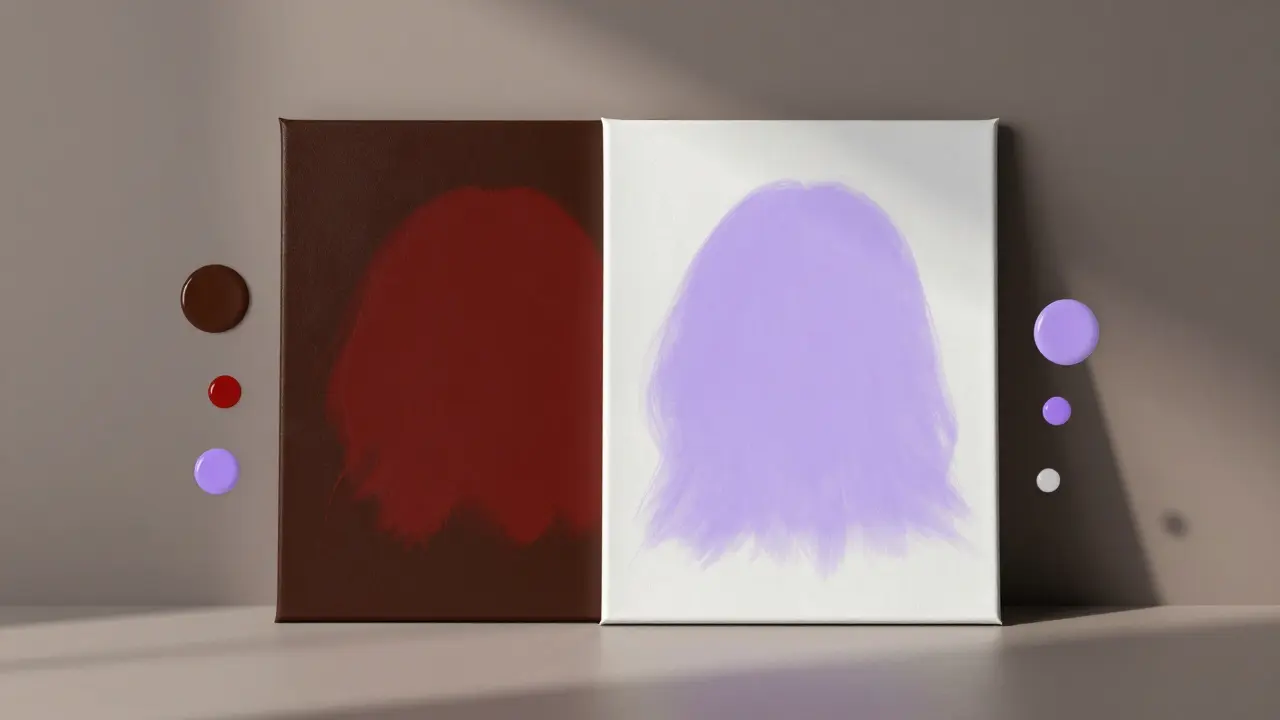
Once you’ve bleached and dyed, your hair is in survival mode. Here’s how to keep it alive:
- Use sulfate-free shampoo. Sulfates strip color and dry out hair.
- Wash with cool water. Hot water opens the cuticle and lets color escape.
- Deep condition every week. Look for masks with keratin, shea butter, or argan oil.
- Use dry shampoo on days 2 and 3. It absorbs oil without washing out color.
- Apply heat when conditioning. Use a blow dryer on low heat for 5 minutes after applying a mask-it helps the cuticle absorb nutrients.
Shvonne Perkins, a colorist at Madison Reed, says many people think they’re done after the dye job. But color maintenance is half the battle. Treat your hair like a garden-you wouldn’t plant a rose and forget to water it.
What About White or Silver Hair?
Even if your hair is gray or silver, you might still need to bleach it. White hair has a tighter cuticle than bleached hair, so it doesn’t absorb color as easily. If you want a vivid color like electric blue or neon green, lightening it first helps the dye stick longer and look brighter.
But if you’re going for a subtle silver-gray or a soft lavender, you might skip it. Test a small section first. Sometimes, direct dyes work beautifully on silver without bleach.
Final Rule: Match the Goal to the Process
There’s no one-size-fits-all answer. The only way to know if you need bleach is to compare your current hair color to your target color.
- Going darker? Skip bleach.
- Going 1-3 shades lighter? Try a high-lift dye with 30-volume developer.
- Going 4+ shades lighter? Bleach.
- Going for vivid, neon, or pastel? Bleach. No exceptions.
And always-always-test a strand first. Cut a small piece near your ear, bleach it, and see how it reacts. That one test can save you from a costly, painful mistake.


John Fox
February 13, 2026 AT 16:33Been there done that. Tried to go from dark brown to pastel pink without bleach. Ended up looking like a bruise with glitter. Lesson learned.
Now I just go dark red. Looks natural. Feels better. Hair still attached.
chioma okwara
February 15, 2026 AT 02:51Actually, you’re kinda wrong about the coconut oil thing. That’s an old wives’ tale. Oils don’t ‘protect’ hair from bleach-they create a barrier that makes lifting uneven. I’ve seen clients do it and end up with patchy orange streaks. If you wanna protect your scalp, use petroleum jelly on the hairline. Not your whole head.
Also, ‘two tablespoons for thick hair’? That’s not even a real measurement. Use a scale. Or better yet, don’t mess with oils before bleach. Just don’t.
Tonya Trottman
February 15, 2026 AT 21:24Someone clearly didn’t read the section on ‘What Happens If You Skip Bleach When You Shouldn’t’
Also, ‘muddy plum’? That’s not even a color. Plum is a pigment. Muddy is a texture. You can’t have a muddy plum. That’s like saying ‘soggy oak’ or ‘sour sky.’ Grammar fail. And you wonder why people’s hair turns green.
Also, ‘lipstick red’? That’s not a technical term. Who says that? A 14-year-old on TikTok? Please. Use ‘vivid crimson’ or ‘high-saturation red.’
Krzysztof Lasocki
February 16, 2026 AT 19:22I went from dark brown to silver last year. Two bleaches. One toner. One near-breakdown. One emotional breakdown. But it was worth it. Now I look like a ghost who just won a Nobel Prize.
Do the strand test. Always. I skipped it once. My hair looked like a burnt marshmallow. Still not sure if I’m proud or traumatized.
Victoria Kingsbury
February 17, 2026 AT 01:44High-lift dyes are overrated. They claim to lift 3-4 levels, but in practice, they’re just bleach with extra steps and a higher price tag. I’ve tested 12 brands. None delivered on their claims. If you’re going more than 2 shades lighter, just bleach. Save yourself the false hope and the $50 bottle of ‘high-lift’ that turns your hair orange in 20 minutes.
Also, sulfate-free shampoo? Yes. But ‘cool water’? That’s not science. It’s a suggestion. The real science is pH-balanced products. Look for 4.5–5.5 on the label.
Veera Mavalwala
February 17, 2026 AT 06:48Let me tell you about my cousin. She tried to go neon green on dark brown hair without bleaching. Said she ‘didn’t have time.’ Two weeks later, her scalp was raw, her hair was in clumps, and she cried in a Target parking lot. I told her: ‘Your hair is not a canvas. It’s a living thing.’
Now she’s back to brown. And she uses a leave-in conditioner with ceramides. She’s happier. Her hair is healthier. And honestly? She looks better. Natural is the new bold.
Also, why do people think bleach is ‘magic’? It’s just hydrogen peroxide. It’s not a spell. It’s chemistry. And chemistry doesn’t care about your aesthetic goals.
Santhosh Santhosh
February 17, 2026 AT 20:50I have been thinking about this for a long time. Hair is not just a cosmetic issue. It is tied to identity, culture, and self-expression. In India, many women bleach their hair to fit into Western beauty standards. But what if we could embrace our natural tones? Dark brown hair is rich. It is deep. It holds history. When we bleach it, we erase part of ourselves.
Perhaps the real question is not ‘should I bleach?’ but ‘why do I feel I need to?’
My mother never bleached her hair. She had beautiful, thick, dark hair. She said, ‘The sun will come to you, not the other way around.’
I now use henna for subtle red tones. No bleach. Just nature. And I feel more myself.
Tasha Hernandez
February 19, 2026 AT 02:02Oh my god. I just got my hair done and it’s neon blue. And I didn’t bleach. I used a ‘direct dye’ from a bottle I bought at a gas station. It’s been three days and it’s already fading into a sad purple. I’m crying. Not because of the color. Because I trusted a TikTok ad. I’m a fool. A beautiful, blue-haired fool.
My cat won’t even look at me anymore. She’s judging me. I think she’s going to leave me.
Henry Kelley
February 21, 2026 AT 01:40Just want to say-this post was actually super helpful. I was about to try to go platinum without bleaching. Thank you for saving me from a disaster.
Also, the part about not washing before bleaching? I did that. My scalp didn’t burn. My hair lifted evenly. I’m a believer now.
And yeah, toner is non-negotiable. I used a purple shampoo once a week. My hair went from ‘sunset’ to ‘moonlight.’ Magic.
Ray Htoo
February 22, 2026 AT 14:08I did a strand test last week. Bleached a tiny piece. It turned orange. Then I waited 12 days. Did it again. This time, it went pale yellow. Toned it with a blue toner. Now it’s ash blonde. I didn’t think I could do it. But I did. And it felt like I unlocked a new version of myself.
Also, the coconut oil tip? I tried it. Didn’t help. Maybe it’s just placebo. I think the real secret is patience. And not doing it all in one day.
Sheila Alston
February 23, 2026 AT 14:15People who bleach their hair are just trying to escape their roots. Literally and metaphorically. Why can’t we just accept our natural color? Society tells us we need to be brighter, lighter, more ‘visible.’ But real beauty is quiet. It’s deep. It’s dark.
My daughter has dark brown hair. I told her, ‘You don’t need to change to be seen.’ She’s 8. She still doesn’t get it. But one day, she will.
sampa Karjee
February 24, 2026 AT 02:56As someone who has studied chromatic theory and hair pigment chemistry at the University of Delhi, I must point out that the entire premise of this article is fundamentally flawed. You cannot ‘skip’ bleaching for vivid colors. The underlying eumelanin structure in dark brown hair has a refractive index that cannot be overcome by direct dyes. This is basic photophysics.
Also, ‘lipstick red’? That’s a marketing term invented by L’Oréal. Real colorists use Pantone codes. If you’re not using PANTONE 18-1663 TCX, you’re not even trying.
And you mentioned ‘coconut oil’? That’s a colonial myth. Traditional Indian haircare uses amla and hibiscus. Not coconut. Please. Educate yourself.
OONAGH Ffrench
February 25, 2026 AT 05:06My mother used to say: ‘Hair is the crown, but bleach is the crown’s undoing.’
I bleached mine once. At 23. It took three sessions. I cried in the salon. My stylist held my hand.
Now I wear my natural color. It’s darker than ever. And I feel like I finally came home.
Also, cool water. Yes. But also, air-dry. Let your hair breathe. You don’t need heat to be beautiful.
Natasha Madison
February 26, 2026 AT 22:28Did you know that bleach is a government tool to make people conform? The hair industry profits from insecurity. They tell you your natural color is ‘not enough.’
And coconut oil? That’s Big Coconut pushing propaganda. They want you to think natural oils are safe. But they’re not. They clog pores. They’re linked to scalp cancer. I read it on a forum.
Also, toners? They’re just blue dye. The same stuff they use in water to hide chlorine. You’re poisoning your scalp. Wake up.