

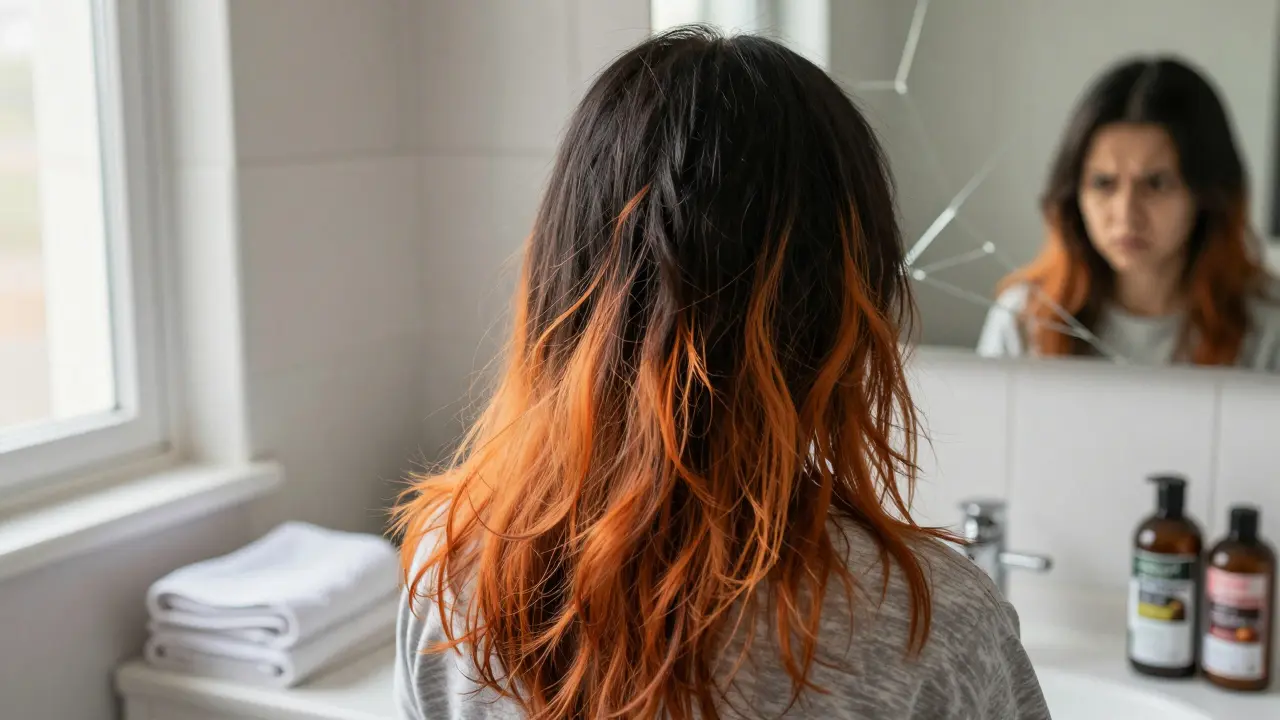
Trying to go from black hair to brown sounds simple-until you actually try it. If your hair was dyed black and you’re now wanting a warmer, softer brown tone, you’re not alone. But here’s the truth: you can’t just slap on a brown dye and expect it to work. Black hair, especially if it’s been dyed, is one of the hardest colors to lift without bleach. Most people try the no-bleach route first, only to end up with muddy, orange-ish streaks or nothing at all. So what actually works? Let’s break it down step by step.
Why Black Hair Won’t Turn Brown Without Bleach
Black hair dye is packed with intense pigments designed to stick and last. Even if your hair was originally natural black, the dye has sealed those pigments deep into the hair shaft. When you apply a brown dye on top, it doesn’t lift the black-it just adds another layer. Think of it like painting a dark blue wall with a light beige color. You’ll see a hint of change, but the base still shows through. Most at-home brown dyes, even the lightest shades like light ash brown a cool-toned brown dye that minimizes brassiness, can’t penetrate or lift black pigment. The result? You might see a slight change near the roots where the dye is freshest, but the mid-lengths and ends stay stubbornly dark. That’s why so many people end up frustrated after multiple attempts.The No-Bleach Method: What Actually Happens
Some tutorials suggest using L'Oreal 10.1 Helsinki a very light ash blonde dye used to subtly lighten black hair or L'Oreal Hi Color in Soft Brown a high-lift dye meant for dark hair without bleach. The idea is that the ash tones will neutralize warmth and give a cooler brown. But here’s what really happens:- You apply the dye to unwashed, greasy hair (oils help the dye cling better).
- You section your hair, apply evenly from roots to ends.
- You cover it with a plastic cap and leave it on for 30-45 minutes.
- You rinse, condition, and hope for the best.
The Only Reliable Way: Bleach First, Then Tone
If you want a clean, even brown, bleach is not optional-it’s necessary. Here’s how to do it safely:- Start with clean, dry hair. Wash your hair 24 hours before bleaching. Natural oils protect your scalp, but too much product (gel, spray, serum) can block the bleach.
- Use a professional-grade bleach. L'Oreal Quick Blue Powder Bleach a strong bleach formula designed for dark hair works well, but other brands like Wella Blondor a salon-quality bleach trusted by professionals are also reliable. Mix it with 20-volume developer for a slower, gentler lift. Avoid 30-volume unless you’ve bleached before-too strong for first-timers.
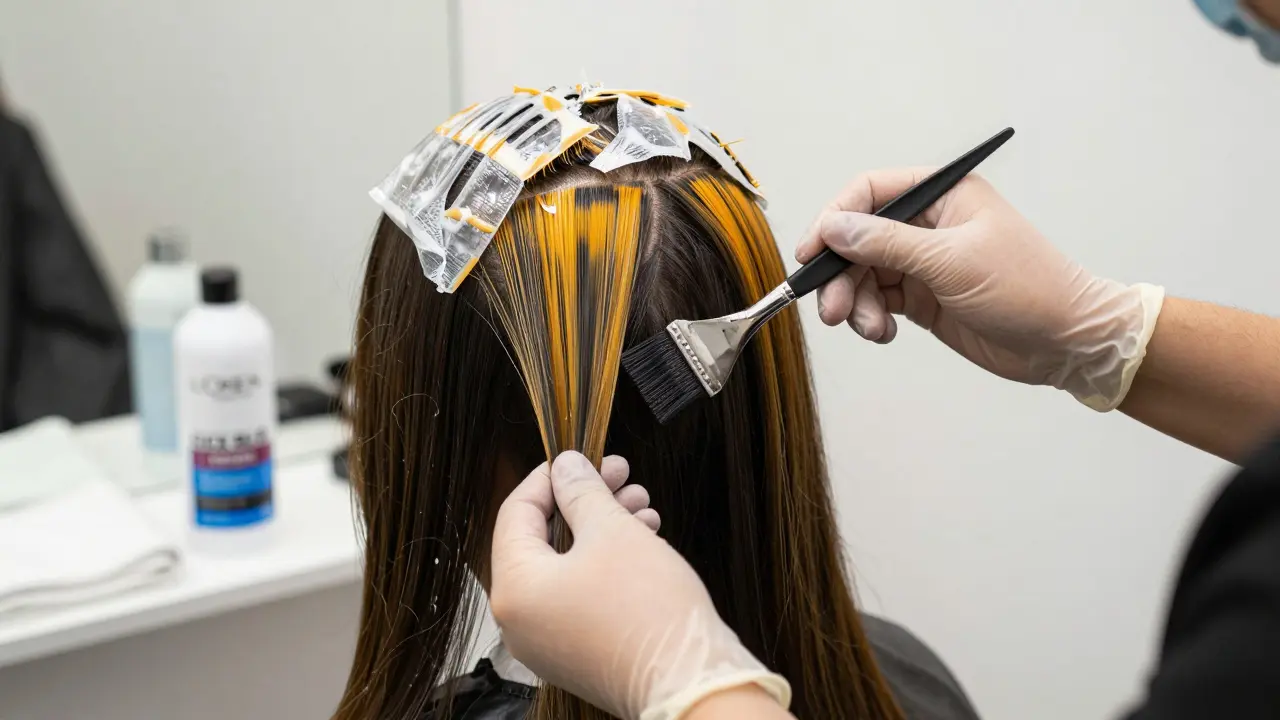
- Apply in sections. Start at the back, near the nape, then work up. Don’t touch the scalp with bleach-leave about 1/4 inch. Use a tint brush for precision.
- Process for 45-60 minutes. Check every 10 minutes. You’re aiming for a light orange or pale yellow stage-not white. If your hair turns orange, that’s fine. That’s the pigment being lifted. If it’s still black after 60 minutes, wait another 15. Never leave it on longer than 90 minutes total.
- Rinse with cool water. Don’t shampoo yet. Just rinse until the water runs clear. Pat dry with a towel.
- Apply toner. Now you need to neutralize the yellow/orange. Use a light ash brown toner a demi-permanent color that cancels warmth mixed with 10- or 20-volume developer. Apply evenly, leave on for 15-20 minutes, then rinse. This step turns orange into brown.
- Condition deeply. Use a protein-rich mask. Bleaching strips moisture. Your hair will feel dry and brittle. Don’t skip this.
What You Need Before You Start
This isn’t a one-hour job. It’s a full-day process with prep, processing, and recovery. Here’s your checklist:- Protective gear: Gloves, old towel, cape or plastic sheeting.
- Barrier cream: Apply Vaseline along your hairline, ears, and neck. Dye stains skin for days.
- Old clothes: Bleach and dye ruin fabric. Wear something you don’t mind throwing out.
- Deep conditioner: Use one with keratin or argan oil the week before and after.
- Timing: Don’t rush. Plan for 3-4 hours total. If you’re nervous, do it on a weekend.
What to Expect After Bleaching
Even if you do everything right, your hair won’t look like a magazine cover right away. The bleach might lift some parts more than others-especially if your hair has layers or was previously dyed. That’s normal. The toner will even it out, but you might still see slight variations. That’s not a mistake-it’s natural. Realistic brown hair has dimension. A few darker strands mixed in? That’s what makes it look lived-in, not cheap. Also, your hair will feel rough. That’s expected. Bleaching opens the cuticle. You’ll need to commit to deep conditioning twice a week for the next month. Skip heat tools. Use a sulfate-free shampoo. Your hair will thank you.What Doesn’t Work (And Why)
You’ve probably seen videos promising “magic brown dyes” that lift black hair without bleach. Here’s why they’re misleading:- “High-lift” dyes: These are designed for natural dark hair (level 3-4), not dyed black (level 1-2). Dyed hair has artificial pigment that resists lifting.
- Color removers: They strip dye, but not all of it. On black, they leave behind a muddy red or orange base-worse than before.
- Apple cider vinegar or baking soda: These are myths. They won’t lift pigment. They’ll just dry out your scalp.
Professional vs. DIY
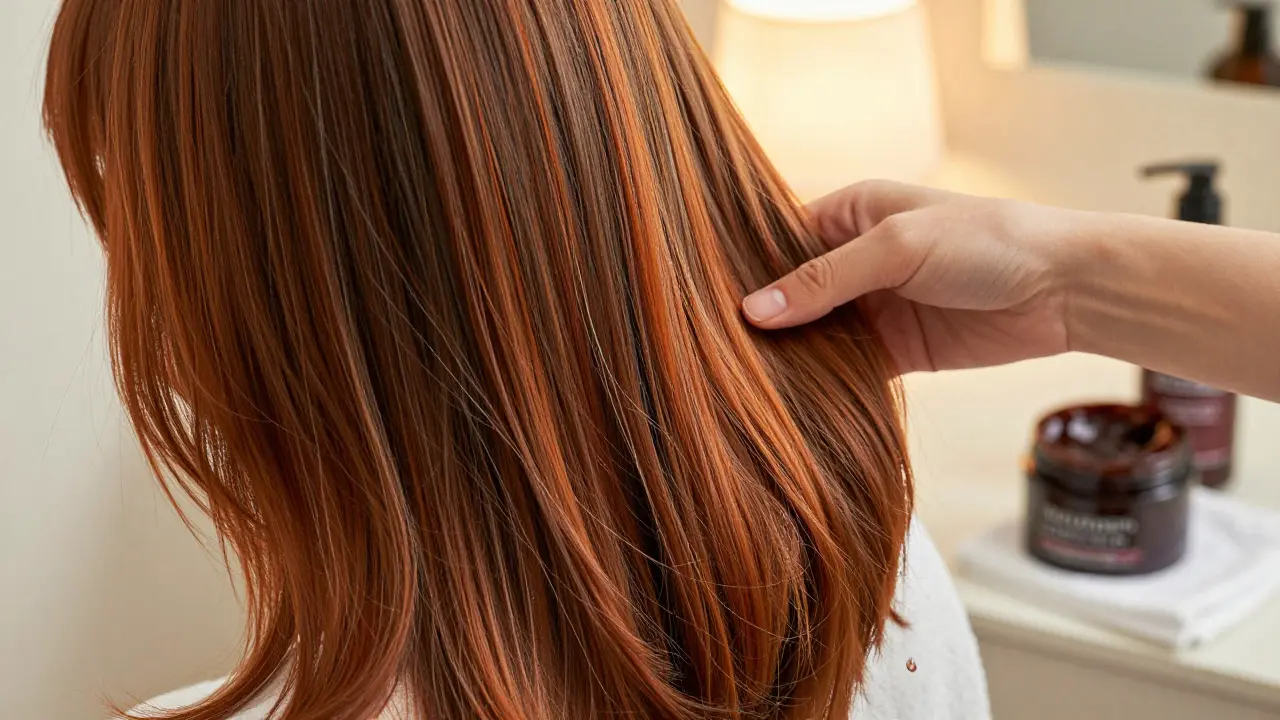
Salons have access to stronger formulas and color correctors that aren’t sold at retail. They can also use toners with violet or blue bases to neutralize brassiness more effectively. If your hair is thick, long, or has been dyed multiple times, a salon is worth the cost. A professional can lift and tone in one visit. DIY? You’re looking at two sessions, maybe three. But if you’re on a budget and willing to learn, DIY works. Just be patient. Don’t expect perfection on the first try. Many people mess up their first bleach job and fix it with a second toner a week later.How to Maintain Your New Brown Hair
Once you’ve got your brown, you need to protect it:- Wash with cool or lukewarm water. Hot water fades color faster.
- Use a purple or blue shampoo once a week to keep brassiness away.
- Limit washing to 2-3 times a week.
- Apply a leave-in conditioner after every wash.
- Stay out of chlorine and saltwater. If you swim, wet your hair with fresh water first, then put on a swim cap.
Final Thoughts
Dyeing black hair brown isn’t impossible. But it’s not a quick fix. You can’t avoid the bleach step if you want a true, even brown. The no-bleach method is a myth for most people with dyed black hair. If you skip the bleach, you’ll be stuck with a color that looks more like muddy gray than warm brown. The key is patience. Prep your hair. Use quality products. Don’t rush the bleach. And always tone after. Your hair will be better off for it.Can I use a box dye to go from black to brown without bleach?
No, standard box dyes won’t lift black pigment. Even light brown or ash blonde box dyes will only add a faint tint on top of black hair. You’ll end up with patchy, muddy results. Bleaching is required for a noticeable change.
How long should I wait between bleaching and toning?
You can tone immediately after rinsing out the bleach. Don’t shampoo first-just rinse thoroughly with cool water, pat dry, then apply the toner. Waiting too long can cause your hair to oxidize and turn more orange.
What’s the best ash brown shade for black hair?
Look for a level 5 or 6 light ash brown (like L'Oreal 5.1 or Revlon Cool Brown). These shades have enough pigment to cover yellow tones without looking too ashy. Avoid very light shades (level 8 or higher)-they’ll look unnatural on dark skin tones.
Will my hair fall out if I bleach it?
Bleaching doesn’t cause hair to fall out, but it can make it brittle and prone to breakage. If your hair is already damaged from previous dye jobs, it may snap during the process. Always do a strand test first, and use a protein treatment after bleaching to strengthen hair.
Can I go from black to light brown in one session?
Not safely. Going from black to light brown requires multiple lifts. One bleach session might only get you to orange or yellow. Then you need toner to reach brown. If you want a light brown, plan for at least two sessions: bleach, tone, wait a week, then re-tone or add highlights.


Liam Hesmondhalgh
February 17, 2026 AT 01:18Also, 'light ash brown' my ass. That's not even a real color. It's just gray with a side of regret.
Patrick Tiernan
February 18, 2026 AT 14:41Patrick Bass
February 19, 2026 AT 05:46Tyler Springall
February 20, 2026 AT 12:45Colby Havard
February 21, 2026 AT 04:28Mongezi Mkhwanazi
February 22, 2026 AT 01:48Zelda Breach
February 23, 2026 AT 04:19Alan Crierie
February 24, 2026 AT 13:49