
Walking into a barber shop with straight, fine hair and asking for curls is like walking into a kitchen and asking for a steak when you only brought lettuce. It’s not about the chef’s skill; it’s about the raw material. If you have naturally straight hair, getting that bouncy, textured look requires more than just wishing for it. You need a strategy.
The truth is, there is no single "best" way because it depends entirely on how long you want the results to last. Are you looking for a quick fix for tonight’s date? A weekend experiment? Or are you ready to commit to a chemical change that lasts for months? The answer changes everything-from the tools you buy to the damage you risk doing to your strands.
Understanding Your Hair Type First
Before you heat up an iron or mix chemicals, you need to know what you’re working with. Not all straight hair is created equal. Some men have coarse, thick hair that holds a shape well but resists bending. Others have fine, thin hair that curls easily but loses volume by noon.
If your hair is oily, any product you use will weigh it down instantly, turning those potential ringlets into greasy clumps. If it’s dry, heat tools will fry it before you even finish one side of your head. Assess your current condition. Is it healthy? Does it break easily? If yes, pause. Fix the health first. Curly hair looks bad if it’s damaged. Straight hair looks worse if it’s burnt.
Temporary Solutions: Heat Styling and Products
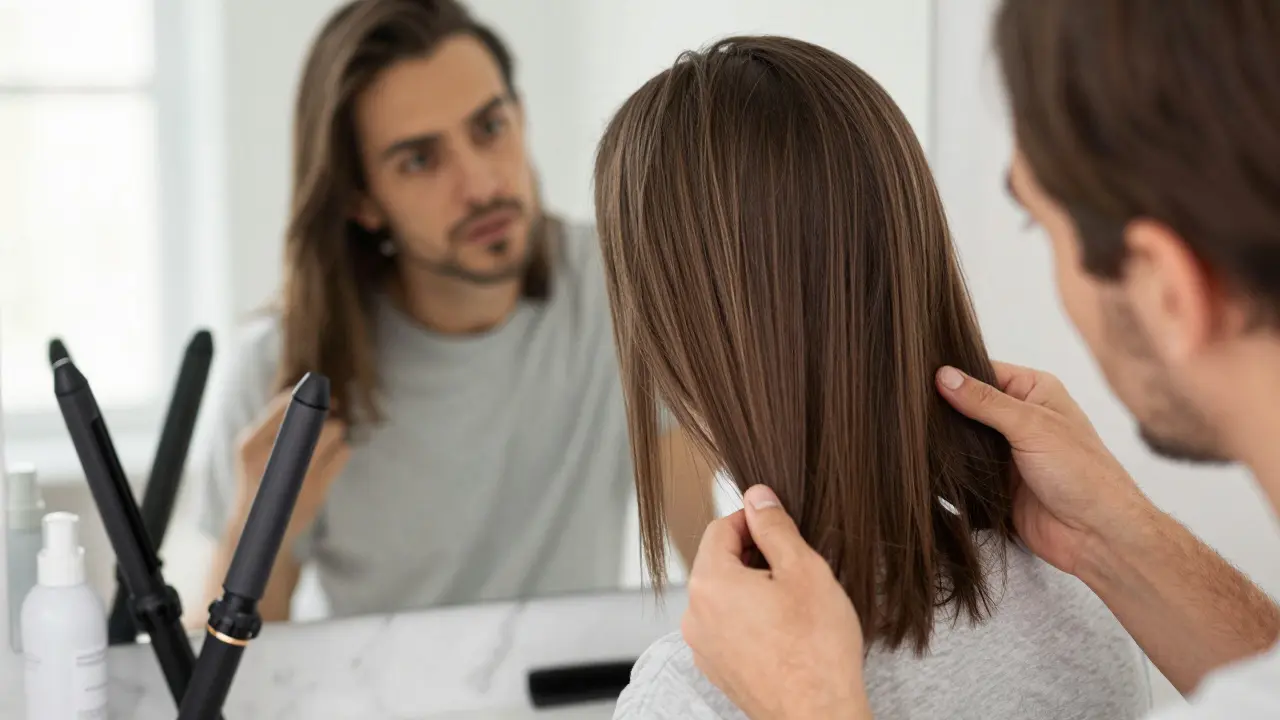
For most guys, the easiest entry point is using heat. This gives you control and reversibility. If you hate the look, you wash it out. The primary tool here is the curling iron, which is a heated styling tool used to create waves and curls in hair. Unlike a curling wand, which has a smooth barrel, an iron has a clamp. That clamp helps beginners hold the hair in place without burning their fingers, though it can leave flat spots if you’re not careful.
- Prep is non-negotiable: Start with dry hair. Damp hair + high heat = steam explosion inside the strand, leading to breakage. Apply a heat protectant spray. This isn’t optional. It creates a barrier that reduces moisture loss and prevents protein denaturation.
- Section the hair: Don’t try to curl your whole head at once. Clip the top section away. Work from the bottom layers up. Take small sections, about half an inch wide. Thicker sections won’t get enough heat exposure to set the curl.
- The technique: Wrap the hair around the barrel, away from your face. Hold for 10-15 seconds. If you have thick hair, go longer. If you have fine hair, keep it shorter. Let the curl cool completely before touching it. Heat sets the shape; cooling locks it in.
- Break it up: Once all hair is curled, run your fingers through it. Do not use a comb. Combs separate the curls into individual strands, making them look frizzy rather than wavy. Use a light-hold hairspray to set the style.
If clamps scare you, switch to a curling wand is a cylindrical heating tool without a clamp, allowing for smoother, more natural-looking waves. It takes more practice to wrap the hair safely, but the result is often less uniform and more "lived-in," which suits many male styles better than perfect salon spirals.
No-Heat Alternatives for Beginners
Maybe you’ve burned yourself too many times, or you just don’t trust your hand-eye coordination. No-heat methods exist, and they are surprisingly effective if you have patience.
Twist-outs and Braid-outs: This works best if you have medium to long hair. Dampen your hair slightly and apply a mousse or foam. Divide your hair into two or four large sections. Twist each section tightly from root to tip, then secure with a clip. Leave it overnight or until completely dry. When you unravel it, you’ll have defined waves. For tighter curls, braid the hair instead of twisting.
Flexi Rods: These are soft, foam rods that hold hair in place without clips. They are cheap, travel-friendly, and gentle. Section damp hair, wrap it around the rod, and let it air dry. The smaller the rod, the tighter the curl. This method is excellent for avoiding heat damage entirely.
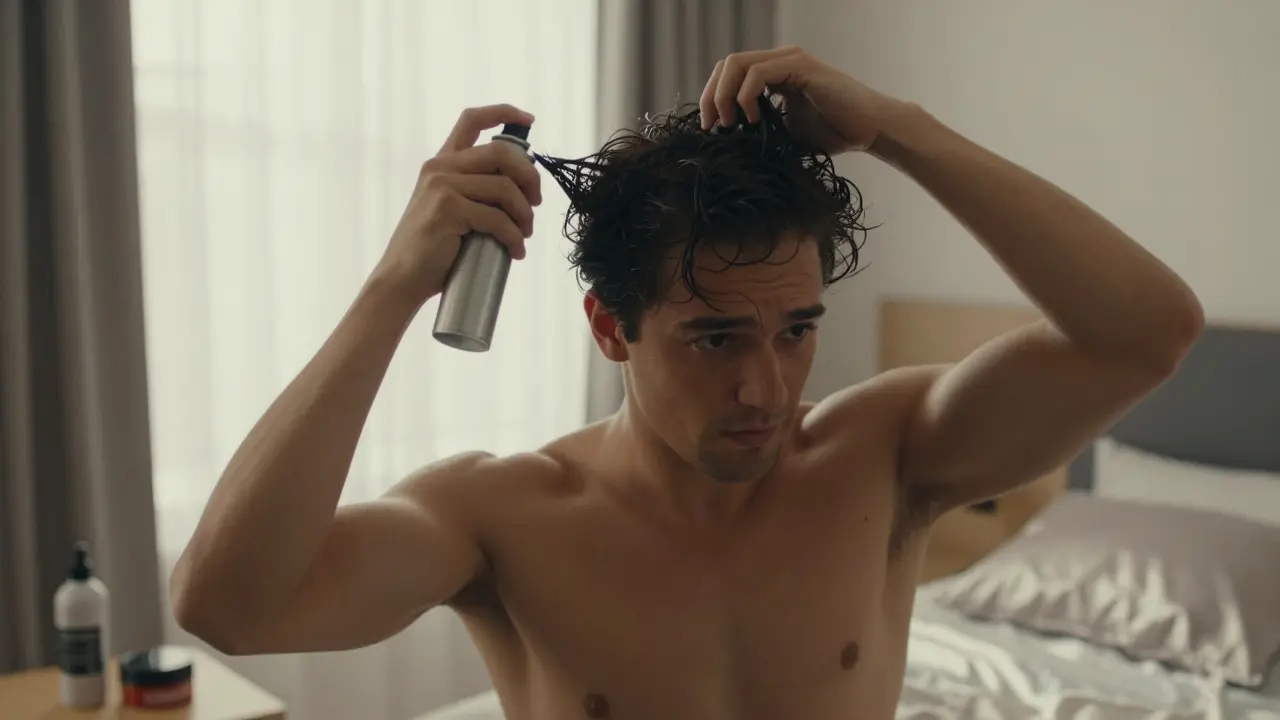
Semi-Permanent Options: Texturizing Sprays and Sea Salt
If you want texture without the commitment of heat or the wait time of braiding, look at products designed to enhance wave formation. Sea salt sprays mimic the effect of ocean water, adding grit and separation to the hair shaft. This doesn’t create true curls, but it enhances existing wave patterns and makes straight hair appear fuller and more textured.
Apply sea salt spray to damp hair, scrunch it upward with your hands, and let it air dry. For stronger hold, follow up with a matte clay or pomade. Avoid shiny gels; they make hair look wet and stiff, which kills the illusion of natural movement.
Permanent Changes: Chemical Perms and Keratin Treatments
When temporary fixes aren’t enough, some men turn to chemistry. A chemical perm is a treatment that uses solutions to break and reform hair bonds, creating permanent curls. This is a big decision. It involves applying a reducing agent (usually ammonium thioglycolate) that breaks the disulfide bonds in your hair. The hair is then wrapped around rods, and an oxidizing agent neutralizes the process, locking the new shape in.
| Method | Duration | Damage Risk | Cost | Best For |
|---|---|---|---|---|
| Curling Iron | 1-2 Days | Medium-High (if misused) | $30-$100 (tool) | Occasional styling, events |
| Braids/Twists | 1 Day | Low | $0 | Natural look, no heat |
| Sea Salt Spray | Until Washed | Very Low | $10-$20 | Texture, beachy waves |
| Chemical Perm | 3-6 Months | High | $100-$300 | Permanent change, thick hair |
| Hair Transplant | Permanent | Surgical Risks | $4,000-$15,000+ | Changing genetic texture |
Perms work well for men with thick, coarse hair who want volume. However, they can be unpredictable on fine hair, resulting in frizz rather than definition. Maintenance is also key. You must use sulfate-free shampoos and deep conditioners regularly, as the chemical process strips natural oils.
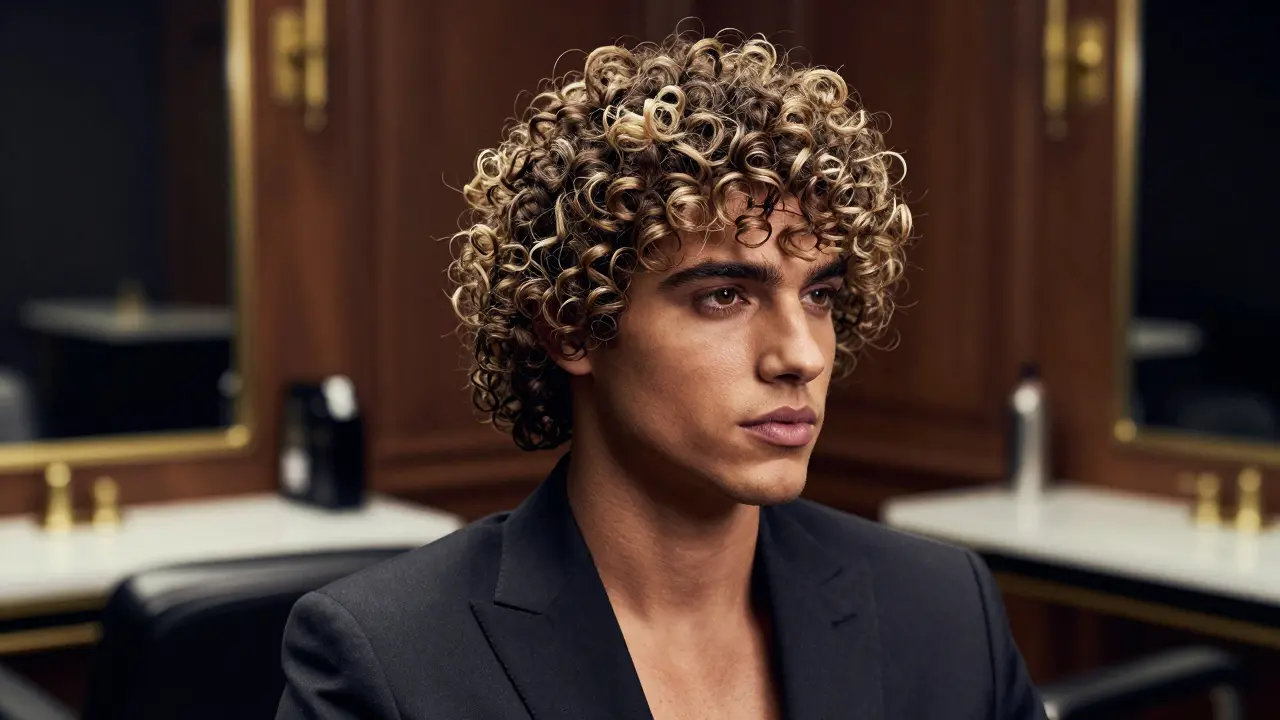
The Radical Option: Hair Transplants
This might sound extreme, but some men seek curly hair transplants if they have significant balding and want to restore density with a specific texture. Hair follicles retain their original characteristics after transplantation. If you have curly hair on the back of your head and straight hair on top (rare, but possible due to hormonal changes), transplanting the curly follicles to the front will give you permanent curls in that area.
However, this is primarily a solution for hair loss, not aesthetic preference. The cost is substantial, ranging from $4,000 to over $15,000 depending on the number of grafts. Recovery takes weeks, and the final result isn’t visible for a year. Only consider this if you are already undergoing restoration for medical reasons.
Maintenance: Keeping Curls Looking Good
Whether you achieve curls via heat, chemistry, or nature, maintenance is where most men fail. Curly hair shows dirt and oil faster than straight hair because the sebum from your scalp has a harder time traveling down the twisted shaft. This leads to dry ends and an oily roots paradox.
- Wash less frequently: Over-washing strips moisture. Aim for 2-3 times a week max.
- Use conditioner every time: Hydration is the enemy of frizz. Look for ingredients like shea butter, argan oil, or glycerin.
- Avoid brushing dry hair: Brushing detangles but also disrupts the curl pattern, creating a halo of frizz. Use a wide-tooth comb only when hair is wet and conditioned.
- Sleep on silk: Cotton pillowcases absorb moisture and create friction, causing breakage and flattening curls overnight. Switch to a silk or satin pillowcase to preserve your style while you sleep.
Common Mistakes to Avoid
One of the biggest errors men make is using too much product. Heavy pomades and waxes weigh down curls, turning them into stringy ropes. Stick to lightweight mousses, foams, or sea salt sprays. Another mistake is ignoring the length. Short hair (under two inches) is very difficult to curl effectively. If your hair is buzz-cut short, no amount of iron or perm will give you visible curls. Grow it out first. Aim for at least three to four inches of length before attempting serious styling.
Also, don’t neglect the neckline. Curly hair tends to expand outward. Keep the sides and back trimmed neatly to balance the volume on top. A disconnected fade can help manage the width that curls add to your silhouette.
Can I curl my hair without damaging it?
Yes, by minimizing heat exposure. Always use a heat protectant spray, keep the temperature below 350°F for fine hair, and limit heat styling to a few times a week. No-heat methods like braiding or flexi rods offer zero damage risk.
How long does a curling iron style last?
Typically, a curling iron style lasts until you wash your hair or encounter high humidity. Using a strong-hold hairspray and sleeping on a silk pillowcase can extend the life of the curls to 2-3 days, though they will loosen significantly.
Is a chemical perm safe for men's hair?
It is generally safe if performed by a professional, but it does cause structural changes to the hair. It can lead to dryness and brittleness if not maintained with proper moisturizing products. Consult a stylist to assess your hair's current health before proceeding.
What is the best product for holding men's curls?
Lightweight mousse or sea salt spray is best for creating and holding texture without weighing hair down. For longer-lasting hold, a flexible-hold hairspray applied after styling works well. Avoid heavy pomades or gels unless you want a stiff, wet look.
Can short hair be curled?
Short hair under two inches is difficult to curl visibly. You need at least three to four inches of length for a curling iron or wand to grip the hair effectively. For shorter lengths, texturizing powders or sea salt sprays can add slight wave and volume.