

You stare at the price tag on a bundle of hair and feel that familiar knot in your stomach. Is it too cheap to be real? Too expensive to justify? The hair extensions market is a minefield of inflated markups and suspiciously low prices, leaving you wondering if you’re getting luxury or just paying for pretty packaging. You want long, flowing locks without draining your savings account, but you also don’t want your new look to unravel after two weeks. The truth is, there’s no single "right" price. It depends entirely on what you value: longevity, texture match, or ethical sourcing.
The Real Price Breakdown: Why Costs Vary So Wildly
Before you hand over your credit card, you need to understand where your money actually goes. When you buy human hair extensions, you aren't just buying strands of protein. You're paying for the source country, the processing method, and the labor required to keep those cuticles intact. A bundle from India might cost less than one from Brazil, not because it’s inferior, but because the supply chain differs. Indian hair is often finer and requires more processing to achieve a uniform texture, whereas Brazilian hair tends to be thicker and more durable with less chemical treatment.
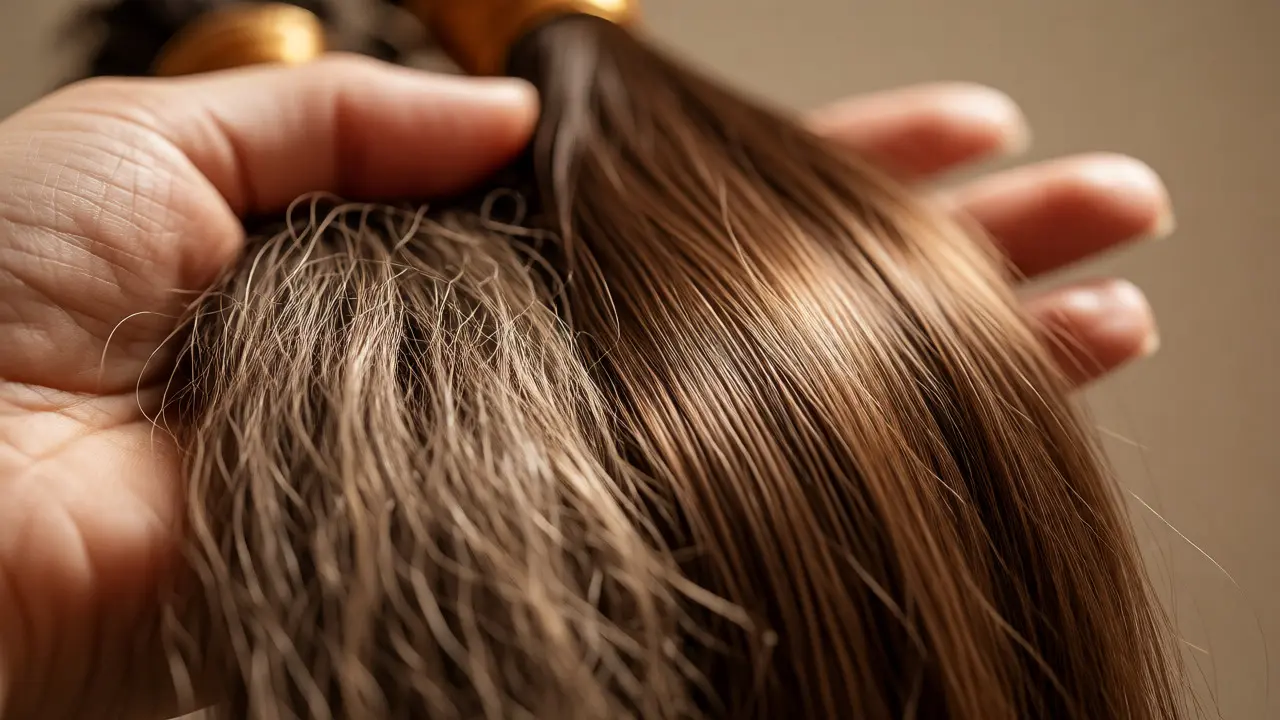
Then there’s the issue of virgin versus processed hair. Virgin hair has never been chemically treated-no bleach, no dye, no perm. This means the cuticles are all aligned in the same direction, which prevents tangling. Processed hair, often labeled as "Remy," may have had its cuticles stripped and re-coated with silicone to mimic shine. That silicone washes off after three shampoos, leaving you with dry, frizzy ends. If you pay $50 for a bundle that looks great in the store but turns into straw by week four, you didn’t save money; you wasted it.
Budget vs. Luxury: What You Get at Each Price Point
Let’s get specific. In 2026, the market has stabilized somewhat, but inflation still hits raw materials hard. Here’s what you can realistically expect to pay for a full head of weave (typically 3-4 bundles plus a closure or frontal).
| Tier | Price per Bundle | Expected Lifespan | Best For |
|---|---|---|---|
| Budget | $15 - $35 | 2 - 4 weeks | Short-term events, synthetic blends |
| Mid-Range | $40 - $75 | 1 - 3 months | Daily wear, moderate styling heat |
| Premium | $80 - $150 | 6 - 12 months | Long-term investment, high heat styling |
| Luxury | $160+ | 1+ years | Virgin unprocessed hair, minimal damage |
Notice the gap between Budget and Mid-Range? That’s where most people fall into the trap. They buy budget hair thinking they’ll treat it gently, but the lack of cuticle integrity makes it impossible to detangle without pulling out chunks. Mid-range hair, often sourced from Vietnam or Cambodia, offers a sweet spot. It’s durable enough for daily brushing but doesn’t carry the hefty markup of European-sourced brands.
Installation Fees: The Hidden Half of the Bill
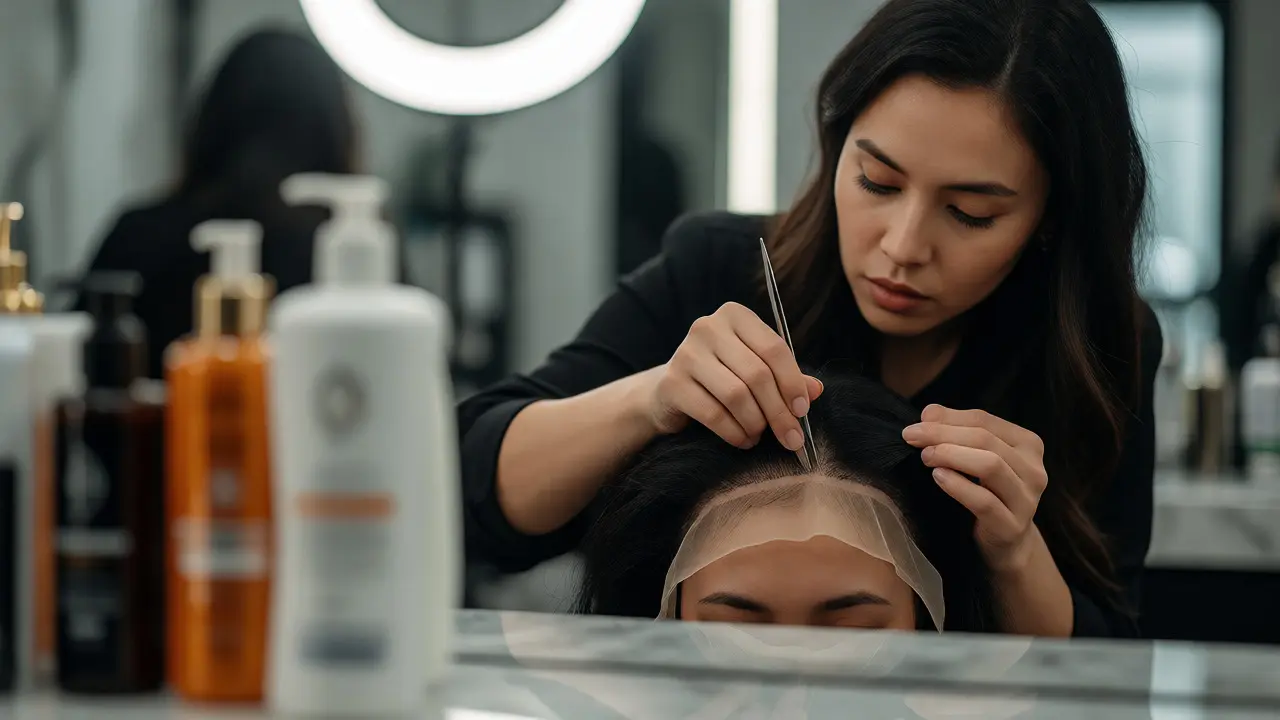
You’ve bought the hair. Great. Now you need someone to put it on your head. This is where many first-timers get blindsided. The cost of the hair is only half the equation. Installation fees vary drastically based on technique and location. A basic sew-in might cost $100-$150 in a mid-sized city, while a complex lace front installation with baby hairs laid down could run $250-$400.
Why the difference? Time and skill. A simple braided wig install takes an hour. A meticulous sew-in with leave-out blending, edge control, and custom coloring can take five hours or more. If you go to a junior stylist, you might pay less, but risk tight braids that cause traction alopecia. Senior stylists charge more because they know how to distribute weight evenly so your scalp doesn’t scream by day three.
- Sew-In: $100 - $200. Most common, least damaging if done correctly.
- Lace Frontal: $200 - $350. Requires glue or tape, higher maintenance.
- Tape-In: $150 - $250. Quick application, needs professional removal every 6-8 weeks.
- Keratin Bonds: $300 - $500+. Longest lasting, most expensive due to specialized tools.
Don’t forget the extras. Do you need a wig cap? ($5). Lace melt spray? ($15). A specialized brush? ($20). These small costs add up. Always ask for an all-in quote before sitting in the chair.
Maintenance: The Ongoing Cost of Looking Good
Here’s the part nobody puts on the receipt: upkeep. High-quality hair isn’t a one-time purchase; it’s a subscription service you pay for with time and product. To make those Premium bundles last a year, you need to invest in proper care.
First, shampoo. Regular drugstore shampoo contains sulfates that strip natural oils. Since extensions don’t receive oil from your scalp, they dry out faster. You need sulfate-free, hydrating formulas. Expect to spend $20-$30 per bottle, which lasts about two months if you wash weekly. Next, leave-in conditioner and heat protectant. Skipping these is like driving a Ferrari without oil-it will break.
Then there’s the salon visit cycle. Tape-ins need tightening every 6-8 weeks. Sew-ins should be taken down and reinstalled every 6-8 weeks to prevent matting. Keratin bonds last longer but require professional removal. Factor in $100-$200 every two months for maintenance appointments. If you skip this, you risk damaging your natural hair, which leads to even bigger repair bills later.
Ethical Sourcing: Does It Really Matter?
With growing awareness, many buyers now ask: "Where did this hair come from?" Ethical sourcing affects price, but does it affect quality? Often, yes. Hair collected through temple donations in India is typically free from chemical treatments because it wasn’t dyed for fashion trends. However, transparency is rare. Many vendors claim "virgin" status without proof.
If ethics matter to you, look for vendors who provide traceability reports. Brands that work directly with donors in Vietnam or Peru often charge a premium because they pay fair wages. This adds $20-$40 per bundle compared to bulk-market purchases. Is it worth it? If you believe in supporting sustainable practices, absolutely. Plus, ethically sourced hair often undergoes less aggressive industrial cleaning, preserving its natural luster.
How to Spot Overpriced Junk
Just because something is expensive doesn’t mean it’s good. Marketing budgets inflate prices more than quality does. Beware of brands that sell "European" hair sourced from China. True European hair is rare and extremely expensive ($200+ per bundle). If you see "European Texture" for $60, it’s likely Asian hair chemically processed to mimic the fine strand diameter of Caucasian hair.
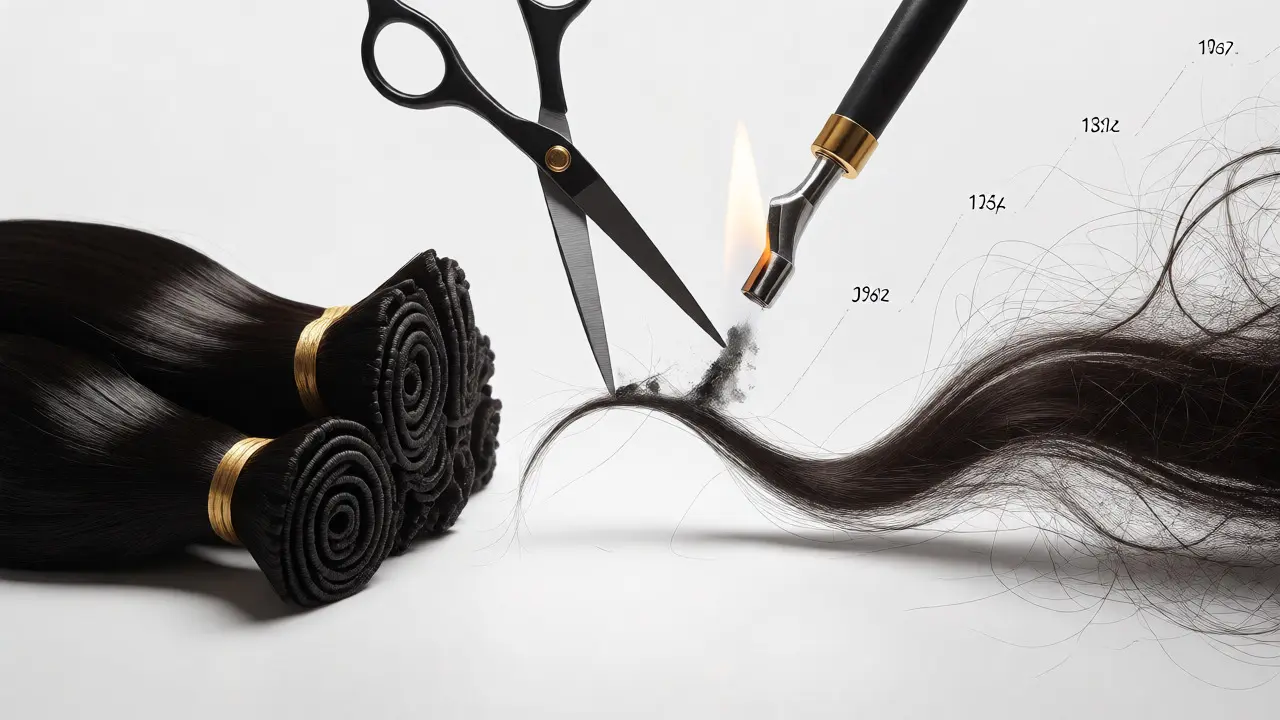
Test the burn. Take a few strands and hold a lighter to them. Human hair burns slowly, smells like burning feathers, and turns to ash. Synthetic hair melts, balls up, and smells like plastic. If the vendor won’t let you test a sample, walk away. Also, check the weft. Double-wefted bundles are stronger and shed less than single-wefted ones. If the weft feels flimsy or glued rather than stitched, it’s lower quality regardless of the price tag.
Making Your Money Work Harder
So, what should you actually pay? For a beginner looking to try extensions, aim for the Mid-Range tier. Spend $50-$70 per bundle. Pair it with a reputable local stylist who charges reasonable rates for installation. Total upfront cost: roughly $300-$400 including products. This gives you a safe entry point without breaking the bank.
If you already wear extensions regularly, upgrade to Premium hair. Yes, it costs $100+ per bundle, but it lasts twice as long. Mathematically, buying one set of Premium hair that lasts 8 months is cheaper than buying two sets of Mid-Range hair that last 4 months each. Plus, your natural hair stays healthier because you’re dealing with less friction and fewer installations.
Remember, the goal isn’t just to look good today. It’s to maintain healthy hair growth while enjoying length and volume. Skimping on quality leads to breakage, which defeats the purpose of wearing extensions in the first place. Invest in the hair, respect the installation process, and commit to the maintenance routine. Your wallet-and your crown-will thank you.
Is synthetic hair ever a good option?
Yes, for short-term use. Synthetic hair costs $10-$25 per bundle and holds styles well without heat. However, it cannot withstand high temperatures (over 300°F) and tangles easily after washing. It's best for vacations or special events lasting less than a month.
Why is Vietnamese hair more expensive than Indian hair?
Vietnamese hair is naturally straighter and coarser, requiring less chemical processing to achieve a smooth texture. Indian hair is often finer and wavier, needing more treatment to standardize it. Less processing preserves the cuticle, leading to longer lifespan and higher durability, which justifies the higher price point.
Can I reuse my hair extensions?
Absolutely, if cared for properly. Human hair extensions can be reused 2-3 times depending on quality. After removing them, wash, deep condition, and store them flat or hung loosely. Avoid tangling during storage. Lower quality hair may not survive multiple uses, but Premium virgin hair often retains its integrity for several installs.
Do salons mark up the hair itself?
Yes, salons typically add a 30-50% markup on hair they sell. Buying hair online from reputable vendors and bringing it to the salon for installation saves money. However, some salons offer warranties or color-matching services included in their retail price, which might offset the markup for beginners.
What is the average total cost for a full sew-in?
In major US cities, expect to pay $300-$600 total for a mid-quality sew-in. This includes 3-4 bundles ($150-$300), a closure/frontal ($50-$150), and installation labor ($100-$200). Prices drop significantly in smaller towns or with newer stylists, but always prioritize hygiene and technique over lowest cost.



Howard Hurd
October 30, 2026 AT 10:37Finally someone telling the truth about Indian hair being overhyped. We don't need to import junk from everywhere when American supply chains are strong enough. If you're paying for "ethical sourcing" you're just getting ripped off by liberal guilt tax.
Sundaraiah Kollipara
October 31, 2026 AT 12:45The distinction between virgin and processed hair is often lost on buyers who focus solely on price rather than the integrity of the cuticle alignment which determines tangling rates
It is fascinating how the market conflates texture with quality when in reality the processing method dictates longevity far more than the geographic origin of the donor
One must consider that fine Indian hair requires rigorous chemical treatment to mimic coarser textures thereby stripping natural oils and leading to premature dryness
Conversely Vietnamese hair retains its structural coherence longer because it undergoes minimal alteration during the manufacturing phase
This creates a paradox where cheaper options appear attractive initially but fail under the stress of daily maintenance routines
Philosophically speaking we are not merely purchasing protein strands but investing in an experience of self-care that demands respect for material properties
The emotional toll of dealing with frizzy extensions after three washes outweighs the initial savings gained from buying budget bundles
Therefore the true cost is not just monetary but also psychological as one battles against entropy within their own hairstyle
We should perhaps view these purchases through the lens of sustainability rather than immediate gratification
When we ignore the source we ignore the human labor involved in collecting and sorting these delicate fibers
A deeper inquiry into why certain regions command higher prices reveals systemic inequalities in global trade practices
Thus the consumer becomes complicit in either supporting fair wages or perpetuating exploitative labor conditions
Ultimately understanding this context transforms a simple transaction into an ethical decision
Hemali Jaiswal
November 2, 2026 AT 12:23Honey, let me tell you something real quick before you go dropping hundreds on a bundle that looks like straw in two weeks. The article hits the nail right on the head regarding the silicone coating trick. You know that shiny, glossy look you see in the salon? That’s not healthy hair, darling, that’s a plastic wrap waiting to dissolve. I learned this the hard way after spending my rent money on "virgin" hair that turned into a bird's nest after one shampoo.
If you are new to this, please listen: check the weft. If it feels glued instead of stitched, run away fast. Do not look back. Also, stop believing that European hair exists at $60 a bundle. It doesn't. It’s Asian hair that has been beaten down by chemicals until it mimics Caucasian texture. Save your cash for the mid-range Vietnamese stuff. It’s tough, it’s honest, and it won’t make you cry in the shower. Treat your scalp like a garden, not a battlefield, and you’ll thank yourself later. 💖
Sherri Jones
November 2, 2026 AT 15:43Great breakdown! 🌟 One thing I’d add is that sulfate-free shampoo is non-negotiable. Regular drugstore shampoos strip the natural oils that extensions can't replenish themselves since they aren't attached to your scalp follicles directly. 💇♀️
I recommend washing every 7-10 days max. Over-washing causes friction and tangling. Use a wide-tooth comb starting from the ends and working up. Never brush wet hair unless it's fully saturated with conditioner. 🚫
For storage, silk pillowcases are your best friend. They reduce friction while you sleep, preventing matting. 😴
If you’re using heat tools, always use a heat protectant spray. Even premium hair will dry out and break without protection. 🔥
Hope this helps anyone struggling with maintenance! ✨
Sean Eagen
November 3, 2026 AT 23:28Stop buying synthetic. Its trash. Buy human hair or stay bald.
Kieran Mitchell
November 5, 2026 AT 09:06Oh, wow... *claps slowly*. Just another generic guide ignoring the REAL issue: local stylists are ripping us off!! Why pay $400 for installation when YOU could do it yourself?? (Spoiler: you can't, but try anyway!) The markup on hair alone is criminal-salons charge 50% extra just to touch it?! Unbelievable. And don't get me started on "ethical sourcing"-it's mostly marketing fluff designed to drain your wallet further. If it comes from India, it's cheap; if it comes from Europe, it's expensive. Period. End of story. Stop overthinking it and just buy the cheapest option that doesn't melt in the sun. 🙄🔥💸
Darlene Hopkins
November 6, 2026 AT 15:49Appreciate the clarity here. For those feeling overwhelmed, remember that comfort matters most. A tight install hurts more than a loose one. Listen to your body. ❤️
LoriBeth Blair
November 7, 2026 AT 19:44If you have to ask about the difference between Remy and Virgin, you aren't ready for Premium hair. Stick to Budget tier and save your money. Most people damage their natural hair anyway so why bother with expensive extensions?
Liam Whelan
November 9, 2026 AT 17:52Yo, just wanted to say thanks for breaking down the hidden costs. I always forget about the lace melt spray and wig caps lol. Those little things add up fast. 🤷♂️
Also, yeah, traction alopecia is no joke. Saw a girl at work with receding edges cause she kept her sew-ins in too long. Don't be that person fam. Take them out on time. 👐
Elizabeth Calwell
November 11, 2026 AT 02:18You’ve got this! Remember, investing in quality now saves you stress later. Start small if you’re nervous, maybe just a closure first. Be kind to your hair and yourself. You deserve to feel beautiful without the anxiety. 🌻
Manoj Kumar
November 11, 2026 AT 08:42One observes with considerable skepticism the assertion that "ethical sourcing" correlates directly with quality. In fact, many vendors exploit this terminology to justify inflated markups without providing verifiable traceability reports. It appears that the primary beneficiary of this narrative is the retailer, not the donor. Furthermore, the claim that Vietnamese hair requires less processing seems convenient for those selling it at a premium. One must remain vigilant against such linguistic manipulations in the marketplace.
Tommy Cahyadi
November 11, 2026 AT 23:00Oh great, another guide telling me to spend more money. Because clearly, the problem was never that I couldn't afford it, but that I didn't understand the nuance of cuticle alignment. Sure, let's all drop $500 on hair that might tangle if I sneeze wrong. Truly revolutionary advice. 🙄